

TL;DR:
- Nearly 42% of U.S. adults over 30 show signs of gum disease, often overlooked due to tooth-focused care. Recognizing clinical and visual markers of healthy gums enables early intervention and supports natural, fluoride-free practices that maintain periodontal stability. Prompt detection of early signs like bleeding and pocket depth changes is essential for reversible gum health through proper routine adjustments.
Nearly 42% of U.S. adults over 30 show measurable signs of gum disease, yet the majority direct their oral care attention almost exclusively toward tooth surfaces. Recognizing the signs of healthy gums is not a supplementary concern; it is a primary diagnostic competency that enables early intervention and long-term periodontal stability. This article establishes the clinical and visual criteria for healthy gum tissue, identifies early gum health indicators that signal developing pathology, and outlines evidence-based, natural, fluoride-free practices that support sustained gum health without reliance on synthetic chemical agents.
Table of Contents
- Key criteria to identify healthy gums
- Common early signs of unhealthy gums to watch
- How gum pocket depth reveals gum health and disease status
- Natural practices supporting and maintaining healthy gums
- Comparing healthy versus unhealthy gum traits: quick reference
- Why daily gum assessment and natural care is often overlooked but critical
- Explore natural fluoride-free products for optimal gum health
- Frequently asked questions
Key Takeaways
| Point | Details |
|---|---|
| Firm gum texture | Healthy gums feel firm and resilient without tenderness or sponginess when touched. |
| Consistent gum color | Gum color should be a uniform light pink or consistent with your natural pigmentation. |
| No bleeding | Healthy gums do not bleed during gentle brushing or flossing under normal care. |
| Proper pocket depth | Gum pockets measure 1-3 mm deep indicating strong attachment and no inflammation. |
| Natural care is key | Daily natural oral hygiene and regular professional cleanings prevent gum disease effectively. |
Key criteria to identify healthy gums
Building on the importance of gum health, the following clinical and visual markers define what healthy gum tissue looks like and how it responds to normal mechanical stimulation. Familiarity with these criteria allows for consistent self-assessment between professional dental evaluations.
According to current evidence, healthy gums are firm, pale pink or consistent with individual skin pigmentation, free of bleeding during brushing or flossing, and characterized by pocket depths of 1 to 3 millimeters with a stippled, orange-peel surface texture. These criteria are measurable, reproducible, and applicable to all patient populations.
Key signs of healthy gums include:
- Firm, resilient texture without tenderness on palpation or during mastication
- Light pink or pigmentation-consistent color, without patches of redness, bruising, or pallor
- No bleeding during brushing, flossing, or dental probing
- Pocket depths of 1 to 3 mm, as measured by a calibrated periodontal probe
- Stippled surface texture, resembling the exterior of an orange peel, which indicates intact collagen fiber attachment
- Smooth, scalloped gum margins that form a tight collar around each tooth without recession or overgrowth
The following table summarizes these gum health indicators against their clinical significance:
| Gum characteristic | Healthy finding | Clinical significance |
|---|---|---|
| Color | Light pink or pigmentation-consistent | Indicates absence of vascular inflammation |
| Texture | Firm, stippled | Reflects intact connective tissue attachment |
| Bleeding on brushing | None | Confirms absence of active bacterial inflammation |
| Gum margin | Smooth, scalloped, tight | Suggests proper epithelial seal around teeth |
| Pocket depth | 1 to 3 mm | Defines healthy sulcular attachment level |
| Tenderness | None | Indicates absence of subgingival pathology |
Pro Tip: Examine your gums in natural light immediately after brushing. If any area appears redder than the surrounding tissue or bleeds even slightly, document the location and raise it at your next dental appointment.
Adopting a routine that supports natural gum health steps is the most effective way to maintain these markers over time.
Common early signs of unhealthy gums to watch
After defining the healthy gum appearance and its markers, it becomes equally important to recognize the earliest departures from those norms. Early detection of gum disease signs is what separates a fully reversible condition from one requiring prolonged clinical intervention.

Bleeding when brushing or flossing is the earliest and most common sign of gingivitis, the initial stage of gum disease. Bleeding indicates that the sulcular epithelium has become ulcerated by bacterial toxins, a sign that the tissue is already responding to pathogenic biofilm accumulation.
Early warning signs that require attention:
- Redness or darkening along the gum margin
- Swelling or puffiness that changes the normal contour of the gum
- Bleeding during routine brushing or interdental cleaning
- Persistent halitosis (bad breath) not explained by recent food intake
- Tenderness or discomfort when biting or chewing firm foods
- Visible gum recession exposing the tooth root surface
“Bleeding gums are never a normal response to brushing. They are a clinical signal that demands investigation, not tolerance.” — Periodontal clinical consensus
Steps to take when early signs appear:
- Modify your brushing technique to use light pressure with a soft-bristle brush
- Introduce interdental cleaning with floss or interdental brushes once daily
- Add a natural, alcohol-free antimicrobial rinse to your daily routine
- Schedule a professional dental evaluation within two to four weeks
- Review dietary factors, particularly refined carbohydrate and sugar intake
The gum disease warning signs that characterize early gingivitis differ substantially from those of advanced periodontitis, where bone loss has already occurred. Catching the problem at the gingivitis stage is critical because gingivitis is fully reversible. Resources on preventing gingivitis naturally and selecting the most appropriate toothpaste for bleeding gums provide additional clinical context for patients seeking natural care options.
How gum pocket depth reveals gum health and disease status
Understanding the surface signs of healthy gum appearance is essential, but periodontal probing depths provide a deeper clinical picture that cannot be observed visually. Pocket depth measurement is the standard tool used by dental professionals to classify gum health status and disease severity.
A periodontal probe, a calibrated thin instrument, is inserted gently between the gum and tooth to measure the depth of the gingival sulcus (the space between the gum margin and its attachment to the tooth root). Healthy gums have probing depths of 1 to 3 millimeters without associated bleeding. Measurements exceeding 4 millimeters indicate that the gum tissue has detached from the root surface, creating a pathological pocket where bacterial biofilm accumulates beyond the reach of routine hygiene.
| Pocket depth (mm) | Clinical classification | Recommended action |
|---|---|---|
| 1 to 3 mm, no bleeding | Healthy | Maintain current hygiene protocol |
| 1 to 3 mm, with bleeding | Early gingivitis | Improve plaque control; monitor closely |
| 4 to 5 mm | Mild periodontitis | Professional scaling and root planing |
| 6 mm or greater | Moderate to severe periodontitis | Specialist referral and surgical evaluation |
Bleeding on probing is a particularly reliable gum health indicator. Its absence at 1 to 3 mm depths confirms that the attachment apparatus (the periodontal ligament and alveolar bone) remains intact and uninflamed. Its presence, even at shallow depths, signals active bacterial activity within the sulcus.
Pro Tip: Ask your dental provider to share your probing chart at each visit. Tracking pocket depth changes over successive appointments gives you objective data on whether your home care routine is producing measurable clinical improvement.
For individuals pursuing natural care approaches, reviewing natural tips for healthy gums can help align daily habits with the clinical outcomes reflected in probing measurements.
Natural practices supporting and maintaining healthy gums
With the criteria for healthy gums and the mechanisms of disease clearly established, the focus now shifts to actionable, natural, fluoride-free practices that sustain those markers over time. Evidence supports that daily electric brushing, flossing, tongue scraping, and targeted supplementation with CoQ10 and omega-3 fatty acids contribute meaningfully to gum health outcomes.
Evidence-supported daily practices for gum health:
- Brush twice daily with a soft-bristle electric toothbrush using light, circular motions, avoiding the lateral scrubbing that abrades the gingival margin
- Floss or use interdental brushes once daily to remove subgingival plaque from the proximal surfaces where standard brushing cannot reach
- Use a tongue scraper each morning to reduce the total bacterial load in the oral cavity, which contributes to halitosis and subgingival contamination
- Apply a natural antimicrobial rinse formulated without alcohol, which desiccates soft tissue, or synthetic chlorhexidine, which disrupts the oral microbiome balance when used long-term
- Avoid tobacco in all forms, as smoking profoundly suppresses the gingival vascular response, masking bleeding and accelerating attachment loss
Supplementation protocol commonly recommended for gum health:
- Coenzyme Q10 (CoQ10), 100 to 200 mg daily, supports mitochondrial energy production in gingival fibroblasts
- Omega-3 fatty acids (EPA/DHA), 1 to 2 grams daily, reduce prostaglandin-mediated gingival inflammation
- Vitamin D3 and K2 combined, which support both calcium metabolism in alveolar bone and immune modulation
- Oral probiotics containing Lactobacillus reuteri or Streptococcus salivarius, which competitively exclude pathogenic periodontal bacteria
Biannual professional cleanings remain essential even for patients with exemplary home care routines. Calculus (mineralized plaque) cannot be removed by brushing or flossing and provides a physical scaffold for continued bacterial colonization. Additional guidance on natural gum protection tips, natural mouthwash home remedies, and strategies for improving gum health naturally offer further clinical detail for each of these practice areas.
Comparing healthy versus unhealthy gum traits: quick reference
To reinforce what to watch for, the following comparison presents healthy and unhealthy gum characteristics side by side, enabling rapid self-assessment against evidence-based benchmarks. Clear visual and tactile differences distinguish healthy gums from early gingivitis and advanced disease states at every stage of progression.
| Gum trait | Healthy gums | Unhealthy gums |
|---|---|---|
| Color | Light pink or pigmentation-consistent | Red, purple, or pale/white in patches |
| Texture | Firm, stippled, resilient | Soft, puffy, smooth (loss of stippling) |
| Bleeding | None during brushing or flossing | Present during or after brushing |
| Pocket depth | 1 to 3 mm | 4 mm or greater |
| Breath | Neutral or fresh | Persistent halitosis |
| Gum margin | Tight, scalloped, no recession | Swollen, receded, or overgrown |
| Tenderness | None | Present on palpation or while chewing |
| Attachment | Intact, no mobility | Possible tooth mobility in advanced stages |
This healthy gums checklist is a practical tool. Any finding in the right column warrants prompt attention and modification of your care protocol. Early intervention consistently produces superior clinical outcomes compared to delayed treatment. The gum bleeding prevention guide provides targeted management protocols for one of the most frequently misunderstood early disease indicators.
Why daily gum assessment and natural care is often overlooked but critical
The question worth examining is not simply what the signs of healthy gums are, but why a significant portion of health-conscious individuals who practice careful dietary and tooth care habits still develop gum disease. The answer lies in a structural gap in patient education.
Even diligent tooth care often fails to address gum tissue specifically, and 42% of adults over 30 with gum disease are not neglecting oral hygiene categorically. They are neglecting the gingival margin specifically. Brushing habits in many individuals are tooth-centered, focusing on enamel surfaces, while the gingival sulcus receives inconsistent or inadequate mechanical disruption of its resident biofilm.
A second overlooked dimension is the role of product chemistry in gum tissue health. Many conventional oral care products contain sodium lauryl sulfate, alcohol, triclosan, or high-concentration peroxides. These agents can disrupt the mucosal epithelium, alter the oral microbiome composition, and reduce the tissue resilience that characterizes healthy gums. Transitioning to natural fluoride-free gum care removes these chemical insults and allows the gingival tissue to maintain its natural defense mechanisms.
The clinical implication is clear. A daily, deliberate gum assessment, requiring no more than 60 seconds in front of a mirror, combined with a product routine formulated to support rather than chemically disrupt the periodontal environment, closes the gap that conventional oral care consistently leaves open.
Explore natural fluoride-free products for optimal gum health
To help you put these natural care principles into practice, our fluoride-free oral care line is formulated specifically to support the gum health indicators described throughout this article.

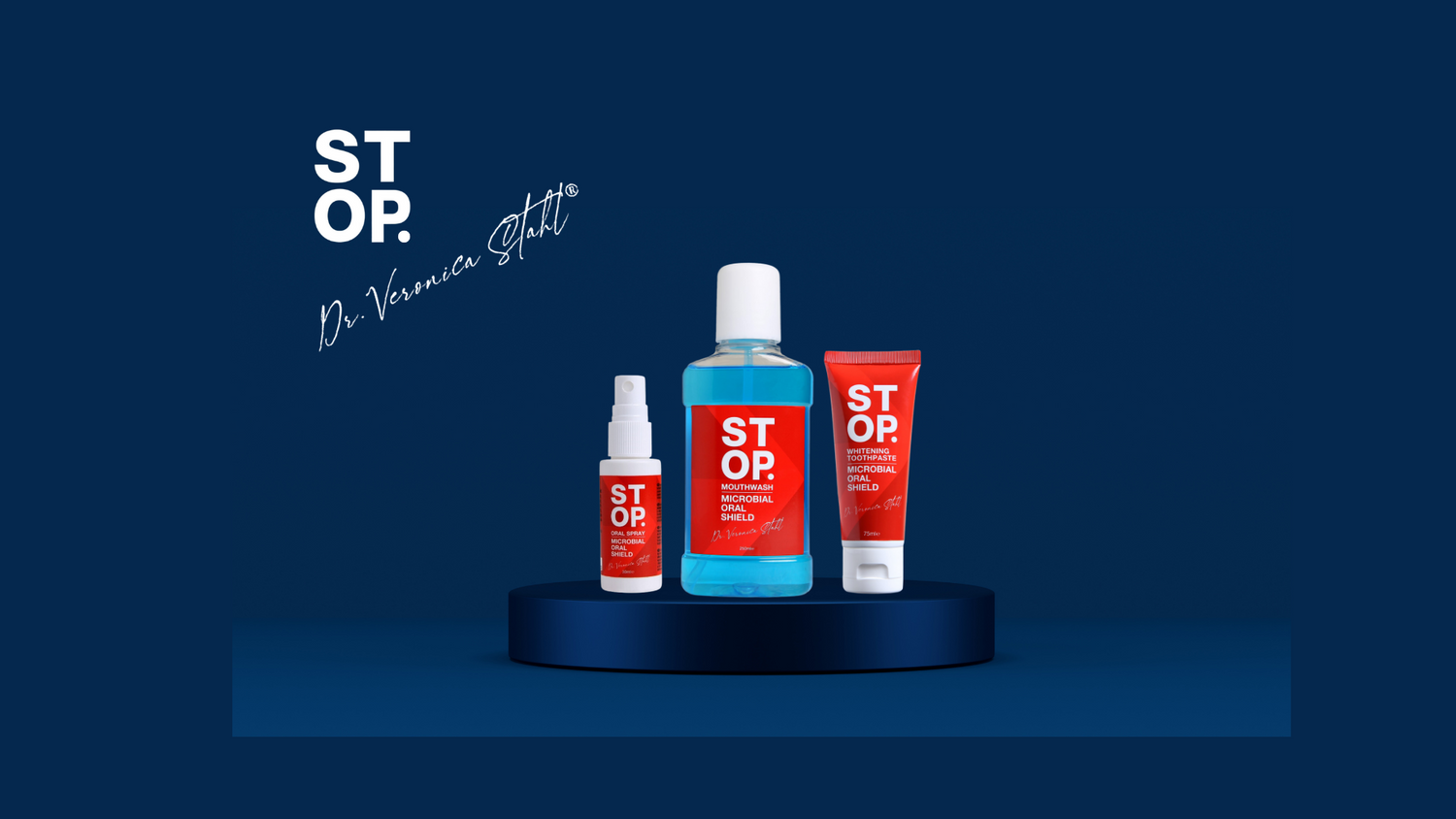
Our products, developed under the guidance of Dr. Veronica Stahl and formulated with hemp-derived cannabinoids and Dead Sea minerals, are designed to reduce gingival inflammation, support tissue resilience, and maintain the balanced oral microbiome that firm, pink, non-bleeding gums depend on. Every formulation avoids synthetic fluoride, alcohol, and harsh surfactants, making them appropriate for daily long-term use. Explore the full range of natural fluoride-free oral care options available to complement your evidence-based gum health routine.
Frequently asked questions
What color should healthy gums be?
Healthy gums are light pink or a consistent darker tone that corresponds to individual skin pigmentation, without localized patches of redness, pallor, or discoloration. Consistency of color across the gingival margin is more diagnostically significant than absolute shade.
Is bleeding normal when brushing my teeth?
No. Bleeding gums are never normal and represent a clinical indicator of active bacterial inflammation within the gingival sulcus, requiring improved hygiene and professional dental evaluation.
How deep should the gum pockets be for healthy gums?
Healthy gum pockets measure 1 to 3 mm in depth and produce no bleeding when probed by a dental professional, confirming intact sulcular attachment and the absence of active periodontal pathology.
Can gum disease be reversed with natural care?
Gingivitis is fully reversible through consistent, thorough oral hygiene and professional scaling to remove calculus when detected early, before bone or connective tissue attachment has been lost.
What natural products support healthy gums?
Daily care including electric brushing, oral probiotics containing Lactobacillus reuteri, CoQ10 supplementation, omega-3 fatty acids, and natural fluoride-free mouthwash formulations collectively support the tissue firmness, color consistency, and absence of bleeding that define healthy gums.