

For most adults and children over six, fluoride toothpaste offers a well-documented reduction in cavities and carries minimal risk when used as directed. The primary exception involves young children, whose developing teeth make ingestion of excess fluoride a genuine concern requiring supervised, dose-appropriate use. The sections below examine the mechanism, the clinical evidence, the documented risks, and the alternatives available to readers weighing their options.
TL;DR:
- Most adults and children over six can safely benefit from fluoride toothpaste used twice daily, except for those under six or with specific health conditions.
- Fluoride works mainly on the tooth surface, preventing demineralization and promoting remineralization, with adult concentrations typically between 1,000 and 1,500 ppm.
- The primary risk of fluoride toothpaste is dental fluorosis in children ingesting excess fluoride during tooth development, which can be mitigated by supervision and appropriate amounts.
- Alternatives like hydroxyapatite show limited long-term evidence, making fluoride the more proven option for cavity prevention in most cases.
- Recyclable packaging and small fluoride amounts in public water supply mean environmental concerns are minor compared to the oral health benefits.
Table of Contents
- What fluoride is and how topical fluoride works
- Benefits of fluoride toothpaste backed by clinical evidence
- Risks and downsides of fluoride toothpaste
- How fluoride compares with fluoride-free alternatives
- Who should use fluoride toothpaste and how to use it safely
- An editorial note on fluoride and fluoride-free formulations
- Environmental impact of fluoride toothpaste
- Making an informed choice about fluoride
- A fluoride-free path from Stop Oral Care
- Sources
- FAQ
What fluoride is and how topical fluoride works
Fluoride toothpaste typically contains one of two active agents: sodium fluoride or sodium monofluorophosphate, both listed on the ingredient label along with their concentration in parts per million. The preventive action occurs largely at the tooth surface rather than through the bloodstream. When fluoride ions are present in saliva and dental plaque, they interfere with the demineralization process that acids from bacteria trigger, and they support remineralization of enamel that has begun to lose minerals. This distinguishes topical exposure, delivered by brushing, from systemic exposure, delivered through ingestion. According to a clinical evidence synthesis, the topical mechanism in saliva and plaque is now understood to be the dominant protective pathway, more significant than the historical role of fluoridated water. Adult toothpastes generally fall between 1,000 and 1,500 ppm fluoride, while children’s formulations are often lower, reflecting the balance between preventive benefit and the risk of ingestion during the years when swallowing reflexes are still developing.
Benefits of fluoride toothpaste backed by clinical evidence
The evidence supporting fluoride toothpaste’s role in cavity prevention is among the most extensively studied in preventive dentistry. A Cochrane review of fluoride toothpaste effectiveness found high-certainty evidence that toothpaste containing 1,000 to 1,250 ppm fluoride reduces caries compared with non-fluoride toothpaste, and that concentrations of 1,450 to 1,500 ppm produce a modestly greater reduction in some trials.
High-certainty evidence supports a dose-related caries reduction at 1,000 to 1,500 ppm fluoride, according to the same Cochrane analysis, which pooled results from more than 55 studies.

Beyond preventing new lesions, topical fluoride assists in remineralizing enamel where early demineralization has already started, which can reduce the need for restorative work later. This matters most for people with inconsistent access to routine dental care, since fluoride toothpaste delivers a preventive effect without requiring a clinic visit. Reported adverse effects in the trials reviewed, such as soft tissue irritation or staining, were minimal. The main developmental concern identified across this body of evidence is fluorosis linked to ingestion during childhood, a risk addressed in the next section.
Risks and downsides of fluoride toothpaste
Dental fluorosis is the most frequently cited downside. It develops when children ingest excess fluoride while permanent teeth are still forming beneath the gums, typically before age eight, and it appears as white flecks or streaking on enamel rather than as decay. The risk rises with the amount of toothpaste used and how often it is swallowed rather than spit out.
Acute fluoride toxicity from toothpaste is rare but documented. Prescription-strength products, such as the 1.1% sodium fluoride dental creams available by prescription, carry label warnings against swallowing and specify pediatric supervision for children under six. Ingesting a large amount, well beyond a typical brushing dose, warrants contacting poison control immediately.
Concerns occasionally surface linking low-level fluoride exposure to broader systemic health effects. The evidence on toothpaste-level topical exposure does not support those claims; fluorosis from ingestion during tooth development remains the primary, evidence-backed concern. Practical mitigation is straightforward: use a pea-sized amount for children old enough to spit reliably, supervise brushing for younger children, and discourage swallowing toothpaste at any age.
How fluoride compares with fluoride-free alternatives
Hydroxyapatite, along with herbal and charcoal-based formulations, has drawn interest from consumers looking for alternatives to fluoride. The evidence picture for these products looks different from fluoride’s, both in volume and in what the studies actually measure.
- Hydroxyapatite shows encouraging results in short-term trials, but a scoping review of the evidence base for fluoride-free alternatives found the studies are generally small and short in duration.
- Most fluoride-free research relies on surrogate measures rather than long-term clinical caries outcomes, meaning the trials track markers like early enamel changes instead of tracking actual cavity rates over years.
- Long-term pediatric data for fluoride-free products remain limited, with hydroxyapatite as the most consistently studied option among the alternatives.
- Switching away from fluoride may be reasonable for people at low caries risk who maintain near-perfect hygiene and tight dietary sugar control, since those factors reduce the baseline risk that fluoride’s evidence base is built to address.
Choosing a fluoride-free product generally means accepting a thinner evidence base in exchange for avoiding an ingredient some consumers prefer to skip, along with a greater reliance on consistent hygiene and closer dental follow-up to catch problems early. Readers weighing this trade-off in more depth can review a comparison of hydroxyapatite and fluoride toothpaste.
Who should use fluoride toothpaste and how to use it safely
Most adults and children over six benefit from a standard fluoride toothpaste in the 1,000 to 1,500 ppm range, used twice daily. People with a documented high caries risk, frequent dry mouth, or a history of multiple cavities may be candidates for a dentist-prescribed higher-concentration product or in-office fluoride varnish, a decision best made with a dental professional. Children under six, along with anyone with kidney impairment, should use fluoride only under a clinician’s guidance, since both dosing needs and clearance from the body differ from the general population.
- Use a rice-sized smear for children under three and a pea-sized amount for ages three to six.
- Supervise brushing for young children to prevent swallowing toothpaste.
- Adults and older children can use a regular pea-sized amount twice daily.
- Spit out excess toothpaste rather than rinsing heavily with water immediately after.
- Contact poison control if a child swallows an amount well beyond a typical dose.
These practices draw on guidance summarized by Cleveland Clinic, which describes typical toothpaste fluoride levels as safe and effective when used with age-appropriate amounts and supervision.
An editorial note on fluoride and fluoride-free formulations
This article is written and reviewed under the editorial direction of Dr. Veronica Stahl, whose background in dentistry and natural medicine informs Stop Oral Care’s fluoride-free product line. That line uses hemp and Dead Sea minerals rather than fluoride, an approach described in more detail in the site’s guide to what hydroxyapatite toothpaste is and how it works and in a broader review of fluoride-free toothpaste’s benefits and risks.
It is worth stating plainly: Stop Oral Care sells fluoride-free products, and this article’s purpose is to lay out the evidence on both sides rather than steer readers toward a purchase. The clinical record for fluoride remains stronger and longer-standing than the record for any fluoride-free alternative, a fact this piece has not minimized. Readers should weigh that record against their own values and risk tolerance.
Environmental impact of fluoride toothpaste
Toothpaste tubes, whether they contain fluoride or not, contribute to packaging waste, since most conventional tubes combine multiple plastic layers that are difficult to recycle through standard municipal programs. This is a packaging issue rather than a fluoride-specific one, and it applies equally to fluoride-free formulations sold in similar tubes.
The fluoride compound itself raises a separate question: what happens after it goes down the drain. Wastewater treatment facilities are not specifically designed to remove trace fluoride, and residual amounts from toothpaste, mouthwash, and other consumer products can pass into treated water and surface waterways in small concentrations. Municipal water systems in many regions already contain fluoride at controlled levels for public health purposes, and the additional contribution from toothpaste rinse-off is generally considered minor relative to that baseline. Consumers concerned about water contamination as a standalone issue, separate from fluoride’s oral health role, may weigh this alongside other factors like packaging when comparing products. Choosing a toothpaste with recyclable or reduced packaging addresses the waste side of the equation regardless of which active ingredient a person prefers.

Making an informed choice about fluoride
Fluoride toothpaste remains the more thoroughly evidenced option for most people, and abandoning it without a plan for equally rigorous hygiene raises real risk. Some readers will still choose a fluoride-free path for personal reasons, and that choice can work reasonably well with strict brushing habits and closer dental monitoring. Talk with a dentist if you fall into a high-risk group, supervise any young child’s brushing regardless of which toothpaste you choose, and keep regular dental visits at the center of your routine either way.
— Veronica
A fluoride-free path from Stop Oral Care
Readers who decide fluoride is not the right fit for their household still need a formulation with a documented rationale rather than a vague “natural” label. Stop Oral Care’s range is built around hemp and Dead Sea minerals as an alternative approach to plaque control and gum health, positioned for people who have already weighed the evidence above and prefer to avoid fluoride specifically.
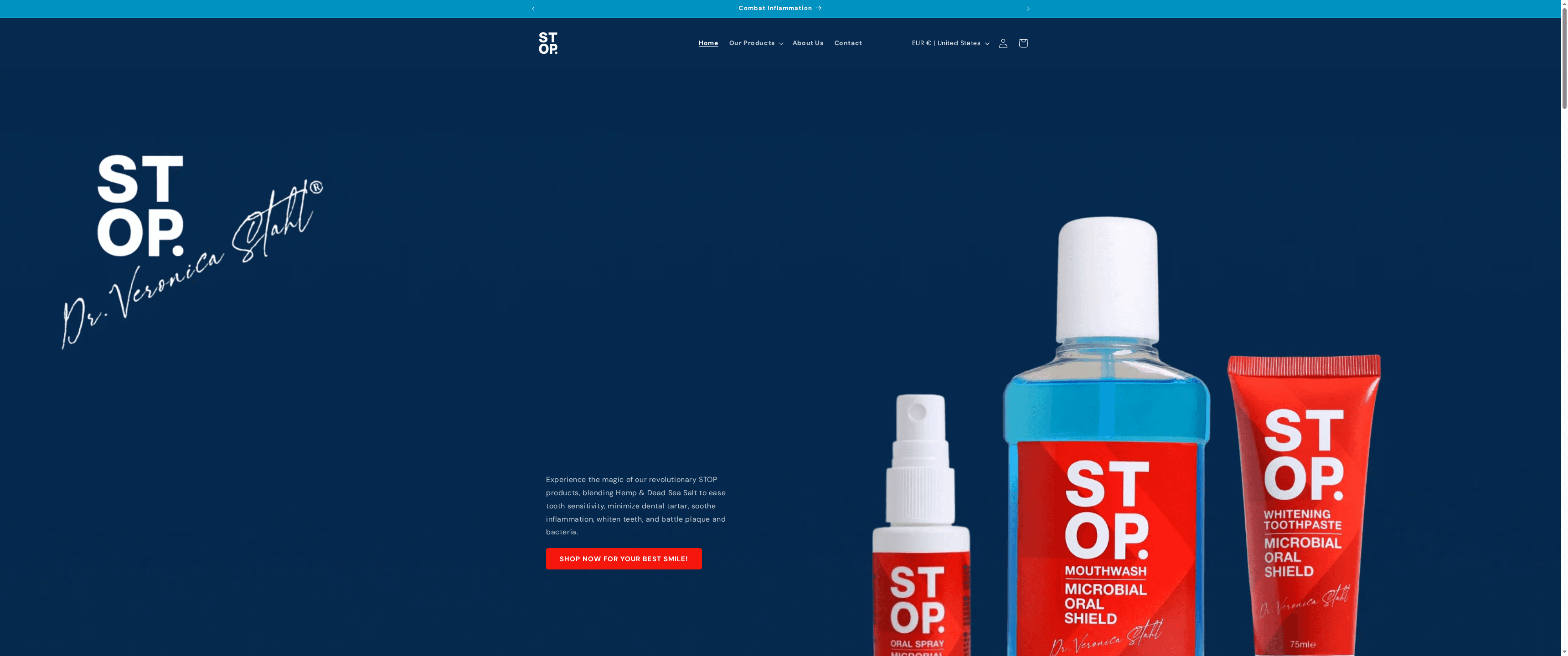
- STOP | Protective & Whitening Toothpaste targets plaque reduction and whitening for people seeking a fluoride-free daily formula, priced at 12,99 € on the product page.
- STOP | Protective Oral Spray offers a fluoride-free maintenance option for use between brushings, suited to those managing gum sensitivity, priced at 11,99 € on the oral spray product page.
These products are designed for buyers interested in fluoride-free options with botanical ingredients. Visit the Stop Oral Care product range to review full ingredient details and place an order.
This article is general information, not a substitute for advice from a qualified doctor. Consult a qualified healthcare professional about your own circumstances before acting on anything here.
Sources
- Cochrane review: fluoride toothpaste effectiveness
- The Benefits of Fluoride: Addressing Public Concern and Supporting Topical Use | Compendium
- Navigating fluoride hesitancy: mapping the evidence base for fluoride-free toothpaste alternatives
- Is fluoride bad for you? | Cleveland Clinic
FAQ
What are the downsides of fluoride in toothpaste?
The main documented downside is dental fluorosis, which affects developing teeth in young children who swallow toothpaste repeatedly during enamel formation. Acute toxicity from toothpaste alone is rare but possible with large ingested amounts, which is why product labels warn against swallowing and recommend supervision for children under six.
Why are you not supposed to use fluoride toothpaste?
Fluoride toothpaste is not universally discouraged. The caution applies mainly to very young children, whose swallowing control is still developing, and to people with kidney impairment, who should consult a clinician about dosing before regular use.
Why do people say no to fluoride at the dentist?
Some people decline fluoride treatments over concerns about ingestion or a preference for products without added minerals, even though topical fluoride’s caries-preventive record is well established according to a Cochrane review. Others simply prefer to manage their own product choices rather than accept an in-office application.
Why are people suddenly against fluoride?
Public concern tends to center on ingestion risk and a general preference for fewer synthetic ingredients rather than new evidence against topical use. Reporting on this hesitancy suggests it can unintentionally reduce topical fluoride use and raise cavity risk in people who avoid it without adopting an equally rigorous alternative routine.