

TL;DR:
- Biomimetic toothpaste uses nano-hydroxyapatite to support natural enamel repair and remineralization.
- It effectively occludes dentinal tubules and reduces sensitivity, comparable or superior to fluoride.
- This science-backed, fluoride-free option aligns with regenerative dentistry principles and biocompatibility.
Biomimetic toothpaste: science-backed natural enamel protection
For decades, fluoride has been positioned as the singular, irreplaceable agent for preventing dental caries and maintaining enamel integrity. That assumption, however, is increasingly challenged by a growing body of clinical evidence. Fluoride-free variants remineralize comparably to fluoride in preventing initial caries and reducing sensitivity per meta-analyses, signaling that an alternative paradigm is not only viable but scientifically credible. Biomimetic toothpaste, formulated with nano-structured hydroxyapatite engineered to replicate enamel’s own mineral matrix, represents that alternative. This article examines the mechanism, comparative efficacy, and practical guidance for selecting and using biomimetic toothpaste.
Table of Contents
- What is biomimetic toothpaste?
- How biomimetic toothpaste works: science explained
- Biomimetic toothpaste vs fluoride: what does the research show?
- Who benefits most from biomimetic toothpaste?
- Why biomimetic toothpaste is a paradigm shift for oral care
- Discover science-first, fluoride-free oral care
- Frequently asked questions
Key Takeaways
| Point | Details |
|---|---|
| Natural remineralization | Biomimetic toothpaste restores enamel and prevents cavities without synthetic chemicals. |
| Sensitive tooth relief | Its hydroxyapatite formula seals and soothes sensitivity better than most alternatives. |
| Evidence-backed alternative | Comparative studies show it is as effective as fluoride at preventing early decay. |
| Ideal for health-conscious users | Fluoride-free, SLS-free, and microbiome-friendly, biomimetic toothpaste suits modern wellness lifestyles. |
What is biomimetic toothpaste?
Biomimetic toothpaste is a category of dental formulation designed to closely replicate the natural structure and self-repair mechanisms of tooth enamel. The core principle is biomimicry: using materials that are chemically and structurally analogous to biological tissues to support physiological repair rather than relying solely on chemical inhibition of decay. Whereas conventional fluoride toothpaste works by converting hydroxyapatite (HAp) in enamel into fluorapatite, which is more acid-resistant, biomimetic formulas aim to replenish enamel’s own mineral phase directly.
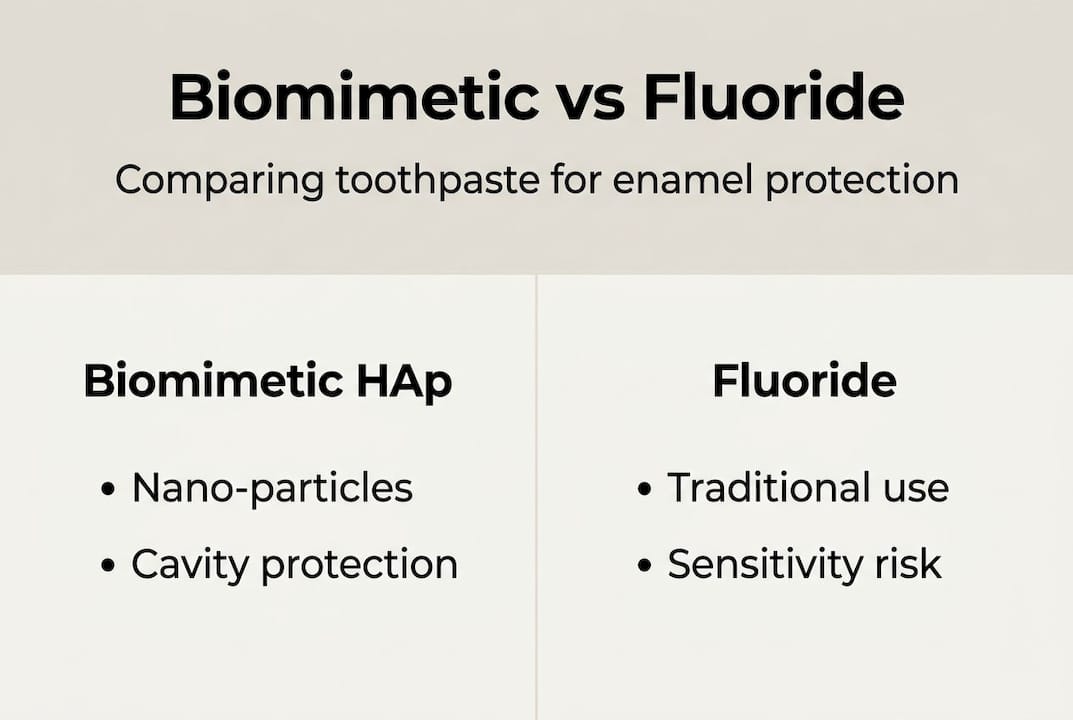
The key active ingredient is hydroxyapatite, specifically nano-crystalline HAp, which is engineered to resemble the enamel matrix in crystal size, carbonate content, and crystallinity level. Understanding what hydroxyapatite toothpaste contains at a structural level is essential because not all products labeled as HAp toothpaste qualify as genuinely biomimetic.
Key distinctions of true biomimetic formulas include:
- Nano-crystallinity: Particle size and crystal structure closely match native enamel crystals, typically in the nanometer range.
- Low crystallinity and carbonate substitution: These properties increase bioaffinity, allowing the HAp to integrate more effectively with the enamel surface.
- Chemical purity and biocompatibility: Biomimetic pastes are formulated to minimize potentially reactive additives, making them suitable for individuals with chemical sensitivities.
- Absence of SLS and artificial fluoride: Most formulations exclude sodium lauryl sulfate and fluoride, supporting mucosal health and microbiome balance.
- Third-party validated efficacy: Genuinely biomimetic products are supported by clinical data, not merely marketing claims.
The distinction matters considerably. True biomimetic versions replicate enamel’s nano-crystallinity, low crystallinity, and carbonate substitution for bioaffinity, while generic micro-HAp products do not achieve the same level of structural integration. In practical terms, this means that a toothpaste marketed as “natural” or even as containing hydroxyapatite may lack the precise engineering required to deliver genuine biomimetic benefits.
Pro Tip: When evaluating a toothpaste label, look specifically for “nano-hydroxyapatite” (n-HAp) rather than simply “hydroxyapatite.” Products that list particle size specifications or reference clinical validation data are more likely to meet the biomimetic standard.
How biomimetic toothpaste works: science explained
With the definition clear, it is even more important to understand what sets biomimetic pastes apart at the molecular level. The mechanism of action for biomimetic HAp toothpaste is both direct and multi-step, operating at the nanoscale to restore and protect enamel through processes that parallel the tooth’s natural remineralization pathways.
The stepwise mechanism proceeds as follows:
- Surface adsorption: Nano-HAp particles deposit onto the enamel surface during brushing, adhering to exposed mineral sites and areas of micro-demineralization.
- Integration with the enamel matrix: Because n-HAp crystals match the structural dimensions of native enamel apatite, they integrate directly into the enamel surface rather than forming a superficial coating.
- Dentinal tubule occlusion: In areas of exposed dentin, HAp particles physically occlude open tubules, which are the primary pathway for sensitivity-inducing stimuli such as thermal changes and osmotic pressure.
- Calcium and phosphate ion release: As HAp particles interact with oral fluids, they release calcium and phosphate ions into the local environment, sustaining a remineralizing ionic gradient around the tooth surface.
- Micro-crack filling: Nano-HAp particles are small enough to fill micro-cracks in enamel, reinforcing structural integrity and reducing sites susceptible to acid attack.
- Acid buffering and surface sealing: The deposited HAp layer provides a degree of acid buffering at the enamel surface, limiting the depth of demineralization during dietary acid challenges.
Clinical research confirms these mechanisms are not merely theoretical. HAp particles integrate with enamel, occlude dentinal tubules, fill micro-cracks, promote remineralization by depositing calcium and phosphate ions, and seal surfaces against acid attacks, according to peer-reviewed findings. This sequence of actions means that a single application initiates multiple protective processes simultaneously.
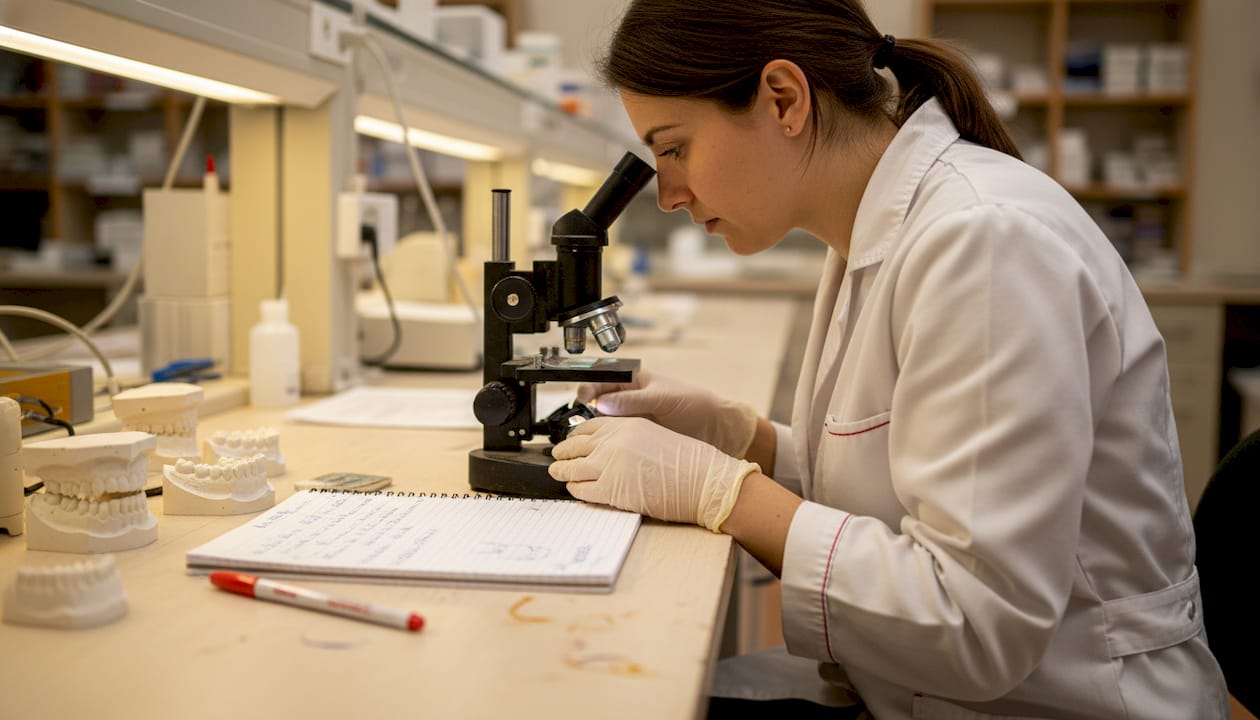
For individuals dealing with dentin hypersensitivity, the tubule occlusion mechanism is particularly significant. Biomimetic HAp reduces dentin hypersensitivity via tubule occlusion, and zinc-substituted HAp formulations such as microRepair provide immediate, stable sealing in randomized controlled trials. Zinc-substituted variants appear to accelerate tubule occlusion compared to standard HAp, offering faster sensitivity relief in clinical settings.
As research in this area has noted regarding the broader shift in dental science:
“The future of preventive dentistry lies in regeneration over chemical intervention—materials that work with the tooth’s biological systems rather than substituting for them.”
This perspective aligns with the foundational rationale of biomimetic formulation: supporting the benefits for sensitive teeth through biological compatibility rather than pharmacological suppression.
Biomimetic toothpaste vs fluoride: what does the research show?
Armed with the science of how biomimetic toothpaste works, it is instructive to examine how it actually performs next to the industry gold standard. The comparative evidence base has grown substantially in recent years, with several rigorous meta-analyses and randomized controlled trials (RCTs) providing quantitative data on caries prevention, remineralization capacity, and sensitivity outcomes.
| Outcome measure | Biomimetic HAp toothpaste | Fluoride toothpaste |
|---|---|---|
| Caries development (RR) | 0.98 (non-significant vs fluoride) | Reference standard |
| Lesion size reduction | Superior (p<0.0001 at 6 months) | Moderate reduction |
| Fluorescence recovery | Superior (p=0.01 at 6 months) | Comparable baseline |
| Sensitivity relief | Comparable to superior | Effective, well-documented |
| Safety profile | High; biocompatible | Generally safe; ingestion concerns in children |
| Systemic fluoride exposure | None | Present |
Fluoride-free HAp toothpastes showed a non-significant relative risk of 0.98 for caries development versus fluoride, with superior outcomes in lesion size reduction (p<0.0001) and fluorescence recovery (p=0.01) after six months of use. These findings are statistically meaningful: they indicate that biomimetic HAp is not merely “as good” as fluoride in a general sense, but may produce measurably better structural repair outcomes in early enamel lesions.
At the same time, comparable caries prevention and remineralization are consistently reported across recent studies, alongside potentially superior sensitivity relief and deeper structural repair. Fluoride, however, retains an advantage in the breadth and duration of its evidence base, having been studied continuously for several decades across diverse populations.
For those interested in a detailed HAp vs fluoride comparison, the key takeaway from current data is that biomimetic toothpaste is a scientifically credible, evidence-backed alternative, particularly for individuals who seek to avoid systemic fluoride exposure or who prioritize formulations with established biocompatibility profiles.
Statistic callout: In a six-month controlled study, biomimetic HAp outperformed fluoride toothpaste in reducing initial enamel lesion size with statistical significance at p<0.0001, a clinically meaningful difference for individuals with early-stage demineralization.
Who benefits most from biomimetic toothpaste?
Seeing the research-backed evidence of biomimetic formulas, the next practical question is whether they are appropriate for your specific circumstances. The evidence supports several well-defined user profiles for whom biomimetic toothpaste offers particular advantages.
Key candidate profiles include:
- Individuals with dentin hypersensitivity: The tubule-occluding mechanism provides measurable, rapid relief for those experiencing sensitivity to hot, cold, or sweet stimuli.
- Those avoiding fluoride intentionally: Health-conscious individuals who prefer to minimize fluoride ingestion, particularly parents of young children, benefit from a formulation that delivers comparable preventive performance without systemic fluoride exposure.
- Individuals with mucosal sensitivities: Because most biomimetic formulas are SLS-free, they are appropriate for those who experience oral ulceration or mucosal irritation from sodium lauryl sulfate-containing products.
- Microbiome-conscious users: Formulations free from harsh antimicrobial agents support the oral microbiome’s ecological balance, which is increasingly recognized as central to systemic health.
- Patients with early-stage enamel demineralization: The remineralizing capacity of nano-HAp is most effective in lesions that have not yet progressed to cavitation, making early intervention with biomimetic toothpaste particularly valuable.
| Population | Primary benefit | Consideration |
|---|---|---|
| Adults with sensitivity | Tubule occlusion, rapid relief | Select zinc-HAp variants |
| Children (fluoride-free preference) | Safe remineralization | Monitor brushing technique |
| Individuals with mucosal conditions | SLS-free formulation | Verify full ingredient list |
| Early enamel demineralization | Structural repair, lesion reduction | Combine with dietary Ca/P intake |
| Health-conscious general users | Biocompatibility, microbiome safety | Verify n-HAp specification |
Dietary support is a frequently overlooked component of biomimetic toothpaste efficacy. Fluoride-free, SLS-free formulations pair most effectively with a diet rich in calcium and phosphate for systemic remineralization support. Consuming adequate dairy, leafy greens, and phosphate-rich foods amplifies the remineralizing environment that nano-HAp creates at the enamel surface.
For a broader understanding of natural toothpaste benefits, particularly in the context of sensitive teeth and microbiome support, integrating biomimetic toothpaste within a holistic oral care routine produces the most consistent clinical benefit. Additional natural dental care ideas for supporting enamel health through diet and lifestyle are also worth reviewing as part of a complete preventive approach.
Pro Tip: Combine biomimetic toothpaste with a low-acid diet and remineralizing foods such as cheese, nuts, and leafy greens. This dietary context maximizes the ionic gradient that nano-HAp requires to sustain ongoing enamel repair between brushing sessions.
Who should not switch without professional consultation? Populations in high-caries-risk environments, individuals with active, rapidly progressing decay, or those in communities with chronically low fluoride exposure may still derive greater net benefit from fluoride-containing formulations as a primary intervention. A qualified dental professional should evaluate individual risk profiles before transitioning away from fluoride toothpaste in high-risk cases.
Why biomimetic toothpaste is a paradigm shift for oral care
Understanding who benefits most from biomimetic toothpaste paints part of the picture, but framing the science in broader perspective reveals even deeper implications for the field of preventive dentistry.
The oral care market is saturated with products that claim “natural” status without meeting any rigorous biological or structural standard. Herbal blends, activated charcoal pastes, and generic hydroxyapatite formulations are all labeled as natural alternatives, yet most lack the nano-crystalline structure required for genuine enamel integration. This distinction is not semantic. Products that fail to replicate enamel’s nano-crystallinity and carbonate substitution cannot achieve the same depth of remineralization or sensitivity relief that true biomimetic formulas deliver.
The reference to botanicals in fluoride-free toothpaste is instructive here: botanical ingredients can complement biomimetic formulas by modulating the oral microbiome or providing anti-inflammatory support, but they do not substitute for the structural function of nano-HAp. True innovation in oral care combines bioactive botanical components with rigorously engineered mineral matrices, not one to the exclusion of the other.
The prediction supported by current trajectory in dental materials science is clear: next-generation preventive care will place biomimetic, science-validated mineral formulas at its center. Chemistry-first approaches, including fluoride as the singular protective agent, will increasingly give way to biology-first formulations that work within the tooth’s own repair architecture rather than overriding it.
Discover science-first, fluoride-free oral care
The clinical evidence for biomimetic toothpaste is compelling, and for health-conscious individuals seeking scientifically validated fluoride-free options, the next step is selecting products that genuinely meet the biomimetic standard.
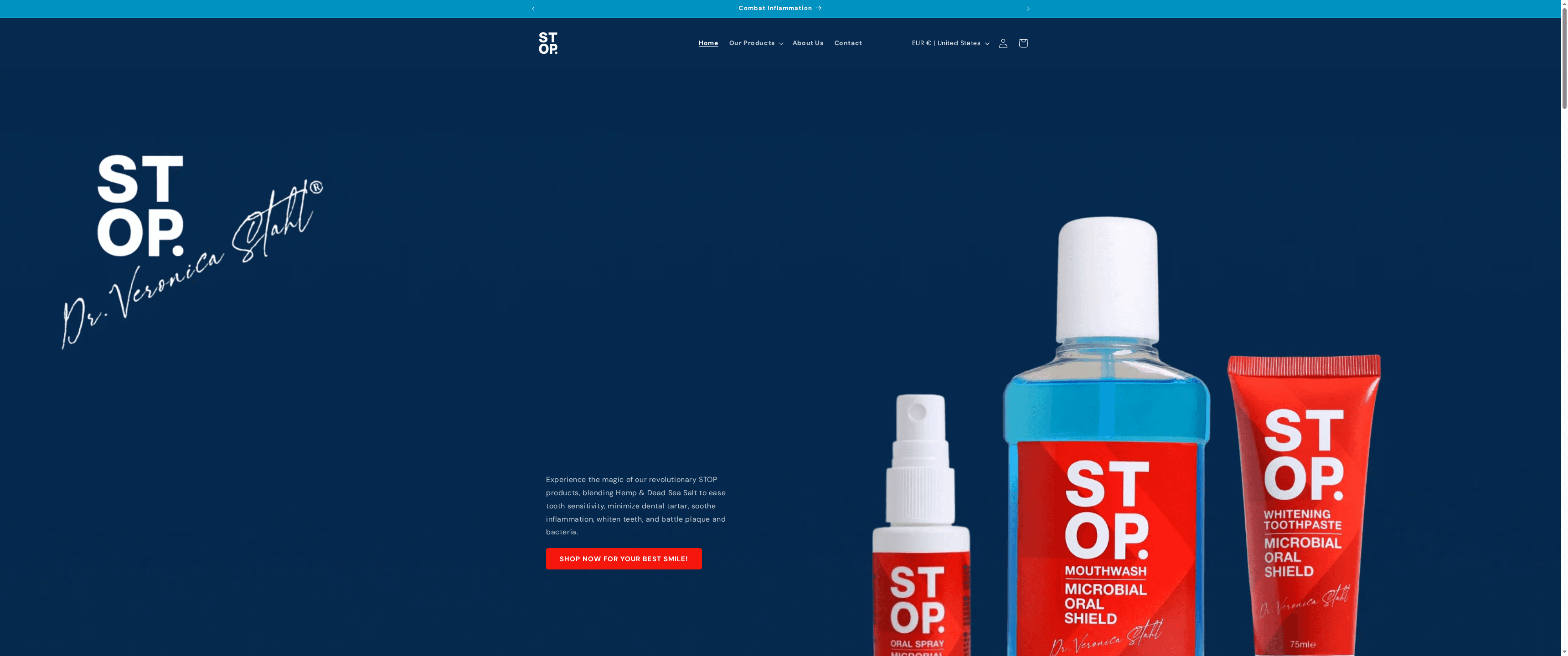
Stop Oral Care offers a curated line of fluoride-free dental care products formulated with scientifically supported ingredients, including Dead Sea minerals and hemp-derived compounds, designed to support enamel health and oral microbiome balance. For those ready to explore options specifically developed for the oral microbiome, the top toothpaste picks guide provides a structured, evidence-based comparison of leading fluoride-free formulas. Moving from fluoride dependence to biomimetic support requires selecting the right product, and that decision benefits from both clinical evidence and transparent ingredient standards.
Frequently asked questions
Does biomimetic toothpaste really rebuild enamel?
Clinical research shows that HAp particles fill micro-cracks and deposit calcium and phosphate ions into enamel, supporting measurable remineralization. It does not regenerate enamel as a living tissue would, but it reinforces and repairs the existing mineral structure.
Is biomimetic toothpaste safe for children?
Hydroxyapatite toothpaste is considered safe for children and presents no ingestion risk from fluoride, making it a practical alternative for families who prefer to limit fluoride exposure. Combination formulas incorporating both HAp and fluoride have shown significant enamel lesion reduction in pediatric populations (p<0.01), indicating strong efficacy in that age group.
Can biomimetic toothpaste help with sensitive teeth?
Yes. Zinc-substituted HAp provides immediate and stable occlusion of dentinal tubules, which are the primary pathway for sensitivity stimuli, delivering consistent relief that is supported by randomized controlled trial data.
How does biomimetic toothpaste differ from regular fluoride-free toothpaste?
Generic fluoride-free toothpastes typically lack active remineralizing agents or contain standard micro-HAp that does not structurally integrate with enamel. True biomimetic versions replicate enamel’s nano-crystallinity and carbonate substitution, enabling genuine mineral integration and repair rather than surface-level cleaning alone.
Recommended
- How to Choose the Best Enamel Protection Toothpaste for Stronger Smile – Stop Oral Care
- Enamel Protection: 30% Stronger Teeth Without Fluoride – Stop Oral Care
- Toothpaste for Enamel Repair: A Complete Guide to Restoring Dental Hea – Stop Oral Care
- The Complete Guide to Remineralizing Toothpaste Without Fluoride – Stop Oral Care