

Hydrogen peroxide mouthwash can cause burning, mucosal irritation, peeling, altered taste, and increased tooth sensitivity, particularly with frequent use or concentrations above low to moderate levels typically around 1.5%. Low-concentration oral solutions are commonly tolerated for short courses, but routine long-term rinsing is not advised without a clinician’s direction. If burning or peeling develops, stop use immediately, avoid swallowing the rinse, and see a dentist if symptoms persist beyond a day or two.
TL;DR:
- Using hydrogen peroxide mouthwash at 1.5% or higher for more than a few days can cause significant mucosal irritation, peeling, and increased tooth sensitivity.
- Symptoms such as persistent soreness, peeling, or severe burning after stopping indicate deeper tissue irritation and require consultation with a dentist.
- Concentrations above 3% or prolonged daily use, especially at home without professional guidance, greatly increase the risk of tissue damage.
- Short-term use at recommended doses (10 mL for about one minute, up to four times daily) is generally safe for healthy adults but not advised for children or those with inflamed oral tissues.
- Swallowing larger amounts or higher concentrations can cause serious burns or systemic poisoning, requiring urgent medical attention.
Table of Contents
- Common Side Effects Of Hydrogen Peroxide Mouthwash
- Why Hydrogen Peroxide Irritates Oral Tissue
- Safe Concentrations And How To Limit Side Effects
- Ingestion And Overdose: Recognizing A Medical Emergency
- Safer Alternatives To Hydrogen Peroxide Mouthwash
- When To Stop And See A Dentist
- Stop-oralcare’s Take On Choosing A Gentler Rinse
- Editorial Perspective: What The Evidence Actually Supports
- Sources
Common Side Effects Of Hydrogen Peroxide Mouthwash
Most reactions to hydrogen peroxide oral rinses show up in the mouth itself, not elsewhere in the body. That local pattern makes sense given how the compound works: it reacts on contact with tissue, so the tissue it touches first absorbs most of the impact.
The most frequently reported effects include:
- Burning or stinging on the tongue, cheeks, and gum line
- Redness, soreness, or visible peeling of the inner mouth lining
- A metallic or altered taste that lingers after rinsing
- Temporary tooth sensitivity to hot or cold
- Dry mouth following repeated use
A randomized trial published on PubMed found that volunteers rinsing with either 0.75% or 1.5% hydrogen peroxide four times daily for two weeks developed significant mucosal abnormalities and reported far more subjective complaints than a group using plain saline. The saline rinses produced no comparable tissue changes. That gap matters because 1.5% is the same strength found in many commercial oral solutions, not some fringe, overly strong mixture.
Most of these symptoms are transient. Redness and mild burning typically ease within hours of stopping the rinse, according to consumer health summaries from Healthline. Peeling of the mucosa and persistent soreness are different territory. Those signs suggest deeper irritation and warrant backing off the rinse rather than pushing through it.
Why Hydrogen Peroxide Irritates Oral Tissue
Hydrogen peroxide breaks down into water and oxygen when it contacts saliva, blood, and the enzymes present in oral tissue. That reaction produces the familiar foaming and bubbling people associate with the product, and it’s also the source of the irritation. The bubbling isn’t just cosmetic fizz. It reflects oxidative activity happening directly against the mucosal surface, and that activity doesn’t discriminate between bacteria and your own cells.
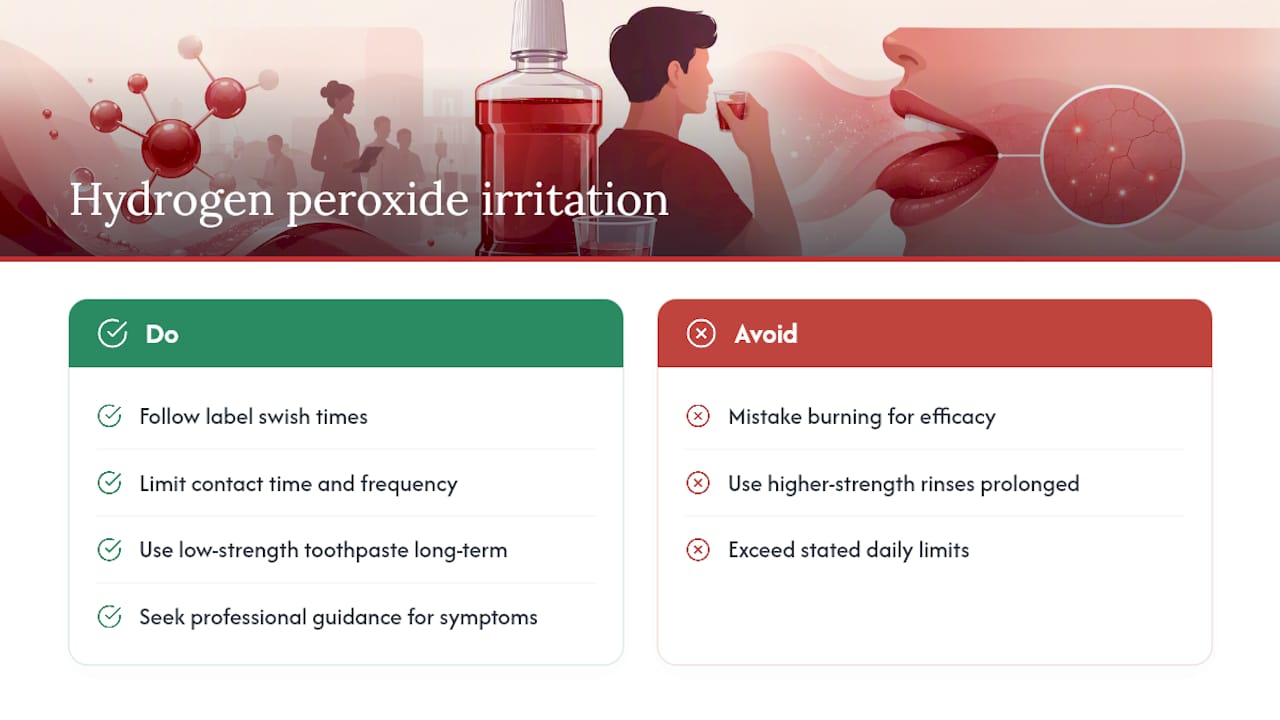
Dose and duration drive the outcome more than any single ingredient quirk. The same PubMed trial exposed subjects to concentrations of 0.75% and 1.5%, well within the range sold in stores, and still measured significant tissue changes over two weeks of regular use. Reviews of hydrogen peroxide safety in oral products, including one indexed on PubMed, draw a similar line: low concentrations in toothpaste tend to be tolerated over long stretches, while higher-strength or prolonged topical exposure raises irritation risk.
There’s a common misconception worth correcting directly: burning does not mean the rinse is working harder. Professional guidance treats that sensation as a sign of tissue irritation, not proof of stronger disinfection.
Hydrogen peroxide’s antimicrobial action relies on nascent oxygen release, which also accounts for its irritant potential on mucous membranes when concentration or contact time is excessive.
That framing, drawn from the Drugs, is the reason product labels specify exact swish times and daily limits instead of leaving strength and duration to guesswork.
Safe Concentrations And How To Limit Side Effects
Concentration is the single biggest variable separating a tolerable rinse from an irritating one. The standard regimen on the Drugs.com monograph calls for swishing 10 mL for about one minute, up to four times a day, then spitting it out completely.
Household hydrogen peroxide, usually sold at 3%, is a different product entirely. It isn’t labeled or stabilized for oral use, and improvising a dilution at home introduces guesswork that a pharmacy-labeled product avoids. Formulation and stabilizers affect how tissue tolerates the rinse, which is why clinicians generally steer people toward products actually intended for the mouth rather than a kitchen-cabinet substitute.
Duration matters just as much as strength. A widely cited practical guidance is to avoid prolonged routine use unless a dentist or doctor directs otherwise. Extended daily rinsing, even at low strength, is what produced the mucosal changes seen in clinical testing.
A basic safe-use sequence looks like this:
- Confirm the product label states it’s intended for oral use and check the percentage.
- Measure 10 mL (about two teaspoons) rather than eyeballing it.
- Swish for roughly one minute, keeping the rinse moving rather than holding it against one spot.
- Spit completely. Never swallow the rinse.
- Limit use to a few times daily at most, and keep the course short unless a clinician directs otherwise.
- Store the bottle capped, away from heat and light, and out of reach of children.
Children, people undergoing cancer therapy, and anyone with thin or already-inflamed mucosa need tighter caution. Chemotherapy and radiation can leave oral tissue fragile, and a rinse tolerated by a healthy adult may cause outsized irritation in that context.
Pro Tip: If your mouth feels raw the morning after using a peroxide rinse, that’s your cue to stop rather than push through another round. Irritated tissue heals faster once the source is removed than while you’re still testing your tolerance.
Ingestion And Overdose: Recognizing A Medical Emergency
Swallowing a small amount of a low-strength oral rinse rarely causes serious harm, but larger volumes or higher-concentration household peroxide are a different problem. Concentrated hydrogen peroxide can burn the lining of the mouth, throat, and stomach on contact.
Watch for these signs after accidental or intentional swallowing:
- Nausea and vomiting
- Abdominal pain or a burning sensation in the throat and chest
- Changes in breathing
- Confusion or altered consciousness
- Visible burns inside the mouth with concentrated solutions
MedlinePlus lists these systemic symptoms among the signs of mouthwash and hydrogen peroxide poisoning and advises seeking urgent medical attention when they appear, rather than waiting to see if they pass.
Prevention is straightforward: keep concentrated peroxide out of reach of children, never rinse with anything above the strength labeled for oral use, and don’t repurpose food-grade or industrial peroxide for the mouth under any circumstance. If a poisoning event happens, tell emergency responders or poison control the exact concentration swallowed, the approximate amount, and how much time has passed since exposure. Those three details shape the treatment decision more than anything else you can report.
Safer Alternatives To Hydrogen Peroxide Mouthwash
Peroxide isn’t the only rinse available, and for most everyday situations, it isn’t the first choice clinicians reach for either.
- Saltwater rinses work through simple osmotic action, drawing fluid out of inflamed tissue. They carry essentially no irritation risk and suit mild gum soreness, minor mouth sores, or comfort after dental procedures.
- Chlorhexidine rinses are effective for specific clinical indications, including short-term plaque control after periodontal treatment, but they come with real drawbacks: tooth staining with extended use and disruption to the oral microbiome. Clinicians typically direct chlorhexidine for defined short courses rather than indefinite daily use.
- Alcohol-free, low-irritant mouthwashes designed for sensitive tissue, avoid the sting that alcohol-based and peroxide rinses can cause, making them a reasonable daily-use option for people prone to burning or dryness.
Peroxide still has a place in specific, clinician-directed situations, such as short-term wound debridement where its effervescent action helps lift debris from a healing site. It’s a poor fit for routine daily hygiene, and mixing it with other antiseptic rinses on the same day only raises the odds of irritation without added benefit. Pick one approach, follow its labeled directions, and don’t stack products.
When To Stop And See A Dentist
Certain symptoms cross the line from “expected mild irritation” to “get this checked.”
- Stop rinsing immediately if you notice persistent mouth ulcers, severe pain, visible swelling, or peeling that doesn’t improve.
- Watch the clock. Mild burning or redness should ease within a few hours to a couple of days after stopping. If it hasn’t improved by then, that lack of progress is itself a signal worth acting on.
- Seek same-day care for facial swelling, fever, difficulty swallowing or breathing, or any sign of spreading infection.
- Bring specifics to the appointment: the product name and concentration, how often and how long you used it, and exactly what symptoms appeared and when.
Stop-oralcare’s Take On Choosing A Gentler Rinse
Stop-oralcare’s editorial position starts from the clinical evidence, not marketing claims: peroxide-based rinses carry a real irritation profile even at concentrations sold over the counter, and that risk rises with frequency and duration. Readers dealing with active burning right now will find practical troubleshooting in why mouthwash burns and how to stop it. Those looking for gentler daily options can compare choices in five natural mouthwash remedies backed by research and a reviewed roundup of natural mouthwash options for gum health.
Some brands favor formulations built for oral tissue tolerance over improvised or high-strength peroxide rinses, though persistent symptoms still belong in a dentist’s chair, not just a different bottle on the shelf. For a broader look at fluoride-free, hemp and Dead Sea mineral oral care formulations, visit Stop-oralcare.
Editorial Perspective: What The Evidence Actually Supports
The clinical literature on this topic is more consistent than most consumer advice suggests. That finding should reshape how people think about “low strength” claims on a bottle. Low strength reduces risk; it doesn’t eliminate it, and duration matters just as much as the percentage on the label.
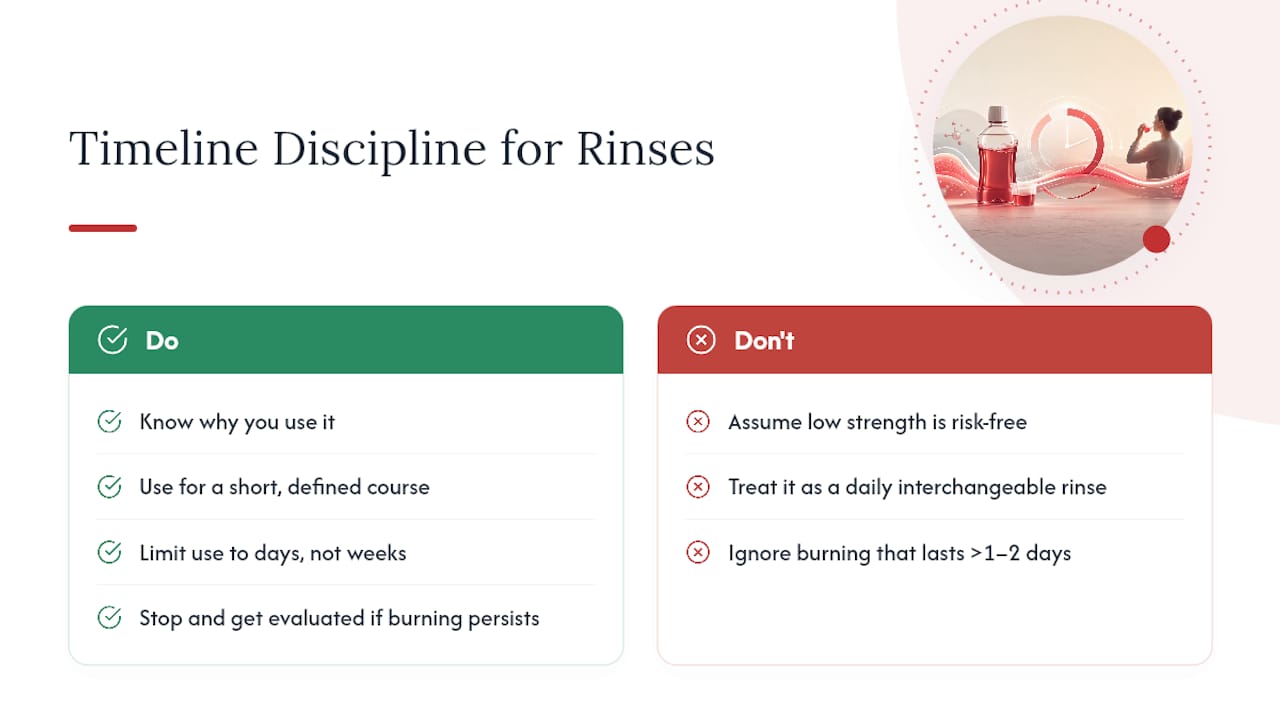
Conventional advice tends to treat hydrogen peroxide rinses as an interchangeable stand-in for any mouthwash, used whenever convenient. The trial data doesn’t support that habit. It supports short, defined courses for a specific purpose, followed by a return to something formulated for daily tolerance.
If there’s one priority for readers to take from this, it’s timeline discipline. Know why you’re using the rinse, use it for days, not weeks, and treat any burning that doesn’t fade within a day or two as a signal to stop and get evaluated rather than a nuisance to push through.
— Veronica
This article is general information, not a substitute for advice from a qualified doctor. Consult a qualified healthcare professional about your own circumstances before acting on anything here.
Sources
- Drugs
- The effects of hydrogen peroxide rinses on the normal oral mucosa (PubMed)
- Safety overview for hydrogen peroxide use in oral products (PubMed)
- Gargling with hydrogen peroxide: Benefits and side effects - Healthline
- Mouthwash poisoning and overdose symptoms - MedlinePlus