

TL;DR:
- Natural mouthwashes focus on supporting daily oral health and microbiome balance through plant-based actives.
- Conventional rinses are designed for short-term clinical use, often containing strong antiseptics like chlorhexidine.
The core difference between natural and conventional mouthwash is formulation intent. Conventional rinses are pharmaceutical-grade antiseptics or drug-category products designed for short-term, clinically defined objectives. Natural rinses prioritize plant- or mineral-based actives that support daily tolerability and oral microbiome preservation. For most health-conscious individuals, the practical decision reduces to this: use a dentist-prescribed conventional rinse (chlorhexidine, fluoride) when a specific clinical condition warrants it, and choose a high-quality natural formulation for daily maintenance, particularly when sensitivity, pregnancy, or avoidance of synthetic preservatives is a consideration.
The scale of this decision is not trivial. As of 2024, the mouthwash market included an estimated 202.58 million consumers globally, which underscores how consequential ingredient and formulation choices are at a population level. Key distinctions to keep in mind from the outset:
- Conventional antiseptic rinses (e.g., chlorhexidine, cetylpyridinium chloride) carry well-documented adverse effects including staining, dysgeusia, and mucosal irritation with prolonged use.
- Natural formulations typically avoid sodium lauryl sulfate (SLS), synthetic preservatives, and alcohol, making them more tolerable for sensitive mouths.
- The American Dental Association (ADA) requires controlled-trial evidence for chemotherapeutic approval, a standard that most natural products have not yet met at scale.
- Stop-oralcare offers a fluoride-free, hemp- and Dead Sea mineral-based mouthwash formulated for daily use, positioned for readers who want scientifically supported natural maintenance.
Table of Contents
- What are the main types of mouthwash?
- How do mouthwash ingredients compare across formulations?
- What does the clinical evidence say about mouthwash effectiveness?
- What are the safety risks and side effects of each type?
- How do you choose between natural and conventional mouthwash?
- What does recent research say about mouthwash and the oral microbiome?
- Which mouthwash should you actually use?
- Key Takeaways
- Why microbiome balance should guide your mouthwash choice
- Stop-oralcare: a natural daily rinse built for tolerability
- Useful sources for further reading
What are the main types of mouthwash?
Mouthwashes fall into four functional categories, each with a distinct regulatory and clinical profile.
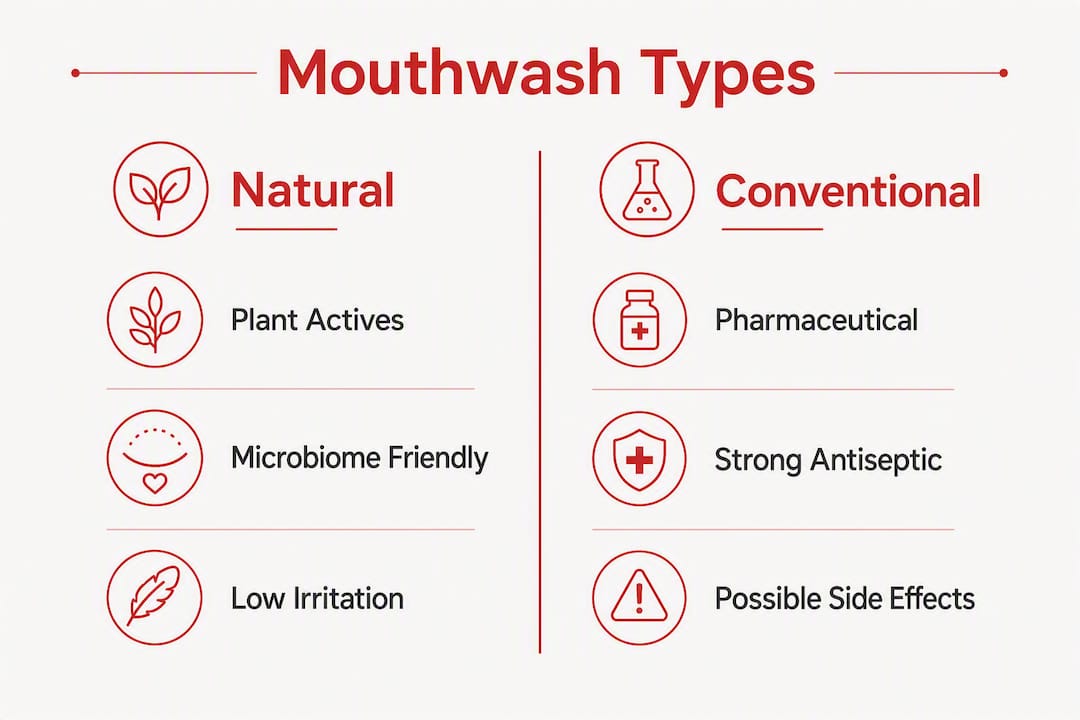
Antiseptic rinses contain active antimicrobial agents such as chlorhexidine gluconate (CHX) or cetylpyridinium chloride (CPC). These are the most clinically potent category and are typically prescribed for short-term management of gingivitis, post-surgical antisepsis, or active periodontal disease. The ADA’s chemotherapeutic approval process requires proof of plaque inhibitory and antiplaque activity from controlled trials, which distinguishes these products from cosmetic rinses at the regulatory level.
Fluoride rinses are drug-category products indicated primarily for caries prevention. Evidence is strongest for high-risk populations, particularly children and individuals with reduced salivary flow. These rinses are not antimicrobial in the traditional sense; their mechanism is remineralization of enamel rather than biofilm disruption.
Cosmetic rinses make no therapeutic claims. They freshen breath transiently through flavoring agents and low concentrations of alcohol or essential oils but do not reduce plaque or treat gingival disease. Regulatory classification as a cosmetic means no clinical evidence is required for market entry.
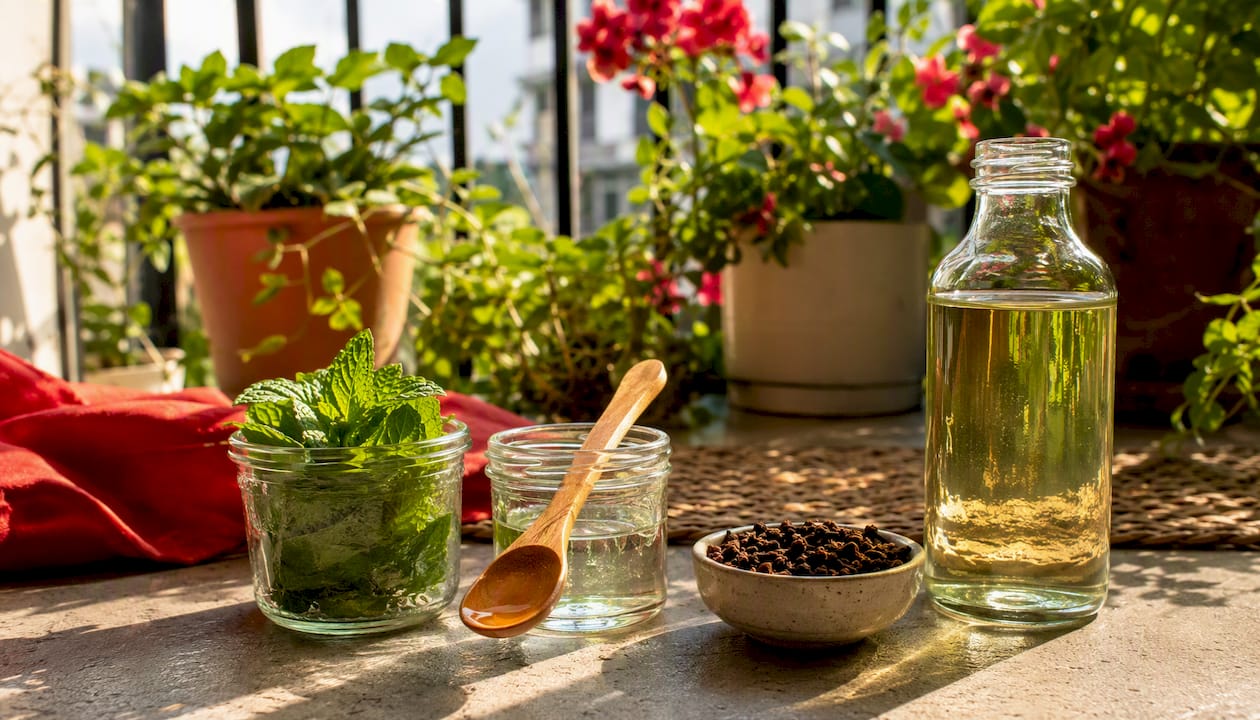
Natural or plant-based rinses use phytochemical actives such as eucalyptol, menthol, tea tree oil, neem, clove, and mineral compounds. Some formulations with essential oils carry genuine antiseptic activity and have been evaluated in randomized controlled trials. Regulatory classification varies: a natural rinse making specific therapeutic claims may be regulated as a drug, while one marketed only for breath freshening remains a cosmetic.
How do mouthwash ingredients compare across formulations?
Understanding what is on the label is the most direct way to evaluate any rinse. The table below maps the major actives to their primary function and documented trade-offs.
| Ingredient | Primary Function | Main Trade-Off |
|---|---|---|
| Chlorhexidine gluconate (CHX) | Broad-spectrum antimicrobial; gold standard for short-term gingivitis | Staining, dysgeusia, mucosal irritation; potential oral dysbiosis with long-term use |
| Cetylpyridinium chloride (CPC) | Antiseptic; reduces supragingival biofilm | Mucosal irritation; associated with reduced microbial diversity in metagenomic studies |
| Alcohol (ethanol) | Solvent and mild antiseptic; enhances essential-oil delivery | Mucosal drying, irritation; contraindicated in dry-mouth conditions |
| Fluoride (sodium fluoride, stannous fluoride) | Enamel remineralization; caries prevention | Requires careful timing relative to brushing; not antimicrobial |
| Essential oils (eucalyptol, menthol, thymol) | Antiseptic and anti-inflammatory; moderate biofilm reduction | Variable concentration and standardization across products |
| Xylitol | Inhibits Streptococcus mutans adhesion; salivary stimulation | Efficacy depends on concentration; not a standalone antimicrobial |
| Plant extracts (tea tree, neem, clove, Triphala) | Antimicrobial and anti-inflammatory; biofilm modulation | Variable extract standardization; limited large-scale RCT data |
| Dead Sea minerals | Anti-inflammatory; supports gingival tissue health | Limited independent clinical trials; formulation-dependent efficacy |
| SLS (sodium lauryl sulfate) | Foaming surfactant | Mucosal irritation; linked to aphthous ulcer frequency in sensitive individuals |
Conventional rinses typically rely on CHX, CPC, or alcohol as primary actives, with common OTC ingredients also including peroxide and synthetic flavorings. Natural formulations substitute these with phytochemical actives and mineral compounds. The absence of SLS and synthetic preservatives in many natural products is clinically meaningful: natural formulations often avoid the chemical agents most directly linked to staining and dysgeusia.
Some meta-analyses have found that certain natural compounds, notably Triphala, demonstrate comparable efficacy to 0.1–0.2% CHX for gingivitis in small trials, though overall evidence quality remains low-to-moderate. Formulation quality, specifically extract standardization and concentration, determines whether a natural product delivers on its phytochemical potential.
Key ingredient considerations:
- Avoid rinses listing “proprietary blend” without disclosed active concentrations.
- Alcohol content above 20% is associated with mucosal drying and is not necessary for antimicrobial efficacy.
- Plant-derived actives such as tea tree, neem, and clove offer anti-inflammatory and antimicrobial properties but require standardized extract concentrations to be clinically reliable.
What does the clinical evidence say about mouthwash effectiveness?
Evidence strength varies considerably by rinse class and clinical objective.
| Use Case | Best-Evidenced Rinse Class | Typical Recommendation |
|---|---|---|
| Short-term gingivitis control | CHX (0.2%) | Dentist-prescribed; 2–4 weeks maximum without reassessment |
| Post-surgical antisepsis | CHX | Short-course prescription only |
| Caries prevention | Fluoride rinse | Daily use for high-risk individuals; timing relative to brushing matters |
| Plaque/gingivitis maintenance | Essential-oil rinses | Adjunct to mechanical cleaning; moderate evidence |
| Daily microbiome-friendly maintenance | Natural/plant-based rinses | Ongoing use; formulation quality is the critical variable |
CHX and essential-oil rinses have the strongest evidence for supragingival biofilm control as adjuncts to mechanical cleaning. Fluoride rinses are well-supported for caries prevention, particularly in pediatric populations. Natural formulations occupy a more variable evidence position: herbal mouthwashes containing Triphala, aloe vera, tea tree, and polyherbal combinations have shown no statistically significant difference from CHX in multiple RCTs for plaque and gingival index scores, though the trials are generally small and of low-to-moderate quality.
The critical distinction for daily users is that most conventional antiseptic rinses are formulated for limited therapeutic use, not indefinite daily maintenance. Dental experts recommend reserving strong antiseptic mouthwashes for short-term clinical indications rather than universal daily use in healthy individuals.
What are the safety risks and side effects of each type?
Conventional antiseptic rinses carry a well-characterized adverse-effect profile. CHX is associated with extrinsic tooth staining, taste disturbance (dysgeusia), and mucosal irritation, particularly with prolonged use. CPC and alcohol-based rinses can cause mucosal drying and irritation, and are poorly tolerated by individuals with xerostomia or mucosal sensitivity.
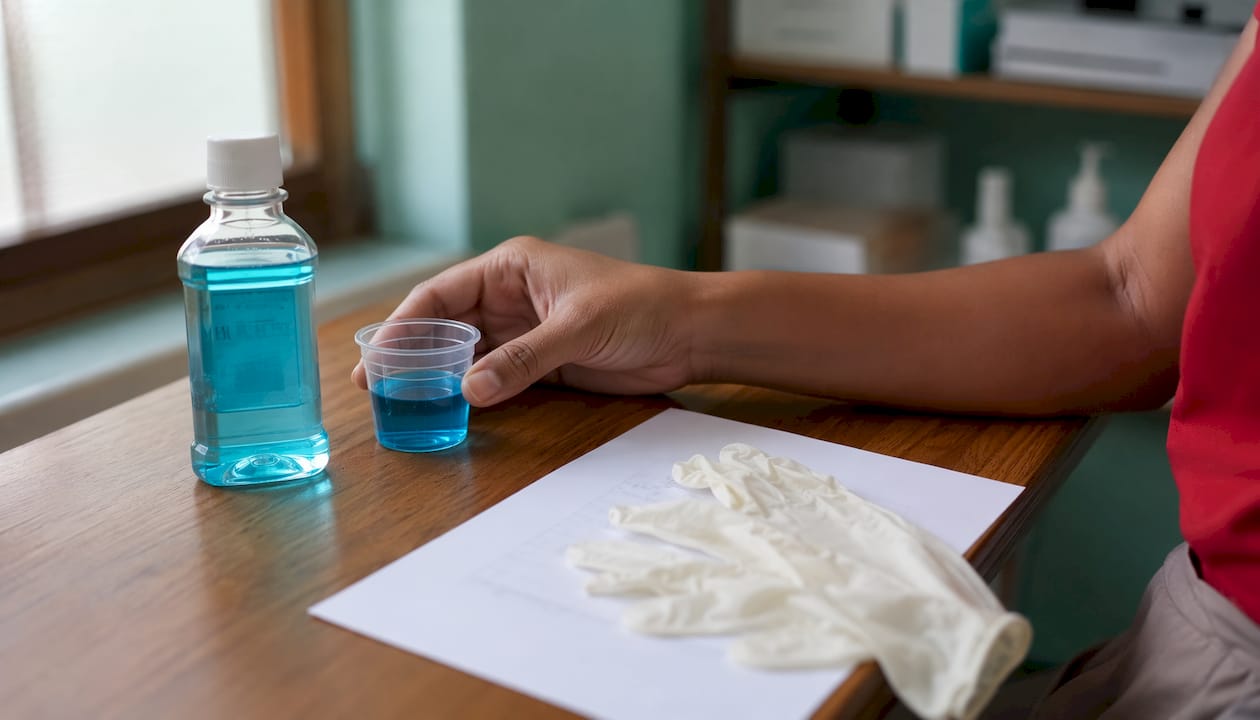
The microbiome concern is increasingly well-supported. Long-term use of CHX and CPC has been associated with reduced microbial diversity in the oral cavity, as demonstrated in metagenomic studies. This ecological disruption raises questions about downstream systemic effects, though causation has not been definitively established.
Natural formulations generally present a more favorable tolerability profile. The absence of SLS, alcohol, and synthetic preservatives makes them better suited to sensitive mouths, pregnant individuals, and children. Variability among brands remains a concern: not all products marketed as “natural” disclose active concentrations or provide clinical references.
Practical safety considerations:
- Do not use CHX long-term without dentist supervision; reassess at 2–4 weeks.
- Avoid alcohol-based rinses if you experience dry mouth or mucosal sensitivity.
- For safe mouthwash frequency, follow product-specific guidance and clinician recommendations.
- Using mouthwash immediately after brushing can reduce the fluoride benefit of toothpaste, as rinsing right after brushing lowers fluoride concentration around teeth. Wait at least 30 minutes, or use mouthwash at a separate time of day.
How do you choose between natural and conventional mouthwash?
The decision should be goal-driven, not marketing-driven. A structured approach reduces the risk of choosing a rinse based on packaging rather than clinical need.
- Define your primary goal. Therapeutic objectives (active gingivitis, post-surgical care, high caries risk) typically require a dentist-prescribed conventional rinse. Daily maintenance, breath freshening, and gingival support are appropriate targets for a high-quality natural formulation.
- Assess oral sensitivity and medical context. Pregnancy, dry mouth, mucosal sensitivity, and pediatric use all favor alcohol-free, SLS-free natural options. Consult a clinician before using any antiseptic rinse during pregnancy.
- Evaluate label transparency. Green flags include disclosed active concentrations, dentist-reviewed formulation claims, and ingredient sourcing information. Red flags include undisclosed “proprietary blends,” high alcohol content without clinical rationale, and unnecessary synthetic dyes.
- Ask your dentist specific questions. Useful questions include: “Is chlorhexidine indicated for my current condition?” “Is a fluoride rinse appropriate given my caries risk?” “How long should I use this rinse before reassessment?”
- Check formulation quality for natural products. Verify that plant extracts are standardized to active compound concentrations, not simply listed as raw ingredients. For sensitive gums, prioritize formulations with documented tolerability data.
- Consider the preservative system. Natural rinses using minimal synthetic preservatives may have shorter shelf lives; check expiration dates and storage requirements.
What does recent research say about mouthwash and the oral microbiome?
Modern oral-care science is shifting from bacterial eradication toward biofilm modulation. The objective is no longer to eliminate all oral bacteria but to preserve a microbial community that supports host health while controlling pathogenic species.
Scientific concern is growing that frequent non-prescribed use of antiseptic mouthwashes may contribute to oral dysbiosis and systemic markers including insulin resistance and blood pressure, though causation remains under investigation. CHX and CPC are non-selective antimicrobials; they do not distinguish between pathogenic and beneficial oral microbes. Metagenomic studies have documented reduced microbial diversity in long-term users of both agents, which is consistent with ecological disruption of the oral biofilm.
Statistic: As of 2024, mouthwash is used by an estimated 202.58 million consumers globally. The scale of potential microbiome disruption from widespread antiseptic rinse use is a legitimate public health consideration.
Natural formulations, particularly those using essential oils, xylitol, and mineral actives, tend to modulate rather than eradicate biofilm. Tolerability evidence supports their use for sensitive mouths, and some small RCTs show parity with CHX for plaque and gingivitis outcomes. The critical variable is formulation quality. For oral microbiome support, products with standardized extracts and transparent ingredient sourcing are preferable to those relying on generic “herbal blend” labeling.
Pro Tip: When evaluating a natural mouthwash, look for products that specify the active compound concentration of each plant extract (e.g., “standardized to X% eugenol”) rather than listing only the plant name. Standardization is what separates a clinically relevant formulation from a flavored rinse.
Which mouthwash should you actually use?
For daily maintenance in a healthy mouth, a high-quality natural mouthwash is the evidence-consistent choice. For dentist-identified clinical conditions, short-term conventional options remain appropriate.
Choose a natural, alcohol-free, SLS-free formulation for daily use if your goals are gingival support, microbiome preservation, breath maintenance, or tolerability for a sensitive mouth. This applies particularly to pregnant individuals, children, and those with mucosal sensitivity or xerostomia. For readers seeking mineral-based options for sensitive teeth, formulations incorporating Dead Sea minerals and plant actives offer a documented tolerability advantage over conventional antiseptic rinses.
Accept a clinician-prescribed conventional rinse when a specific diagnosis warrants it: active gingivitis, post-surgical antisepsis, or high caries risk confirmed by your dentist. Use it for the prescribed duration only, then reassess with your clinician before continuing.
Stop-oralcare’s fluoride-free, hemp- and Dead Sea mineral-based mouthwash is formulated for this daily-maintenance role, providing anti-inflammatory and antimicrobial support without the adverse-effect profile associated with CHX or alcohol-based rinses.
Key Takeaways
Natural mouthwashes prioritize tolerability and microbiome preservation for daily use, while conventional antiseptic rinses are clinically indicated for short-term, dentist-prescribed treatment objectives.
| Point | Details |
|---|---|
| Core formulation difference | Conventional rinses are pharmaceutical antiseptics; natural rinses use plant- or mineral-based actives for daily maintenance. |
| Microbiome risk | Long-term CHX and CPC use is linked to reduced oral microbial diversity; reserve these for short-term clinical use. |
| Safety for sensitive groups | Alcohol-free, SLS-free natural formulas are better tolerated by pregnant individuals, children, and those with mucosal sensitivity. |
| Timing matters | Using mouthwash immediately after brushing reduces fluoride efficacy; wait at least 30 minutes or use at a separate time. |
| Stop-oralcare for daily use | Stop-oralcare’s fluoride-free, Dead Sea mineral- and hemp-based mouthwash is formulated for daily tolerability-focused maintenance. |
Why microbiome balance should guide your mouthwash choice
The clinical evidence reviewed here points to a conclusion that many conventional oral-care protocols have not yet fully incorporated: the oral microbiome is not an adversary to be eliminated but a community to be maintained in functional balance. The shift toward biofilm modulation rather than eradication is not a marketing trend. It reflects a substantive change in how microbiologists and periodontists understand the relationship between oral microbial ecology and systemic health.
From a clinical standpoint, the most defensible daily-use strategy for a healthy individual is a formulation that supports gingival tissue integrity and microbial balance without the collateral disruption associated with broad-spectrum antiseptics. Natural formulations with standardized plant actives and mineral compounds meet this criterion when formulated with appropriate rigor. The variability in the natural-product category is real, and it is why ingredient transparency and clinical references are non-negotiable selection criteria.
Conventional rinses remain indispensable for specific clinical indications. The problem is not that they exist; it is that they are frequently used outside those indications, often by individuals who would benefit more from a well-formulated natural alternative used consistently over time.
Stop-oralcare: a natural daily rinse built for tolerability
For readers who have concluded that a daily natural mouthwash is the right choice, Stop-oralcare offers a formulation designed around the criteria this article identifies as clinically meaningful: fluoride-free, alcohol-free, and SLS-free, with Dead Sea minerals and hemp-derived actives that support gingival health and anti-inflammatory activity without disrupting the oral microbiome.
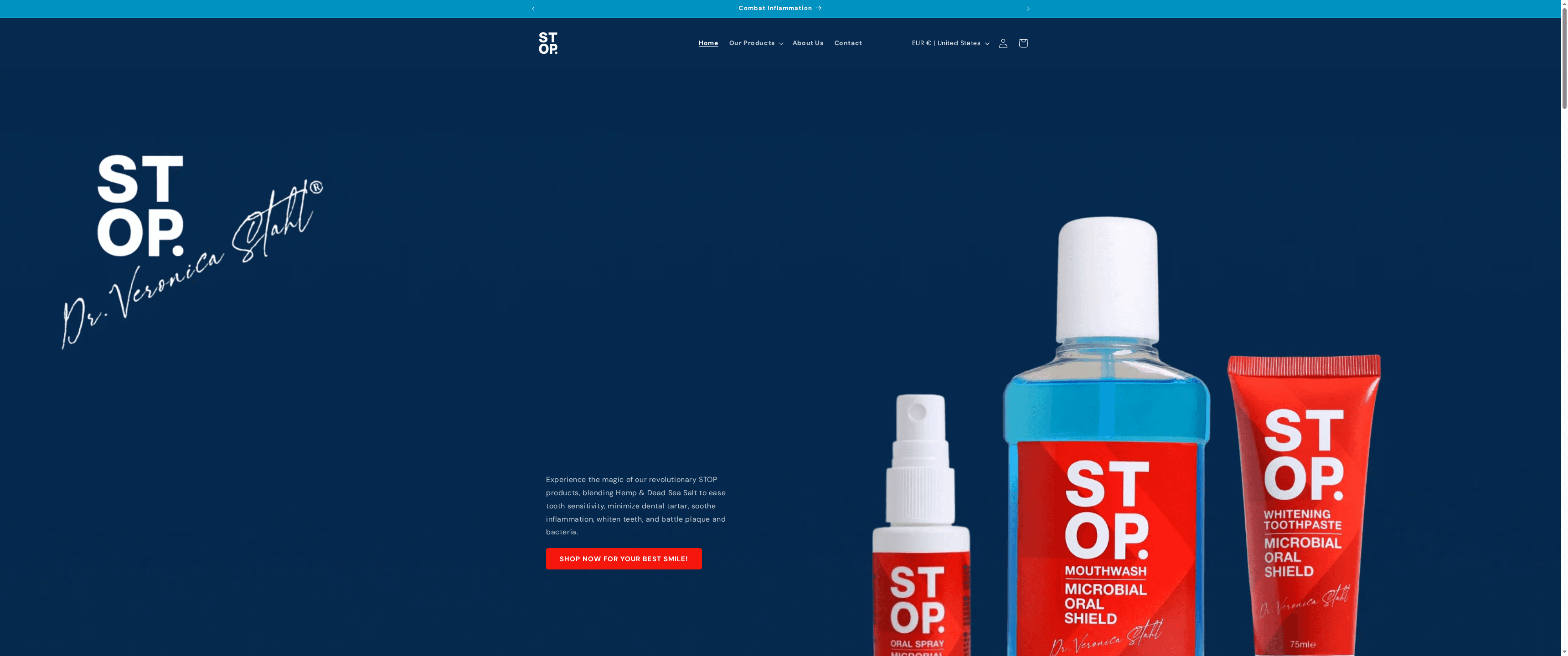
The formulation is specifically developed for individuals with sensitive teeth and gums, those seeking to avoid synthetic preservatives, and anyone who wants a dentist-reviewed natural option for daily maintenance. It is not a substitute for a clinician-prescribed antiseptic when one is genuinely indicated, but for the large majority of healthy adults whose daily oral-care goal is maintenance rather than acute treatment, it represents a scientifically grounded alternative to conventional rinses.
Pro Tip: When trialing any new mouthwash, begin with a short 7–10 day period, monitor for mucosal sensitivity or taste changes, and consult your dentist before use if you are currently on a prescription antiseptic rinse.
Visit Stop-oralcare to review the full product formulation and place an order for daily natural oral care.
Useful sources for further reading
The following sources represent the highest-quality references used in this article. Each is selected for evidence strength, clinical relevance, or regulatory context.
- Evidence on the use of mouthwash for supragingival biofilm control (MDPI): A systematic review covering CHX, essential oils, and fluoride rinses; the most comprehensive source for evidence strength by rinse class and ADA regulatory context.
- The Nexus of Mouthwash, Oral Dysbiosis, and Cardiovascular Health (Eastern Journal of Medical Sciences): Primary source for microbiome disruption data, systemic marker associations, and the 202.58 million consumer market figure.
- Natural mouthwash tolerability and chlorhexidine adverse effects (MDPI): Documents CHX adverse-effect profile and the tolerability advantages of SLS-free natural formulations.
- Mouthwash: more harm than good? (British Dental Journal): Addresses post-brushing timing errors and the practical misuse of mouthwash in daily routines.
- Traditional Oral Hygiene Practices: A Systematic Review (PMC): Evaluates miswak, oil pulling, and herbal rinses against conventional products; useful for understanding the evidence base for traditional natural actives.
- Herbal vs. Non-Herbal Mouthwash for Periodontal Health (PMC): Literature review of RCTs comparing herbal and CHX rinses for plaque and gingival index outcomes.
- Phytochemistry and clinical context for natural mouthwash actives (PhytoJournal): Covers plant-derived actives including tea tree, neem, and clove, with notes on extract standardization requirements.
- Is Mouthwash Bad for You? (Geisinger): Patient-facing clinical summary of common OTC ingredients and practical cautions for daily use.
This article provides general oral-health information and does not constitute professional dental or medical advice. Confirm current clinical recommendations with a licensed dental professional for your individual situation.