

TL;DR:
- Safe mouthwashes should have regulatory approval, transparent ingredients, and be suitable for users.
- Alcohol-free formulas are generally gentler, reduce tissue irritation, and are recommended for sensitive individuals.
- Proper use involves correct dosing, timing after brushing, and supervision, especially for children.
Selecting a safe mouthwash is not as straightforward as reaching for the nearest bottle on the shelf. Many commercially available rinses contain alcohol, artificial colorants, or synthetic preservatives that may irritate oral tissues, disrupt the oral microbiome, or pose additional concerns for vulnerable users such as young children. For families seeking products that are both effective and free from unnecessary chemical burden, understanding what qualifies as genuinely safe requires examining ingredient lists, regulatory standards, and user-specific needs. This guide provides a structured, evidence-based framework for evaluating mouthwash safety, identifying beneficial actives, and applying best practices for daily use.
Table of Contents
- What makes a mouthwash safe?
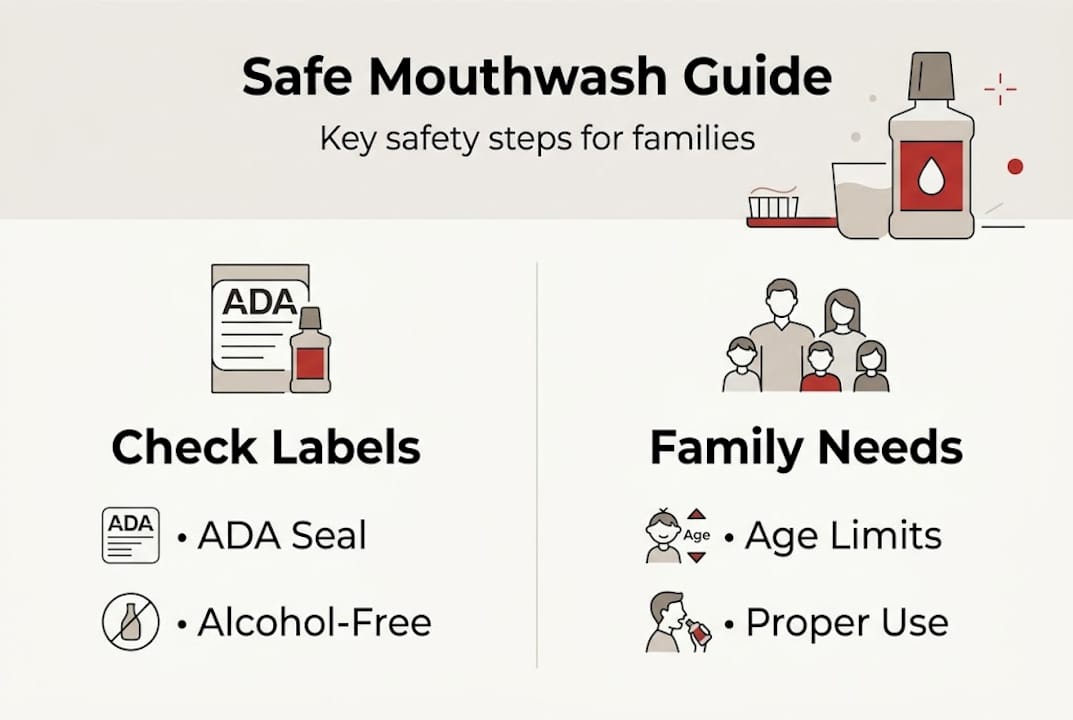
- Step 1: Check labels for key safety standards
- Step 2: Match the mouthwash to user needs
- Step 3: Safe use practices and common mistakes
- Our perspective: Why ‘natural’ mouthwash isn’t always safer
- Find safe, effective mouthwash for your family
- Frequently asked questions
Key Takeaways
| Point | Details |
|---|---|
| Check for ADA Seal | Look for the ADA Seal of Acceptance to ensure mouthwash safety and effectiveness. |
| Avoid high-alcohol formulas | Alcohol-free mouthwashes are generally safer, especially for children and sensitive users. |
| Match to user needs | Choose formulas based on age, oral health, and any sensitivities in your family. |
| Follow safe use | Use mouthwash as directed and supervise children to avoid accidental swallowing. |
| Natural isn’t always best | Prioritize evidence-based ingredients over marketing claims for genuine safety. |
What makes a mouthwash safe?
Safety in oral rinse formulations is not a single, universally defined standard. It encompasses regulatory approval, ingredient transparency, and suitability for the intended user population. The most widely recognized benchmark in the United States is the American Dental Association (ADA) Seal of Acceptance. Products bearing this seal have undergone independent evaluation confirming that safety and efficacy are supported by scientific evidence. However, the absence of the seal does not automatically indicate an unsafe product; it may simply mean the manufacturer did not submit the product for evaluation.
Beyond regulatory markers, ingredient composition is central to safety assessment. Certain compounds commonly found in conventional mouthwashes warrant scrutiny:
- Ethanol (alcohol): Used as a solvent and antimicrobial agent, but associated with oral dryness, mucosal irritation, and potential microbiome disruption in regular users.
- Artificial colorants and flavoring agents: May trigger sensitivities in individuals with allergies or chemical intolerances.
- Sodium lauryl sulfate (SLS): A surfactant linked to aphthous ulcers (canker sores) in susceptible individuals.
- Chlorhexidine: Clinically effective for short-term use but associated with tooth staining and taste alteration with prolonged application.
For families considering natural fluoride-free mouthwash options, the formulation must still demonstrate measurable clinical benefit through verified actives such as xylitol or hydroxyapatite.
“A mouthwash that avoids harmful ingredients but offers no therapeutic benefit is not inherently a better choice; efficacy and safety must be evaluated together.”
| Safety criterion | What it means | Why it matters |
|---|---|---|
| ADA Seal of Acceptance | Independent verification of safety and efficacy | Reduces risk of ineffective or harmful products |
| Alcohol-free formulation | No ethanol as a primary solvent | Minimizes irritation and microbiome disruption |
| Fluoride or alternative actives | Cavity-preventive or remineralizing agents | Ensures therapeutic value |
| Age-appropriate labeling | Formulated for the intended user group | Critical for pediatric safety |
| Absence of SLS | No foaming surfactant linked to ulcers | Reduces risk for sensitive users |
Step 1: Check labels for key safety standards
Knowing the standards is just one part; the next is putting them into practice on the shelf. When evaluating a mouthwash product, the label and ingredient list are the primary sources of actionable information. Many products use front-of-package claims such as “natural,” “gentle,” or “clinically tested” that may not reflect the full ingredient profile. Systematic label evaluation is therefore essential.
- Verify the ADA Seal: Located on the front or back of the packaging, this seal confirms independent safety and efficacy review.
- Identify active ingredients: Look for xylitol, hydroxyapatite, cetylpyridinium chloride (CPC), or fluoride, depending on your therapeutic goals.
- Scan for alcohol content: Ethanol or “SD alcohol” in the first five ingredients indicates a high-alcohol formulation. Choosing alcohol-free mouthwash benefits users who rinse daily or have sensitive tissues.
- Check for SLS and artificial dyes: These are typically listed by their chemical names; cross-reference with known sensitizers if allergies are a concern.
- Review concentration levels: Some active ingredients, such as fluoride, are regulated at specific concentrations for over-the-counter versus prescription use.
Research indicates that alcohol-free formulas reduce the risk of dry mouth, mucosal irritation, and potential oral microbiome disruption, and that alcohol may contribute to oral cancer risk when combined with other behavioral factors, though the evidence remains inconclusive. For families with children or users who rinse frequently, choosing alcohol-free mouthwash is a conservative and defensible clinical decision.
Pro Tip: Front-of-package claims are marketing language. Always cross-reference them against the full ingredient list printed in smaller text on the back or side of the bottle. A product labeled “natural” may still contain synthetic preservatives or alcohol derivatives.
Step 2: Match the mouthwash to user needs
Once you have the label in hand, it is important to make sure the choice fits everyone in your household. Mouthwash formulations are not interchangeable across age groups or health profiles. A rinse appropriate for a healthy adult may be contraindicated for a child or an individual with specific oral health conditions.
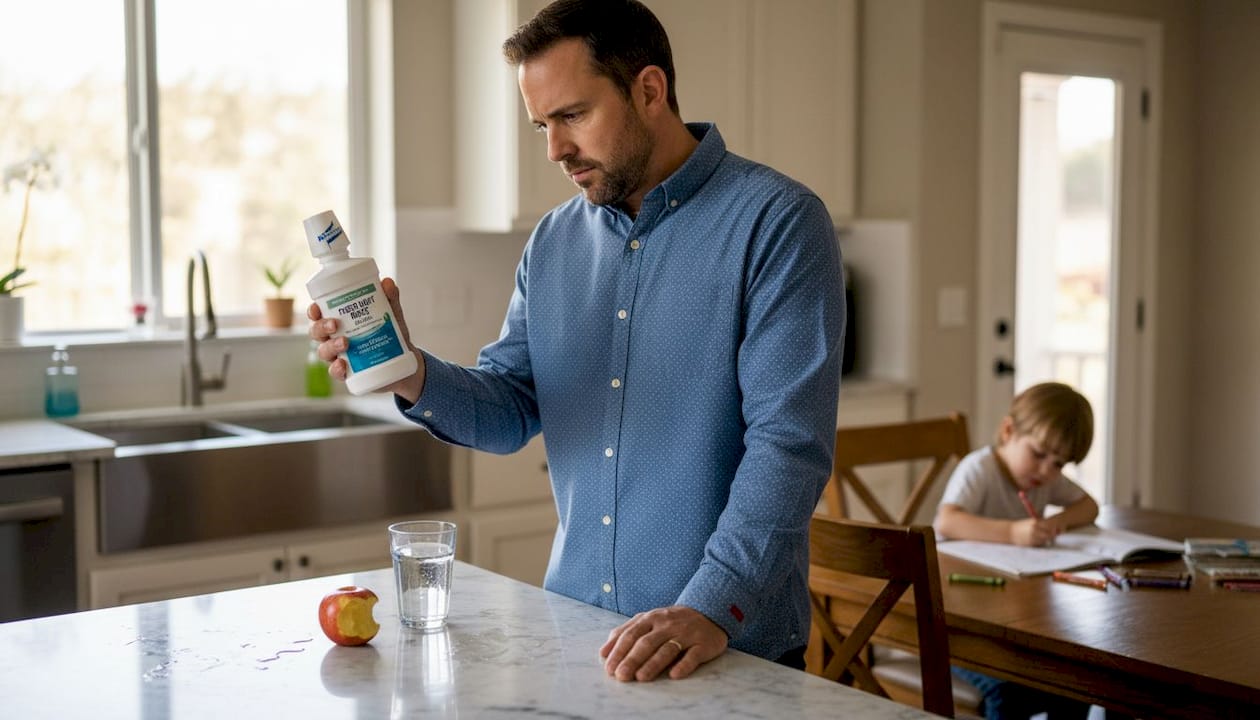
Age-related considerations are particularly significant. Children under 6 should not use mouthwash unless directed by a dentist, due to the risk of ingestion; for older children, supervised use of alcohol-free, low-strength formulas is recommended. The swallowing reflex in young children is not sufficiently developed to reliably prevent accidental ingestion, which can result in fluoride toxicity or alcohol intoxication depending on the product.
| User profile | Recommended type | Key actives to seek | Ingredients to avoid |
|---|---|---|---|
| Children (6 to 12) | Alcohol-free, low-fluoride | Xylitol, low-dose fluoride | Alcohol, high-concentration actives |
| Adults (general) | Therapeutic or natural | Fluoride, CPC, xylitol | SLS (if sensitive), high alcohol |
| Adults with gum disease | Antimicrobial therapeutic | CPC, essential oils, hydroxyapatite | Alcohol (long-term use) |
| Sensitive users / allergies | Fragrance-free, minimal actives | Xylitol, aloe vera | Artificial dyes, SLS, alcohol |
| Pregnant individuals | Conservative, dentist-guided | Xylitol, low-dose fluoride | High-alcohol, chlorhexidine (long-term) |
For individuals managing gum disease, best natural mouthwashes formulated with evidence-supported actives may offer a viable alternative to conventional antimicrobial rinses. Products containing natural actives in mouthwash such as Dead Sea minerals or hemp-derived compounds are increasingly supported by emerging clinical data, though peer-reviewed evidence continues to develop.
- Users with xerostomia (dry mouth) should prioritize alcohol-free, moisturizing rinses.
- Individuals undergoing orthodontic treatment benefit from fluoride or hydroxyapatite rinses to protect enamel around brackets.
- Those with a history of oral ulcers should avoid SLS-containing products.
Step 3: Safe use practices and common mistakes
You have chosen the right mouthwash for your family; now it is essential to use it correctly every day. Even a well-formulated product can produce suboptimal outcomes or unintended effects if applied incorrectly. Safe use encompasses technique, timing, storage, and supervision.
- Measure the correct dose: Use the cap or a measuring cup. Exceeding the recommended volume does not enhance efficacy and increases the risk of ingestion.
- Swish for the recommended duration: Therapeutic mouthwashes are most effective when swished for 30 to 60 seconds, ensuring adequate contact with all oral surfaces.
- Use after brushing and flossing: Rinsing after mechanical cleaning maximizes the delivery of active ingredients to clean surfaces. Review timing of mouthwash use to optimize your routine.
- Avoid eating or drinking for 30 minutes after use: This is especially important for fluoride-containing rinses, as premature food or liquid intake dilutes the active agent before it can exert its remineralizing effect. Guidance on mouthwash before or after brushing clarifies the optimal sequence.
- Store products correctly: Keep mouthwash in a cool, dry location away from direct sunlight and out of reach of children.
- Do not swallow: Even alcohol-free formulations contain active compounds not intended for ingestion.
Common mistakes include using mouthwash as a substitute for brushing, diluting the product with water (which reduces active ingredient concentration), and using adult formulations for young children.
Pro Tip: Supervise young children’s mouthwash use at all times. Position yourself at eye level with the child to observe the rinse-and-spit cycle and confirm no swallowing occurs before allowing independent use.
Our perspective: Why ‘natural’ mouthwash isn’t always safer
The term “natural” carries significant marketing weight but limited regulatory definition in oral care. Consumers frequently assume that a natural or fluoride-free label is synonymous with safety, yet this assumption is not supported by clinical evidence. A product derived entirely from botanical sources may still contain compounds that irritate oral mucosa, disrupt the microbiome, or interact with medications.
What matters more than the “natural” designation is the formulation’s evidence base. ADA-verified safety and efficacy remain the most reliable indicators of a product’s clinical value. For consumers who prefer fluoride-free options, dentist-formulated products incorporating xylitol or hydroxyapatite represent the most defensible alternatives. These actives have documented mechanisms of action and peer-reviewed support.
Alcohol-free formulations also warrant careful evaluation beyond the absence of ethanol. Research confirms that alcohol mouthwashes carry greater long-term risk, particularly for oral microbiome integrity and potential carcinogenicity in combination with other risk factors. Choosing alcohol-free options is a sound precautionary measure, but the replacement ingredients must still demonstrate safety and efficacy. Consulting a fluoride-free care guide developed by credentialed dental professionals provides a more reliable basis for product selection than marketing claims alone.
Find safe, effective mouthwash for your family
Applying the criteria outlined in this guide positions consumers to make genuinely informed mouthwash selections, rather than relying on front-of-package claims or brand recognition. Ingredient transparency, evidence-based actives, and age-appropriate formulations are the non-negotiable foundations of safe oral rinse use.
For families seeking safer mouthwash options that combine scientific rigor with natural formulation principles, Stop Oral Care offers a curated line of fluoride-free products developed under the guidance of Dr. Veronica Stahl, a recognized specialist in dentistry and natural medicine. Each product is formulated with verified actives, including hemp-derived compounds and Dead Sea minerals. Explore the fluoride-free guide to understand the clinical rationale behind these formulations and identify the product best suited to your household’s specific oral health profile.
Frequently asked questions
Is alcohol-free mouthwash really more effective for oral health?
Alcohol-free mouthwashes can be equally effective when they contain clinically proven actives such as xylitol or CPC. They also minimize dry mouth, mucosal irritation, and long-term microbiome risk associated with ethanol-based rinses.
Can children use any mouthwash?
Children under 6 should not use mouthwash unless directed by a dentist due to swallowing risk; older children require alcohol-free, low-strength formulas used under adult supervision.
What does the ADA Seal of Acceptance mean on mouthwash?
The ADA Seal indicates the product has been independently evaluated and found to meet rigorous standards for both safety and efficacy based on peer-reviewed scientific evidence.
Should I choose natural or fluoride-free mouthwash?
Natural or fluoride-free mouthwashes are appropriate only when they incorporate evidence-based actives such as xylitol or hydroxyapatite and are formulated by credentialed dental professionals; always verify safety standards before use.
When should I use mouthwash in my oral care routine?
Most clinical guidance recommends using mouthwash after brushing and flossing, swishing for 30 to 60 seconds, and avoiding food or drink for at least 30 minutes following use of fluoride-containing rinses.
Recommended
- Best Mouthwash for Receding Gums: Top Picks for Healthy Gums in 2026 – Stop Oral Care
- Natural Mouthwash for Periodontal Disease: A Practical Guide to Safer – Stop Oral Care
- Alcohol Free Mouthwash Benefits: 5 Reasons to Make the Switch Today – Stop Oral Care
- 6-Step Oral Care Checklist for Families: Safe, Natural Tips – Stop Oral Care
- Zahnreinigung: Wie oft ist wirklich sinnvoll? - Zahnarzt Leipzig
- Snus und deine Mundgesundheit: So schützt du dein Lächeln – Snustrend - Snus, Vapes & Schnupf