

TL;DR:
- Natural actives like herbal extracts, essential oils, hemp CBD, and Dead Sea minerals can be as effective as synthetic mouthwashes in reducing plaque and gingivitis.
- They support oral health through bacterial membrane disruption, biofilm penetration, anti-inflammatory effects, and microbiome preservation.
- These ingredients offer a safe, fluoride-free alternative with minimal side effects for routine oral hygiene maintenance.
Conventional wisdom has long positioned chlorhexidine and fluoride-based mouthwashes as the gold standard for oral hygiene, yet clinical evidence increasingly demonstrates that natural actives, including herbal extracts, essential oils, hemp-derived CBD, and Dead Sea minerals, deliver antibacterial, anti-inflammatory, and antioxidant effects that are clinically comparable to these synthetic agents. This article examines the scientific basis for natural actives in mouthwash formulations, covering their classification, mechanisms of action, comparative clinical performance, and practical guidance for European consumers seeking fluoride-free oral care solutions.
Table of Contents
- What are natural actives in mouthwash?
- How do natural actives improve oral health?
- Spotlight: Role of hemp and Dead Sea minerals
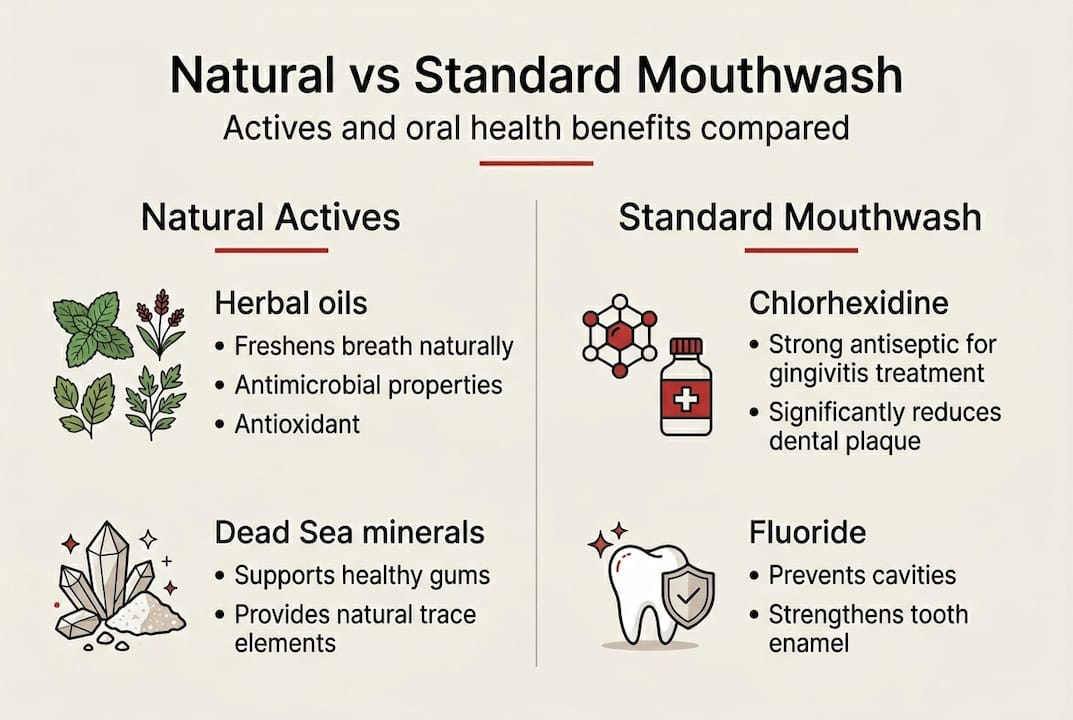
- How do natural actives compare to standard mouthwashes?
- Choosing and using natural mouthwash: What to know
- Why natural actives deserve a balanced, evidence-first approach
- Discover fluoride-free, natural oral care solutions
- Frequently asked questions
Key Takeaways
| Point | Details |
|---|---|
| Natural actives work | Clinical research shows herbal and mineral mouthwashes can reduce plaque and gingivitis as effectively as conventional formulas in the short term. |
| Hemp and minerals excel | CBD and Dead Sea minerals deliver enhanced anti-inflammatory and remineralizing benefits beyond standard herbal blends. |
| Gentle but not all-purpose | Natural mouthwashes minimize side effects and suit daily use, but may not replace synthetics for severe oral health issues. |
| Smart selection matters | Choosing products with documented ingredient concentrations and routines grounded in science maximizes oral health outcomes. |
What are natural actives in mouthwash?
Natural actives are bioactive compounds derived from plant, mineral, or botanical sources that exert measurable pharmacological effects within the oral cavity. In the context of mouthwash formulations, they encompass a broad spectrum of ingredients, each with distinct mechanisms and documented clinical relevance.
The most studied categories include:
- Herbal extracts: Neem (Azadirachta indica), green tea polyphenols, thyme, and clove have demonstrated antimicrobial and anti-inflammatory properties in multiple clinical trials.
- Essential oils: Eucalyptol, menthol, thymol, and methyl salicylate disrupt bacterial cell membranes and are among the most widely validated natural antibacterial agents in oral care.
- Plant-derived compounds: Tannins, flavonoids, and alkaloids contribute antioxidant and enzyme-inhibiting activity that reduces plaque formation.
- Minerals: Dead Sea minerals, particularly magnesium and bromide, provide antimicrobial, soothing, and remineralizing effects that are increasingly recognized in periodontal care.
- Hemp-derived CBD: Cannabidiol from Cannabis sativa has emerged as a clinically relevant anti-inflammatory and antimicrobial agent with direct applications in gum health.
In Europe, consumer demand for fluoride-free products has accelerated interest in these ingredients, particularly among individuals with sensitivities to conventional agents. Plant-derived compounds such as neem, green tea, menthol, and eucalyptol are validated antibacterial ingredients that appear consistently across peer-reviewed literature. For those interested in science-backed home remedies, understanding these ingredient categories is the essential first step.
Pro Tip: When evaluating a natural mouthwash, check the product label for the specific concentration of each active ingredient. A product listing “neem extract” without a stated concentration may contain insufficient levels to produce a clinical effect.
How do natural actives improve oral health?
With a clear understanding of what’s inside natural mouthwashes, let’s examine how these ingredients actually support oral health at a mechanistic level.
Natural actives operate through several distinct and complementary pathways:
- Bacterial cell wall disruption: Essential oils such as eucalyptol and thymol penetrate and destabilize bacterial membranes, reducing viable bacterial counts in saliva and on soft tissues.
- Biofilm penetration: Unlike some synthetic agents, certain plant compounds can diffuse into established dental plaque biofilms, reducing their structural integrity and pathogen load.
- Enzyme inhibition: Polyphenols from green tea and clove inhibit bacterial enzymes, including glucosyltransferases, that are responsible for plaque adhesion and maturation.
- Anti-inflammatory modulation: Herbal actives reduce pro-inflammatory cytokine expression in gingival tissues, which directly lowers clinical signs of gingivitis such as bleeding on probing and gingival index scores.
- Microbiome support: Unlike broad-spectrum agents, many natural actives selectively reduce pathogenic species while preserving commensal bacteria, supporting a balanced top picks for oral microbiome.
Natural actives disrupt bacterial cell walls, penetrate biofilms, and reduce inflammation without the major side effects associated with chlorhexidine, including tooth staining and taste alteration.
Biofilm penetration and microbiome preservation are the two areas where natural actives most clearly differentiate themselves from conventional synthetic agents, offering a mechanistic rationale for their use in daily, long-term oral hygiene protocols.
Clinical data supports these mechanisms. Most herbal mouthwashes produce statistically comparable reductions in plaque index and gingival index scores relative to chlorhexidine within 14 to 21 days of consistent use. For those seeking safe daily use tips, the absence of staining and taste disruption makes natural actives a practical long-term option.
Spotlight: Role of hemp and Dead Sea minerals
Among the natural actives, hemp-derived CBD and Dead Sea minerals deserve focused attention for their documented performance and growing clinical evidence base.
Hemp-derived CBD exerts its oral health effects primarily through anti-inflammatory and antimicrobial pathways. CBD interacts with endocannabinoid receptors present in gingival tissue, reducing the expression of inflammatory mediators that drive periodontal disease progression. CBD-infused mouthwash reduces plaque buildup, gum inflammation, and oral bleeding more effectively than tea tree oil alone, positioning it as a clinically meaningful active rather than a marketing ingredient. For detailed guidance, the CBD mouthwash benefits resource provides formulation-specific information.
Dead Sea minerals, including magnesium chloride, bromide, and trace elements, contribute antimicrobial activity, reduce gingival bleeding, and support enamel remineralization. Dead Sea minerals provide antimicrobial and remineralizing effects with efficacy comparable to chlorhexidine, making them a scientifically supported choice for fluoride-free protocols. Their soothing properties also benefit individuals with mucosal sensitivity. More information on formulation is available in the Dead Sea minerals mouthwash guide.
| Active | Primary mechanism | Key clinical benefit | Side effects |
|---|---|---|---|
| Hemp-derived CBD | Anti-inflammatory, antimicrobial | Reduces plaque, bleeding, inflammation | Minimal; no staining |
| Dead Sea minerals | Antimicrobial, remineralizing | Reduces bacteria, supports enamel | Well-tolerated |
| Essential oils (CHX-comparable) | Membrane disruption | Broad antibacterial | Mild irritation possible |
| Chlorhexidine (synthetic) | Broad-spectrum antibacterial | Rapid plaque reduction | Staining, taste alteration |
Pro Tip: Concentration matters. A CBD mouthwash delivering less than 5 mg per dose may not achieve the anti-inflammatory threshold demonstrated in clinical studies. Review published formulation data before selecting a product.
How do natural actives compare to standard mouthwashes?
But how do these natural actives really stack up against established formulas like chlorhexidine or fluoride-based rinses?
Clinical trials show herbal mouthwashes reduce plaque and gingivitis as effectively as chlorhexidine in the short term, but evidence is mixed for advanced disease and long-term outcomes. Herbal mouthwashes are not a first-line therapy for significant oral disease, as long-term randomized controlled trial data remain limited.
| Agent | Short-term plaque reduction | Gingivitis reduction | Side effects | Long-term evidence |
|---|---|---|---|---|
| Herbal actives | Comparable to CHX (14-21 days) | Significant | Minimal | Limited RCTs |
| Hemp/CBD | Strong anti-inflammatory | Significant | Minimal | Emerging |
| Dead Sea minerals | Moderate to strong | Moderate | Well-tolerated | Limited |
| Chlorhexidine (CHX) | High | High | Staining, dysgeusia | Established |
| Fluoride rinses | Moderate (caries-focused) | Low | Minimal | Established |
| Triclosan | Moderate | Moderate | Regulatory concerns | Declining use |
When to choose natural versus synthetic mouthwash:
- Choose natural actives if you prioritize daily maintenance, have sensitive gums, prefer fluoride-free formulations, or experience side effects from chlorhexidine.
- Choose synthetic agents if you have active, clinically significant periodontal disease or require short-term intensive antibacterial therapy under professional supervision.
- Consider combination approaches for transitional periods, such as using natural mouthwash daily and chlorhexidine only during acute flare-ups.
For a curated review of best mouthwash options and a broader fluoride-free oral care guide, additional resources are available for informed product selection.
Choosing and using natural mouthwash: What to know
Ready to make the switch? Here’s what matters most when selecting and using a natural mouthwash for best results.
Label evaluation is the first critical step. Effective natural mouthwashes should clearly state active ingredient concentrations, avoid sodium lauryl sulfate (SLS), parabens, and alcohol-based carriers (which can dry oral mucosa), and list ingredients in descending order of concentration.
Steps to integrate natural mouthwash into your daily routine:
- Select a formulation that lists verified actives (CBD, Dead Sea minerals, or validated herbal extracts) with stated concentrations.
- Time your use after brushing and flossing, not before, to allow the active compounds to work on a mechanically cleaned surface.
- Use the recommended volume (typically 15-20 ml) and rinse for the full 30 to 60 seconds specified by the manufacturer.
- Avoid eating or drinking for at least 30 minutes after rinsing to allow actives to remain in contact with oral tissues.
- Monitor for changes in gingival color, bleeding on brushing, and breath quality over the first two to three weeks.
Who benefits most from natural mouthwash:
- Individuals with sensitive gums or mucosal hypersensitivity to alcohol or SLS
- Consumers committed to fluoride-free oral care protocols
- Those seeking daily maintenance support between professional cleanings
- People who have experienced chlorhexidine-related staining or taste disruption
Mechanical cleaning through brushing and flossing remains the foundation of oral hygiene; mouthwash functions as an adjunct, not a replacement. For practical protocols on integrating mouthwash into routines, structured daily guides are available.
Why natural actives deserve a balanced, evidence-first approach
The discourse around natural versus synthetic oral care has become polarized in ways that serve neither clinical accuracy nor consumer interest. Most published guides either overstate the efficacy of natural actives or dismiss them without engaging the available clinical data.
The evidence-based position is more nuanced. Many herbal and CBD mouthwashes match chlorhexidine performance over two to three weeks, but more long-term randomized controlled trials are needed, and conventional brushing and flossing remain primary. This does not diminish the value of natural actives. It contextualizes them correctly as highly effective adjuncts for daily maintenance, compliance-friendly alternatives for sensitive users, and scientifically credible choices for fluoride-free protocols.
The practical lesson is this: natural actives are not a universal solution for advanced periodontal disease, but they are a well-supported, evidence-consistent choice for the majority of health-conscious consumers managing routine oral hygiene.
For individuals with chronic oral conditions, consultation with a dental professional before changing formulations is essential. For those managing routine maintenance, the evidence supports natural actives as a legitimate, effective, and safer daily option. Products formulated with natural mouthwash for sensitivity represent a growing category with genuine clinical backing.
Pro Tip: Before switching your oral care routine, discuss the change with your dentist or periodontist, particularly if you are managing chronic gingivitis, periodontitis, or post-surgical recovery.
Discover fluoride-free, natural oral care solutions
If you are ready for true fluoride-free, natural oral care, here’s where to learn and shop with confidence.
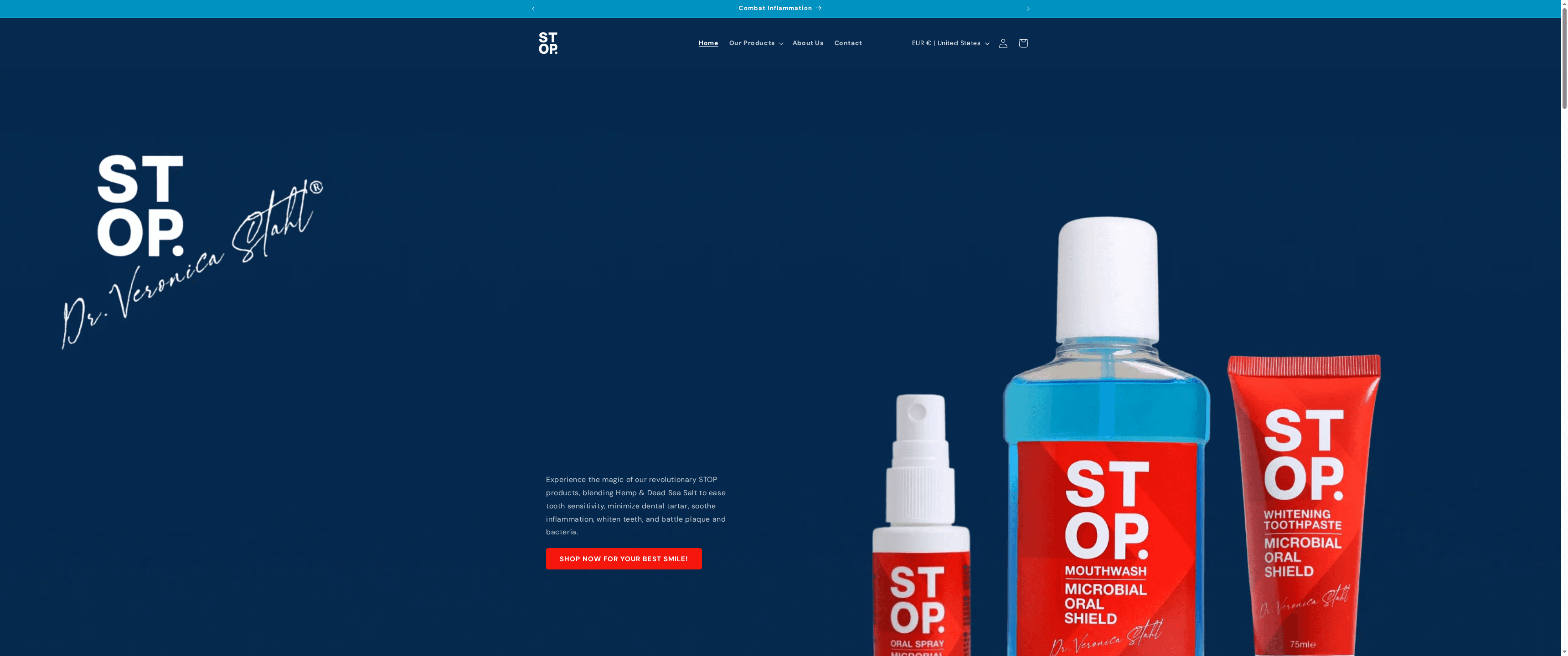
Stop Oral Care offers a curated complete range of natural mouthwash formulated with hemp-derived CBD and Dead Sea minerals, developed under the scientific guidance of Dr. Veronica Stahl. Each product is designed to deliver verified active concentrations, free from fluoride, SLS, and parabens. Explore the Dead Sea minerals guide for a detailed breakdown of mineral benefits, or review the enamel protection mouthwash resource to understand how natural remineralization supports long-term dental health without synthetic additives.
Frequently asked questions
Are natural actives in mouthwash as effective as chlorhexidine?
Clinical studies show natural active mouthwashes match chlorhexidine for plaque and gingivitis reduction within 2 to 3 weeks, with no statistically significant difference in plaque index or gingival index scores. More long-term randomized controlled trial data are needed to confirm sustained superiority.
What are the benefits of Dead Sea minerals in mouthwash?
Dead Sea minerals provide antimicrobial and remineralizing effects comparable to chlorhexidine, while also soothing gingival mucosa and supporting enamel integrity through magnesium and bromide activity.
Can hemp-derived CBD mouthwash improve gum health?
Hemp-derived CBD reduces plaque buildup, oral bleeding, gum inflammation, and biofilm formation more effectively than tea tree oil alone, making it a clinically supported option for gum health maintenance.
Is natural mouthwash safe for people with sensitive gums?
Natural actives are generally well-tolerated and produce fewer adverse effects than synthetic agents, with Dead Sea minerals specifically noted for their ability to soothe mucosa and reduce inflammation in sensitive individuals.
Recommended
- Effective Natural Mouthwash for Gum Disease: 5 Home Remedies Backed by – Stop Oral Care
- Why Use Plant-Based Mouthwash for Oral Health – Stop Oral Care
- Best Natural Mouthwash for Gum Disease: 5 Effective Options Reviewed – Stop Oral Care
- Alcohol Free Mouthwash Benefits: 5 Reasons to Make the Switch Today – Stop Oral Care
- Otkrijte benefite prirodnih sastojaka za zdravlje