

TL;DR:
- Formulation specifics like active ingredients and concentrations determine mouthwash efficacy.
- Natural and herbal mouthwashes can match chemical options in reducing plaque and gingivitis with fewer side effects.
- Long-term safety depends on gentle, microbiome-compatible formulations avoiding excessive antimicrobials and alcohol.
Most people select a mouthwash based on flavor or brand familiarity, treating all rinses as functionally equivalent. This assumption is scientifically unsupported. Formulation determines whether a product prevents cavities, reduces plaque, controls gingivitis, or disrupts the oral microbiome. Subtle differences in active ingredient concentration, pH, and carrier solvents produce measurably different clinical outcomes. This guide examines the evidence behind common mouthwash ingredients, evaluates the safety and efficacy of natural and fluoride-free alternatives, identifies formulation-related risks, and provides a framework for selecting a rinse aligned with your specific oral health priorities.
Table of Contents
- The science behind mouthwash: Active ingredients and their effects
- Natural and fluoride-free mouthwashes: Efficacy, safety, and long-term use
- Risks and side effects: Why formulation safety is non-negotiable
- Choosing the right mouthwash: Customization for personal oral health needs
- A new approach to choosing mouthwash: It’s not one-size-fits-all
- Upgrade your oral care: Explore holistic mouthwash solutions
- Frequently asked questions
Key Takeaways
| Point | Details |
|---|---|
| Ingredients drive results | Fluoride, essential oils, and herbal agents each deliver targeted oral benefits. |
| Natural is often safer | Herbal and fluoride-free options can match chemicals for plaque and gum care with fewer side effects. |
| Formulation affects risks | Careless ingredient choices may lead to dry mouth, irritation, or microbiome imbalance. |
| Personalize your choice | Pick mouthwash based on your unique oral health needs, not just flavor or marketing. |
The science behind mouthwash: Active ingredients and their effects
With that myth dispelled, let’s break down which ingredients make up mouthwash and what science says they actually do.
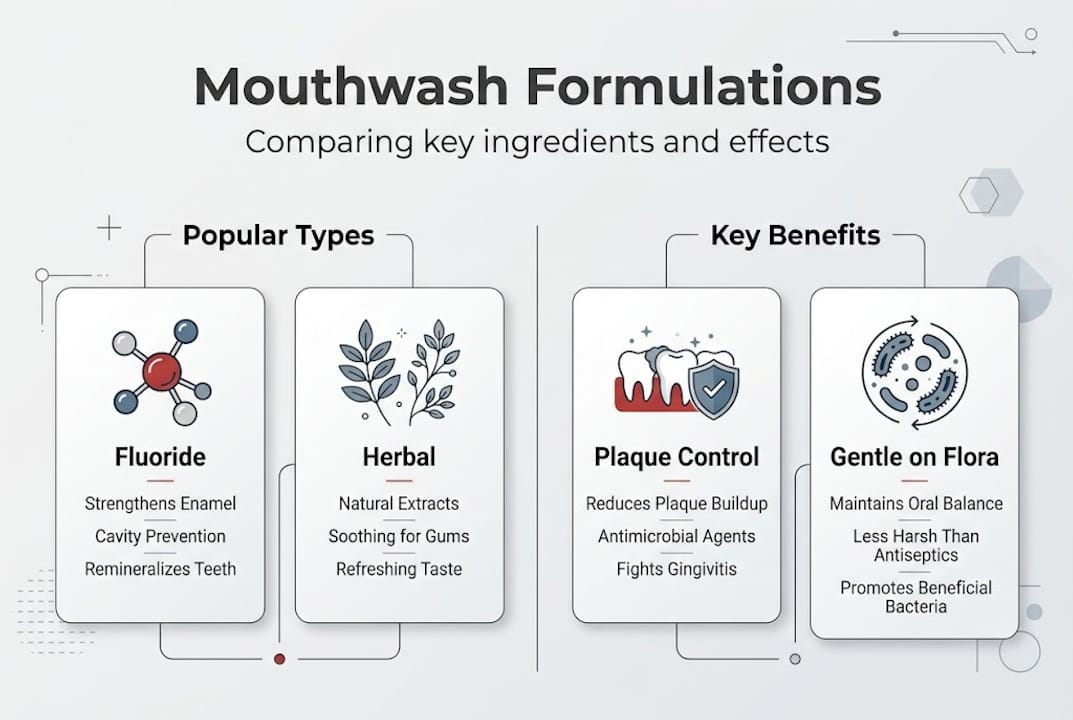
Mouthwash formulation determines efficacy against specific oral conditions via targeted active ingredients: fluoride prevents caries at concentrations of 225 to 900 ppm, while chlorhexidine (CHX), essential oils (EOs), and cetylpyridinium chloride (CPC) reduce plaque and gingivitis through distinct antimicrobial mechanisms. Understanding these mechanisms is foundational to making an informed selection.
Key active ingredients and their primary targets:
- Fluoride (225 to 900 ppm): Remineralizes enamel and inhibits acid production by cariogenic bacteria. Best indicated for high cavity risk.
- Chlorhexidine (CHX, 0.12% to 0.2%): Broad-spectrum antimicrobial with substantivity (prolonged binding to oral surfaces). Effective against plaque and gingivitis, but associated with side effects on extended use.
- Essential oils (thymol, eucalyptol, menthol, methyl salicylate): Disrupt bacterial cell membranes and reduce biofilm formation. Validated by the American Dental Association (ADA) for plaque and gingivitis control.
- Cetylpyridinium chloride (CPC, 0.05% to 0.1%): Cationic surfactant that destabilizes bacterial membranes. Effective against plaque with a lower side-effect profile than CHX.
| Ingredient | Primary target | Side effect risk |
|---|---|---|
| Fluoride | Caries prevention | Low (at standard concentrations) |
| CHX | Plaque, gingivitis | Moderate (staining, taste changes) |
| Essential oils | Plaque, biofilm | Low |
| CPC | Plaque, gingivitis | Low to moderate |
Concentration matters as much as ingredient selection. A CPC rinse at 0.05% produces different antimicrobial activity than one at 0.1%, and combining EOs with fluoride may yield synergistic effects not seen with either agent alone. Optimizing your mouthwash routine and results also depends on when and how frequently the rinse is applied, since contact time directly influences efficacy.
Statistic: Clinical trials confirm that EO-based rinses reduce plaque scores by up to 26% compared to placebo, while CHX at 0.12% achieves reductions exceeding 30% but at the cost of higher adverse event rates.
For individuals prioritizing supporting oral flora alongside plaque control, ingredient selection becomes a precision decision rather than a matter of preference.
Pro Tip: Read the “active ingredients” panel on any mouthwash label before purchasing. If a product lists only “inactive” or “flavoring” components without specifying concentrations, its clinical value is likely minimal.
Natural and fluoride-free mouthwashes: Efficacy, safety, and long-term use
Understanding ingredients sparks another question: how do natural and fluoride-free alternatives stack up for effectiveness and safety?
Herbal/natural mouthwashes match CHX efficacy with fewer side effects, making them a clinically viable option for long-term fluoride-free use. Neem, green tea, and clove extracts each demonstrate measurable antimicrobial and anti-inflammatory properties in peer-reviewed trials.
Evidence-backed natural agents:
- Neem (Azadirachta indica): Inhibits Streptococcus mutans and Lactobacillus species, both primary caries pathogens.
- Green tea extract (epigallocatechin gallate): Reduces gingival inflammation markers and inhibits biofilm adhesion.
- Clove (eugenol): Demonstrates analgesic and antimicrobial properties, particularly against periodontal pathogens.
- Aloe vera: Reduces gingival indices comparable to CHX in short-term trials, with no reported staining.
Fluoride-free options and their antimicrobial effects such as CPC, essential oils (thymol, eucalyptol, menthol, methyl salicylate), and hydrogen peroxide show strong antimicrobial activity against S. mutans and oral biofilms, confirming their suitability for health-conscious users who prefer to avoid fluoride.
| Formulation type | Plaque reduction | Gingivitis reduction | Side effect profile |
|---|---|---|---|
| CHX (0.12%) | High | High | Moderate to high |
| Essential oils | Moderate to high | Moderate | Low |
| Herbal (neem/green tea) | Moderate | Moderate | Very low |
| CPC (0.05 to 0.1%) | Moderate | Moderate | Low |
The evidence for natural remedies continues to grow, with recent systematic reviews confirming that herbal formulations are not merely anecdotal alternatives but scientifically grounded options. For individuals with sensitivities, allergies, or a preference for minimal chemical exposure, natural options reviewed by clinical researchers offer a reliable starting point.
Pro Tip: When evaluating a natural mouthwash, look for standardized extract concentrations on the label. A product listing “clove extract” without specifying eugenol content provides no reliable dosing information.
Risks and side effects: Why formulation safety is non-negotiable
Next, it is essential to recognize why “natural” is not only a trend, but often a safety-forward choice: formulation safety truly matters.

Risks of poor mouthwash formulation include CHX-induced staining and taste changes, alcohol-related irritation and dry mouth, and antimicrobial-driven dysbiosis, resistance, and microbiome shifts. These are not rare adverse events. They are documented outcomes of formulations that prioritize short-term antimicrobial potency over long-term biological compatibility.
Documented risks by ingredient class:
- CHX: Extrinsic tooth staining, altered taste perception, mucosal desquamation with prolonged use.
- Alcohol (ethanol carrier): Dry mouth (xerostomia), mucosal irritation, contraindicated in individuals with alcohol sensitivity or dry mouth conditions.
- Broad-spectrum antimicrobials: Selective pressure on oral microbiome, potential for dysbiosis (imbalance of beneficial versus pathogenic bacteria), and emerging resistance patterns.
- High-concentration hydrogen peroxide: Mucosal irritation and enamel sensitivity with frequent use.
“Antimicrobial mouthwashes that eliminate pathogens indiscriminately may simultaneously suppress beneficial nitrate-reducing bacteria, which play a role in cardiovascular health via nitric oxide production.”
The impact on beneficial bacteria is a frequently overlooked dimension of mouthwash safety. Routine use of alcohol-containing or high-CHX rinses can reduce populations of commensal species that maintain oral pH balance and inhibit pathogen colonization.
For individuals with dry mouth, sensitivity, or a history of oral mucosal conditions, preserving oral microbiome integrity through alcohol-free, pH-neutral formulations is not a preference but a clinical necessity.
Pro Tip: If you experience persistent dry mouth or altered taste after starting a new mouthwash, discontinue use and review the formulation for alcohol or high-concentration CHX content before resuming.
Choosing the right mouthwash: Customization for personal oral health needs
Armed with knowledge of what works and what to avoid, the next step is matching a mouthwash to your unique oral health priorities.
Tailoring mouthwash formulations to oral health needs is the standard recommended by the ADA: fluoride-free EO, CPC, or herbal formulations for health-conscious users maintain anti-plaque benefits while avoiding caries-related fluoride concerns, provided cavity risk is managed through diet and hygiene. The goal is balancing clinical efficacy with microbiome health.
A stepwise selection framework:
- Identify your primary oral concern. Cavity prevention, plaque reduction, gingivitis management, sensitivity, or dry mouth each point toward different active ingredients.
- Assess your sensitivity profile. Alcohol intolerance, mucosal sensitivity, or a history of dysbiosis narrows the field toward alcohol-free and herbal options.
- Review ingredient concentrations. Efficacy is dose-dependent. A mouthwash with unspecified or subtherapeutic concentrations will not produce clinical results.
- Consider long-term safety. Considerations for specialized mouthwash needs indicate that alcohol-free, pH-neutral rinses are preferred for chronic use, while short-term CHX may be appropriate post-surgically under clinical supervision.
- Reassess periodically. Oral health needs change with age, diet, medication use, and systemic health. A formulation optimal at one stage may require adjustment later.
For those managing gentle mouthwash for sensitivity concerns, EO-based or herbal rinses without alcohol offer a well-tolerated daily option. Individuals seeking alcohol-free options for dry mouth will find that pH-neutral, humectant-containing formulations provide symptomatic relief without exacerbating xerostomia.
Pro Tip: Consult a dental professional before using any antimicrobial rinse for more than four consecutive weeks without reassessment. Extended use without clinical review increases the risk of microbiome disruption.
A new approach to choosing mouthwash: It’s not one-size-fits-all
Having explored the research-backed facts and nuances, a broader perspective on what really drives effective mouthwash selection is warranted.
Conventional mouthwash marketing has historically prioritized sensory attributes, flavor intensity, and brand recognition over ingredient transparency and clinical specificity. This has produced a consumer base that selects oral rinses by taste rather than therapeutic alignment. The evidence reviewed here challenges that paradigm directly.
The distinction between “natural” and “chemical” formulations is less meaningful than the distinction between evidence-supported and evidence-deficient ones. Herbal and fluoride-free options are not compromises. For individuals with sensitive oral tissues, microbiome awareness, or systemic health considerations, they may represent the more precise clinical choice.
A personalized microbiome mouthwash approach, grounded in ingredient knowledge and individual biology, represents a meaningful advancement over generic recommendations. Ingredient literacy is now a legitimate component of informed self-care, not an optional supplement to professional advice.
Upgrade your oral care: Explore holistic mouthwash solutions
If you are ready to apply this evidence-based framework to your daily routine, Stop Oral Care offers a curated range of natural, alcohol-free, and fluoride-free mouthwashes formulated with hemp and Dead Sea minerals, developed under the guidance of Dr. Veronica Stahl.
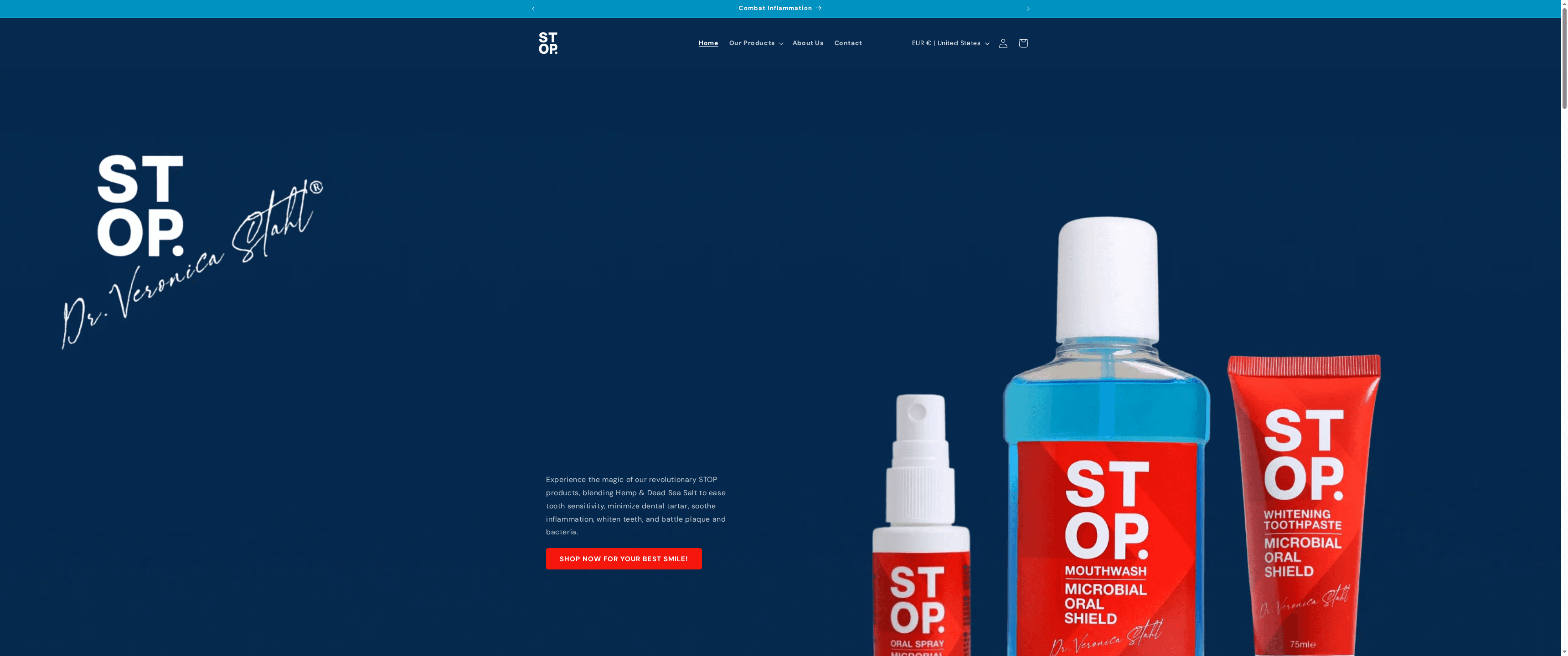
The Stop Oral Care solutions portfolio is built on the same scientific principles outlined in this article: targeted active ingredients, microbiome-compatible formulations, and transparent concentration labeling. For readers seeking further guidance, the blog provides detailed reviews of best natural mouthwash picks for gum disease, sensitivity, and dry mouth, enabling precise selection based on clinical need rather than marketing claims.
Frequently asked questions
Do natural and fluoride-free mouthwashes work as well as chemical options?
Clinical studies confirm that herbal/natural mouthwashes match CHX efficacy for plaque and gingivitis reduction, typically with a more favorable side effect profile for long-term use.
What side effects should I watch for when using mouthwash?
Common risks documented in research on risks of poor mouthwash formulation include dry mouth, taste disturbance, extrinsic staining, and shifts in the oral microbiome, particularly with prolonged chemical rinse use.
Are there mouthwashes for dry mouth or sensitive teeth?
Yes. Considerations for specialized mouthwash needs confirm that alcohol-free and pH-neutral formulations are clinically recommended for xerostomia and mucosal sensitivity.
Can mouthwash harm the oral microbiome?
Broad-spectrum antimicrobials can induce dysbiosis, resistance, and microbiome shifts when used long term, making microbiome-compatible formulation selection a clinically significant consideration.
Recommended
- How to select safe mouthwash for you and your family – Stop Oral Care
- Natural Mouthwash for Periodontal Disease: A Practical Guide to Safer – Stop Oral Care
- Remineralizing mouthwash: 30% better enamel protection – Stop Oral Care
- The Best Mouthwash for Oral Microbiome: Top Picks That Support Healthy – Stop Oral Care