

You can usually clear a benign white tongue in a matter of days by gently scraping your tongue each morning, drinking more water throughout the day, and rinsing with a mild salt or baking-soda solution. This trio addresses the biofilm buildup responsible for most cases of white coating, and it works because it targets the mechanism directly rather than masking the symptom.
A quick word on when this advice does not apply. If you see thick, curdy white patches that will not scrape off, feel sharp pain, or have carried the coating for more than two weeks, home care alone is not enough and you need a clinical evaluation. The tongue harbors a large share of the mouth’s bacterial population, and when that biofilm accumulates unchecked, it produces both the visible white film and the bad breath that usually comes with it. The good news, according to the Cleveland Clinic, is that most cases are harmless and resolve within days to weeks once basic hygiene and hydration improve.
Here is the minimal daily routine worth starting today:
- Scrape your tongue gently, back to front, once each morning
- Drink water consistently through the day, not just at meals
- Rinse once or twice daily with warm water mixed with ½ teaspoon of salt
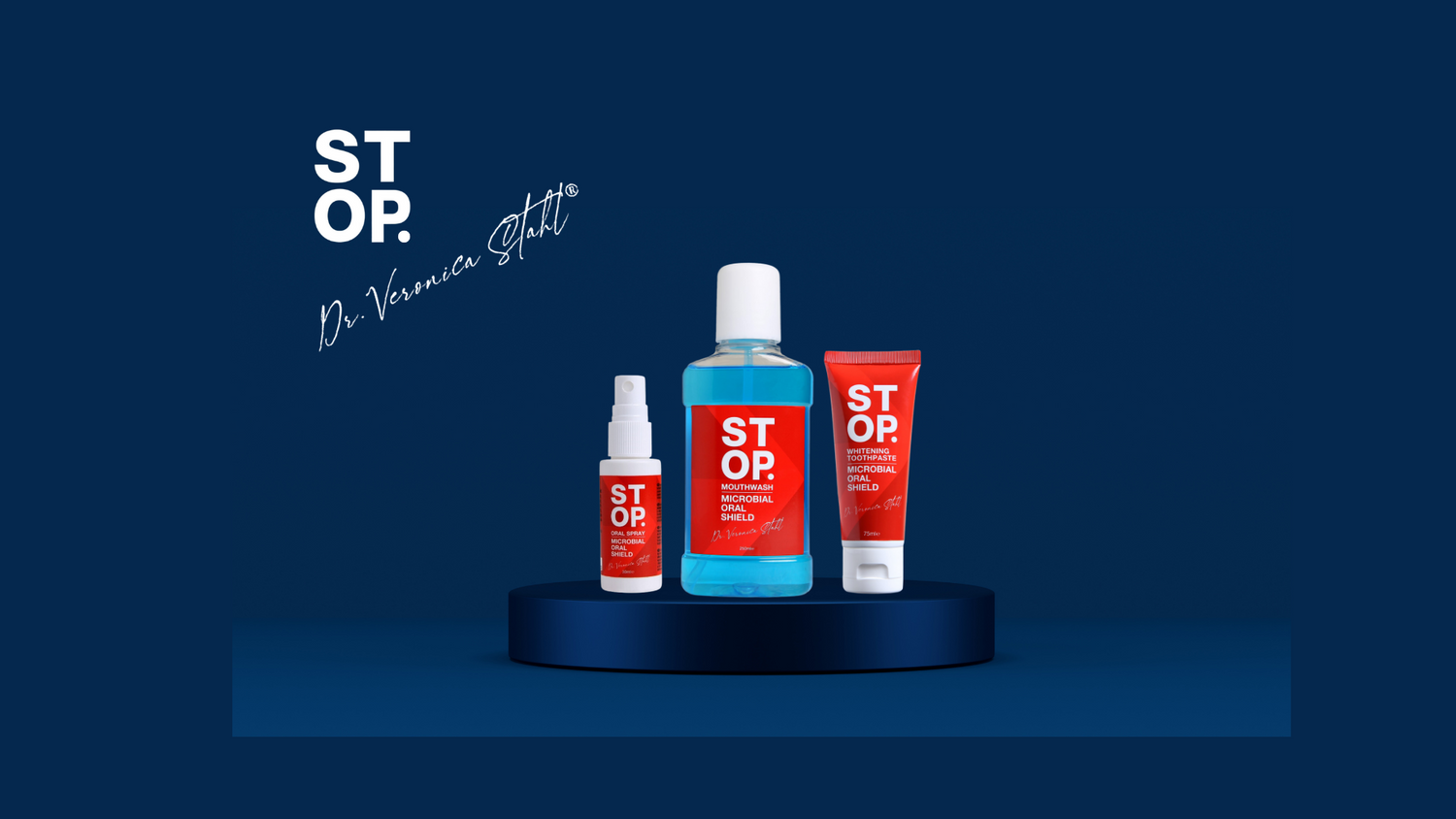
You may see visible improvement within several days for straightforward biofilm-related whiteness. Dr. Veronica Stahl, whose formulations underpin Stop-oralcare’s natural oral care line, points to this combination of mechanical cleaning and saliva support as the foundation of nearly every effective home protocol for white tongue.
Key Takeaways
Clearing benign white tongue comes down to consistent mechanical removal of biofilm, sustained hydration, and knowing the specific signs that call for a clinician instead of another home remedy.
| Point | Details |
|---|---|
| Scrape daily, gently | Back-to-front strokes with light pressure remove biofilm without damaging the papillae underneath. |
| Hydration drives saliva | Steady water intake supports the mouth’s natural cleaning system and prevents dry-mouth buildup. |
| Salt beats acidic rinses | A ½ to 1 teaspoon salt rinse is effective and safe daily; skip undiluted lemon or vinegar. |
| Know the two-week rule | Coating lasting beyond two weeks, or paired with pain or curdy patches, needs clinical evaluation. |
| Stop-oralcare supports maintenance | Fluoride-free, hemp and Dead Sea mineral toothpaste and mouthwash complement daily tongue care after infections are medically treated. |
This article is general information, not a substitute for advice from a qualified doctor. Consult a qualified healthcare professional about your own circumstances before acting on anything here.
Table of Contents
- What Causes White Tongue and How Do You Know Which Type You Have?
- What Are the Best Natural Remedies for White Tongue?
- How Do You Perform a Daily Tongue-Cleaning Protocol?
- How Can You Prevent White Tongue From Coming Back?
- When Should You See a Dentist or Doctor for White Tongue?
- What Evidence Backs This Natural Approach to Tongue Care?
- Sources
What Causes White Tongue and How Do You Know Which Type You Have?
Not all white tongue looks or behaves the same way, and the appearance often tells you more than the color alone. A “coated” tongue typically presents as a thin to moderate film, usually pale yellow-white, that shifts or thins somewhat through the day and responds well to scraping. A “curdy” white tongue is different: it forms raised, cottage-cheese-like patches that resist removal and sometimes leave a red, raw surface underneath when you do scrape them off. That distinction matters for deciding whether you are dealing with simple bacterial and dead-cell buildup or something that needs medical attention, like oral thrush.
Lifestyle and local factors account for the majority of coated-tongue cases:
- Inconsistent tongue cleaning, which lets dead cells and bacteria accumulate on the papillae
- Dehydration, which reduces the saliva flow that normally rinses the mouth
- Mouth breathing during sleep, which dries the tongue’s surface overnight
- Smoking and alcohol use, both of which irritate tissue and reduce saliva quality
- Soft, processed foods that do not mechanically clean the tongue the way crunchy produce does
Medications and systemic conditions can also drive persistent white tongue. Drugs that cause dry mouth, xerostomia in clinical terms, are common culprits: antihistamines, some blood pressure medications, and antidepressants all reduce saliva output. Antibiotics disrupt the natural balance of oral flora and can allow yeast like Candida albicans to overgrow, producing the classic curdy patches of thrush. Diabetes and acid reflux are two systemic conditions worth ruling out if your white tongue does not respond to basic hygiene changes, since both alter the oral environment in ways that favor bacterial or fungal overgrowth.
Watch for symptoms that point past a simple hygiene issue: pain when eating or swallowing, bleeding when you scrape, difficulty swallowing liquids, or fever. Any of these, paired with a white tongue, calls for a dental or medical visit rather than another week of home remedies.
What Are the Best Natural Remedies for White Tongue?
Several natural approaches have real mechanical or antiseptic value, and understanding how each one works helps you use it correctly instead of overdoing it.
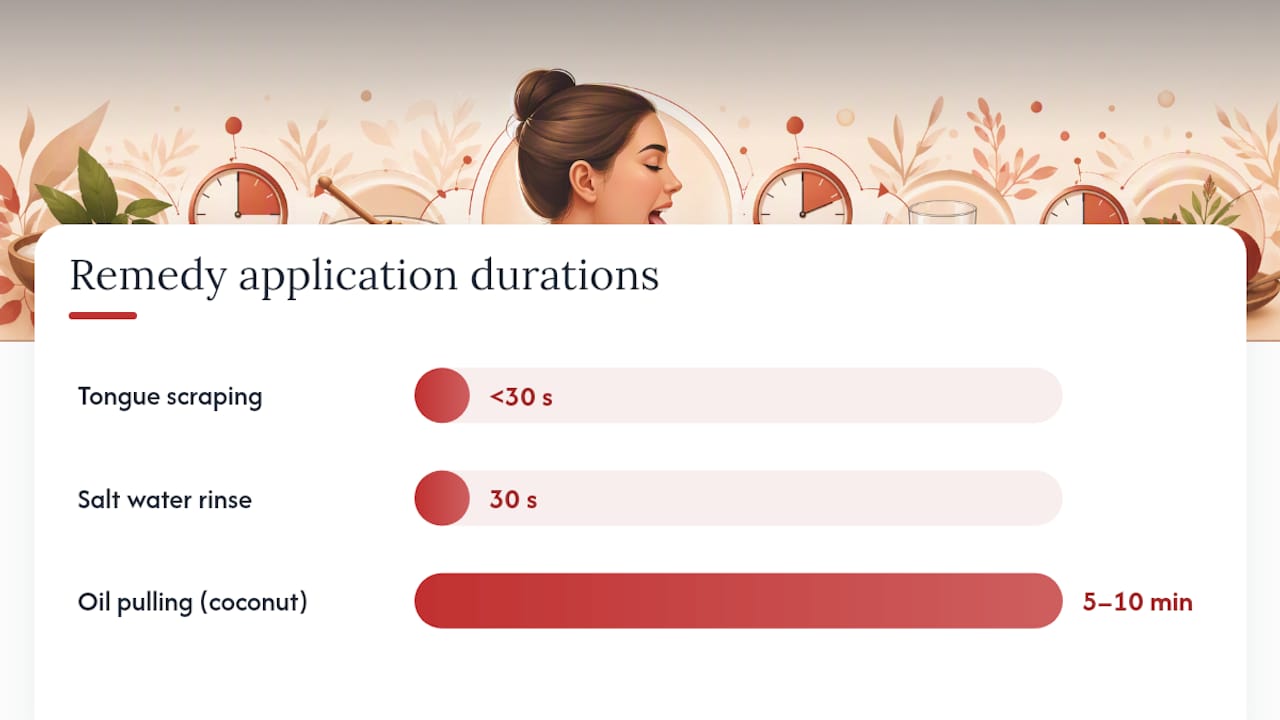
- Tongue scraping. A dedicated scraper removes biofilm far more effectively than a toothbrush, which tends to push debris around rather than lift it off the papillae. Dentists note that consistent scraping is the single most effective daily action against tongue coating, and it takes less than 30 seconds once you have the technique down.
- Salt water rinse. Dissolve ½ to 1 teaspoon of salt in a cup of warm water and swish for 30 seconds, once or twice daily. Salt’s antiseptic effect helps reduce the bacterial load that feeds the biofilm, and it is gentle enough for daily use without damaging tissue.
- Baking soda rinse or light paste. Baking soda raises the pH of the mouth slightly, which makes it harder for certain bacteria and yeast to thrive. Use it as a diluted rinse (a pinch in a glass of water) rather than a frequent paste. Overuse can irritate the tongue’s surface, so limit this to a few times a week rather than every day.
- Oil pulling with coconut oil. Swishing a tablespoon of coconut oil for 5 to 10 minutes is a long-standing folk practice with limited but plausible evidence for reducing oral bacteria. It will not replace scraping, but it is safe as an occasional addition to your routine.
- Probiotic and fermented foods. Plain yogurt, kefir, and other fermented foods introduce beneficial bacteria that can help rebalance an oral microbiome tipped toward overgrowth, particularly useful if you have recently finished a course of antibiotics.
- Dietary adjustments. Cutting back on sugar and starchy snacks for 7 to 10 days starves the bacteria that feed on those carbohydrates, while adding crunchy, water-rich foods like apples, celery, and cucumber gives your tongue a natural, mild scrubbing action with every bite.
Folk remedies for white tongue have circulated for generations precisely because several of them, salt rinses and dietary changes especially, hold up reasonably well under closer scrutiny. That said, a few common home remedies deserve a caution flag. Undiluted lemon juice or vinegar applied directly to the tongue is a bad idea. Both are acidic enough to irritate or even damage the mucosa with repeated use, and neither offers an advantage over salt or baking soda for the same purpose. If any remedy causes burning, stinging, or bleeding, stop immediately. That reaction means the tissue is being damaged, not cleaned.
Pro Tip: Rinse with plain water after an oil-pulling session or a baking-soda rinse before eating. It clears residue and prevents the slightly odd taste from lingering into your next meal.
How Do You Perform a Daily Tongue-Cleaning Protocol?
A realistic 7 to 14 day routine works better than sporadic effort, and the order of steps matters almost as much as the steps themselves.
Morning:
- Drink a full glass of water immediately after waking, before coffee or food, to kick-start saliva flow after hours of overnight dryness.
- Scrape your tongue using light pressure in smooth, back-to-front pulls. Rinse the scraper between passes and stop once the visible coating is gone, usually 3 to 5 passes.
- Brush your teeth with a soft-bristled brush.
- Finish with a salt water or diluted baking-soda rinse.
During the day: Sip water regularly rather than large amounts infrequently, since steady hydration supports the saliva flow that naturally cleans the mouth. Avoid mouth-drying substances like excess caffeine and alcohol where possible, chew sugar-free xylitol gum if your mouth feels dry between meals, and favor water-rich snacks over dry, processed ones.
Evening: If coating has built back up by evening, particularly common in mouth breathers, repeat a gentle scrape before bed. Skip heavy sugars or alcohol close to bedtime, since both feed bacteria overnight while saliva production naturally slows during sleep.
Light cases typically clear in 1 to 3 days. Moderate, longer-standing coating usually takes 7 to 10 days of consistent effort. If you are not seeing improvement by the two-week mark, that is your signal to see a professional rather than intensify the home routine.
Pro Tip: More pressure is not more effective. Aggressive scraping damages the tiny papillae on your tongue’s surface, which can actually make debris cling more easily and prolong the exact problem you’re trying to fix.
How Can You Prevent White Tongue From Coming Back?
Preventing recurrence comes down to a handful of habits that take less than five minutes a day once they are routine.
- Add tongue cleaning to your existing oral hygiene habit, right alongside brushing twice daily and cleaning between teeth.
- Keep water intake steady throughout the day, and address chronic mouth breathing if allergies or nasal congestion are the cause.
- Cut back on alcohol and tobacco, both of which dry out oral tissue and disrupt its natural bacterial balance.
- Include probiotic foods a few times a week and keep added sugar intake moderate, since sugar is the primary fuel source for the bacteria that form biofilm.
- Book routine dental checkups, and if you are on a medication known to cause dry mouth, ask your prescriber whether an alternative exists.
A complete daily oral hygiene checklist makes it easier to fold tongue care into a habit you already have, rather than treating it as one more thing to remember.
When Should You See a Dentist or Doctor for White Tongue?
Most white tongue clears with home care, but certain signs mean it is time to stop experimenting and get evaluated.
- Coating or patches that persist beyond two weeks despite consistent hygiene and hydration
- Pain, burning, or bleeding that does not resolve
- Difficulty eating or drinking liquids comfortably
- Fever, unexplained weight loss, or other systemic symptoms
- Thick, curdy white patches that will not scrape away, which often signal oral thrush
A clinician’s response depends on what they find. For suspected thrush, the standard treatment is a topical antifungal like nystatin or, for more resistant cases, oral fluconazole. If reflux appears to be driving the irritation, treatment shifts toward managing that underlying condition. A visibly unusual or non-healing lesion may warrant a biopsy to rule out something more serious. Walk into the appointment ready to describe how long the coating has lasted, any medications you take, and whether you have noticed pain, bleeding, or trouble swallowing. That detail speeds up an accurate diagnosis.
What Evidence Backs This Natural Approach to Tongue Care?
Dr. Veronica Stahl, the dentist and natural-medicine researcher behind Stop-oralcare’s formulations, built the brand’s approach around a straightforward principle: mechanical cleaning paired with saliva support does most of the work, and harsh chemical intervention is rarely necessary for benign cases.
Most white tongue is a hygiene and hydration problem before it is anything else. Treat the biofilm mechanically, support saliva production, and reserve medical treatment for the cases that genuinely need it, like fungal infection or an underlying systemic condition.
For readers who want to go deeper on technique, Stop-oralcare’s guide to tongue scraper benefits and its natural remedy guide for bad breath both expand on the routines covered here. It is worth being direct about the limits of any natural product line: none of these formulations replace prescription antifungal treatment when thrush is confirmed. They support daily hygiene and help prevent recurrence, not treat active infection.
A Note From Dr. Veronica Stahl
White tongue understandably worries people, but in the vast majority of cases it responds to the gentlest interventions: water, a light scrape, a mild rinse. Give it a few days before assuming the worst, and see a professional if it does not budge. Stop-oralcare was built around exactly this philosophy, gentle, evidence-informed natural care, not aggressive fixes.
Where a Natural Oral Care Routine Fits In
Once the basic protocol has done its work, the right products help you maintain the result instead of sliding back into the same buildup. Stop-oralcare formulates its toothpaste and mouthwash with hemp and Dead Sea minerals, free of fluoride, specifically for people who want daily oral care that supports gum health and reduces plaque without harsh chemical additives.

These products are designed to complement the routine outlined above, not replace it. A gentle, mineral-based mouthwash after your morning scrape helps rinse away loosened debris, and a fluoride-free toothpaste formulated for sensitivity works well for anyone whose tongue and gums feel irritated after a bout of aggressive brushing. To be clear: if a clinician diagnoses thrush, you need the prescribed antifungal treatment first. Stop-oralcare’s line supports the maintenance phase that follows, not the infection itself. If you are ready to build a full natural routine around your morning tongue-care habit, you can browse the Stop-oralcare product line and see which formulation fits your current routine.
Sources
- VIDAL — Mauvaise haleine
- Cleveland Clinic — White tongue: Causes, treatments & prevention
- PasseportSanté — Langue blanche : les remèdes de grand-mère à connaître
- CoursDentaires — Langue blanche: how to remove it (dentist advice)
Recommended
- How to Whiten Teeth Naturally at Home: Simple Steps for a Brighter Smi – Stop Oral Care
- Natural Remedy for Bad Breath: A Practical How‑To Guide – Stop Oral Care
- Effective Natural Mouthwash for Gum Disease: 5 Home Remedies Backed by – Stop Oral Care
- Natural Remedy for Bleeding Gums: A Step‑by‑Step Guide to Healing Your – Stop Oral Care