

Stevia is safe to use in toothpaste for the vast majority of consumers, and current laboratory and clinical research supports its classification as a non-cariogenic, tooth-friendly sweetener when it appears in its purer forms. The primary caveat concerns formulation: some commercial blends combine stevia with fermentable fillers, and ingestion of any toothpaste, regardless of sweetener, warrants supervision in children. Clinical trials and the European Food Safety Authority’s regulatory review both inform this verdict.
TL;DR:
- Clinical trials of stevia rinses reported lower plaque, gingivitis, and bacterial counts, but small samples and short follow up leave long term cavity effects untested.
- Pure steviol glycosides resist bacterial fermentation, while some stevia labeled blends contain lactose or other fermentable fillers that can behave like sugar in testing.
- Stevia sweetens toothpaste but does not rebuild enamel, so choose a formulation with fluoride or hydroxyapatite for active cavity protection.
- EFSA set the acceptable daily intake at 4 mg/kg body weight; high dietary exposure may exceed it, so supervise children and limit toothpaste swallowing.
Table of Contents
- What clinical trials and lab studies show about stevia and oral health
- Why stevia is considered tooth-friendly: mechanism and limits
- EFSA and JECFA set the acceptable daily intake for steviol glycosides
- How to choose a safe stevia-containing toothpaste: label checklist
- Risks, side effects, and limitations of stevia in oral care
- Expert perspective: how Stop Oral Care approaches stevia in formulations
- The case against treating natural sweeteners as a cure
- Stop Oral Care: natural toothpaste options that use plant-derived sweeteners
- FAQ
- Sources
What clinical trials and lab studies show about stevia and oral health
The evidence base for stevia’s role in oral care draws from two distinct research traditions: in vitro laboratory comparisons of sweeteners under simulated oral conditions, and clinical trials testing stevia-based rinses in human populations. Both lines of inquiry point in a similar direction, though neither offers the depth of evidence available for established anticaries agents like fluoride.
Laboratory work comparing stevia against other sweeteners has focused on two measurable outcomes: plaque pH and bacterial inhibition. One study comparing the cariogenic potential of stevia and aspartame found that pure stevia exhibited antimicrobial activity against Streptococcus mutans comparable to other non-sugar alternatives, while significantly outperforming sucrose in maintaining stable plaque pH. Because tooth decay depends heavily on acid production from fermentable sugars, a sweetener that does not trigger that acid drop carries a structural advantage over sucrose, independent of taste.
Clinical research extends this picture beyond the laboratory bench. A clinical trial using a stevia-based mouthrinse reported reductions in plaque index and gingivitis scores among trial participants, alongside measurable decreases in S. mutans and Lactobacilli counts.
These findings carry real weight, but they come with boundaries worth naming plainly:
- Sample sizes in the clinical trials to date are modest, limiting how confidently results generalize across broader populations.
- Trial durations tend to be short, which leaves long-term effects on caries incidence largely untested.
- Several supporting studies are in vitro, meaning they model oral conditions rather than observe them directly in living patients over time.
S. mutans and Lactobacilli counts below 10^5 CFU/mL in one clinical trial**, a result that signals meaningful antibacterial activity within the scope of that specific study population and timeframe.
The practical takeaway sits between enthusiasm and caution. The evidence supports stevia’s anti-cariogenic potential as a sweetening agent, and it does so consistently across both laboratory and clinical settings. What it does not support is treating stevia as a standalone therapeutic replacement for ingredients with decades of remineralization data behind them. It functions best as a favorable alternative to sucrose within a toothpaste formulation, not as the active ingredient doing the cavity-fighting work.
Why stevia is considered tooth-friendly: mechanism and limits
Understanding why stevia behaves differently from sucrose in the mouth requires two technical terms that describe the same underlying property from different angles.
“Non-fermentable” means oral bacteria cannot metabolize the compound to produce energy for their own growth. “Non-acidogenic” means that even where limited metabolism occurs, it does not generate the organic acids that erode enamel. Sucrose fails both tests: oral bacteria ferment it readily and produce lactic acid as a byproduct, which lowers plaque pH and demineralizes tooth surfaces over repeated exposure. Pure stevia, by contrast, resists fermentation by the bacterial species most associated with decay, which is why laboratory comparisons consistently show it maintaining a higher, safer plaque pH than sucrose.
Beyond simply failing to feed decay-causing bacteria, stevia extracts have shown direct antimicrobial activity in laboratory settings, inhibiting S. mutans growth in ways that suggest secondary plant compounds within the extract may play a contributing role. A broader review of stevia’s biological properties points to anti-plaque and anti-inflammatory actions that researchers are still working to characterize fully, positioning stevia as a multifunctional ingredient rather than a purely cosmetic sweetener.
Formulation matters enormously here, and three categories deserve distinction:
- Pure steviol glycosides (including rebaudioside A and stevioside) show the cleanest non-cariogenic profile in laboratory testing.
- Whole-leaf stevia extracts carry the same core glycosides plus additional plant compounds, some of which may contribute the antimicrobial signals noted above.
- Commercial sweetener blends that use stevia as a marketing term sometimes include other ingredients entirely, which changes the product’s behavior in the mouth.
These mechanisms explain why stevia earns a tooth-friendly label, but they do not extend to remineralization. Stevia does not rebuild enamel mineral structure the way fluoride or hydroxyapatite can; it simply avoids feeding the process that breaks enamel down in the first place.
EFSA and JECFA set the acceptable daily intake for steviol glycosides
Regulatory bodies have scrutinized stevia’s safety far more thoroughly than its oral care applications specifically, largely because it enters the food supply as a sugar substitute consumed daily by millions of people. The European Food Safety Authority, building on earlier work by the Joint FAO/WHO Expert Committee on Food Additives, has evaluated steviol glycosides (listed as E 960a to E 960d in European food labeling) and established an acceptable daily intake expressed in steviol equivalents.

The acceptable daily intake for steviol glycosides stands at 4 mg/kg body weight per day, a figure EFSA’s 2024 assessment found no justification to raise. For an adult, this threshold is difficult to approach through toothpaste use alone, since brushing involves minimal ingestion and the sweetener concentration in toothpaste is far lower than in a sweetened beverage or food product consumed throughout the day.
The more pointed finding from that same assessment concerns toddlers. EFSA’s review flagged that certain exposure scenarios, specifically high dietary intake at the 95th percentile among young children, could exceed the ADI when steviol glycoside use is extended across multiple food categories. This finding centers on dietary intake broadly rather than toothpaste specifically, but it carries a practical implication for oral care:
- Toothpaste contributes a small, generally inconsequential fraction of a child’s total steviol glycoside exposure for occasional supervised brushing.
- Young children who routinely swallow toothpaste, rather than spitting it out, add to their overall daily intake in a way adults typically do not.
- Parents selecting toothpaste for toddlers should favor products with clear child-safety labeling and pea-sized dosing guidance.
Parents with specific concerns about a child’s total steviol glycoside intake across food and oral care products should raise the question with a pediatrician or dentist rather than estimating exposure independently, since total dietary intake varies widely by diet.
How to choose a safe stevia-containing toothpaste: label checklist
Selecting a toothpaste that uses stevia well, rather than merely marketing it, comes down to careful label reading. The term “stevia” alone does not guarantee a non-cariogenic product, since manufacturers sometimes blend it with other sweetening agents that behave very differently in the mouth.
- Check for specific ingredient names. Look for “steviol glycosides,” “rebaudioside A,” or “stevioside” listed clearly rather than a vague reference to “natural sweetener,” which can obscure what is actually in the tube.
- Scan for hidden fermentable carbohydrates. Avoid products that list sugar, lactose, or similar fermentable fillers alongside stevia, since a study on commercial sweetener blends found that some stevia-labeled products behaved like sucrose in cariogenicity testing, likely due to added lactose or other fermentable components.
- Match the formulation to your goal. If cavity prevention is the priority, choose a toothpaste that pairs stevia’s taste benefits with enamel-supporting actives such as hydroxyapatite, rather than relying on the sweetener alone.
- Apply extra caution for children. Use a pea-sized amount, supervise brushing to minimize swallowing, and select products with child-specific safety labeling; reviews of pediatric dental prevention guidance consistently emphasize supervised brushing habits as a cornerstone of early cavity prevention.
Pro Tip: Read the full ingredient list, not just the front-of-package claim; “stevia-sweetened” on the box tells you less than the actual glycoside name printed in the ingredients panel.
Readers comparing stevia against other non-sugar sweeteners in oral care formulations may also want to review how xylitol performs in dental hygiene products, since the two sweeteners share a non-cariogenic profile but differ in mechanism and pet safety, addressed next.
Risks, side effects, and limitations of stevia in oral care
Stevia’s safety profile in toothpaste is favorable overall, but several caveats deserve direct attention rather than a passing mention.
- Gastrointestinal sensitivity. Some individuals report mild digestive discomfort after ingesting notable amounts of stevia, though the quantity present in a typical toothpaste dose, most of which is spit out rather than swallowed, makes this an unlikely concern from brushing alone.
- Pet safety. Xylitol is clearly documented as toxic to dogs, causing a dangerous insulin release even in small amounts. Stevia’s risk profile for pets is far less established in the research record, which argues for the same precaution: keep any toothpaste, regardless of sweetener, away from pets.
- Allergic reactions. True allergic responses to stevia are rare in the available literature, but anyone who notices oral irritation, swelling, or rash after using a stevia-containing product should discontinue use and consult a healthcare provider.
- No remineralizing capacity. Stevia does not rebuild enamel mineral structure, and no formulation should be marketed or understood as a substitute for proven anticaries actives like fluoride or hydroxyapatite.
These limitations do not undercut the core verdict so much as frame it correctly: stevia is a safe, tooth-friendly sweetening choice within a well-formulated toothpaste, not a therapeutic agent in its own right.
Expert perspective: how Stop Oral Care approaches stevia in formulations
Our formulation work draws on the dental and natural medicine background of Dr. Veronica Stahl, whose focus on evidence-based natural oral care shapes how we select every ingredient we put into a tube. We treat stevia the way the research supports treating it: as a taste agent with a favorable non-cariogenic profile, not as a marketing shortcut or a therapeutic claim we have not earned.
Formulating with stevia means committing to ingredient transparency from the start, because the sweetener’s safety profile depends entirely on what else sits beside it on the label.
When we use stevia in products, we prioritize purity of the steviol glycosides themselves and deliberately exclude added sugars or ambiguous “natural sweetener” blends that could undermine the very property that makes stevia worth choosing. We pair it with minerals and plant-derived ingredients aimed at gum health and sensitivity, rather than positioning stevia as the product’s primary active. For anyone with specific dental concerns, including sensitivity, active decay, or pediatric use, we recommend reviewing product details carefully and consulting a dentist for guidance tailored to that situation.
The case against treating natural sweeteners as a cure
The most common mistake in how stevia gets discussed online is treating “natural” as a synonym for “therapeutic.” Stevia’s genuine contribution to oral health is a negative one: it does not feed the bacteria that cause decay, and that absence of harm is valuable, but it is not the same as active protection. A toothpaste can be entirely sugar-free and still do nothing to strengthen enamel.
The conventional advice on this topic tends to stop at “stevia is safe,” which is true but incomplete. The more useful framing asks what a stevia-sweetened toothpaste pairs the sweetener with. A formulation that combines stevia’s non-cariogenic taste profile with genuinely active ingredients, whether that is hydroxyapatite, antimicrobial botanicals, or another evidence-backed component, delivers more than one that relies on the sweetener’s safety story alone.
Readers should prioritize the ingredient list over the front-of-package claim every time. “Stevia-sweetened” tells you what the product will not do to your teeth. It tells you nothing about what it will.
— Veronica
Stop Oral Care: natural toothpaste options that use plant-derived sweeteners
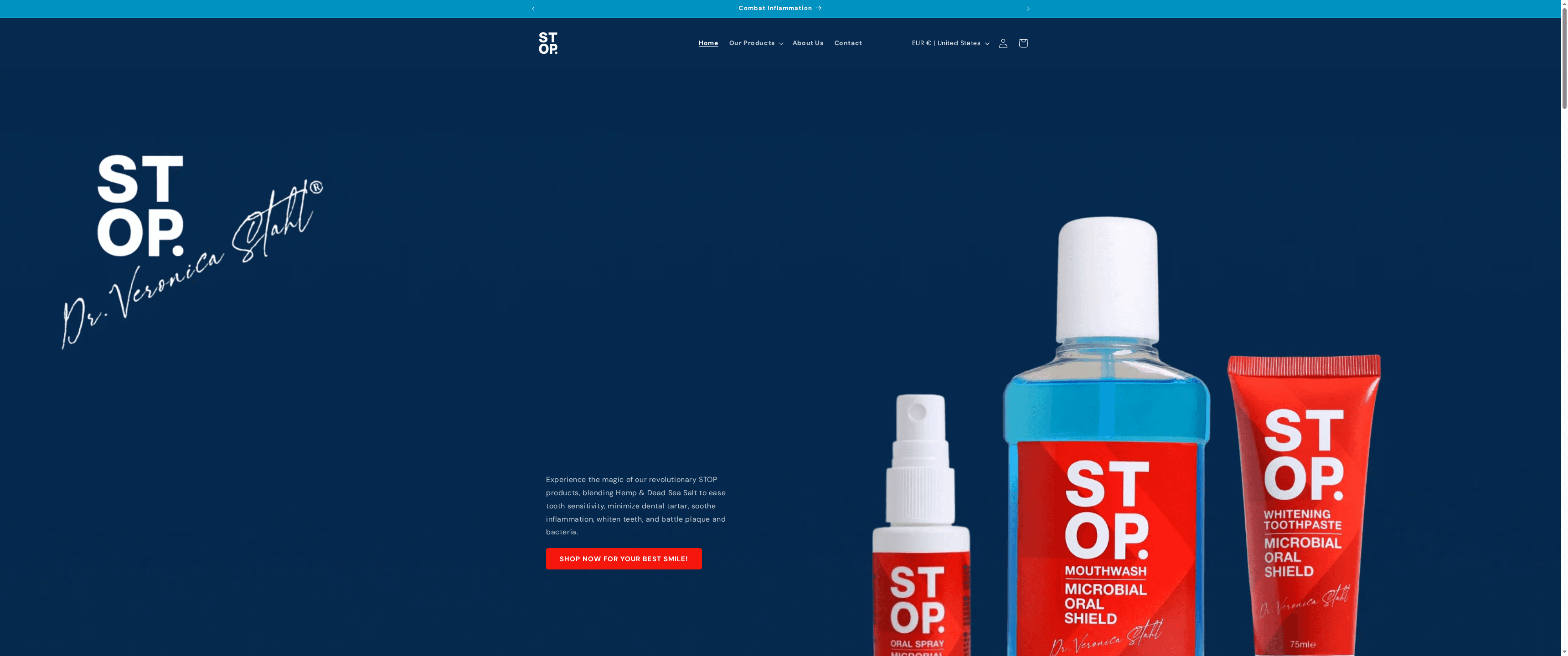
We formulate our STOP | Protective & Whitening Toothpaste around fluoride-free, hemp and Dead Sea mineral ingredients, with stevia selected specifically for its non-cariogenic taste profile rather than as a throwaway marketing term. If the evidence above resonated with you, the practical next step is checking an ingredient list that matches what the research actually supports.
What sets our approach apart for readers who have just read through the clinical and regulatory detail above:
- We disclose the full ingredient composition on our product pages rather than hiding behind the word “natural.”
- Our formulations avoid added sugars or lactose fillers that could undercut stevia’s non-cariogenic benefit.
- We pair taste agents with Dead Sea mineral and hemp-derived ingredients aimed at gum sensitivity and whitening, not sweetener alone.
If you are looking for a fluoride-free toothpaste that treats ingredient transparency as a baseline rather than a bonus, you can review the full STOP Oral Care product range and compare the formulation details against the checklist covered earlier in this piece.
This article is general information, not a substitute for advice from a qualified doctor. Consult a qualified healthcare professional about your own circumstances before acting on anything here.
FAQ
Is stevia safe for teeth compared to sugar?
Yes, stevia is considered safe for teeth because laboratory studies show it does not ferment the way sucrose does, which means it does not trigger the acid production responsible for enamel demineralization. Research comparing stevia against sucrose and aspartame found it maintained healthier plaque pH levels than sugar in testing.
What do the Amish use for toothpaste?
Traditional Amish oral care practices are not documented in the dental or regulatory research this article draws from, so we cannot state a verified answer here. General historical accounts of home remedies vary widely by community and are not a reliable substitute for evidence-based toothpaste formulations.
Is it okay to swallow a tiny bit of toothpaste?
Swallowing a small amount of toothpaste occasionally is not typically a serious concern for most ingredients, but habitual swallowing in children raises total exposure to sweeteners and other additives over time. Supervised brushing with pea-sized amounts remains the standard recommendation, particularly for young children.
Are there artificial sweeteners in toothpaste?
Yes, some toothpaste formulations use artificial sweeteners such as saccharin, while others use natural alternatives like stevia or sugar alcohols such as xylitol. Checking the ingredient label directly is the only reliable way to know which sweetener a specific product contains.
Why is sucralose in my mouthwash?
Manufacturers add sucralose and similar artificial sweeteners to mouthwash to improve taste without introducing fermentable sugars that bacteria could use to produce decay-causing acids. It serves the same basic taste function that stevia serves in other formulations, though the two compounds differ in origin and in the secondary plant compounds stevia extracts may contribute.
Sources
- Comparison of the Cariogenic Potential of Two Sweeteners, Stevia and Aspartame, Based on Bacterial Inhibition and pH Reduction
- Clinical trial reporting reductions in plaque and gingivitis with stevia-based mouthrinse
- Study noting commercial sweeteners with stevia may be cariogenic when mixed with lactose
- EFSA assessment on steviol glycosides (E 960a–d) and ADI considerations