

TL;DR:
- Xylitol suppresses Streptococcus mutans by disrupting its metabolism and reducing bacterial adhesion. It works best when used in doses of 5 to 10 grams daily, spread across multiple exposures after meals. Xylitol complements fluoride but does not replace it and is most effective when incorporated into a consistent oral hygiene routine.
Xylitol is a natural sugar alcohol that actively suppresses Streptococcus mutans, the primary bacteria responsible for tooth decay, by disrupting their metabolic processes. The role of xylitol in dental hygiene extends beyond simple sweetening. It alters the oral biofilm, reduces acid production on enamel surfaces, and promotes a more balanced microbial environment in the mouth. Dental associations recognize xylitol as a beneficial adjunct to standard oral care, and clinical evidence supports its use as part of a structured daily routine. Understanding how xylitol functions, how much to use, and where it fits relative to fluoride gives patients a clear framework for applying it effectively.
How does xylitol inhibit harmful oral bacteria?
Xylitol disrupts Streptococcus mutans at the metabolic level. Unlike sucrose, xylitol cannot be fermented by cariogenic bacteria. When S. mutans absorbs xylitol, it enters a futile metabolic cycle that consumes bacterial energy without producing acid. This process weakens the bacteria over time and reduces their ability to colonize tooth surfaces.
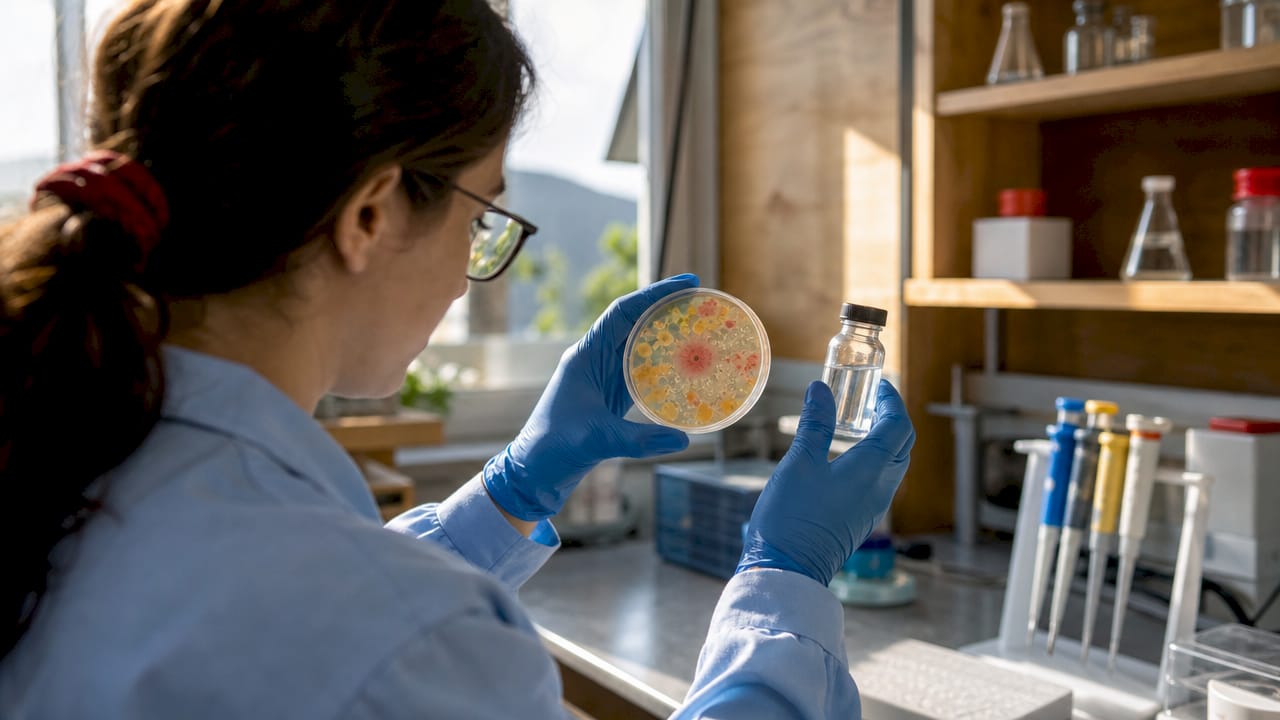
The reduction in acid production is clinically significant. Acid demineralizes enamel, creating the conditions for cavities. By limiting acid output, xylitol slows enamel erosion and gives saliva more time to remineralize affected areas. Saliva itself becomes more effective when xylitol stimulates its flow, raising the oral pH toward a neutral range.
Xylitol also reduces bacterial adhesion to tooth surfaces. S. mutans relies on sticky polysaccharides to anchor itself to enamel and form plaque. Xylitol interferes with this adhesion mechanism, making it harder for bacteria to build and maintain the complex biofilm that precedes cavity formation. This is why xylitol supports microbiome balance rather than simply killing all bacteria indiscriminately.
Critically, xylitol suppresses S. mutans selectively without harming normal oral flora. This selective action promotes a shift toward a less acidogenic oral microbiome. Dental hygienist Barbara Tritz notes that xylitol supports microbiome balance by disrupting acidogenic bacteria without sterilizing the mouth, which preserves the beneficial microbial communities that support overall oral health.
Pro Tip: Use xylitol products immediately after meals, when oral acidity peaks and bacterial activity is highest. This timing maximizes xylitol’s acid-neutralizing effect.
What is the recommended dosage for effective dental benefits?
Dosage precision determines whether xylitol delivers measurable oral health benefits or produces no clinical effect at all. The optimal daily intake is 5–10 grams, distributed across 3–5 separate exposures throughout the day. Spreading consumption across multiple sessions is more effective than consuming the full dose at once, because each exposure suppresses bacterial activity in a discrete window.
The following sequence reflects evidence-based usage for consistent results:
- Choose a product with sufficient xylitol per serving. Therapeutic chewing gum requires approximately 1 gram of xylitol per piece. Many commercial gums contain only 0.08–0.17 grams per piece, which means a person would need to chew many pieces daily to reach the therapeutic threshold. Xylitol-specific dental gums, lozenges, and mints formulated for oral health purposes are more reliable choices.
- Time each exposure after meals or snacks. Consuming xylitol after eating neutralizes the acid spike that follows carbohydrate intake. Three to five post-meal exposures align with typical eating patterns and maintain suppression of S. mutans throughout the day.
- Chew for at least 3 minutes per session. A minimum of 3 minutes of chewing allows xylitol to dissolve fully and stimulate adequate saliva flow. Chewing significantly longer may reduce the effective contact time between xylitol and oral surfaces, so 3–5 minutes per session is the practical target.
- Distribute exposures evenly. Morning, midday, afternoon, and evening use creates consistent bacterial suppression. Clustering all exposures into one part of the day leaves extended periods where S. mutans activity goes unchecked.
- Monitor gastrointestinal tolerance. Xylitol can cause GI discomfort when intake exceeds approximately 0.3 grams per kilogram of body weight daily. Patients new to xylitol should start at the lower end of the 5–10 gram range and increase gradually.
Pro Tip: Xylitol mints or lozenges work well in situations where chewing gum is impractical, such as during work meetings or at the gym. Confirm the xylitol content per unit before purchasing.
How does xylitol compare with fluoride and other oral care agents?
Xylitol and fluoride operate through different mechanisms and serve different primary functions. Fluoride remineralizes enamel and inhibits bacterial enzymes directly. Xylitol modifies the oral microbiome and reduces the conditions that allow decay to begin. These mechanisms are complementary, not interchangeable.
| Feature | Xylitol | Fluoride |
|---|---|---|
| Primary mechanism | Disrupts bacterial metabolism and adhesion | Remineralizes enamel, inhibits bacterial enzymes |
| Effect on microbiome | Selective suppression of S. mutans | Broad antibacterial action |
| Cavity prevention strength | Adjunctive; preventive fraction ~17% | Primary agent; stronger evidence base |
| Use in toothpaste | Additive; ~13% additional cavity reduction over fluoride alone | Core active ingredient |
| Replaces professional care | No | No |
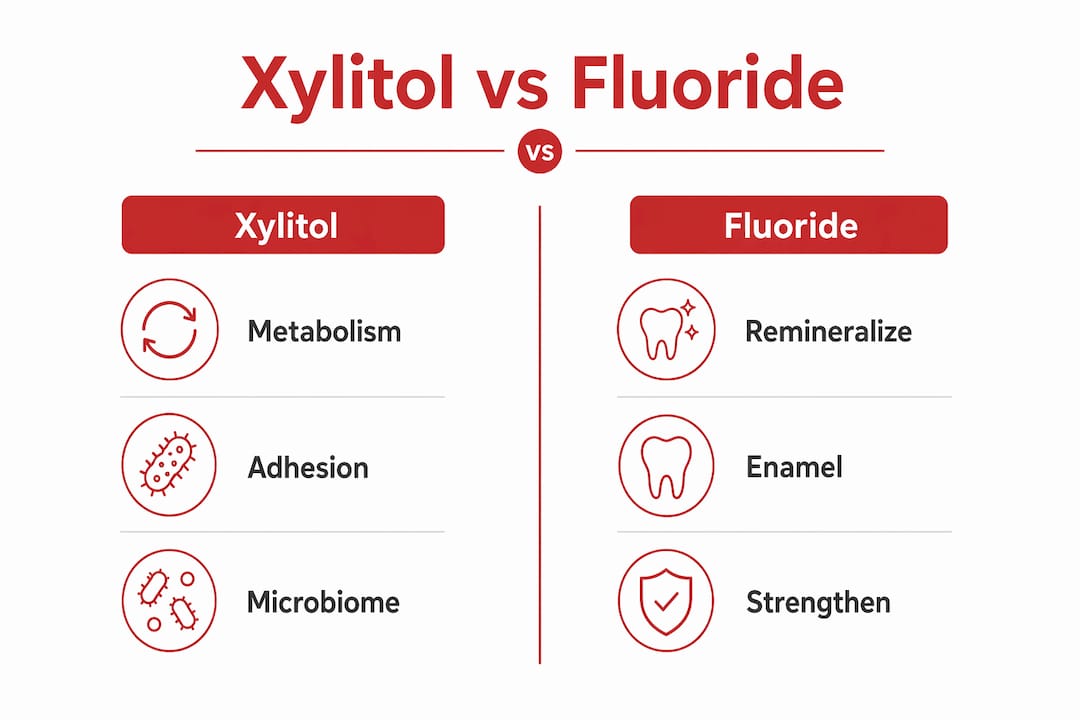
The 17% preventive fraction for xylitol means it can prevent cavities in roughly 17 out of 100 susceptible individuals. That figure is meaningful at a population level, but it confirms that xylitol functions as a supplement to, not a replacement for, fluoride-based care. When xylitol is added to fluoride toothpaste, studies show approximately 13% additional cavity reduction over 2.5–3 years compared to fluoride-only toothpaste, though the evidence quality is rated as low.
Xylitol’s unique contribution is microbiome modulation. Fluoride does not selectively preserve beneficial bacteria. Xylitol does. For patients interested in fluoride-free oral care or those seeking to support microbial balance alongside conventional treatment, xylitol fills a specific and well-documented niche. Xylitol is best used as a complement to professional dental care and standard hygiene practices, not as a standalone intervention.
What practical tips maximize xylitol’s benefits in daily oral care?
Integrating xylitol into a daily dental hygiene routine requires attention to product selection, timing, and consistency. The following practices reflect current clinical guidance for maximizing its effectiveness:
- Verify xylitol content before purchasing. Labels that list xylitol as the first sweetener indicate a higher concentration per serving. Products listing xylitol third or fourth likely contain insufficient amounts for clinical benefit. Aim for at least 1 gram per serving.
- Allow prolonged oral contact. Swallowing xylitol products quickly eliminates the contact time needed for bacterial suppression and saliva stimulation. Hold lozenges in the mouth until fully dissolved. Chew gum for the full 3–5 minute window.
- Combine xylitol with brushing and flossing. Xylitol reduces plaque formation, but it does not remove existing plaque mechanically. Brushing twice daily and flossing once daily remain the foundation of cavity prevention. Reviewing a dental hygiene checklist helps confirm that xylitol use fits within a complete routine rather than replacing any step.
- Maintain regular dental visits. Professional cleaning removes calcified deposits that xylitol and home care cannot address. Xylitol’s microbiome benefits are most durable when combined with periodic professional assessment.
- Adjust intake if GI symptoms appear. Bloating or loose stools signal that daily intake has exceeded personal tolerance. Reducing to 5 grams daily and increasing slowly over several weeks allows the digestive system to adapt. Spreading doses across more frequent, smaller exposures also reduces GI load.
Consistency is the single most important variable. Sporadic xylitol use does not sustain the suppression of S. mutans needed to shift the oral microbiome. Daily use, structured around meals, produces the cumulative effect that clinical studies measure.
Key Takeaways
Xylitol reduces cavity risk by selectively suppressing Streptococcus mutans, modulating the oral microbiome, and complementing fluoride and professional care within a structured daily routine.
| Point | Details |
|---|---|
| Mechanism of action | Xylitol disrupts S. mutans metabolism and reduces bacterial adhesion to enamel. |
| Optimal daily dose | Consume 5–10 grams spread across 3–5 exposures, ideally after meals. |
| Product selection | Choose products with at least 1 gram of xylitol per serving; most commercial gums fall short. |
| Adjunctive role | Xylitol complements fluoride and professional care; it does not replace either. |
| Microbiome benefit | Xylitol selectively suppresses harmful bacteria without disrupting beneficial oral flora. |
Xylitol in practice: what clinical experience actually shows
Xylitol’s clinical record is solid, but its real-world performance depends almost entirely on patient compliance. I have observed that patients who understand the dosing rationale, specifically the need for 3–5 daily exposures rather than a single large dose, are far more likely to maintain consistent use. Those who treat xylitol like a supplement they take once a day rarely achieve the bacterial suppression that studies document.
The microbiome angle is where I think conventional dental guidance still underserves patients. Most oral care advice focuses on removing bacteria or killing them outright. Xylitol works differently. It selects against the most damaging species while leaving the broader microbial community intact. That distinction matters for long-term oral health in ways that a simple cavity count does not capture. Patients who understand this tend to view xylitol not as a candy substitute but as a tool for actively managing their oral environment.
Gastrointestinal tolerance is a real barrier for some patients, and it is one that practitioners often overlook when recommending xylitol. Starting at 5 grams daily and titrating upward over two to three weeks resolves most tolerance issues. Patients who experience discomfort at the outset and stop using xylitol entirely miss the benefit because they were never guided through the adaptation period.
The honest clinical picture is this: xylitol is not a high-magnitude intervention on its own. Its preventive fraction is modest. But within a complete oral hygiene routine that includes brushing, flossing, and regular professional care, it adds a layer of microbiome management that no other common adjunct provides. That is a meaningful contribution, provided patients use it correctly and consistently.
— Veronica
Natural oral care products that work alongside xylitol
Xylitol delivers the most consistent results when it is part of a broader oral care routine rather than used in isolation. Stop-oralcare develops fluoride-free dental products formulated with natural ingredients, including options designed to support the kind of microbiome balance that xylitol promotes.
Patients seeking to extend xylitol’s benefits across their full routine can explore xylitol mouthwash options that maintain bacterial suppression between brushing sessions. Stop-oralcare also provides educational content on building a natural dental routine that integrates evidence-based adjuncts like xylitol with hemp-based and Dead Sea mineral formulations. For patients committed to fluoride-free care, the full product range at Stop-oralcare offers scientifically supported alternatives developed under the guidance of Dr. Veronica Stahl.
FAQ
What is xylitol and how does it help teeth?
Xylitol is a sugar alcohol that inhibits Streptococcus mutans by disrupting its metabolism, reducing acid production, and limiting bacterial adhesion to enamel. Regular use supports a less acidogenic oral microbiome and reduces the conditions that lead to cavities.
How much xylitol should I use daily for oral health benefits?
The evidence-based target is 5–10 grams daily, distributed across 3–5 separate exposures. Each exposure should last at least 3 minutes to allow adequate saliva stimulation and xylitol contact with oral surfaces.
Can xylitol replace fluoride in my dental routine?
Xylitol is an adjunct, not a replacement for fluoride. Fluoride remains the primary agent for enamel remineralization and cavity prevention. Xylitol adds microbiome modulation that fluoride does not provide, making the two complementary rather than interchangeable.
Does xylitol in toothpaste provide additional cavity protection?
Xylitol-containing fluoride toothpaste shows approximately 13% additional cavity reduction over fluoride-only toothpaste across a 2.5–3 year period, though the supporting evidence is rated as low quality. The combination is still considered beneficial as part of a complete routine.
Are there side effects from using xylitol?
Xylitol can cause bloating, gas, or loose stools when daily intake exceeds approximately 0.3 grams per kilogram of body weight. Starting at 5 grams daily and increasing gradually over several weeks allows most patients to reach therapeutic doses without significant gastrointestinal discomfort.