

Toothpaste abrasivity refers to how much wear a formula causes on tooth structure during brushing, and it is measured most commonly through Relative Dentin Abrasivity (RDA), a laboratory score comparing a product’s dentin wear against a standard reference abrasive set at 100. The practical verdict dentists and researchers agree on: an RDA of 250 or below is considered acceptable for daily use, a threshold the American Dental Association applies as part of its Seal of Acceptance evaluation. Most mainstream toothpastes fall well under that ceiling, but the number alone does not tell the whole story, since a separate measure called Relative Enamel Abrasivity (REA) can diverge sharply from RDA depending on the abrasive chemistry used.
For a quick baseline, here is what to do with that information right now:
- Check the product label or manufacturer datasheet for a published RDA value before assuming a toothpaste is “gentle.”
- Reduce brushing pressure and use a soft-bristled brush regardless of which toothpaste you choose.
- Choose a low-RDA formula if you have exposed dentin, gum recession, or diagnosed sensitivity.
Key Takeaways
Toothpaste abrasivity is measured through RDA, REA, and profilometry together, and no single number tells the full safety story on its own.
| Point | Details |
|---|---|
| RDA ≤ 250 is generally accepted as a safety threshold | The ADA’s Seal of Acceptance considers dentifrices below that threshold for daily use. |
| RDA and REA can diverge | Diamond-powder formulas have shown low RDA but much higher REA values, so dentin safety does not guarantee enamel safety. |
| Silica load raises abrasivity predictably | RDA rose from about 33 to 66 as hydrated silica increased from 2.5% to 10% by weight in profilometry testing. |
| Technique often outweighs small RDA differences | Light brushing pressure and a soft brush reduce wear more reliably than switching between two ADA-accepted products. |
| Stop-oralcare formulates toward the low end | Its fluoride-free, hemp and Dead Sea mineral toothpaste targets gentler abrasive systems suited to sensitivity and exposed dentin. |
Table of Contents
- What Do RDA and Related Abrasivity Terms Mean?
- How Are RDA, RDA-PE, and Profilometry Tests Actually Performed?
- Which Ingredients and Particle Properties Drive Abrasivity?
- What Does Clinical Evidence Show About Abrasivity and Long-Term Risk?
- How Should You Use RDA to Choose and Use Toothpaste Safely?
- What Are the Biggest Misconceptions About Toothpaste Abrasivity?
- What Does Recent Research Say About Refining RDA-Based Decisions?
- How Do You Verify an RDA Claim on a Product Label?
- A Publisher’s View on Formulating for Abrasivity
- Find Toothpaste Built Around Gentle, Disclosed Abrasive Systems
- Frequently Asked Questions
- Sources
What Do RDA and Related Abrasivity Terms Mean?
RDA expresses how much dentin a toothpaste wears away compared with a standardized reference abrasive assigned a fixed value of 100. Labs measure this using radioactive dentin substrates, tracking material loss during a controlled brushing protocol, then reporting the result as a ratio against that reference standard, according to the RDA and REA testing literature. The scale itself is unitless. It exists purely as a comparative ranking tool, not an absolute measurement of harm.
REA works on the same comparative logic but targets enamel instead of dentin. This distinction matters more than most product marketing lets on. Enamel is dramatically harder than dentin, so a toothpaste that scores low on RDA can still behave aggressively against enamel if its abrasive particles are hard enough or shaped in a way that scratches harder surfaces effectively. Research on diamond-powder formulations found exactly this pattern: some products measured low RDA values on dentin but produced REA readings dramatically higher than conventional silica-based toothpastes, in some cases reaching very high REA values for diamond-powder toothpastes, as documented in research on diamond-powder and traditional abrasives. A toothpaste can look mild by one metric and aggressive by another.
Profilometry offers a third lens entirely. Instead of comparing wear to a reference standard, profilometry physically maps the tooth surface before and after brushing, quantifying roughness (Ra), surface height variation (Rz), and total volume loss. It captures texture and microscratch patterns that a single RDA number cannot express.
RDA gives you a ranking. Profilometry gives you a picture. A formulation can produce a moderate RDA score while still generating deep, concentrated scratch patterns that only surface-mapping technology reveals, which is why researchers increasingly argue for measuring abrasivity in both quantitative and qualitative terms.
The three metrics answer different questions:
- RDA answers: how much dentin material is lost relative to a reference standard?
- REA answers: how does the same formula behave against enamel specifically?
- Profilometry answers: what does the resulting surface texture actually look like, and how deep are the scratches?
How Are RDA, RDA-PE, and Profilometry Tests Actually Performed?
Laboratory abrasivity testing follows a handful of standardized protocols, and understanding the mechanics behind each one helps you read a lab report without taking marketing claims on faith.
- Radioactive dentin RDA protocol. Technicians embed radioactive isotopes into extracted human or bovine dentin, brush the samples a fixed number of strokes with a slurry of the toothpaste being tested, then measure the radioactivity released into the slurry. More radioactivity released means more dentin material worn away, and the result gets converted into the familiar RDA number relative to the reference abrasive.
- RDA-PE (profilometric equivalent) variants. Because working with radioactive substrates requires specialized licensing, some labs use profilometry-based methods that estimate an equivalent RDA score without radioactive material, cross-calibrating volume loss measurements against known RDA reference points.
- Profilometry (Ra, Rz, volume loss). A laser or stylus scans the sample surface at microscopic resolution before and after brushing, generating roughness values (Ra measures average deviation, Rz measures peak-to-valley height) and calculating total material volume lost.
- In vitro brushing simulators. Mechanical arms replicate brushing motion at controlled force and stroke count, holding pressure and speed constant across every sample so that ingredient differences, not human variability, drive the results.
Substrate choice changes what a test can actually tell you. Dentin remains the default substrate for RDA specifically because it abrades faster than enamel, making differences between formulations easier to detect within a reasonable testing timeframe, per the same RDA and REA research. Some profilometry studies instead use polymethyl methacrylate (PMMA) blocks or sintered hydroxyapatite disks, both of which offer more uniform, reproducible surfaces than natural tooth tissue, though at the cost of not perfectly replicating dentin’s exact composition.
| Method | Substrate Used | What It Captures | Key Limit |
|---|---|---|---|
| RDA (radioactive) | Human/bovine dentin | Overall dentin material loss vs. reference | Says little about enamel behavior |
| RDA-PE | PMMA or hydroxyapatite | Estimated RDA equivalent, no radioactivity | Correlates well for simple formulas, less reliably for complex ones |
| Profilometry | Dentin, enamel, or PMMA | Surface roughness (Ra, Rz), volume loss | Highly sensitive to scan settings and sample prep |
| REA testing | Enamel specimens | Enamel-specific wear, independent of RDA | Rarely disclosed on consumer packaging |
Lab conditions rarely mirror how you actually brush. Standard protocols concentrate thousands of brushing strokes, sometimes between 1,500 and 12,000, onto a single fixed spot with a defined slurry concentration, according to guidance from Teeth. That concentrated repetition, combined with the absence of saliva’s protective pellicle layer, means lab abrasion values run conservative compared with typical real-world brushing, where your brush moves across the whole dentition and saliva continuously buffers the surface.
Which Ingredients and Particle Properties Drive Abrasivity?
Abrasive chemistry sets the baseline for how a toothpaste will score on RDA and REA, and the ingredient list on the tube tells you more than most consumers realize once you know what to look for.
Hydrated silica dominates the modern toothpaste market because it offers a controllable abrasivity range and works well alongside fluoride and other actives. A profilometry research shows that increasing hydrated silica concentration is associated with increases in RDA and roughness measurements (Ra, Rz) as well as volume loss, as reported in laser-scan profilometry research. More particles in suspension means more contact events during brushing, which directly increases scratch count even when scratch depth stays constant.
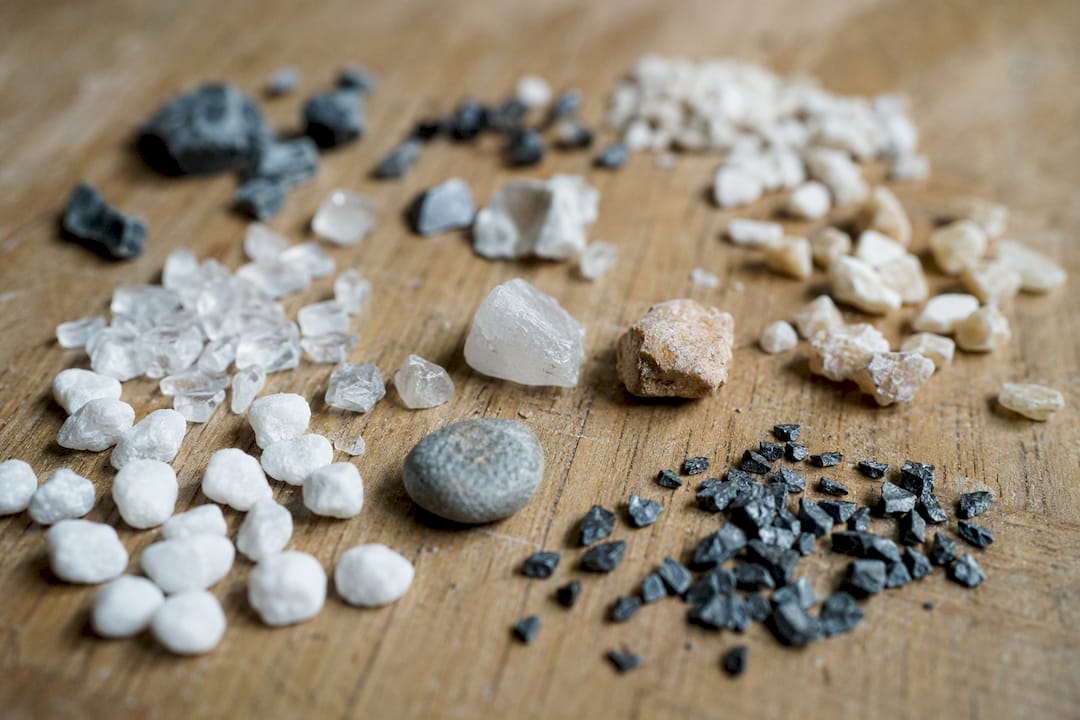
Calcium carbonate tends to sit in the moderate-to-higher abrasivity range and shows up frequently in whitening formulations aimed at mechanical stain removal. Dicalcium phosphate falls closer to the gentler end of the spectrum and has a long history in toothpaste formulation. Alumina (aluminum oxide) ranks among the harder abrasive minerals used in dental products, capable of aggressive cleaning but requiring careful formulation to stay within safe RDA ranges. Diamond powder, used in some polishing and whitening products, illustrates the RDA/REA gap most dramatically: extremely hard particles can slide across softer dentin with limited wear while still scratching much harder enamel, a mismatch documented in studies of diamond-powder toothpastes.
Particle size and shape matter independently of chemistry. Smaller, rounder particles tend to distribute contact force across a wider surface area, producing shallower, more numerous scratches, which is the basic mechanism behind microabrasion-focused formulations. Larger or sharper-edged particles concentrate force into fewer, deeper scratches, even at an identical particle count. Hardness relative to the tooth surface being brushed determines whether a particle cuts, polishes, or simply slides past.
Pro Tip: Ingredient position on the label offers a rough clue to abrasive load, since ingredients list in descending order by weight. A toothpaste listing hydrated silica within the first three or four ingredients is likely formulated toward the higher end of its category’s abrasivity range, even without a published RDA number.
Reading a label critically means looking past marketing language like “gentle” or “whitening” and checking whether the manufacturer discloses an actual RDA figure, what abrasive system it uses, and whether that system has independent testing behind it rather than an internal, undisclosed method.
What Does Clinical Evidence Show About Abrasivity and Long-Term Risk?
The correlation between abrasive load and measured wear is strong and consistent across independent studies, but RDA alone leaves clinically important gaps that dentists have to fill with judgment and patient history.
The profilometry data on hydrated silica concentration illustrates the dose-response relationship clearly: as silica content rose from 2.5% to 10% by weight, RDA increased from approximately 33 to 66, and roughness metrics climbed in step, per the laser-scan profilometry study. That kind of linear relationship gives formulators a predictable lever, but it also means small increases in abrasive concentration for whitening or stain-removal purposes carry a measurable, non-trivial wear cost.
Where RDA falls short is in predicting enamel-specific outcomes, since dentin and enamel respond very differently to the same abrasive particle. Enamel is a highly mineralized, dense tissue built to withstand mechanical and chemical stress far better than the softer, more porous dentin beneath it. Once dentin becomes exposed, through gum recession, aggressive brushing, or erosion, it becomes vulnerable to wear at a rate that outpaces what a person’s decades of prior brushing habits would suggest.
Erosion compounds this vulnerability in a way that pure abrasion studies do not always capture. Acidic exposure from dietary sources or reflux softens the outer layer of enamel temporarily, and brushing immediately after that exposure removes softened tissue far more readily than brushing on unaffected enamel. This interaction between chemical softening and mechanical wear explains why timing, not just toothpaste choice, factors heavily into long-term tooth wear.
Several risk factors compound to elevate someone’s personal abrasion risk well beyond what an RDA number alone would predict:
- Exposed root surfaces from gum recession, where dentin sits directly in the brushing path with no enamel buffer.
- Aggressive brushing technique, including excessive pressure or a scrubbing horizontal motion rather than controlled, angled strokes.
- Hard or worn bristles, which concentrate force onto fewer contact points than a soft, splayed brush head.
- Frequent acidic exposure from diet, reflux, or certain medications, which softens enamel ahead of brushing.
- Existing enamel defects such as developmental hypoplasia or prior erosive damage, which reduce the tissue’s baseline resistance.
A review of RDA’s role in predicting hard-tissue outcomes concluded that the metric functions best as one input among several, recommending it be paired with roughness data and clinical context rather than used as a standalone safety score, according to research on RDA and dental hard tissue impact. That combined approach reflects how dentists actually practice: they weigh a patient’s specific anatomy and habits alongside any published abrasivity figures, rather than treating RDA as a pass/fail safety certificate.
How Should You Use RDA to Choose and Use Toothpaste Safely?
Turning RDA data into a daily decision comes down to matching your specific dental situation against the trade-off between cleaning power and tissue wear, then reinforcing that choice with technique.
- Identify your risk category first. If you have diagnosed sensitivity, visible gum recession, exposed root surfaces, or a history of enamel erosion, prioritize a non-abrasive toothpaste formulated toward the lower end of the RDA scale.
- Weigh stain removal needs against wear cost. If your main concern is surface staining from coffee, tea, or tobacco and you have no sensitivity or recession, a moderate-RDA whitening formula sits within the ADA’s accepted range and can be used without excessive risk, provided you are not brushing aggressively.
- Check brushing pressure independently of toothpaste choice. Clinician guidance consistently points to light pressure and a proper two-finger grip as a bigger lever on wear prevention than shaving a few points off an RDA score, since even a low-RDA formula applied with heavy pressure and a scrubbing motion can still cause damage over years of repetition.
- Match brush type to your risk level. Soft bristles paired with a gentle circular or angled stroke reduce mechanical load regardless of which toothpaste sits on the brush.
- Time your brushing around acidic exposure. Wait at least 30 minutes after consuming acidic food, coffee, or soda before brushing, giving saliva a chance to buffer and re-harden the enamel surface first.
- Look for fluoride or stannous fluoride if remineralization is a priority. These ingredients support enamel resistance independent of the abrasive system, and many low-RDA formulas still include them for that reason. Fluoride-free formulas, which some consumers prefer, need to lean on alternative remineralizing ingredients to fill that gap, a trade-off worth understanding before choosing toothpaste without fluoride.
A simple decision rule covers most situations: if you have exposed dentin, recession, or diagnosed sensitivity, default to low-RDA formulas and gentle technique. If your enamel is intact and your main goal is stain control, a moderate-RDA product used with proper brushing habits falls within the safety range research supports. When in doubt, check whether the manufacturer publishes an actual RDA number rather than a vague “gentle” or “extra whitening” claim, since the absence of a disclosed figure is itself informative.
Pro Tip: If a product’s marketing emphasizes whitening power heavily but the label discloses no RDA value at all, treat that as a signal to look elsewhere, particularly if you already have any of the risk factors above.
What Are the Biggest Misconceptions About Toothpaste Abrasivity?
Several myths persist around abrasivity, and clearing them up prevents both unnecessary anxiety and misplaced confidence.
- “Whitening toothpaste is always more abrasive.” Not necessarily. Whitening formulas often rely on higher abrasive concentrations for mechanical stain removal, but some use enzymatic or chemical whitening agents instead, keeping RDA within the standard range while still lifting surface stains.
- “Low RDA always means safer for enamel.” Not automatically. As the diamond-powder research shows, a formula can register a low RDA on dentin while still producing high REA on enamel, so the dentin-focused number does not guarantee enamel-friendly behavior.
- “Hydroxyapatite toothpaste is inherently non-abrasive.” Hydroxyapatite itself is a mineral compound that mimics natural tooth structure, and its abrasivity depends on particle size and concentration just like any other ingredient; check the evidence behind hydroxyapatite toothpaste rather than assuming the ingredient name alone settles the question.
- “An ‘unhealthy’ toothpaste is obvious from the ingredient list.” Abrasivity risk is contextual, not universal. A moderately abrasive formula poses little concern for someone with intact enamel and good technique but meaningful risk for someone with exposed dentin.
- “Higher RDA always cleans better.” Cleaning effectiveness depends on abrasive particle design and brushing technique together, not abrasivity alone; some low-to-moderate RDA formulas with well-engineered particle shapes perform comparably to higher-RDA products.
What Does Recent Research Say About Refining RDA-Based Decisions?
Newer profilometry techniques are narrowing the gap between lab measurement and real-world prediction, though limits remain for complex formulations.
Profilometry-based RDA equivalents (RDA-PE) correlate closely with traditional radioactive RDA testing for simple, single-abrasive formulas, since the relationship between particle concentration and surface wear stays fairly linear in those cases, consistent with the dose-response pattern seen in silica concentration studies. Complex, multi-abrasive formulations with combined particle chemistries tend to diverge more between the two methods, because interactions between different particle types do not always scale predictably.
Technique differences between patients often account for more variation in measured tooth wear than small differences in RDA between two ADA-accepted products. A clinician evaluating wear patterns typically checks brushing force and stroke pattern before assuming the toothpaste itself is the primary cause.
Clinicians integrating this research into patient advice tend to layer three inputs together: the RDA and REA figures where available, a patient’s specific anatomical risk factors like recession or erosion history, and observed brushing habits during a hygiene visit. That layered approach reflects the core limitation of any single abrasivity number: it describes a formula in isolation, not how that formula interacts with a specific mouth and a specific brushing pattern over years of use.
How Do You Verify an RDA Claim on a Product Label?
A credible RDA claim comes with supporting documentation, not just a bare number printed on packaging or a marketing page.
- Check for a named testing method and substrate. A trustworthy claim specifies whether the value came from radioactive RDA testing, RDA-PE, or another profilometry-based method, and identifies the substrate used.
- Look for a lab name and test date. Independent, accredited laboratories that disclose their identity and testing date carry more weight than an unnamed “internal test.”
- Treat unexplained single numbers with suspicion. A bare RDA figure with no method, no lab attribution, and no test repetition count is a red flag, particularly if it contradicts known behavior for that abrasive chemistry.
- Request the underlying lab report when possible, and compare it against peer-reviewed literature on similar formulations, then consult a dental professional if your specific risk factors make the answer unclear.
A Publisher’s View on Formulating for Abrasivity
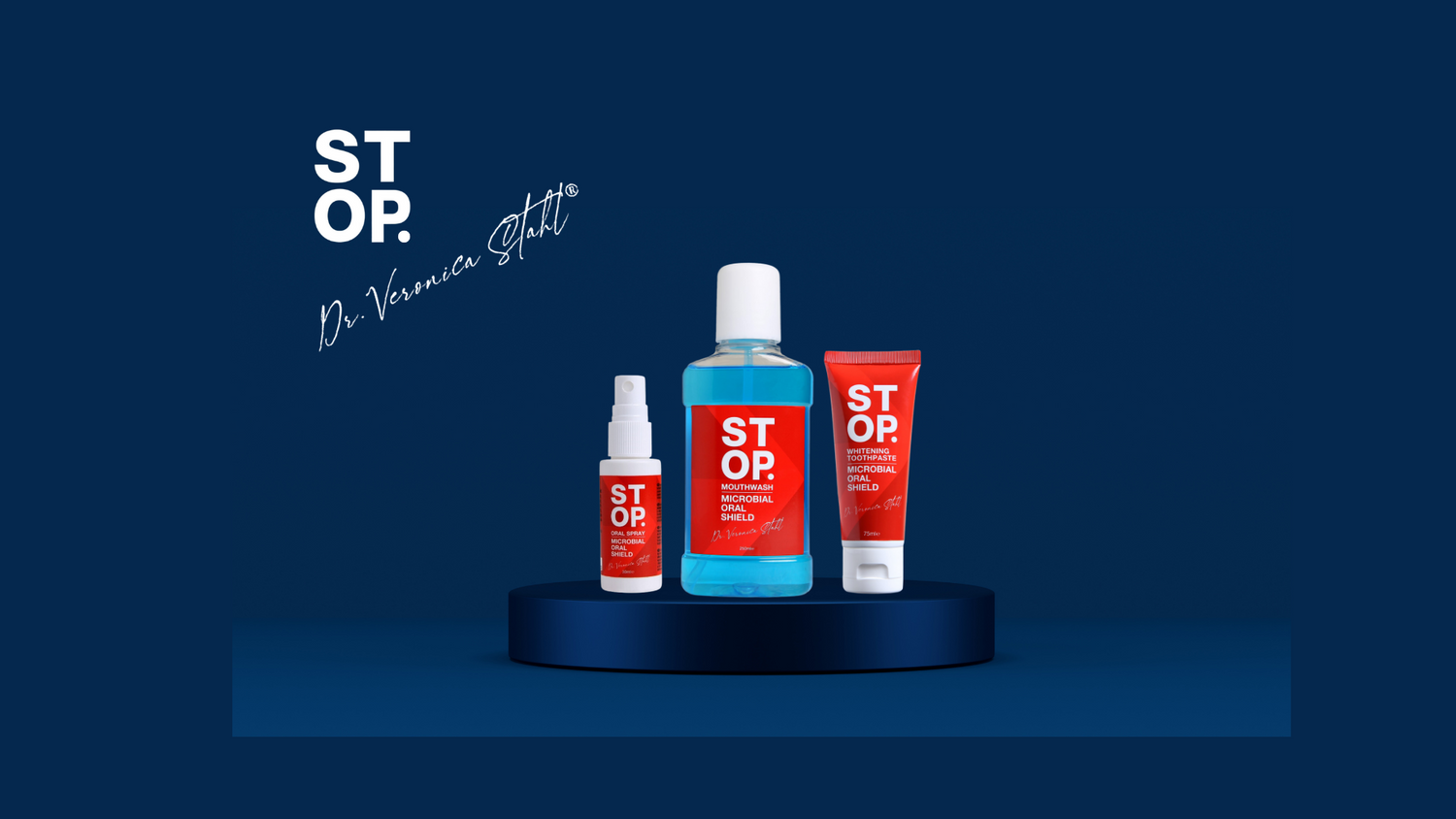
Stop-oralcare sells fluoride-free, hemp-infused toothpaste formulated with Dead Sea minerals, and that positioning comes directly from the evidence in this article, not around it. Sensitivity and exposed-dentin cases call for restrained abrasive systems, and the brand’s formulations are built toward that lower end of the safety range rather than toward aggressive whitening claims.
Independent verification matters more to us than a marketing number, which is why we favor transparent abrasive systems over undisclosed “proprietary” claims. None of this replaces individualized clinical advice. Anyone with active recession, diagnosed erosion, or unexplained sensitivity should still bring these questions to a dentist before settling on a long-term toothpaste choice.
Find Toothpaste Built Around Gentle, Disclosed Abrasive Systems
Choosing a toothpaste with a disclosed, low-to-moderate abrasive profile matters most if you already deal with sensitivity, recession, or thinning enamel, and that is exactly the gap Stop-oralcare’s fluoride-free line was formulated to close. Instead of leaning on undisclosed “proprietary” whitening abrasives, the hemp and Dead Sea mineral formulations prioritize gentler particle systems designed for people who need daily protection without gambling on an unlabeled RDA number.
If your enamel is intact and you are managing occasional sensitivity, our Dead Sea mineral toothpaste guidance walks through how to match formulation to your specific situation before you buy. Browse the current toothpaste and oral care range to compare formulations against the decision framework covered above, and choose the one that fits your risk profile rather than the one with the loudest whitening claim on the box.
Frequently Asked Questions
What is a safe RDA value for toothpaste? Values at or below 250 meet the ADA’s accepted safety threshold for daily use, though people with exposed dentin or sensitivity generally do better with formulas well under that ceiling.
How is toothpaste abrasivity measured? Labs primarily use RDA testing on dentin substrates, sometimes supplemented with REA testing on enamel and profilometry scans that measure surface roughness and volume loss directly.
Does a low RDA mean a toothpaste is non-abrasive to enamel too? Not necessarily. Some formulas, particularly those using diamond powder, show low RDA on dentin while still producing high REA on enamel, so the two measures need to be checked separately when available.
Is hydroxyapatite toothpaste automatically low-abrasion? No. Its abrasivity depends on particle size and formulation concentration, the same variables that determine abrasivity in any other toothpaste chemistry.
Can toothpaste abrasivity cause permanent enamel damage? Enamel wear from abrasive brushing accumulates gradually and is not reversible once tissue is lost, which is why choosing an appropriate RDA level and using gentle technique both matter for long-term dental health.
This article is general information, not a substitute for advice from a qualified doctor. Consult a qualified healthcare professional about your own circumstances before acting on anything here.
Sources
- RDA and REA values of commercially available toothpastes utilising diamond powder and traditional abrasives — PMC
- Teeth
Recommended
- What Is Microabrasion in Toothpaste? A Clear Guide – Stop Oral Care
- Non-Abrasive Toothpaste: Protecting Sensitive Teeth Naturally – Stop Oral Care
- What Is Hydroxyapatite Toothpaste? A Complete Guide to Safe, Effective – Stop Oral Care
- Hydroxyapatite Toothpaste vs Fluoride: A Comprehensive Comparison for – Stop Oral Care