

TL;DR:
- Professional enamel microabrasion uses controlled acid and abrasive techniques to remove superficial intrinsic stains, unlike commercial whitening toothpastes that rely solely on surface abrasion. It is a minimally invasive, dentist-supervised procedure effective for certain enamel defects, whereas toothpaste “microabrasion” products often pose risks of enamel damage due to uncontrolled abrasive use. Proper post-treatment care with low-abrasion, remineralizing toothpaste is essential for long-lasting, healthy results.
Microabrasion in toothpaste is defined as the controlled mechanical removal of superficial enamel layers using abrasive particles to reduce surface stains and minor discolorations. The term describes two distinct clinical realities that are frequently conflated: the professional, in-office enamel microabrasion procedure and the abrasive action found in commercial whitening toothpastes. Professional enamel microabrasion, as performed with products such as Opalustre, combines mild acids with abrasive particles under strict dental supervision. Understanding the difference between these two approaches is the foundation for making safe, informed decisions about enamel care.
What is microabrasion in toothpaste and how does it work?
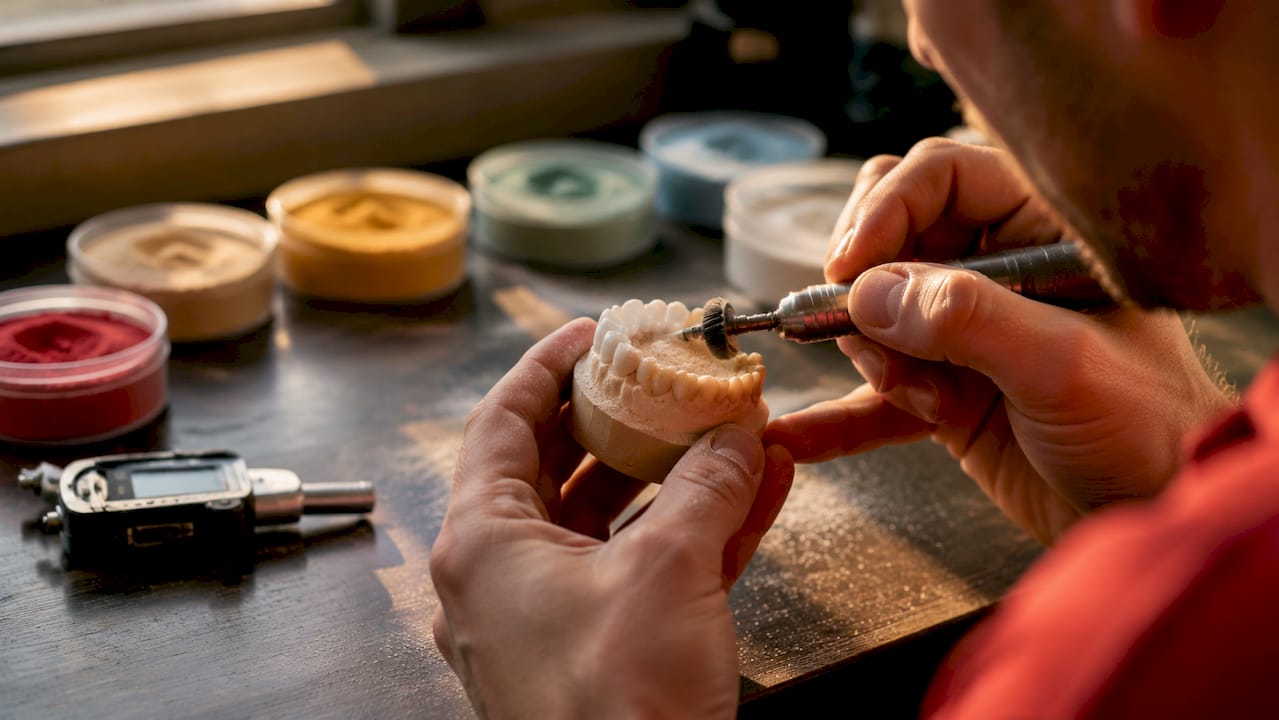
Professional enamel microabrasion is a chemical-mechanical procedure that combines mild acids, typically hydrochloric or phosphoric acid, with abrasive particles such as pumice. The acid softens the outermost enamel layer, while the abrasive mechanically removes it. This dual action targets intrinsic discolorations that exist within the enamel structure itself, not just on its surface.
By contrast, commercial whitening toothpastes use abrasives such as silica or calcium carbonate to scrub the tooth surface. These products scrub surface deposits but do not address subsurface mineral defects. The absence of an acid component means they cannot reach intrinsic staining embedded within enamel.
Professional microabrasion removes 50–100 micrometers of enamel per pass, with a typical session requiring 6–8 passes. Total enamel removal is limited to 300–500 micrometers to preserve structural integrity. Each application pass is timed at 5–20 seconds using dental instruments, giving the clinician precise control over the depth of removal.
Comparing the two mechanisms
| Feature | Professional Microabrasion | Abrasive Whitening Toothpaste |
|---|---|---|
| Active mechanism | Acid erosion plus mechanical abrasion | Mechanical abrasion only |
| Target | Intrinsic enamel defects | Surface stains and deposits |
| Depth of action | 50–100 micrometers per pass | Surface layer only |
| Clinical control | Dentist-supervised, timed application | Consumer-applied, uncontrolled |
| Acid component | Yes (hydrochloric or phosphoric acid) | No |
| Risk of overuse | Managed by professional calibration | High with daily unsupervised use |
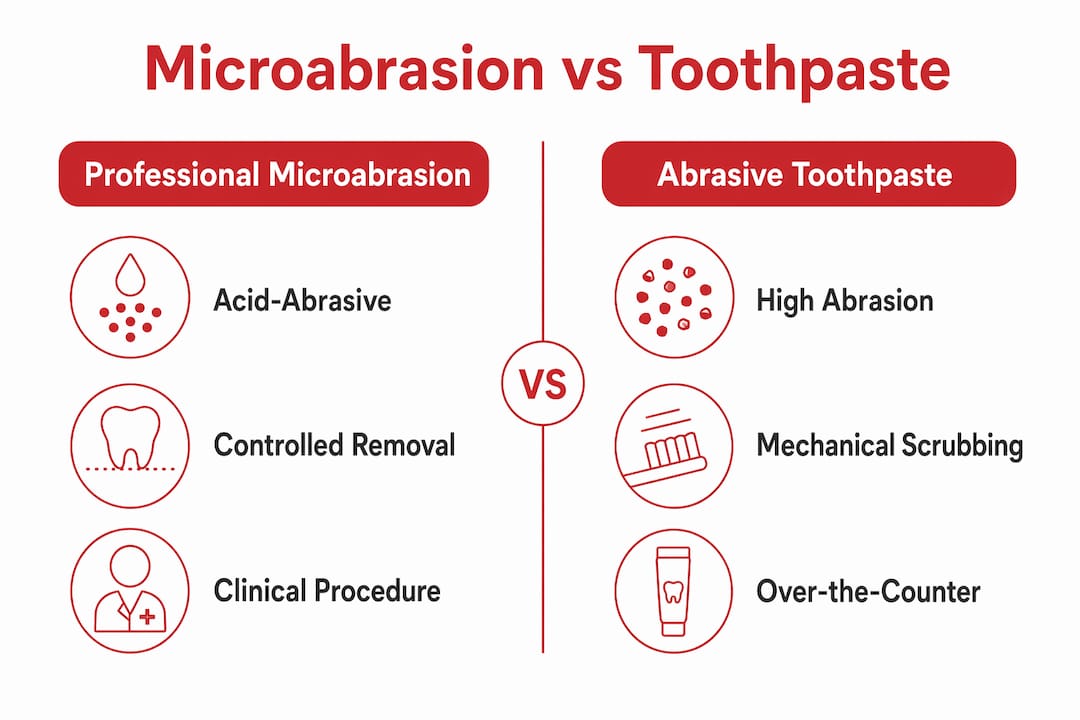
This table makes the core distinction clear. Professional microabrasion is a calibrated clinical procedure. Abrasive toothpaste is a daily hygiene product with a fundamentally different mechanism and a narrower range of appropriate applications.
What are the benefits and limitations of enamel microabrasion?
Professional microabrasion is most effective for superficial intrinsic stains, including fluorosis spots, decalcification marks, and mild surface discolorations caused by developmental enamel defects. These are conditions where the discoloration originates within the enamel itself, making surface-only treatments ineffective. Results from microabrasion can last for decades with proper oral hygiene.
The procedure is minimally invasive compared to alternatives such as porcelain veneers or composite bonding. It requires no drilling and is typically performed without anesthesia. Minor post-treatment sensitivity is possible but generally resolves within a short period.
Key benefits of professional enamel microabrasion:
- Removes intrinsic enamel stains such as fluorosis and decalcification without drilling
- Preserves more natural tooth structure than veneers or crowns
- Anesthesia-free in most cases, with minimal post-treatment discomfort
- Cost-effective at $200–$400 per treatment compared to veneers, which can exceed $1,000 per tooth
- Long-lasting results when supported by consistent oral hygiene
Limitations to recognize:
- Ineffective for deep intrinsic stains that extend beyond the superficial enamel layer
- Cannot address extrinsic discolorations caused by coffee, tea, or tobacco without adjunct treatment
- Not appropriate for teeth with thin enamel or existing enamel erosion
- Requires professional assessment to determine candidacy
Pro Tip: Combining professional microabrasion with a supervised whitening treatment improves outcomes for patients with both intrinsic defects and general surface discoloration. The microabrasion addresses the structural defect first, and whitening then uniformly brightens the remaining enamel.
Microabrasion toothpaste vs. professional treatment: key differences
Many commercial toothpastes marketed as “microabrasion” products are high-abrasion whitening pastes without any acid component. Consumers frequently confuse these with professional microabrasion, which creates a real risk of enamel damage from daily overuse. The marketing term “microabrasion” on a toothpaste label does not indicate clinical equivalence to the in-office procedure.
Professional microabrasion uses an acid-abrasive slurry applied with dental instruments under strict controls to limit enamel removal and avoid dentin exposure. This is categorically different from brushing with an abrasive paste twice daily without professional oversight. The risks of applying a high-abrasion toothpaste to healthy enamel include progressive enamel thinning, increased sensitivity, and eventual dentin exposure near the gum line.
Comparison of treatment types
| Feature | Professional Microabrasion | “Microabrasion” Toothpaste | Standard Whitening Toothpaste |
|---|---|---|---|
| Acid component | Yes | No | No |
| Abrasive particles | Pumice or equivalent | Silica or calcium carbonate | Silica or calcium carbonate |
| Application control | Dentist, timed passes | Consumer, uncontrolled | Consumer, uncontrolled |
| Target stain type | Intrinsic enamel defects | Surface deposits | Surface deposits |
| Safety oversight | High | Low | Low |
| Appropriate frequency | Single or limited sessions | Daily (with caution) | Daily (with caution) |
| Enamel risk | Low when properly performed | Moderate to high with overuse | Moderate with overuse |
Choosing the right enamel-safe toothpaste requires understanding the Relative Dentin Abrasivity (RDA) value of any product you use daily. The American Dental Association considers an RDA below 250 acceptable, but products below 70 are considered low-abrasion and preferable for long-term enamel protection.
Pro Tip: Before purchasing any toothpaste labeled “microabrasion,” check the RDA value on the manufacturer’s website or ask your dentist. A high RDA combined with aggressive brushing is a common cause of preventable enamel wear.
Safe usage guidelines for microabrasion and abrasive toothpaste
Safe use of microabrasion, whether professional or product-based, depends on understanding the limits of enamel removal and the conditions that make each approach appropriate. The following guidelines apply to both clinical patients and daily toothpaste users.
- Consult a dental professional before any microabrasion treatment. Professional microabrasion must be performed by a licensed dentist. Attempting to replicate the procedure at home with acid-based products risks permanent enamel damage and dentin exposure.
- Use fluoride gel or a remineralizing agent after professional microabrasion. Post-treatment remineralization requires fluoride application and patient adherence to oral hygiene to restore enamel hardness and maintain cosmetic outcomes.
- Expect a temporary matte appearance after professional treatment. Enamel regains its glossy appearance in 2–4 weeks through remineralization. This is a normal part of the healing process, not a sign of damage.
- Avoid high-abrasion toothpastes unless specifically prescribed. For daily maintenance after professional microabrasion, select a low-abrasion toothpaste to protect the treated enamel surface. Products formulated with Dead Sea minerals or hydroxyapatite support remineralization without aggressive abrasion.
- Monitor for sensitivity near the gum line. Practitioners avoid microabrasion near gum lines to reduce risks of sensitivity and permanently exposed dentin. If sensitivity develops after treatment, report it to your dentist promptly.
- Maintain consistent oral hygiene to preserve results. Long-term outcomes from professional microabrasion depend heavily on the patient’s daily oral hygiene routine. Brushing twice daily with a soft-bristle brush and a low-abrasion toothpaste is the standard recommendation.
Pro Tip: If you experience sensitivity after professional microabrasion, a toothpaste formulated with potassium nitrate or hydroxyapatite can help manage discomfort while supporting enamel remineralization. Discuss this with your dentist before switching products.
For patients interested in enamel repair toothpaste options that complement post-microabrasion care, mineral-based formulations offer a scientifically supported alternative to conventional fluoride products.
Key takeaways
Professional enamel microabrasion is a clinically controlled procedure that removes intrinsic enamel stains through acid-abrasive synergy, and it is not replicable by commercial toothpaste products regardless of their labeling.
| Point | Details |
|---|---|
| Microabrasion is a clinical procedure | It combines acid and abrasive particles under dental supervision, not a toothpaste ingredient. |
| Toothpaste products differ fundamentally | Commercial “microabrasion” toothpastes use abrasion only and cannot address intrinsic enamel defects. |
| Enamel removal is precisely limited | Professional treatment removes no more than 300–500 micrometers total to preserve structural integrity. |
| Post-treatment care is required | Fluoride or remineralizing agents restore enamel hardness and gloss within 2–4 weeks after treatment. |
| Safe toothpaste selection matters | Choose low-RDA, enamel-protective toothpastes for daily use, especially after professional microabrasion. |
The misconception that concerns me most in clinical practice
One pattern I observe consistently is patients arriving for consultation after months of using a heavily marketed “microabrasion” toothpaste, expecting results equivalent to an in-office procedure. They are often disappointed, and in some cases, they have caused measurable enamel thinning through daily overuse of a high-abrasion product. The marketing language around these products is, in my assessment, misleading to a degree that warrants stronger regulatory scrutiny.
The professional microabrasion procedure has a 40-year evidence base. It is precise, controlled, and appropriate for a specific subset of enamel conditions. It is not a daily hygiene practice. Conflating it with abrasive toothpaste use does a disservice to patients who genuinely need the clinical procedure and to those who would be better served by a protective, low-abrasion daily product.
What I find most productive in patient education is a simple reframe: microabrasion is a treatment, not a maintenance routine. Once patients understand that distinction, they make better decisions about both their professional care and their at-home products. The rise of minimally invasive dentistry has created genuine opportunities to preserve natural tooth structure. Microabrasion, used correctly and within its clinical indications, is one of the better tools available for that purpose. The key word is “correctly.”
— Veronica
Explore enamel-protective oral care from Stop-oralcare
Professional microabrasion addresses intrinsic enamel defects with clinical precision. Daily maintenance requires a different approach: a toothpaste that protects and remineralizes without adding unnecessary abrasion to treated or healthy enamel.
Stop-oralcare formulates its oral care products with Dead Sea minerals and hemp-derived compounds, providing a fluoride-free alternative that supports enamel remineralization and oral health without aggressive abrasion. For individuals managing post-microabrasion care or seeking to protect enamel long-term, the Dead Sea mineral toothpaste range offers a scientifically grounded option. Explore the full Stop-oralcare product line at stop-oralcare.com to find formulations aligned with your enamel care goals.
FAQ
What is the difference between microabrasion and teeth whitening?
Microabrasion removes a thin layer of enamel using acid and abrasive particles to eliminate intrinsic stains, while whitening uses peroxide to bleach discoloration without removing enamel. The two procedures target different types of discoloration and are often combined for optimal results.
Is microabrasion safe for tooth enamel?
Professional microabrasion is safe when performed by a licensed dentist, as total enamel removal is limited to 300–500 micrometers. Overuse of high-abrasion toothpastes marketed as “microabrasion” products carries a real risk of enamel thinning and sensitivity.
How long do microabrasion results last?
Results from professional enamel microabrasion can last for decades with proper oral hygiene. Long-term outcomes depend on consistent brushing, low-abrasion toothpaste use, and regular dental monitoring.
Can i do microabrasion at home with toothpaste?
No. Professional microabrasion requires acid-abrasive slurry applied under dental supervision and cannot be replicated with commercial toothpaste. At-home products labeled “microabrasion” are abrasive whitening pastes without the clinical acid component.
What conditions does microabrasion treat most effectively?
Microabrasion is most effective for fluorosis spots, decalcification marks, and mild developmental enamel discolorations. It is not appropriate for deep intrinsic stains or extrinsic discolorations caused by dietary habits.
Recommended
- What Is Hydroxyapatite Toothpaste? A Complete Guide to Safe, Effective – Stop Oral Care
- The Benefits of Hydroxyapatite Toothpaste for Sensitive Teeth: A Compr – Stop Oral Care
- Discover the Best Toothpaste for Oral Microbiome: 10 Science‑Backed Pi – Stop Oral Care
- What Is Microbiome-Friendly Toothpaste and Why It Matters – Stop Oral Care