

TL;DR:
- Ingredient purity in oral care means every component is verified to be free from harmful contaminants through batch-specific testing. Natural ingredients are not always safer, as they can carry microbial and abrasivity risks requiring strict manufacturing controls. Consumers should ask brands for independent testing records, full ingredient disclosure, and proof of batch-specific quality verification to ensure product safety and consistency.
Ingredient purity in oral care is defined as the verified absence of harmful contaminants, adulterants, and undisclosed substances in every component used to formulate a dental product. The oral mucosa absorbs compounds directly into the bloodstream, which means impure ingredients bypass the digestive filtration that protects against many ingested toxins. This direct exposure makes ingredient safety in oral care a clinical concern, not merely a marketing preference. Consumers increasingly demand ingredient transparency in oral care, and regulatory bodies like the FDA now require identity and microbial testing on every production lot to prevent contamination from reaching end users.
Why ingredient purity in oral care is a testable science, not a label claim
Purity in oral care products is confirmed through two distinct processes: identity testing and purity testing. Identity testing confirms that an ingredient is what the supplier claims it is. Purity testing confirms that the ingredient contains no harmful contaminants at detectable levels. Both are required for a product to be considered genuinely safe.
The most common analytical methods for identity testing include Fourier Transform Infrared Spectroscopy (FTIR) and Raman spectroscopy. These techniques produce a molecular fingerprint of a substance and compare it against a reference standard. 2026 FDA guidance mandates 100% identity testing on active ingredients and statistical sampling for excipients on every production lot. That requirement exists because counterfeit or misidentified raw materials have caused product failures and safety incidents across the personal care industry.
Purity testing goes further by screening for specific classes of contaminants. Purity testing detects heavy metals such as lead and arsenic, microbial contamination including mold and gram-negative bacteria, and residual solvents from extraction or synthesis processes. Each of these contaminant classes poses a distinct health risk when applied repeatedly to gum tissue and oral mucosa.
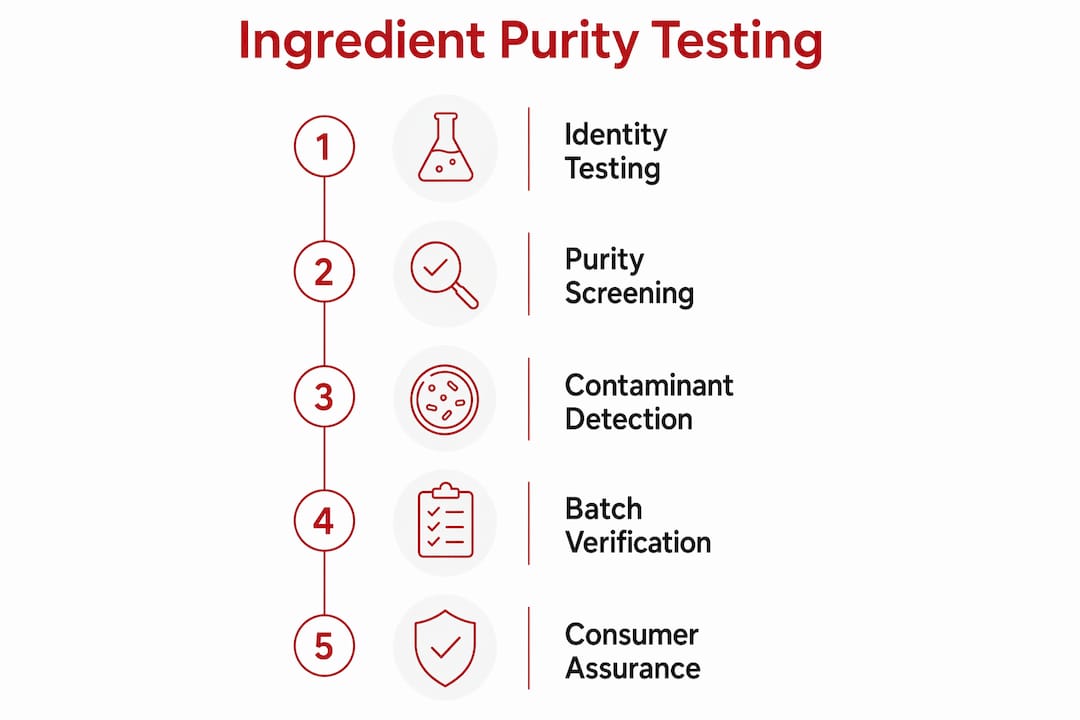
A critical and frequently overlooked issue is the difference between supplier documentation and independent batch verification. Certificates of Analysis can be misleading when they do not correspond to the specific batch delivered. Materials that pass a supplier’s internal quality check often fail independent testing for purity or contaminant levels. That discrepancy directly affects product performance and consumer safety.
Pro Tip: When evaluating an oral care brand, ask whether their Certificates of Analysis are batch-specific and whether independent third-party labs performed the testing. Generic or undated CoAs from a supplier are not sufficient evidence of ingredient purity.
The following contaminant categories are the most clinically significant in oral care formulations:
- Heavy metals (lead, arsenic, cadmium): accumulate in soft tissue with repeated exposure
- Microbial contamination (gram-negative bacteria, mold, yeast): cause infection risk, especially in preservative-free products
- Residual solvents: remain from botanical extraction and may irritate mucosal tissue
- Undisclosed excipients: fillers or processing aids not listed on the label
| Contaminant Type | Testing Method | Primary Risk |
|---|---|---|
| Heavy metals | ICP-MS, atomic absorption | Systemic toxicity via mucosal absorption |
| Microbial load | Plate count, PCR | Infection, product degradation |
| Residual solvents | Gas chromatography | Mucosal irritation, systemic exposure |
| Identity mismatch | FTIR, Raman spectroscopy | Counterfeit or adulterated ingredient |
Does “natural” guarantee ingredient purity?
Natural origin does not guarantee ingredient purity. This is one of the most consequential misconceptions in consumer oral care decisions. Plant-derived ingredients carry their own contamination risks, and in some cases those risks are higher than in well-controlled synthetic formulations.
A survey of 28 plant-based toothpastes found that 8 exceeded the recommended RDA limit for Relative Dentin Abrasivity. The optimal RDA for daily use is 0–150 units, and several products in that study surpassed that threshold. Excessive abrasivity causes irreversible enamel wear, regardless of whether the abrasive agent is synthetic silica or a natural mineral compound.
Microbial contamination is a specific risk in natural formulations that use minimal or no traditional preservatives. Removing conventional preservatives creates conditions where biofilm-forming bacteria such as Ralstonia can colonize a product if manufacturing hygiene is insufficient. No level of raw ingredient purity compensates for poor hygiene controls during production.
“No ingredient purity can offset poor hygiene; preservatives are designed for incidental contamination.” — FDA warning letter analysis, 2026
The purity percentage printed on a technical data sheet also requires careful interpretation. A 98.5% pure ingredient with controlled impurity profiles can be safer than a 99.9% pure ingredient with unknown residual solvents. The identity of the remaining fraction matters as much as its quantity. Consumers and clinicians who rely on purity percentages alone are working with incomplete information.
The following assumptions about natural oral care products are not supported by current evidence:
- Natural ingredients are inherently free of contaminants
- Higher price correlates with higher purity
- Plant-based formulas are always gentler on enamel
- Preservative-free products are microbiologically safer
How ingredient purity shapes oral health outcomes and clinical trust
Ingredient purity directly determines whether a product performs consistently from one batch to the next. Variability in raw material quality leads to variability in the finished product, which makes it impossible for a consumer or a clinician to draw reliable conclusions from their experience with that product. This is not a theoretical concern. Ingredient quality varies by batch due to raw material sourcing differences, storage conditions, and manufacturing controls.
Without purity assurance, it is impossible to link cause and effect in personal use or clinical studies. A patient who experiences gum irritation after switching toothpastes cannot determine whether the active ingredient caused the reaction or whether a contaminant in an impure batch was responsible. That ambiguity frustrates both personal decision-making and evidence-based clinical guidance.
“Ingredient purity ensures interpretability of oral health outcomes rather than causing fear; it creates a foundation for trustworthy consumer and clinical experiences.”
Consumer trust in oral care brands depends on this interpretability. Brands now combine natural positioning with hydroxyapatite technology, enzyme plaque control, and botanical blends to meet both efficacy and safety expectations. That market shift reflects consumer demand for products where every ingredient is documented, tested, and traceable.
The consequences of insufficient purity controls follow a predictable sequence:
- Raw material arrives with undisclosed contaminants or identity mismatch
- Finished product contains variable active concentrations or harmful residues
- Consumer experiences inconsistent results or adverse reactions
- Neither consumer nor clinician can identify the cause
- Trust in the product and the brand erodes permanently
How to evaluate ingredient purity when choosing oral care products
Evaluating ingredient purity requires looking beyond the front label. Marketing terms like “clean,” “pure,” and “natural” carry no regulatory definition in the United States. The information that actually matters is found in technical documentation, third-party certifications, and brand transparency practices.

The safe oral care ingredients list published by Stop-oralcare provides a reference point for identifying ingredients with documented safety profiles and known purity standards. Cross-referencing a product’s ingredient list against such a resource gives consumers a factual basis for comparison.
When assessing any oral care product, apply the following criteria:
- Batch-specific CoAs: Confirm the brand tests each production lot, not just the raw material supplier’s documentation
- Third-party laboratory verification: Independent labs provide unbiased confirmation of identity and contaminant levels
- Full ingredient disclosure: Every ingredient, including processing aids and excipients, should appear on the label
- Absence of undisclosed additives: Artificial dyes, undisclosed fragrances, and unlisted preservatives indicate incomplete transparency
- Microbial testing records: Especially relevant for water-based or preservative-free formulations
Pro Tip: Search for a brand’s testing documentation directly on their website or contact their customer service team. Brands with genuine purity commitments make this information accessible without requiring a formal request.
Understanding evidence-based oral hygiene also helps consumers interpret ingredient claims accurately. A product supported by clinical data and transparent quality assurance provides a measurably stronger safety foundation than one relying solely on marketing language.
Key Takeaways
Ingredient purity in oral care is the single most reliable predictor of product safety, consistent performance, and trustworthy clinical outcomes.
| Point | Details |
|---|---|
| Purity requires active verification | Identity testing and contaminant screening must occur at the batch level, not just from supplier documentation. |
| Natural does not mean pure | Plant-based products carry microbial and abrasivity risks that require the same rigorous quality controls as synthetic formulations. |
| Purity percentage is incomplete data | The identity of residual impurities matters as much as their quantity; unknown solvents in a 99.9% pure ingredient can be more dangerous than controlled impurities in a 98.5% pure one. |
| Impurity causes clinical ambiguity | Without purity assurance, neither consumers nor clinicians can reliably attribute oral health outcomes to specific ingredients. |
| Transparency is the consumer’s tool | Batch-specific CoAs, third-party lab results, and full ingredient disclosure are the practical markers of a trustworthy oral care brand. |
My perspective on purity as the non-negotiable standard
After years of working at the intersection of dentistry and natural medicine, I have observed one consistent pattern: the brands that invest in rigorous purity testing are the ones whose products deliver predictable, documentable results. The brands that rely on marketing language alone produce outcomes that neither clinicians nor patients can interpret with confidence.
The most common mistake I see health-conscious consumers make is equating a premium price or a “natural” label with guaranteed purity. I have reviewed products at both ends of the price spectrum that failed independent contaminant testing. Price and positioning are not proxies for quality assurance.
What I tell patients directly is this: ask for the documentation. A brand that cannot produce batch-specific testing records from an independent laboratory has not completed the work that ingredient purity requires. That is not a harsh standard. It is the minimum standard for any product applied daily to mucosal tissue that connects directly to the bloodstream.
The oral care market is moving toward clean-label formulations with genuine scientific backing, and that shift is long overdue. Consumers who demand transparency are not being difficult. They are applying the same standard of evidence that clinical practice requires.
— Veronica
Pure oral care products backed by documented quality standards
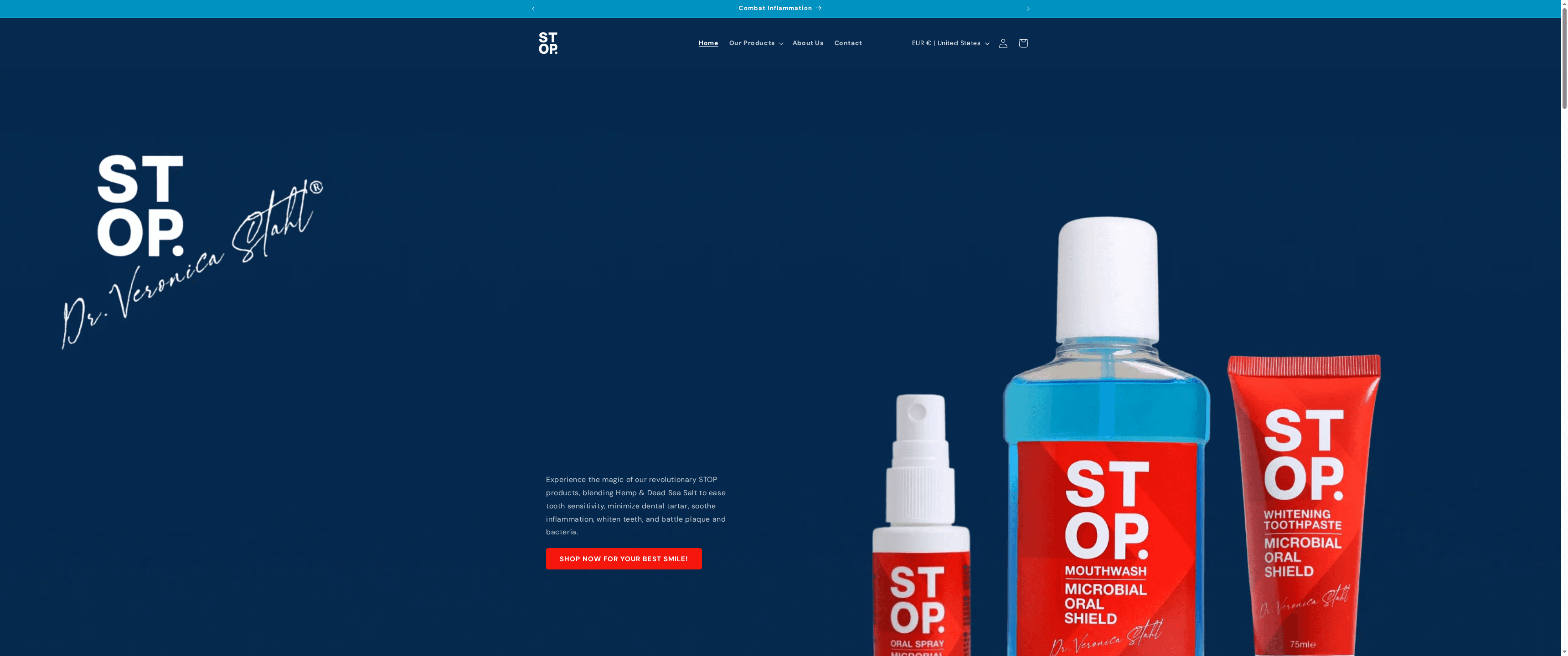
Stop-oralcare formulates its fluoride-free dental care line with hemp and Dead Sea minerals, and every product reflects a commitment to documented ingredient purity rather than unverified marketing claims. Dr. Veronica Stahl leads the scientific development of each formulation, applying the same evidence-based standards described throughout this article. Consumers who prioritize ingredient transparency and batch-level quality assurance will find that Stop-oralcare’s approach addresses both requirements directly. Explore the full product range and the science behind each ingredient at Stop-oralcare.
FAQ
What does ingredient purity mean in oral care products?
Ingredient purity in oral care means every component is verified to be authentic and free from harmful contaminants such as heavy metals, microbial organisms, and residual solvents. Verification requires identity testing and independent batch-level analysis, not just supplier documentation.
Are natural toothpaste ingredients automatically safer than synthetic ones?
Natural ingredients are not automatically safer. A survey of 28 plant-based toothpastes found that 8 exceeded the recommended Relative Dentin Abrasivity limit, and natural preservative-free formulas carry specific microbial contamination risks that require controlled manufacturing hygiene.
What is a Certificate of Analysis and why does it matter?
A Certificate of Analysis (CoA) is a document from a testing laboratory confirming an ingredient’s identity and contaminant levels. Batch-specific CoAs from independent labs are the most reliable evidence of ingredient purity; generic supplier CoAs do not provide the same assurance.
How does ingredient purity affect clinical oral health outcomes?
Impure or variable ingredients make it impossible to link a specific oral health outcome to a specific product component. Consistent purity allows both consumers and clinicians to draw reliable conclusions from product use and supports evidence-based dental hygiene decisions.
What should I look for on an oral care product label to assess purity?
Look for full ingredient disclosure including excipients, evidence of third-party batch testing, and the absence of undisclosed additives or artificial dyes. Brands with genuine purity commitments make their testing documentation publicly accessible.