

For most people focused on preventing cavities, fluoride concentration and brushing frequency matter far more than whether a toothpaste contains xylitol or sorbitol. The best available evidence suggests that fluoride toothpaste with 10% xylitol may reduce caries by about 13% compared to fluoride-only toothpaste, but this finding rests on low-quality evidence. Sorbitol remains an acceptable, low-cariogenic alternative, and neither ingredient should take priority over consistent fluoride use.
TL;DR:
- The potential benefit of xylitol in toothpaste for cavity prevention is modest and supported by low-quality evidence, with no clear advantage over sorbitol.
- Effectiveness depends heavily on the dose, frequency, and actual percentage of xylitol in the product, which are often not specified on labels.
- Both xylitol and sorbitol do not feed acid-producing bacteria, but xylitol’s specific enzyme-inhibiting action is uncertain at typical toothpaste doses.
- For meaningful anti-caries effects, pairing xylitol-containing products with high-dose gum or lozenges after meals is more effective than relying on toothpaste alone.
- Fluoride remains the most reliable agent for cavity prevention, and polyol choice is a secondary consideration unless delivering a significant dose.
Table of Contents
- How Xylitol and Sorbitol Work in the Mouth
- What Trials and Systematic Reviews Say
- Why Dose and Frequency Matter More Than the Ingredient Label
- Safety and Side Effects: Digestion, Pets, and Children
- How to Choose a Toothpaste: Simple Decision Rules
- Why Trust This Guidance: Our Research Approach
- Our Take: Don’t Let the Polyol Debate Distract You
- A Fluoride-Free Option for Readers Who Want One
- FAQ
- Sources
How Xylitol and Sorbitol Work in the Mouth
Both compounds belong to a class of sugar alcohols called polyols, which oral bacteria cannot ferment into the acids that erode enamel. The mechanisms behind each, however, differ in ways that matter for how we interpret clinical claims.
Xylitol has a more specific mode of action. Laboratory and animal research indicates it inhibits bacterial enzymes known as glucosyltransferases, which Streptococcus mutans relies on to build the sticky biofilm matrix that anchors plaque to tooth surfaces. Reduced glucosyltransferase activity is associated with lower mutans streptococci adherence, which is the mechanistic basis for most anticaries claims attached to xylitol. A Caries Research review notes this mechanistic plausibility while cautioning that similar effects have shown up with other low-cariogenic sweeteners in animal models, meaning xylitol’s specific advantage over related compounds is not fully settled.
Sorbitol works through a simpler route. It resists fermentation by most cariogenic bacteria, so it does not feed the acid production that sucrose does, but it lacks xylitol’s enzyme-inhibiting action. It functions primarily as a safer substitute for sugar rather than as an active disruptor of the bacteria that cause decay.
In practice, the two share more similarities than differences:
- Neither sorbitol nor xylitol feeds the fermentation process that drives enamel-damaging acid production.
- Both can shift plaque pH modestly compared with sucrose-containing products.
- Xylitol’s enzyme-inhibiting mechanism theoretically gives it an edge, but that edge depends heavily on concentration and exposure frequency.
- At the doses typically found in toothpaste, the mechanistic gap between the two often narrows considerably.
The distinction that matters clinically is not which polyol a label lists, but whether the product delivers enough of it, often enough, to produce a measurable biological effect.
What Trials and Systematic Reviews Say
The Cochrane review on xylitol-containing products remains the most rigorous synthesis available. Based on two studies in children, fluoride toothpaste containing 10% xylitol showed a prevented fraction of −0.13 (95% CI −0.18 to −0.08) over 2.5 to 3 years compared with fluoride-only toothpaste, a result the reviewers graded as low-quality evidence. The grading reflects real methodological concerns: several trials favoring xylitol were small, carried a high risk of bias, and in some cases were conducted by overlapping research groups within the same populations, which limits how confidently the results generalize.

One supervised trial found no measurable advantage for xylitol over six months. A cluster-randomized toothbrushing trial comparing fluoride-xylitol toothpaste against fluoride-sorbitol toothpaste in young children found no statistically significant difference in early childhood caries after six months of supervised brushing. That null result sits alongside other studies that do favor xylitol, and the contradiction illustrates why reviewers call the overall evidence base inconsistent.
Several design factors explain the mixed picture:
- Trials vary in which control sweetener they use, and a sorbitol comparator behaves differently than a sucrose or saccharin comparator.
- Fluoride presence or absence in both arms changes what a xylitol effect can even look like, since fluoride itself is a strong independent variable.
- Dosing and total xylitol exposure per day differ widely across study protocols, making cross-study comparison difficult.
- Short follow-up periods, as in the six-month trial above, may not capture effects that take years to appear in a caries context.
It is also worth separating delivery formats. Stronger evidence for xylitol’s anticaries effect tends to come from chewing gum and lozenge studies, where total daily exposure is higher and more frequent. Whether those benefits translate to toothpaste, used for roughly two minutes twice daily, is a separate question the toothpaste-specific trials have not clearly answered.
Why Dose and Frequency Matter More Than the Ingredient Label
A toothpaste listing “contains xylitol” tells us little without knowing the percentage. Reviewers studying delivery formats have pointed out that toothpaste simply cannot match gum’s cumulative dose, which limits how much of the gum-based research applies to brushing alone.
To read a label usefully, check these items in order:
- Percent xylitol, if listed; many products omit this figure entirely, which makes efficacy claims unverifiable.
- Other polyols present, since a blend of xylitol with sorbitol or maltitol dilutes xylitol’s relative share and may reduce its specific mechanistic contribution unless the total xylitol percentage stays high.
- Fluoride concentration in ppm, because this is the ingredient with the strongest, most consistent caries-prevention evidence.
- Age-appropriate fluoride guidance, since recommended ppm differs for young children versus adults.
If reliable xylitol dosing matters to you, toothpaste alone is unlikely to supply it consistently.
Pro Tip: If you want a measurable xylitol effect, pair toothpaste with xylitol gum or lozenges used after meals rather than relying on brushing alone.
Safety and Side Effects: Digestion, Pets, and Children
Xylitol and sorbitol are generally considered safe for oral use at toothpaste concentrations, but their systemic tolerance profiles differ. Xylitol tends to be better tolerated than sorbitol for many people, though both can cause osmotic diarrhea when intake is high, and tolerance for either often improves with gradual exposure rather than sudden large doses, according to a review of polyol-related gastrointestinal effects. Sorbitol and related hexitols carry a somewhat higher laxative potential at equivalent doses, while erythritol, a different polyol not covered in this comparison, is usually the best tolerated of the group.
Xylitol does not appear to destroy gut bacteria broadly. Research on the gut microbiome and xylitol shows the compound is fermentable by beneficial colonic bacteria and can increase production of short-chain fatty acids like propionate and butyrate, rather than causing the wholesale disruption some popular claims suggest. This contradicts the common fear that xylitol harms gut flora and instead supports moderate, measured use.
A few practical safeguards still apply:
- Xylitol is toxic to dogs even in small amounts, so store any xylitol-containing toothpaste or gum well out of reach of pets.
- For children, follow established fluoride dosing guidance by age rather than focusing on polyol content, since fluoride ppm, not xylitol or sorbitol, is the variable with established pediatric safety and efficacy data.
- If a new toothpaste or mouthwash causes stomach upset, scale back frequency rather than stopping fluoride use altogether, and consider a product with a lower total polyol load.
How to Choose a Toothpaste: Simple Decision Rules
Marketing language around xylitol and sorbitol often outpaces what trials support. These three rules cut through that noise:
- If caries prevention is your priority, choose a fluoride toothpaste at the recommended concentration and brush twice daily. Belgian and European pediatric guidance, summarized by BCFI, recommends 1,450 ppm fluoride for adults and children over six, and 1,000 ppm for children under six, with no recommendation to substitute sugar alcohols for fluoride.
- If you want an adjunctive xylitol benefit, look for products that state a specific xylitol percentage, or supplement with xylitol gum or lozenges after meals rather than assuming any “contains xylitol” label delivers a clinically relevant dose.
- If you have gastrointestinal sensitivity or live with pets, favor lower-polyol formulations or erythritol-based alternatives, while continuing to follow your dentist’s fluoride and brushing recommendations.
None of these rules require abandoning fluoride. They simply place the ingredient debate in its proper, secondary role.
Why Trust This Guidance: Our Research Approach
We write from a science-forward position shaped by Dr. Veronica Stahl’s work in dentistry and natural medicine, and we built our product line around published research on hemp and Dead Sea mineral formulations rather than ingredient trends alone.
- We maintain blog resources that walk through xylitol’s mechanisms and formulation role in more depth than a single comparison article can cover.
- We also publish guidance on evidence-based oral hygiene for readers who want to understand how we weigh study quality before making claims.
- We encourage anyone with persistent decay risk, gum disease, or pediatric dental questions to consult a dental professional for guidance personalized to their case, since no article can substitute for an in-person exam.
Our Take: Don’t Let the Polyol Debate Distract You
The evidence supports a narrower claim than most marketing suggests: xylitol has a plausible mechanistic edge over sorbitol, but that edge shows up inconsistently in toothpaste trials and rests on low-quality evidence even where it appears. The conventional framing, xylitol good, sorbitol merely acceptable, overstates what two small studies and a mixed trial record can support.
What gets overlooked is that the polyol choice is a minor lever next to fluoride concentration and brushing consistency, which have decades of stronger evidence behind them. A xylitol toothpaste used once a day will likely do less for your teeth than a sorbitol toothpaste used correctly twice a day at the right fluoride ppm.
Our honest view: treat xylitol as a reasonable adjunct worth exploring through gum or lozenges if you enjoy it, not as a reason to deprioritize fluoride or to pay a premium for a toothpaste based on polyol marketing alone. Read ingredient percentages critically, and let brushing habits do the heavier lifting.
— Veronica
A Fluoride-Free Option for Readers Who Want One
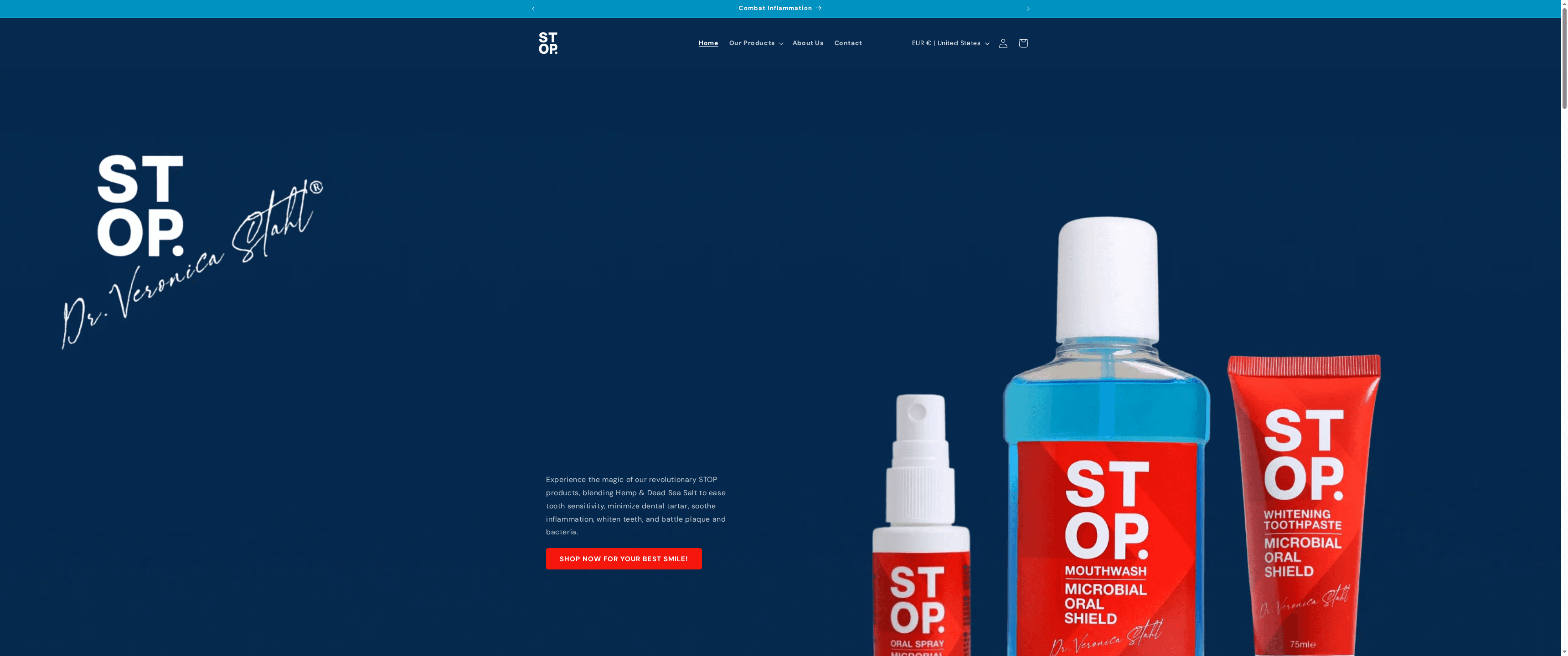
For readers specifically seeking a fluoride-free approach, often for personal preference rather than clinical necessity, we offer the STOP | Protective & Whitening Toothpaste, formulated with hemp and Dead Sea minerals rather than fluoride.
We want to be direct about where this fits: for primary caries prevention, traditional fluoride toothpaste at the ppm levels outlined above remains the standard most dental guidance supports. Our toothpaste is not positioned to replace that standard but to serve those who have already decided fluoride-free care suits their needs.
- We formulate without fluoride, using ingredients aimed at supporting gum health and reducing sensitivity.
- We price the toothpaste at 12,99 € per tube, available through our product page.
- Readers who want more background on xylitol’s role in natural formulations can review our dental hygiene guide before deciding what fits their routine.
If a fluoride-free, natural formulation matches what you are looking for, our toothpaste page has full ingredient details and ordering information.
This article is general information, not a substitute for advice from a qualified doctor. Consult a qualified healthcare professional about your own circumstances before acting on anything here.
FAQ
Is sorbitol or xylitol better for teeth?
Neither is clearly superior for teeth on its own. The Cochrane review found a modest caries reduction with 10% xylitol fluoride toothpaste versus fluoride-only, but the evidence quality is low, and a separate trial found no significant difference between fluoride-xylitol and fluoride-sorbitol toothpaste after six months.
What do Japanese use instead of fluoride?
This comparison does not draw on Japanese-specific dental guidance, so we cannot state a verified regional practice here. What the evidence does support broadly is that fluoride toothpaste at an age-appropriate concentration remains the most studied caries-prevention tool, regardless of region.
Why isn’t xylitol used more in toothpaste?
Xylitol’s clinical evidence base in toothpaste specifically is still rated low quality by reviewers, and much of the stronger anticaries research involves chewing gum or lozenges, which deliver a higher total dose than a two-minute brushing session can. Formulation cost and the need for a meaningful percentage, not just a trace amount, also limit wider use.
Does xylitol destroy gut bacteria?
No, available microbiome research does not support that claim. A study on xylitol and the gut microbiome found it can be fermented by beneficial colonic bacteria and may increase short-chain fatty acid production, rather than causing broad disruption to gut flora.
Can I use a fluoride-free toothpaste and still prevent cavities effectively?
Fluoride toothpaste has the strongest, most consistent evidence for caries prevention according to Belgian and European pediatric guidance. If you choose a fluoride-free product, maintaining twice-daily brushing, flossing, and regular dental checkups becomes even more important to manage your personal caries risk.
Sources
- Xylitol-containing products for preventing dental caries in children and adults (Cochrane review)
- BCFI / Hoge Gezondheidsraad guidance on fluoride-containing toothpastes
- Study on xylitol and gut microbiome effects (Springer, 2021)
- Cluster-randomized supervised toothbrushing trial comparing fluoride-xylitol vs fluoride-sorbitol toothpaste