

Baking soda is a safe, low-abrasive ingredient for daily toothbrushing, but it is not a substitute for fluoride when it comes to preventing cavities. A systematic review of 21 studies found modest plaque and stain benefits with no evidence it protects enamel the way fluoride does. Use it as a supplement to a fluoride-based routine, not a replacement, unless a dentist has specifically advised otherwise.
TL;DR:
- Baking soda provides modest short-term plaque and stain removal benefits, but lacks the cavity-fighting properties of fluoride.
- It is low in abrasivity, generally testing well below safety limits, making it gentler on enamel than many whitening pastes.
- Baking soda is best used as a supplement within a routine that includes fluoride, not as a replacement, especially for high-risk individuals.
- Formulated baking-soda toothpastes with tested abrasivity and fluoride compatibility offer safer, more effective options than DIY pastes.
- Consumers should avoid products with vague ingredients, high RDA values without testing, or unsupported whitening claims to ensure safety and efficacy.
Table of Contents
- Is Baking Soda Toothpaste Safe? What the Evidence Says
- What Baking Soda Helps With, and What It Doesn’t
- How to Use Baking Soda Safely in Your Daily Routine
- Who Should Avoid Baking Soda or Check With a Dentist First
- How to Choose a Safe, Effective Baking-Soda Toothpaste
- Why You Can Trust This Guide
- My Take on Where Baking Soda Fits
- A Formulated Alternative to Homemade Baking-Soda Pastes
- Sources
- FAQ
Is Baking Soda Toothpaste Safe? What the Evidence Says
The clinical evidence on baking soda dentifrices is more limited than marketing claims suggest, but what exists points toward a consistent conclusion: it is safe for the tooth surface and modestly effective for plaque and stain control, without matching fluoride’s cavity-fighting mechanism.
A 2019 systematic review pooled data from 21 studies covering 2,517 participants and found that baking-soda dentifrices produced a small, statistically significant reduction in plaque after single-use brushing sessions. That effect did not reliably hold up over longer follow-up periods. Some trials also reported small reductions in gingival bleeding, a marker of gum inflammation, though the researchers flagged inconsistency across study designs.
By the numbers: 21 studies, 2,517 participants, one small but real single-use plaque reduction, and no confirmed long-term advantage over standard fluoride dentifrices.
Two structural issues explain why the results are modest rather than dramatic. First, the trials are heterogeneous. Some measured single brushing sessions, while others tracked weeks of use, and short-term and long-term studies do not always agree. Single-use trials tend to show the clearest short-term plaque and stain benefits, while extended trials often find the advantage shrinks once other factors, like brushing technique and existing oral hygiene, even out. Second, several studies carried a moderate risk of bias, meaning the actual effect size could be smaller than reported.
Abrasivity is where baking soda earns genuine credit. Dentists measure abrasive potential using RDA, or Relative Dentin Abrasivity, a scale that compares a product’s wear on dentin against a reference standard. The International Organization for Standardization sets an upper safety limit at RDA 250. Baking-soda toothpastes commonly test in the range of 35 to 134, well inside that ceiling and often lower than many conventional whitening pastes. If you want the technical detail on how that scale works, the toothpaste abrasivity breakdown covers how manufacturers test and report these numbers.
What the research does not show matters just as much:
- No consistent evidence that baking soda alone reverses early decay or remineralizes enamel the way fluoride does.
- No large-scale trials proving superior long-term gum health outcomes compared to standard fluoride toothpaste.
- Limited data on how baking soda performs across different age groups or high-risk populations, since most trials recruited healthy adults.
None of this makes baking soda dangerous. It makes it a supporting player rather than the star of a cavity-prevention strategy, which is exactly how dental researchers tend to frame it.
What Baking Soda Helps With, and What It Doesn’t
Baking soda earns its reputation honestly in a few specific areas, and falls short in others that matter just as much for long-term dental health.
What it does well:
- Removes surface stains, particularly when paired with an electric toothbrush. Lab and clinical models found greater stain lightening (measured by a color-change metric called ΔE*) with baking soda plus powered brushing, without a measurable increase in enamel surface roughness.
- Buffers acid in the mouth, neutralizing the low pH environment created by bacterial byproducts and acidic foods. This buffering action is one reason some formulations market themselves around pH-neutral chemistry.
- Carries low intrinsic abrasivity, which is gentler on enamel and dentin than many conventional whitening pastes loaded with silica or aluminum oxide particles.
- Delivers a small, measurable reduction in plaque and gingival bleeding after single-use brushing, according to the same 2019 review.
Where it falls short:
- No fluoride means no remineralization support. Fluoride actively strengthens enamel at the mineral level; baking soda does not replicate that mechanism.
- The taste is salty and unfamiliar to many people, and foaming is noticeably lower than with standard sodium lauryl sulfate formulas, which can make brushing feel less satisfying.
- Some formulations that combine baking soda with fluoride can alter how the fluoride interacts with enamel, so the mixing matters more than most home bakers of DIY toothpaste realize.
The practical consequence: baking soda works best as a supplement within a broader routine, not a wholesale swap for your regular toothpaste, unless a dentist has cleared you for a fluoride-free approach.
Pro Tip: If you like the taste and buffering effect of baking soda but still want cavity protection, alternate it with a fluoride toothpaste on different days rather than trying to find one product that does everything.
How to Use Baking Soda Safely in Your Daily Routine
Using baking soda safely comes down to timing, pressure, and pairing it with the right products, not just picking it up and brushing the way you always have.
- Choose a formulated product over a DIY mix. Commercial baking-soda dentifrices balance bicarbonate with humectants and mild surfactants to control taste, foaming, and abrasive load. A homemade paste of straight baking soda and water skips all of that engineering.
- Alternate with a fluoride toothpaste if cavity prevention is a priority. Many people brush with a baking-soda formula in the morning and a fluoride toothpaste at night, or use baking soda a few times a week rather than daily.
- Brush for two minutes with light pressure. Baking soda’s low abrasivity is only protective if you do not compensate by scrubbing harder. Let the ingredient do the work.
- Use an electric toothbrush for stain-focused sessions. The combination of powered brushing and baking soda showed the strongest stain removal results in clinical models, without added roughness to the enamel surface.
- Avoid high-concentration homemade pastes used daily. Straight baking soda applied aggressively and frequently, especially with a wet fingertip instead of a soft-bristled brush, increases the odds of surface wear over months of repetition.
- Rinse and reassess after a few weeks. If you notice new sensitivity or a change in how your teeth feel, that is a signal to scale back frequency or check in with your dentist.
Pro Tip: If your goal is whiter teeth rather than cavity prevention, baking soda plus an electric brush two or three times a week often delivers noticeable results without the higher abrasivity of some whitening-specific pastes.
Who Should Avoid Baking Soda or Check With a Dentist First
Baking soda is not the right primary toothpaste for everyone, and a few groups should treat it with more caution than the general population.
- People at high risk for cavities. If you have a history of frequent decay, active orthodontic work, or dry mouth that reduces natural remineralization, fluoride needs to stay front and center in your routine. Baking soda can supplement that routine, but it should not replace it.
- Anyone with recent dental restorations. Fresh fillings, crowns, or bonding work can be more sensitive to abrasive contact while they settle, so ask your dentist before switching products in the weeks after treatment.
- People with exposed root surfaces or significant enamel erosion. Root surfaces lack the protective enamel layer and wear differently. Low abrasivity helps here, but formulation and technique both need to be right. The enamel erosion risk factors are worth understanding if this applies to you.
- Young children. Kids are more likely to swallow toothpaste during brushing, and while incidental swallowing during normal use is not a clinical concern, supervised brushing and age-appropriate products matter more than the specific ingredient choice.
- Anyone noticing new sensitivity or worsening erosion. A change in how your teeth feel after switching products is a clear signal to stop and consult a dentist rather than push through it.
How to Choose a Safe, Effective Baking-Soda Toothpaste
Not all baking-soda toothpastes are built the same way, and the difference between a well-formulated product and a risky one often comes down to details buried in the ingredient list.
Look for manufacturer transparency around abrasivity testing. A product that cites its RDA value or references clinical testing is telling you something a vague “gentle whitening” label never will. Avoid formulas that pair baking soda with harsh secondary abrasives or high concentrations of peroxide, since stacking abrasive or oxidizing ingredients can push the total wear profile higher than baking soda alone would ever produce.
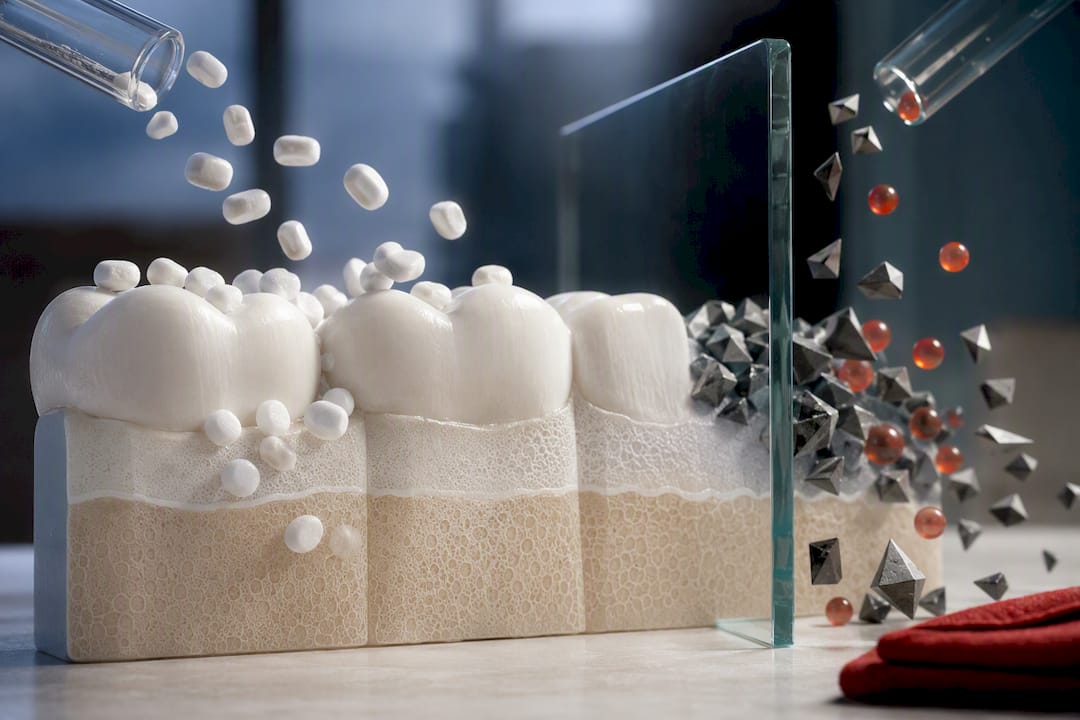
Pay attention to fluoride compatibility. Some in vitro research suggests that combining baking soda with fluoride in a single formula can alter how the fluoride interacts with enamel, so manufacturer formulation choices matter more than the ingredient list alone. If you choose a fluoride-free baking-soda product, make sure you are getting fluoride exposure elsewhere, whether through a rinse, a separate toothpaste, or professional application at checkups.
A few practical selection cues:
- Prefer products with published clinical testing or third-party abrasivity data over ones relying purely on marketing language.
- Check whether the ingredient list is legible and specific, not a vague “natural minerals” catch-all.
- If a product makes whitening claims, look for evidence tied to stain removal specifically, not general “brighter smile” language with no mechanism behind it.
- When formulation details are missing entirely, lean toward products that reference peer-reviewed testing, or ask a dental professional for a recommendation suited to your enamel condition.
Why You Can Trust This Guide
This article draws its safety claims from peer-reviewed dental literature rather than marketing copy, and that distinction shapes every recommendation above.
- The core evidence comes from a systematic review published in a peer-reviewed dental journal, alongside abrasivity data from the Journal of the American Dental Association, the publication behind ADA-referenced clinical guidance.
- Stop-oralcare’s editorial approach, guided by Veronica, prioritizes findings from systematic reviews and controlled trials over anecdotal claims, particularly on questions involving enamel safety and cavity prevention.
- The evidence has real limits. Trial designs vary, formulations differ from product to product, and most studies recruited healthy adults rather than higher-risk populations. Where the science is thin, this guide says so rather than filling the gap with confident-sounding guesswork.
- None of this replaces a personalized recommendation. A dentist who has examined your enamel, gum health, and cavity risk can tailor advice this article cannot.
My Take on Where Baking Soda Fits
The honest answer is that baking soda deserves a permanent spot in a lot of routines, just not the starring one some natural-care advocates want to give it. The evidence supports it as a gentle, low-abrasivity option that helps with stains and short-term plaque control, and I think that is genuinely useful, especially for people whose enamel cannot tolerate harsher whitening formulas. Where I part ways with the more enthusiastic corners of the natural-toothpaste conversation is the idea that it can fully replace fluoride. The data does not support that leap, and pretending otherwise does readers a disservice. If you have sensitive teeth or a strong preference for fluoride-free formulas, that is a reasonable choice, but it is worth building the rest of your routine, and your checkup schedule, around that decision consciously rather than by default. Talk to your dentist about what your specific risk profile actually needs.
— Veronica
A Formulated Alternative to Homemade Baking-Soda Pastes
If the formulation concerns above gave you pause about mixing your own baking-soda paste at the sink, that hesitation is well-founded. Stop-oralcare builds its fluoride-free line around hemp and Dead Sea minerals instead of DIY bicarbonate, giving you a professionally balanced abrasive and pH profile without the guesswork of measuring powder into a cup.
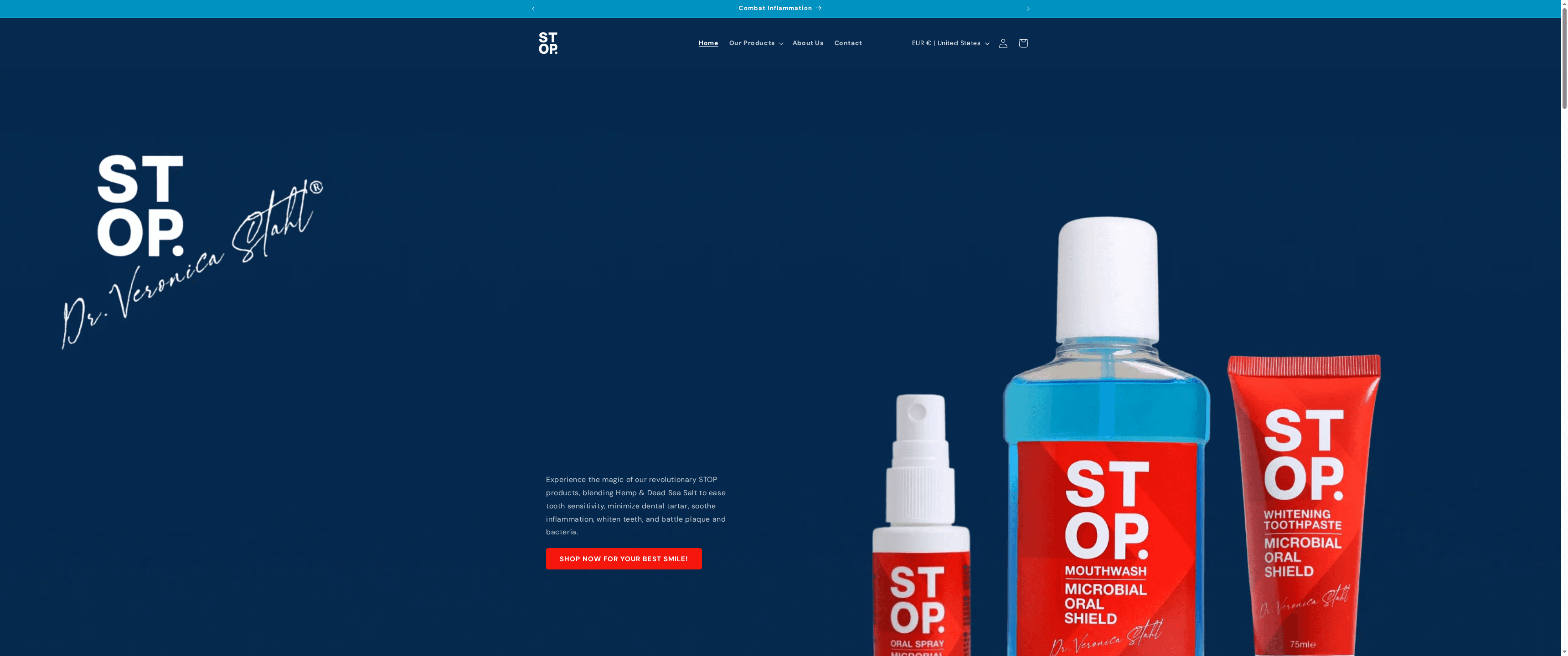
The STOP | Protective & Whitening Toothpaste ($12.99), STOP | Mouthwash ($20.00), and STOP | Protective Oral Spray ($11.99) are formulated as a complete fluoride-free system rather than a single improvised ingredient. That matters because, as the formulation section above covers, mixing abrasives and active ingredients without testing can shift how they behave on enamel. Stop-oralcare’s approach draws on the same biomimetic, science-backed principles that guide natural remineralization research, developed under Dr. Veronica Stahl’s clinical background in natural dentistry. If you are ready to move from a homemade experiment to a formulated fluoride-free routine, browse the full product line and see which piece fits where your current toothpaste leaves off.
Sources
- The efficacy of baking soda dentifrice in controlling plaque and gingivitis: A systematic review
- Baking soda as an abrasive in toothpastes: mechanism of action and safety and effectiveness considerations
FAQ
Is it safe to brush your teeth with baking soda toothpaste?
Yes, for most adults, baking soda toothpaste is safe for regular use because of its low abrasivity, though it should supplement, not replace, a fluoride-based routine for cavity prevention.
Is baking soda safe to use as toothpaste on its own?
It’s safe for short-term or supplemental use, but using straight baking soda alone daily skips the fluoride exposure most dental guidance considers necessary for long-term cavity prevention.
What are the disadvantages of baking soda toothpaste?
The main drawbacks are the lack of fluoride’s remineralizing effect, a salty taste with less foaming than standard toothpaste, and formulation interactions that can affect fluoride performance when the two are combined poorly.
What toothpaste should you stay away from?
Avoid toothpaste with unlisted or vague abrasive ingredients, high RDA values without published testing, or aggressive whitening claims unsupported by clinical data. Fluoride-free options like Stop-oralcare’s toothpaste address this by publishing their formulation approach rather than relying on marketing language alone.
Does Stop-oralcare’s toothpaste contain fluoride?
No. Stop-oralcare’s STOP | Protective & Whitening Toothpaste ($12.99) is formulated as a fluoride-free option built around hemp and Dead Sea minerals rather than baking soda or fluoride.