

TL;DR:
- Most toothpastes have a pH between 6.1 and 8.83, with neutral formulas supporting enamel integrity and mucosal health. While pH neutrality reduces erosion risks, effective sensitivity relief also requires active remineralizing and desensitizing ingredients, and formulation factors like surfactant type influence tissue compatibility. Selecting a toothpaste based on comprehensive formulation, individual oral risk factors, and validated pH levels ensures optimal oral care outcomes.
Most people select toothpaste based on flavor, whitening claims, or brand familiarity, without ever considering the product’s pH value. Yet the role of pH neutral toothpaste in daily oral care is well-documented in peer-reviewed research and directly relevant to enamel integrity and mucosal health. Formulations that fall outside a safe pH range can accelerate enamel erosion, increase dentinal sensitivity, and irritate soft oral tissues during regular use. This article explains what pH-neutral toothpaste is, how pH balance in toothpaste affects your teeth and gums, and what evidence supports or qualifies its use for sensitivity and enamel protection.
Table of Contents
- Key Takeaways
- Role of pH neutral toothpaste: what the science says
- Enamel protection and sensitivity: the pH mechanism
- pH neutral vs. acidic and alkaline formulas
- Practical applications: who benefits and what to look for
- My perspective on pH-neutral toothpaste claims
- Choosing the right toothpaste with Stop-oralcare
- FAQ
Key Takeaways
| Point | Details |
|---|---|
| pH range in commercial toothpastes | Most toothpastes fall between pH 6.1 and 8.83, making extreme acidity uncommon but not impossible. |
| Enamel demineralization threshold | Enamel begins to dissolve at oral pH below 5.5, making acidic toothpaste a direct erosion risk. |
| pH neutrality alone is insufficient | Desensitizing and remineralizing active ingredients are required alongside neutral pH for sensitivity management. |
| Surfactants affect tissue more than pH | Detergent type, such as SLS versus CABP, influences cytotoxicity independently of the product’s pH value. |
| Formulation must match individual risk | Toothpaste selection should reflect a person’s erosion history, sensitivity level, and mucosal tolerance profile. |
Role of pH neutral toothpaste: what the science says
The pH scale runs from 0 to 14, with 7 representing chemical neutrality. Values below 7 are acidic, and values above 7 are alkaline. In dentistry, the term “pH-neutral toothpaste” refers to formulations with a pH close to 7, though the broader category of “pH-safe” toothpaste typically includes slightly alkaline products up to approximately pH 8. The informal phrase “pH-neutral toothpaste” does not correspond to a standardized regulatory category. The recognized industry concept is pH-balanced toothpaste, meaning a formulation designed to remain within a physiologically safe range during oral use.
Tested toothpaste pH values in a 2026 Scientific Reports study ranged from 6.1 to 7.8 when measured as a 10% diluted slurry, which simulates in-mouth conditions after salivary dilution. This is a technically significant point: the pH printed on a product or measured from a concentrated paste does not reflect actual oral exposure. The diluted slurry measurement provides a more accurate proxy for what teeth and mucosa encounter during brushing. A separate market analysis found commercial toothpaste pH ranging from 6.68 to 8.83, confirming that most products sit in a neutral-to-mildly-alkaline zone.
Pro Tip: If a toothpaste’s pH is not disclosed on the label, you can test it at home using standard pH strips applied to a small amount of paste diluted with water. A reading between 6.5 and 8 suggests low erosive risk under normal use conditions.
| Toothpaste category | Approximate pH range | Erosion risk level |
|---|---|---|
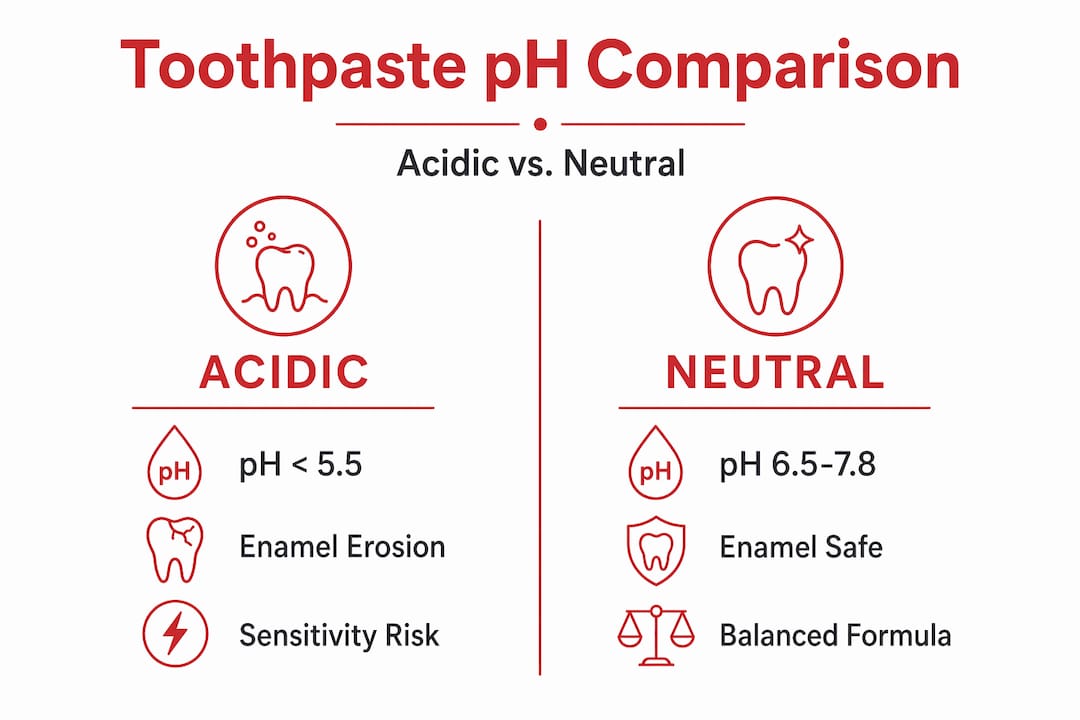
| Highly acidic | Below 5.5 | High: active enamel demineralization |
| Mildly acidic | 5.5 to 6.9 | Moderate: use with caution if erosion-prone |
| pH neutral | 7.0 | Low: physiologically safe for enamel |
| Mildly alkaline | 7.1 to 8.35 | Low to none: may support remineralization |
| Highly alkaline | Above 8.5 | Moderate: calculus formation risk increases |
Enamel protection and sensitivity: the pH mechanism
Enamel is composed primarily of hydroxyapatite crystals. These crystals begin to dissolve when the surrounding oral pH drops below approximately 5.5, the critical demineralization threshold. Repeated exposure to acidic conditions, whether from diet, gastroesophageal reflux, or acidic oral care products, progressively degrades enamel surface hardness, widens dentinal tubules, and increases thermal and osmotic sensitivity.
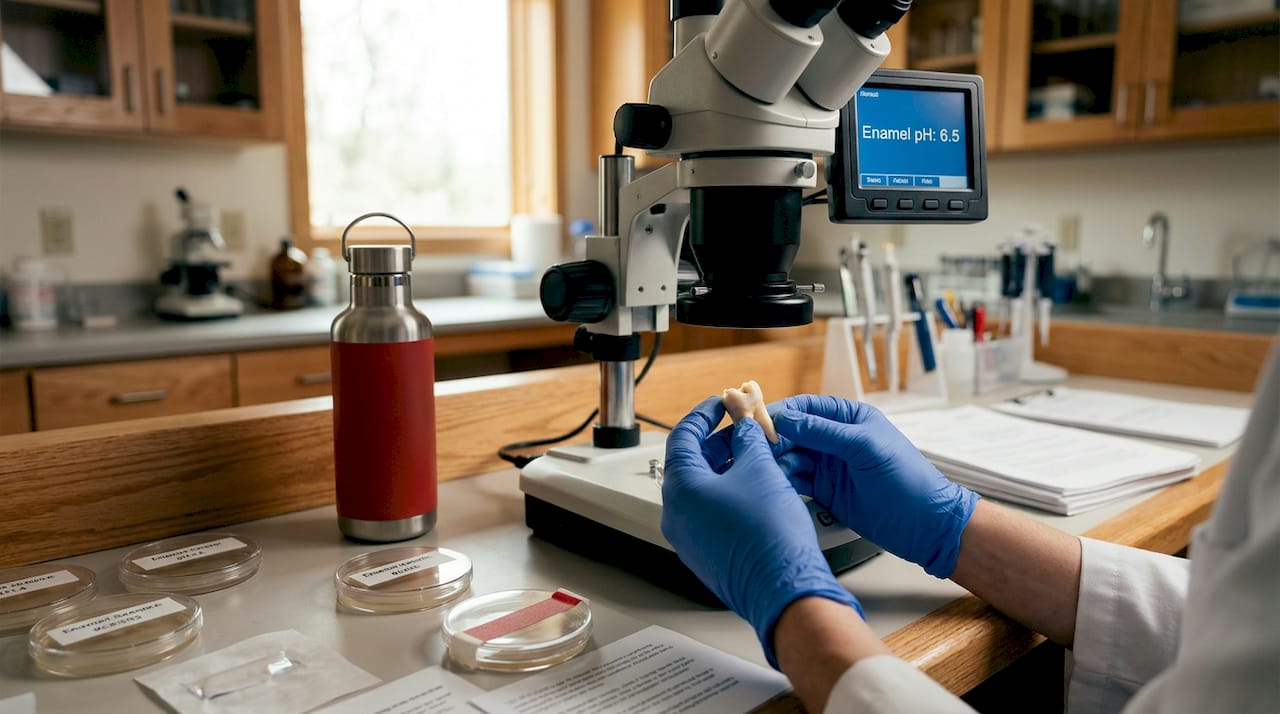
A pH-balanced formulation reduces the cumulative acid load introduced during brushing. This matters most for individuals who already face dietary acid exposure from citrus, carbonated beverages, or fermented foods. The two-minute brushing window is short in absolute terms, but when multiplied across twice-daily use over years, toothpaste pH becomes a measurable variable in cumulative enamel wear.
Research demonstrates that the protective function of pH-neutral formulations extends further when combined with active remineralizing compounds. Fluoride and nano-hydroxyapatite toothpastes restored enamel microhardness to near-baseline levels after erosion cycles in vitro. The mechanism involves mineral redeposition into enamel defects, a process that requires a non-acidic environment to proceed efficiently.
The key evidence-based conclusions regarding pH and sensitivity are as follows:
- Acidic toothpaste formulations introduce chemical erosion risk during every brushing session, compounding dietary acid exposure.
- Neutral or mildly alkaline pH prevents additional demineralization during brushing without reversing existing enamel loss.
- Active remineralizing ingredients, particularly nano-hydroxyapatite and fluoride, can facilitate structural repair, but only when the formulation pH supports mineral stability.
- Sensitivity relief is not a direct product of pH neutrality alone. It requires targeted desensitizing compounds such as potassium nitrate or stannous fluoride to occlude tubular pathways.
Enamel remineralization requires a pH above 5.5 to proceed. A neutral toothpaste creates the necessary electrochemical conditions, but the mineral substrates must also be present in the formula to generate repair.
pH neutral vs. acidic and alkaline formulas
Comparing toothpaste categories by pH alone produces a misleading picture of product safety and efficacy. The pH value is a necessary parameter but not a sufficient one. Understanding why requires examining what else the formulation contains.
Acidic toothpastes, which are uncommon in mainstream markets but do exist in some whitening and stain-removal products, present a direct enamel erosion risk. However, the more common and underappreciated issue is that pH neutrality does not guarantee tissue compatibility. A 2026 study established that cytotoxicity differences between formulations were primarily attributable to detergent systems, specifically the type of surfactant used, rather than to pH variation within the physiological range.
Sodium lauryl sulfate (SLS) is the most common surfactant in toothpaste and is associated with mucosal irritation, aphthous ulcer recurrence, and altered oral tissue permeability in sensitive individuals. Cocamidopropyl betaine (CABP) and similar mild amphoteric surfactants show significantly lower cytotoxicity profiles. This distinction is essentially absent from most consumer-facing pH discussions, which tend to focus exclusively on the acid-alkaline axis.
| Feature | Acidic toothpaste | pH neutral toothpaste | Highly alkaline toothpaste |
|---|---|---|---|
| Enamel erosion risk | High (below 5.5 pH) | Low | Low to moderate |
| Calculus formation risk | Low | Low | Higher above pH 8.5 |
| Tissue irritation source | pH and formulation | Primarily formulation | Primarily formulation |
| Remineralization support | Poor | Possible with actives | Possible with actives |
| Recommended for sensitivity | No | Conditionally yes | Conditionally yes |
Alkaline toothpastes, including baking soda formulations, neutralize oral acids rapidly and create conditions favorable for mineral redeposition. Their limitation lies at the upper pH extreme: formulations above approximately pH 8.5 may precipitate calcium and phosphate in ways that accelerate supragingival calculus deposition, particularly in patients already prone to heavy tartar buildup.
Pro Tip: When reviewing toothpaste options for sensitive teeth, request the surfactant identity from the manufacturer if it is not listed. Switching from an SLS-based product to one using CABP or sodium cocoyl glutamate often reduces mucosal irritation independently of pH.
Practical applications: who benefits and what to look for
The importance of pH balanced toothpaste is most clinically relevant for specific patient profiles rather than for the general population uniformly.
Individuals who are most likely to benefit from pH-neutral formulations include:
- Patients with erosive tooth wear. Repeated acid exposure from diet or reflux progressively thins enamel. Introducing an additional acid source during brushing compounds an already active erosion process.
- Individuals with dentinal hypersensitivity. Exposed dentin responds to temperature, pressure, and osmotic changes. Acidic toothpastes widen dentinal tubule openings by dissolving the smear layer, increasing sensitivity. A neutral pH preserves smear layer stability during brushing.
- Patients with recurrent aphthous ulcers or mucosal fragility. SLS-containing toothpastes are documented mucosal irritants. Choosing a pH-neutral, SLS-free formula reduces two potential irritation sources simultaneously.
- Children and adolescents with developing enamel. Immature enamel is more soluble than fully mature adult enamel, making pH control during formative years particularly relevant.
- Individuals managing xerostomia (dry mouth). Saliva normally buffers oral pH after food or product exposure. Reduced salivary flow means pH-neutral toothpaste provides the buffering function that saliva cannot.
When evaluating a specific product, pH value is the starting point, not the endpoint. A genuinely protective formulation for sensitive teeth should meet the following criteria. The pH should fall between 6.5 and 8.0. The surfactant should be mild, such as CABP, sodium cocoyl glutamate, or a plant-derived equivalent, rather than SLS. The formula should include at least one remineralizing agent, such as nano-hydroxyapatite, fluoride, or calcium phosphate compounds. The best pH neutral toothpaste options for sensitivity pair these characteristics with desensitizing agents rather than relying on pH alone.
It is also worth noting that toothpaste selection must be individualized, since an incorrect formulation can impair both hard and soft oral tissues even when pH is within the safe range. Two patients with the same sensitivity complaint may require different formulations depending on whether the origin is erosive, abrasive, or inflammatory.
My perspective on pH-neutral toothpaste claims
I have reviewed enough toothpaste marketing materials to recognize a recurring pattern: pH neutrality is positioned as a standalone benefit, as if selecting a pH 7 product resolves sensitivity and protects enamel by definition. In clinical practice, that framing is incomplete and sometimes counterproductive.
In my experience, patients who switch exclusively to a pH-neutral toothpaste while retaining SLS and no active remineralizing agents often report no change in sensitivity within 6 to 8 weeks. The pH adjustment was correct. The formulation as a whole was not matched to their clinical profile. When the same patients transition to a hydroxyapatite-containing formula at a compatible pH, outcomes are measurably better.
What I find problematic is not the emphasis on pH neutrality. That emphasis is scientifically grounded. The issue is the market tendency to isolate pH as a proxy for overall product quality. A well-formulated toothpaste is a system: pH creates the right chemical environment, active ingredients do the therapeutic work, and surfactants determine tissue tolerance. All three variables must align. Selecting a product based on any single parameter consistently produces suboptimal results.
My practical advice is to treat pH as a filter, not a recommendation. Use it to eliminate products below pH 5.5, then evaluate the remaining candidates based on their active ingredient profile and surfactant chemistry relative to your individual risk factors.
— Veronica
Choosing the right toothpaste with Stop-oralcare
Selecting a pH-balanced toothpaste that genuinely addresses sensitivity requires evaluating the complete formulation, not just the pH value. Stop-oralcare provides scientifically grounded resources and a curated line of natural oral care products formulated without fluoride, developed with hemp extracts and Dead Sea minerals, and designed for individuals seeking documented alternatives to conventional dental care. For those managing sensitivity or erosion risk, the Stop-oralcare product catalog includes detailed ingredient disclosures and research references to support informed decisions. Readers seeking guidance on formulation criteria can also explore the Stop-oralcare safe toothpaste selection guide for a clinically structured framework.
FAQ
What is pH neutral toothpaste?
pH neutral toothpaste refers to a formulation with a pH close to 7, within the safe physiological range. In practice, toothpaste pH values are measured from a 10% diluted slurry to approximate in-mouth exposure conditions.
Are pH neutral toothpastes effective for sensitivity?
pH neutral toothpaste reduces acid-related enamel wear during brushing, but true sensitivity relief requires additional desensitizing and remineralizing ingredients such as potassium nitrate or nano-hydroxyapatite.
How does pH affect oral health?
When oral pH drops below 5.5, enamel demineralization begins, leading to erosion and increased dentinal sensitivity over time. Maintaining a pH-neutral oral environment limits this dissolution process.
Does a toothpaste’s pH determine its safety?
pH is one important safety parameter, but cytotoxicity studies show that surfactant type influences tissue response more than pH variation within the physiological range.
What pH range should toothpaste have?
Most dental researchers consider a toothpaste pH between 6.5 and 8.0 to be safe for regular use. Commercial toothpastes typically fall within this range, though some products reach pH 8.83 at the alkaline end.
Recommended
- Why Oral pH Matters for Lasting Dental Health – Stop Oral Care
- Role of antioxidants in toothpaste: a guide for natural oral care – Stop Oral Care
- Why non-foaming toothpaste matters for healthy smiles – Stop Oral Care
- Role of pH Balance in Oral Hygiene: Protecting Enamel and Microbiome – Stop Oral Care