

TL;DR:
- Foam does not improve cleaning; mechanical brushing and abrasives are sufficient.
- Non-foaming toothpastes reduce mucosal irritation and support oral microbiome health.
- They are environmentally friendly, avoiding microbeads and synthetic chemicals found in traditional toothpastes.
The assumption that abundant foam signals superior cleaning is one of the most persistent misconceptions in oral hygiene. Foam, in reality, is a cosmetic byproduct of synthetic surfactants added primarily to create a familiar sensory experience. Non-foaming toothpaste formulas, which omit these agents entirely, are gaining measurable traction among health-conscious consumers who prioritize mucosal safety, microbiome balance, and ingredient transparency. This guide examines the biochemical rationale for avoiding foaming agents, identifies who stands to benefit most from non-foaming alternatives, and provides a structured framework for selecting a formula aligned with evidence-based, natural oral care principles.
Table of Contents
- What is non-foaming toothpaste and how does it work?
- Benefits of non-foaming toothpaste for sensitive mouths
- The link between non-foaming toothpaste and natural, fluoride-free oral care
- Eco-friendly and additive-free: The environmental impact of non-foaming formulas
- Why most people misunderstand non-foaming toothpaste benefits
- Find your best non-foaming toothpaste
- Frequently asked questions
Key Takeaways
| Point | Details |
|---|---|
| Gentle for sensitive mouths | Non-foaming toothpastes avoid harsh chemicals and reduce irritation for sensitive users. |
| Promote natural oral health | These formulas often use herbs or minerals for cleaning and remineralization without fluoride. |
| Support oral microbiome balance | SLS-free options are less likely to disrupt beneficial oral bacteria. |
| Better for the environment | Many non-foaming pastes skip microbeads and synthetic dyes for eco-friendlier choices. |
What is non-foaming toothpaste and how does it work?
Non-foaming toothpaste is defined by the deliberate exclusion of surfactants, most commonly sodium lauryl sulfate (SLS), that generate lather during brushing. SLS functions as a detergent, reducing surface tension and dispersing the paste across tooth surfaces. While this mechanism appears functional, the foaming action itself contributes minimally to plaque removal. Mechanical brushing and abrasive particles perform the actual cleaning work.
SLS in oral care has been studied extensively, and the evidence indicates that SLS causes oral irritation including aphthous ulcers, epithelial damage, and disruption of the oral microbiome in susceptible individuals. Non-foaming toothpastes avoid this surfactant category entirely, substituting it with gentler, functionally superior ingredients.
| Feature | SLS-containing toothpaste | Non-foaming alternative |
|---|---|---|
| Primary agent | Sodium lauryl sulfate | Herbal extracts, xylitol, hydroxyapatite |
| Foam production | High | None to minimal |
| Mucosal irritation risk | Elevated | Low |
| Microbiome impact | Disruptive | Neutral to supportive |
| Ideal users | General population | Sensitive, dry mouth, orthodontic |
Key non-foaming ingredients found in evidence-informed formulas include:
- Xylitol: A sugar alcohol that inhibits Streptococcus mutans adhesion and reduces cariogenic (cavity-causing) bacterial activity
- Hydroxyapatite: A calcium phosphate mineral that remineralizes enamel and occludes dentinal tubules without fluoride
- Neem extract: Demonstrates antimicrobial and anti-inflammatory properties in periodontal tissue
- Clove oil (eugenol): Provides analgesic and antiseptic activity against oral pathogens
- Aloe vera gel: Supports mucosal healing and reduces gingival inflammation
Pro Tip: SLS appears under multiple names on ingredient labels. Look for sodium dodecyl sulfate, sulfuric acid monododecyl ester sodium salt, or sodium laurilsulfate to identify hidden SLS in products marketed as gentle or natural.
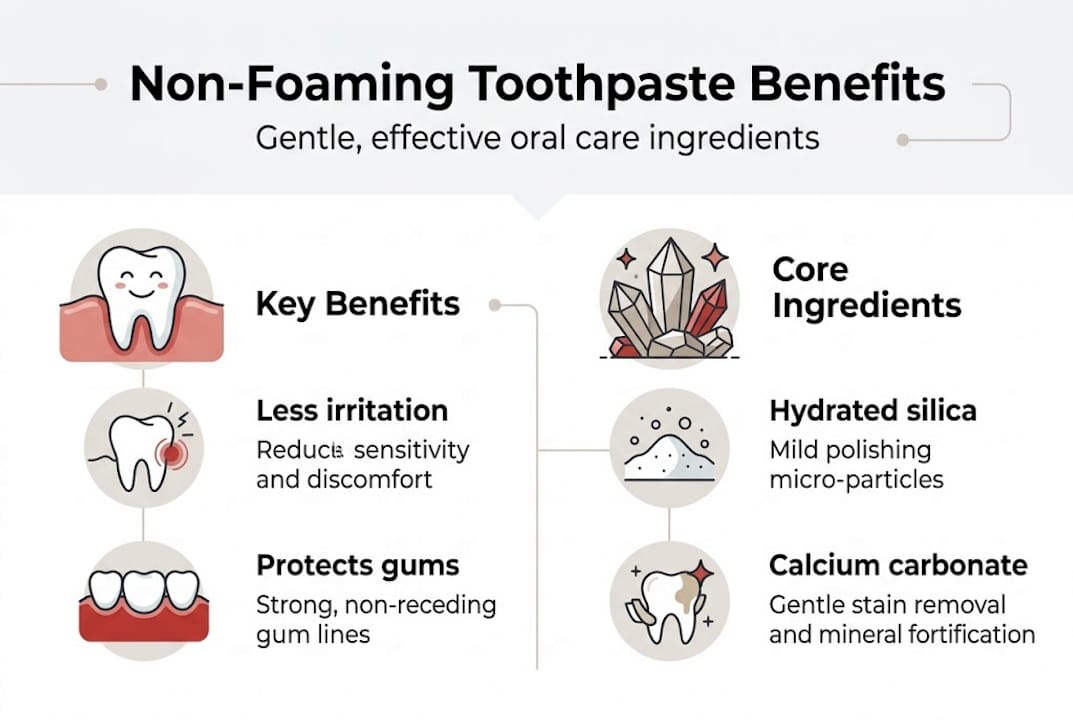
The absence of SLS does not compromise cleaning efficacy. Abrasive agents such as hydrated silica or calcium carbonate, combined with enzymatic or antimicrobial ingredients, provide equivalent plaque disruption without the surfactant-associated risks. This distinction is critical for consumers who equate foam volume with product performance.
Benefits of non-foaming toothpaste for sensitive mouths
Understanding what is in your toothpaste matters even more if you deal with sensitivity or chronic oral discomfort. Non-foaming formulas offer a clinically relevant advantage for several patient populations, particularly those whose oral tissues respond adversely to conventional surfactants.
“Non-foaming formulas are gentler for sensitive gums, dry mouth, and braces, and promote better saliva balance and oral microbiome health.” This observation aligns with clinical data showing reduced mucosal irritation and lower aphthous ulcer recurrence in SLS-free cohorts.
For individuals with xerostomia (dry mouth), SLS compounds the problem by stripping the protective mucosal layer and reducing salivary buffering capacity. Non-foaming pastes preserve this layer, supporting the natural defense mechanisms that saliva provides against bacterial colonization and acid erosion.
Orthodontic patients present another high-benefit population. Brackets and wires create complex biofilm retention sites where SLS-induced irritation can escalate gingival inflammation. A gentle toothpaste for sensitive teeth that omits SLS reduces this inflammatory burden without compromising the mechanical cleaning required around orthodontic hardware.
Populations that benefit most from non-foaming toothpaste:
- Individuals with recurrent aphthous ulcers (canker sores)
- Patients diagnosed with xerostomia or Sjogren’s syndrome
- Orthodontic patients with fixed appliances
- Those with lichen planus or other mucosal conditions
- Individuals with chemotherapy-induced oral mucositis
- Children and elderly patients with fragile gingival tissue
The microbiome benefit is equally significant. SLS disrupts commensal bacterial populations that regulate oral pH and compete with pathogenic species. Preserving this balance through safe toothpaste for sensitivity supports long-term periodontal health rather than creating cycles of disruption and recolonization.
Pro Tip: When switching to a non-foaming paste, allow a two-week adjustment period. The absence of foam can feel unfamiliar, but this sensation is purely perceptual. Brushing technique and duration remain the primary determinants of cleaning effectiveness.
The link between non-foaming toothpaste and natural, fluoride-free oral care
Beyond comfort, choosing a non-foaming paste often aligns with a broader commitment to natural, fluoride-free oral hygiene. The two categories overlap substantially because the same formulation philosophy that eliminates SLS typically extends to fluoride substitution with mineral-based alternatives.
Hydroxyapatite, the primary mineral constituent of tooth enamel, has emerged as the most evidence-supported fluoride alternative. Natural toothpaste benefits documented in peer-reviewed literature confirm that hydroxyapatite-based formulas provide comparable remineralization to fluoride, with additional biocompatibility advantages. Herbal ingredients such as neem and clove further contribute antimicrobial activity that addresses the microbial etiology of caries and periodontal disease.
| Ingredient | Primary benefit | Supporting evidence |
|---|---|---|
| Hydroxyapatite | Enamel remineralization | Equivalent to fluoride in RCTs |
| Xylitol | Caries prevention | Inhibits S. mutans adhesion |
| Neem | Antimicrobial, anti-inflammatory | Periodontal efficacy studies |
| Clove (eugenol) | Analgesic, antiseptic | Documented in endodontic research |
| Dead Sea minerals | Gingival support, mineral replenishment | Emerging clinical data |
Consulting a toothpaste ingredient overview confirms that fluoride-free toothpaste options increasingly demonstrate efficacy across key oral health measures. One comparative study reported statistically significant improvements in gum health metrics favoring herbal non-fluoride formulas (p=0.037), a finding that challenges the assumption of fluoride’s indispensability.
Steps for transitioning to a natural, non-foaming formula:
- Identify your primary oral health concern (sensitivity, caries prevention, gum health) to select the most targeted formula
- Review ingredient labels for SLS, artificial dyes, and synthetic preservatives, and cross-reference with how to choose fluoride-free toothpaste
- Introduce the new paste for morning brushing while maintaining your existing routine at night during the first week
- Monitor gum tissue response, sensitivity levels, and overall comfort across a four-week period
- Consult your dental practitioner if you have active caries lesions before eliminating fluoride entirely
The natural oral health benefits of this approach extend beyond individual ingredients to the cumulative reduction in chemical load on oral tissues over years of daily use.
Eco-friendly and additive-free: The environmental impact of non-foaming formulas
Health is only one part of the story. Eco-conscious consumers may also benefit by switching to non-foaming toothpaste, given the environmental profile of conventional formulas.
Standard foaming toothpastes frequently contain microbeads (polyethylene particles used as abrasives), synthetic dyes, and petrochemical-derived surfactants. These compounds enter waterways through normal rinsing, where they accumulate in aquatic ecosystems and resist biodegradation. Avoiding microbeads and additives is a documented advantage of natural non-foaming formulas.
Statistic: Microplastics from personal care products, including toothpaste microbeads, have been detected in marine sediments at concentrations exceeding 100,000 particles per liter in heavily populated coastal zones, according to environmental monitoring data.
| Category | Conventional foaming paste | Non-foaming natural paste |
|---|---|---|
| Surfactant type | SLS (petrochemical) | None or plant-derived |
| Abrasive particles | Synthetic microbeads possible | Natural silica or calcium carbonate |
| Artificial dyes | Common | Absent |
| Biodegradability | Low | High |
| Aquatic toxicity | Moderate to high | Minimal |
Eco-benefits of non-foaming, natural toothpaste formulas:
- Biodegradable ingredients reduce aquatic ecosystem contamination
- Absence of synthetic dyes eliminates non-functional chemical additives
- No microplastic particles entering waterways through daily rinsing
- Plant-derived and mineral ingredients have lower carbon footprint in production
- Reduced packaging waste when combined with concentrated or solid formats
For consumers committed to switching to fluoride-free care, the environmental rationale reinforces the health rationale. The decision to eliminate SLS and fluoride simultaneously reduces both personal chemical exposure and environmental chemical load, representing a coherent, evidence-aligned choice.
Why most people misunderstand non-foaming toothpaste benefits
The persistence of the foam-equals-clean belief is not accidental. Decades of consumer conditioning through advertising established foam as a sensory proxy for efficacy, a perception that has no biochemical basis. The evidence, however, consistently contradicts this assumption.
Randomized controlled trials confirm that SLS-free pastes demonstrate equivalent plaque removal and gingivitis reduction compared to conventional foaming formulas. The clinical difference lies not in cleaning power but in tissue response: SLS-free users report significantly lower rates of aphthous ulcer recurrence and mucosal irritation. These are measurable outcomes, not subjective preferences.
Some individuals report preferring the foaming sensation, and foam does facilitate minor paste distribution across tooth surfaces. However, this mechanical advantage is marginal and fully replicable through adequate brushing duration and technique. Foam is a texture preference, not a therapeutic requirement. Consulting resources on oral care myths reveals how deeply marketing has shaped clinical perception. The more productive framework evaluates toothpaste by its active ingredient profile, its compatibility with individual oral tissue health, and its alignment with long-term microbiome preservation rather than its lather volume.
Find your best non-foaming toothpaste
Ready to reconsider your oral care routine? The evidence reviewed here points toward a clear conclusion: non-foaming, fluoride-free formulas offer measurable advantages for mucosal health, microbiome balance, and environmental impact without compromising cleaning efficacy.
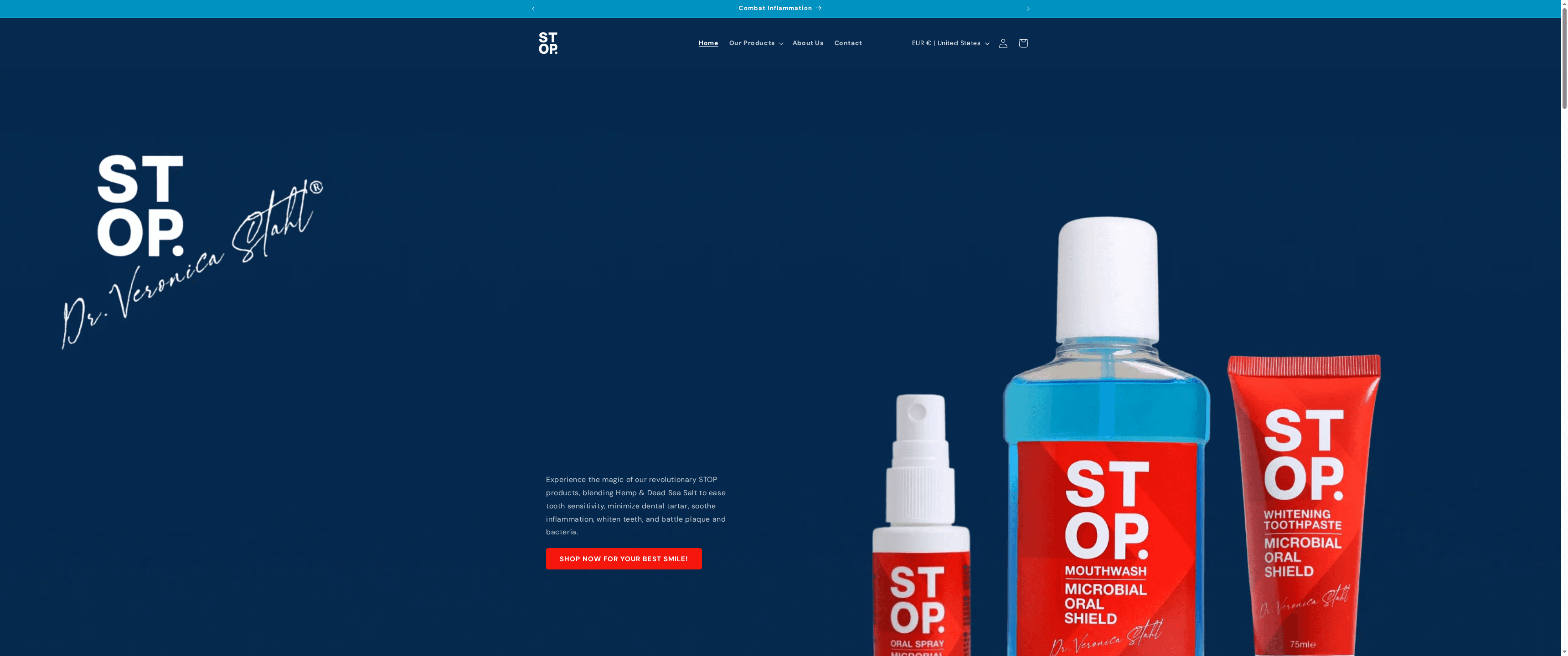
Stop Oral Care offers a scientifically formulated line of fluoride-free oral care products developed with hemp extract and Dead Sea minerals, designed for individuals who prioritize ingredient safety and evidence-based natural dentistry. Explore the best natural non-foaming toothpaste options available and find a formula matched to your specific oral health profile. The transition to non-foaming care is straightforward, supported by clinical data, and accessible through a curated product selection built on transparent, research-backed ingredients.
Frequently asked questions
Does non-foaming toothpaste clean as well as regular toothpaste?
Yes. RCTs confirm equivalent efficacy for plaque removal and gingivitis control, with the additional benefit of reduced mucosal irritation in SLS-free users.
Why should I avoid sodium lauryl sulfate (SLS) in toothpaste?
SLS is linked to increased aphthous ulcer frequency, epithelial damage, and oral microbiome disruption, particularly in individuals with existing mucosal sensitivity.
What ingredients replace SLS in non-foaming toothpastes?
Common alternatives include herbal extracts such as neem and clove, the sugar alcohol xylitol, and remineralizing minerals like hydroxyapatite, all of which provide cleaning and protective activity without surfactant-related risks.
Who benefits the most from non-foaming toothpaste?
Non-foaming formulas benefit individuals with sensitive gums, xerostomia, recurrent canker sores, fixed orthodontic appliances, and those pursuing natural or fluoride-free oral care protocols.
Are non-foaming toothpastes always fluoride-free?
Most non-foaming natural pastes substitute fluoride with mineral alternatives such as hydroxyapatite, but formulation varies by brand, so reviewing the ingredient label remains essential before purchase.
Recommended
- SLS-Free Toothpaste Benefits: A Gentler Clean – Stop Oral Care
- Best Natural Toothpaste Without Fluoride: Top 5 Picks for a Cleaner Sm – Stop Oral Care
- Discover the Best Toothpaste for Oral Microbiome: 10 Science‑Backed Pi – Stop Oral Care
- Best Toothpaste Without SLS: Top Picks for Gentle, Effective Cleaning – Stop Oral Care