

Do not use any mouthwash on the day of your extraction. The American Dental Association (ADA) advises a strict 24–48 hour waiting period before introducing any oral rinse, allowing the blood clot to stabilize within the socket. Once that window has passed, gentle saline rinses are the appropriate first step. Chlorhexidine antiseptic rinses are reserved for higher-risk cases and introduced only on clinician instruction, typically after a few days of healing.
The core rule for post-extraction oral rinse use: protect the clot first, clean second. No rinse of any kind during the first 24 hours; gentle saline from day 1; medicated antiseptics only when your dentist specifically prescribes them.
Key immediate guidance:
- Day 0: No rinsing, no spitting, no suction of any kind.
- Day 1 (~24 hours): Begin gentle saline rinses after meals if your dentist has not instructed otherwise.
- Day 3–4: Consider a short course of chlorhexidine only if your clinician advises it for a complex extraction or elevated infection risk.
- Avoid immediately: alcohol-containing rinses, hydrogen peroxide, oil pulling, and any forceful gargling throughout the early healing period.
Key Takeaways
Mouthwash after tooth extraction requires strict timing: no rinse during the first 24 hours, gentle saline from day 1, and short-course antiseptics only when a clinician specifically prescribes them.
| Point | Details |
|---|---|
| Wait 24–48 hours | No mouthwash of any kind on the day of extraction; saline begins at approximately 24 hours. |
| Saline recipe | Dissolve ½ teaspoon of salt in 240 ml of warm water; rinse 3–4 times daily after meals. |
| Chlorhexidine is targeted | Use 0.12%–0.20% concentration, 2–3 times daily, for 7–14 days maximum and only when prescribed. |
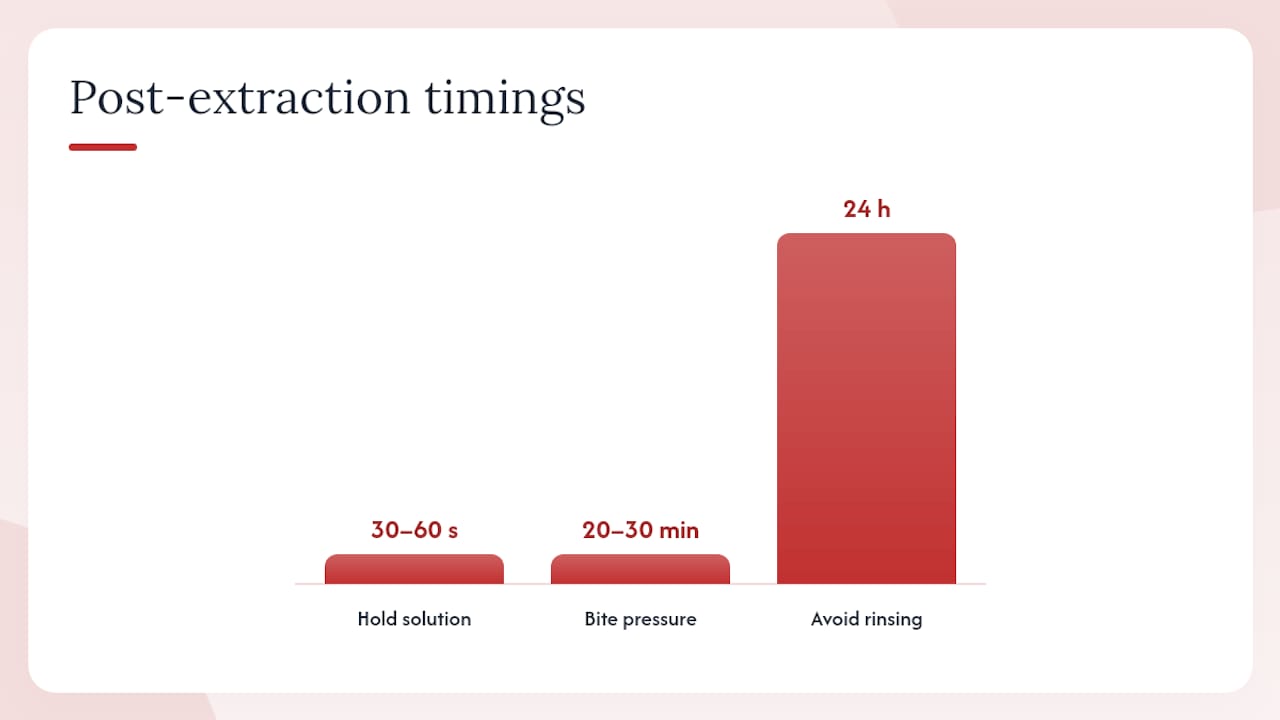
| Passive technique only | Hold 15–20 ml over the socket for 30–60 seconds; let it fall out; never spit forcefully or gargle. |
| Stop-oralcare for maintenance | After clinician clearance, Stop-oralcare’s alcohol-free rinses support gentle, fluoride-free post-healing care. |
Table of Contents
- Why timing matters for mouthwash after extraction
- How to prepare and use a saline rinse safely
- When does chlorhexidine help, and what are its side effects?
- Which rinses and practices to avoid after extraction
- Safe rinsing technique and the errors that cause dry socket
- How often to rinse and when to resume normal oral care
- Red flags: signs of dry socket, infection, or abnormal bleeding
- How guidance changes for higher-risk patients
- A clinician-style day-by-day protocol for post-extraction care
- Why conservative, evidence-based aftercare produces the best outcomes
- Stop-oralcare alcohol-free rinses for post-extraction maintenance
- Sources
Why timing matters for mouthwash after extraction
The blood clot that forms in the socket within minutes of extraction is not simply a byproduct of bleeding. It functions as a biological bandage, sealing exposed bone and nerve tissue from the oral environment, initiating the cascade of cellular repair, and providing a scaffold for new tissue ingrowth. Mechanical disruption of this clot, whether from irrigation, suction, or pressure changes caused by forceful rinsing, exposes the underlying alveolar bone directly to oral bacteria and air. The resulting condition, alveolar osteitis (dry socket), produces intense, throbbing pain that typically peaks 2–4 days post-extraction and requires clinical intervention.
Clinical rationale: The first 24–48 hours are about biological protection, not sterilization. The clot is the primary defense; no rinse improves on it during this window.
Clinical handouts from CHU Nantes consistently instruct patients to avoid all rinsing, spitting, and suction on the day of surgery, with gentle rinsing permitted beginning the next day. The 48-hour threshold applies particularly to complex cases: surgical extractions involving a mucoperiosteal flap, mandibular third molar removal, or patients with impaired healing capacity (diabetes, immunosuppression, anticoagulant therapy).
Simplified timeline:
- Day 0 (J0): No rinsing of any kind.
- Day 1 (J1): Gentle saline rinse permitted after meals.
- Day 3–4 (J3–J4): Short-course chlorhexidine considered if clinically indicated.
How to prepare and use a saline rinse safely
Saline is the preferred first-line rinse because it is isotonic, non-irritating, and supports a moist wound environment without chemical interference. The standard preparation is ½ teaspoon of non-iodized salt dissolved in approximately 240 ml (one standard glass) of warm water. The water temperature should be warm but not too hot, as high temperatures may increase blood flow and promote bleeding.
Preparation and protocol:
- Dissolve ½ teaspoon of salt in 240 ml of warm (not hot) water.
- Prepare fresh solution before each use; do not store diluted saline.
- Use after each meal and before sleep multiple times daily.
- Take approximately 15–20 ml into the mouth.
- Hold the solution passively over the extraction site for 30–60 seconds with minimal movement.
- Allow the liquid to fall gently from the mouth; do not spit forcefully.
Frequency matters. Rinsing after meals removes food debris from the socket without the mechanical trauma of brushing near the site. Ameli’s patient guidance reinforces careful dilution, appropriate temperature, and avoidance of strong liquid movements near the socket.
Pro Tip: Tilt your head slightly toward the extraction side while holding the saline solution. Gravity distributes the rinse over the socket without requiring active swishing, reducing clot disturbance risk.
When does chlorhexidine help, and what are its side effects?
Chlorhexidine gluconate is a broad-spectrum antiseptic with established efficacy against the gram-positive and gram-negative bacteria implicated in post-extraction infection. It is not a routine recommendation for every extraction; clinicians prescribe it selectively for patients at elevated risk of infection or dry socket, including those with surgical extractions, compromised immune function, or a history of post-operative complications.
Prescribing note: Chlorhexidine is a targeted, short-course tool. Routine use in uncomplicated extractions is not supported by current clinical consensus, and prolonged use carries documented risks.
Commonly prescribed concentrations are 0.12% and 0.20%, used 2–3 times daily. Courses are typically limited to 7–14 days because of cumulative side effects. The Mayo Clinic notes that prolonged or unnecessary use of strong antiseptics can alter the oral microbiome and cause extrinsic staining of teeth and tongue. A staged approach, saline first and then short-course antiseptic only when clinically indicated, reflects current best practice.
Known side effects and mitigation:
- Extrinsic staining of teeth and tongue (brown or yellow discoloration): minimize by limiting course duration and rinsing with water after use.
- Taste disturbance: temporary and typically resolves after discontinuation.
- Oral microbiome disruption: a concern with courses exceeding 14 days; microbiome effects are reversible with short-course use.
- Do not swallow chlorhexidine rinse; expectorate carefully without forceful spitting.
Which rinses and practices to avoid after extraction
Several commonly available oral care products are contraindicated during the early post-extraction period. The mechanism of harm varies by product, but the shared outcome is delayed healing, increased infection risk, or clot disruption.
- Alcohol-containing mouthwashes: Alcohol dries and irritates the fragile mucosal tissue lining the socket. Post-operative guidance from ANTEL explicitly identifies alcohol-based rinses as contraindicated after extraction because of their capacity to cause painful stinging and delay tissue recovery. The ADA similarly recommends alcohol-free alternatives for post-operative maintenance.
- Hydrogen peroxide: Concentrations available over the counter are too aggressive for a fresh surgical wound. Hydrogen peroxide can cause oxidative tissue damage and disrupt the cellular environment necessary for clot organization and early granulation tissue formation.
- Oil pulling: The sustained swishing motion required for oil pulling generates mechanical suction and agitation that directly risks dislodging the clot. This practice should be suspended for a minimum of one week post-extraction.
- Vigorous gargling and forceful rinsing: Any technique that creates pressure differentials within the oral cavity, including gargling at the back of the throat, risks mechanical clot disruption.
- Hot solutions and concentrated essential oils: Elevated temperatures promote vasodilation and bleeding; high concentrations of essential oils (clove, eucalyptus, peppermint) can chemically irritate exposed tissue.
Safe rinsing technique and the errors that cause dry socket
Technique is as consequential as product choice. Patients who select an appropriate rinse but apply it incorrectly can still dislodge the clot and develop dry socket. SmileHub’s post-operative guidance identifies high-force rinsing, gurgling, and forceful spitting as common mechanical contributors to alveolar osteitis.
Step-by-step safe rinse protocol:
- Measure approximately 15–20 ml of your prepared rinse (saline or prescribed chlorhexidine).
- Take the solution into the mouth without drawing it in forcefully.
- Tilt the head gently toward the extraction side.
- Hold the solution passively over the socket for 30–60 seconds; minimal or no swishing.
- Open the mouth and allow the liquid to fall out by gravity; do not spit.
- Repeat once per rinse session; do not exceed the prescribed frequency.
Common errors to avoid:
- Vigorous swishing or gargling.
- Forceful spitting after rinsing.
- Using a straw (creates negative pressure in the socket).
- Probing the socket with the tongue or a toothbrush.
- Rinsing within the first 24 hours regardless of product type.
Pro Tip: If bleeding restarts or intensifies after a rinse, fold a clean piece of gauze, place it over the socket, and apply firm, steady biting pressure for 20–30 minutes. Contact your dental clinic if bleeding does not subside.
How often to rinse and when to resume normal oral care
The frequency and duration of post-extraction rinses follow a staged schedule that mirrors the phases of wound healing. Saline rinses are maintained throughout the early healing phase; antiseptic rinses, when prescribed, are a short, targeted intervention.
| Day Range | Recommended Action |
|---|---|
| Day 0 | No rinsing, no spitting, no suction. Bite on gauze as directed. |
| Day 1–2 | Gentle saline rinse (½ tsp salt / 240 ml warm water) after meals, 3–4 times daily. |
| Day 3–7 | Continue saline; add chlorhexidine 0.12%–0.20% (2–3x/day) only if prescribed. |
| Day 8–14 | Discontinue chlorhexidine if used; continue saline or transition to alcohol-free maintenance rinse per clinician clearance. |
| Day 14+ | Resume normal oral care routine, including regular alcohol-free mouthwash and standard brushing near the healed site. |

Transitioning back to a standard oral care routine should be gradual. Resume gentle brushing near the socket only when the tissue has visibly closed, typically around day 7–10 for routine extractions. For guidance on transitioning to natural oral care products after the healing phase, a stepwise approach reduces the risk of irritating partially healed tissue. Alcohol-free maintenance rinses are appropriate once antiseptic use has ended; standard alcohol-containing products should remain excluded until full mucosal closure is confirmed.
Red flags: signs of dry socket, infection, or abnormal bleeding
Most extraction sites heal without complication when the post-operative protocol is followed. Distinguishing normal healing from early complications allows for timely clinical intervention.
Signs requiring prompt contact with your dental clinic:
- Intense, throbbing pain beginning 2–4 days after extraction, particularly if it worsens rather than improves: the hallmark presentation of dry socket (alveolar osteitis).
- Foul odor or unpleasant taste emanating from the socket, suggesting bacterial colonization of exposed bone.
- Visible bone in the socket (a grayish or whitish surface where the clot should be): confirms dry socket and requires clinical debridement and dressing.
- Fever above 101°F (38.3°C), chills, or spreading facial swelling: indicators of developing infection requiring urgent evaluation.
- Persistent heavy bleeding beyond 30–60 minutes of gauze pressure: warrants immediate contact with the treating clinician or an emergency dental service.
Normal post-extraction pain and swelling typically peak at 24–48 hours and progressively diminish over 3–5 days. Any trajectory of worsening pain after day 3, or the appearance of systemic symptoms, falls outside the expected healing pattern and warrants clinical reassessment.
How guidance changes for higher-risk patients
Standard post-extraction protocols assume a patient with no significant systemic comorbidities. Several patient populations require modified timing, closer follow-up, or explicit clinician coordination before any rinse regimen is initiated.
- Smokers: Tobacco smoke introduces chemical irritants and creates negative intraoral pressure during inhalation, both of which increase dry socket risk substantially. Clinicians typically advise complete smoking cessation for a minimum of 48–72 hours post-extraction and may recommend a longer protective saline period before transitioning to any other product.
- Patients on anticoagulant or antiplatelet therapy: Warfarin, clopidogrel, direct oral anticoagulants, and aspirin at therapeutic doses all affect clot stability. Rinsing protocols, particularly the timing of introduction and the force applied, should be coordinated with both the prescribing clinician and the treating dentist. Gauze pressure management is especially critical in this group.
- Diabetic and immunocompromised patients: Impaired wound healing and elevated infection susceptibility may justify earlier introduction of antiseptic rinses under direct clinician supervision, or a longer saline-only period depending on glycemic control. These patients benefit from more frequent post-operative check-ins.
- Pregnant patients: Systemic absorption of chlorhexidine from oral rinses is low, but the precautionary principle applies. Saline is the preferred rinse throughout pregnancy; any medicated rinse requires explicit approval from both the obstetrician and the treating dentist before use.
For all higher-risk patients: the protocol described in this article represents general clinical guidance. Your dentist’s written post-operative instructions take precedence over any general recommendation, and deviations from the standard timeline should be discussed with your care team before implementation.
A clinician-style day-by-day protocol for post-extraction care
The following protocol synthesizes current clinical guidance into a practical daily sequence. Deviations from this schedule, particularly in higher-risk patients, should be discussed with the treating clinician.
-
Day 0 (day of extraction): Bite firmly on the gauze pack provided for 30–45 minutes. Do not rinse, spit, or use a straw. Consume only soft, cool foods. Avoid smoking, alcohol, and any physical exertion that raises blood pressure. Apply an ice pack to the cheek in 20-minute intervals to reduce swelling.
-
Day 1 (approximately 24 hours post-extraction): Introduce saline rinses after each meal (½ teaspoon salt in 240 ml warm water, 3–4 times daily). Use the passive soak technique: hold, wait 30–60 seconds, release gently. Resume gentle toothbrushing away from the extraction site. Continue soft diet.
-
Day 3–4: If the dentist has prescribed chlorhexidine, begin the prescribed concentration (0.12% or 0.20%) at the directed frequency (2–3 times daily). Continue saline rinses between chlorhexidine sessions if tolerated. Monitor for staining or taste changes and report them at the follow-up appointment.
-
Day 5–7: Continue the prescribed regimen. Swelling and discomfort should be diminishing. If pain is worsening rather than resolving, contact the clinic. Do not extend chlorhexidine use beyond the prescribed course without clinician instruction.
-
Day 8–14: Discontinue chlorhexidine. Transition to an alcohol-free maintenance rinse if cleared by the clinician. Resume normal brushing near the site as tissue closure permits.
Pro Tip: At your post-operative check, report the exact rinse used, the start date, and any side effects (staining, taste changes, unusual pain). This allows the clinician to attribute findings accurately and adjust the protocol if needed.
Clinician reminder: Document any deviation from the standard protocol, including patient-reported non-compliance with the Day 0 rules, at the post-operative visit. Early identification of clot disruption allows for prompt intervention before alveolar osteitis becomes established.
Why conservative, evidence-based aftercare produces the best outcomes
The clinical evidence consistently supports a conservative, staged approach to post-extraction oral hygiene: protect the clot first, introduce saline at 24 hours, and reserve antiseptics for cases where the infection risk genuinely justifies their side-effect profile. Patients who follow this sequence, particularly the 24–48 hour clot protection rule, experience fewer complications and require fewer return visits for dry socket management.
The tendency to reach for a strong antiseptic mouthwash immediately after surgery, driven by an understandable desire to keep the wound clean, is the single most common patient error in post-extraction care. The socket does not need sterilization in the first 24 hours; it needs an undisturbed clot. Saline, applied gently and at the right time, provides adequate mechanical cleansing without the chemical or mechanical risks associated with medicated rinses.
Most extractions, when these steps are followed, heal without complication. If you have any uncertainty about your specific situation, contact your dental care team for personalized instructions before modifying the protocol.
Stop-oralcare alcohol-free rinses for post-extraction maintenance
Once your clinician clears you to resume maintenance rinsing, typically after day 7–14, the choice of product matters. Alcohol-containing rinses remain contraindicated for sensitive, partially healed tissue; the benefits of alcohol-free formulas for post-operative maintenance are well-supported by clinical guidance.
Stop-oralcare offers alcohol-free mouthwash formulated with hemp and Dead Sea minerals, designed for sensitive oral tissue and fluoride-free daily maintenance. These rinses are appropriate for the transition phase after antiseptic use ends, providing gentle cleansing without the drying or irritating effects of alcohol-based products. Use only after your dentist confirms that the extraction site has sufficiently closed; saline remains the first-line rinse during active healing. Follow product instructions and your clinician’s guidance at all times. This mention is both informational and promotional. Visit Stop-oralcare to review the current product range and select the option appropriate for your recovery stage.
Sources
The following sources support the clinical guidance presented in this article. U.S.-based professional resources are prioritized where available.
- American Dental Association (ADA)
- Coursdentaires
- Je viens de subir une extraction dentaire. Quelles sont les précautions à prendre? — CHU Nantes
- Orthodontie-adulte
- Soins après extraction dentaire : Guide J0-J7 et bain de bouche — SmileHub
- Effectuer un bain de bouche — Ameli (French public health)
- Mayo Clinic
This article provides general clinical information and does not constitute professional dental advice. Confirm all post-operative instructions with your treating dentist or oral surgeon before modifying any aspect of your care protocol.
This article is general information, not a substitute for advice from a qualified doctor. Consult a qualified healthcare professional about your own circumstances before acting on anything here.
Recommended
- Best Morning Mouthwash Routine for Fresh Breath in 2026 – Stop Oral Care
- Best Evening Mouthwash Routine Guide 2026 – Stop Oral Care
- When Is the Best Time to Use Mouthwash After Brushing? A 2026 Guide – Stop Oral Care
- When Is the Best Time to Use Mouthwash After Brushing? A 2026 Guide – Stop Oral Care