

TL;DR:
- Fluoride-free oral care products include nanohydroxyapatite, Dead Sea mineral formulations, xylitol systems, and hemp plus Dead Sea minerals. These alternatives work through mineral deposition, antimicrobial activity, or anti-inflammatory effects rather than chemical anticavity mechanisms. Selecting the appropriate product depends on individual risk profiles, clinical evidence, and professional guidance.
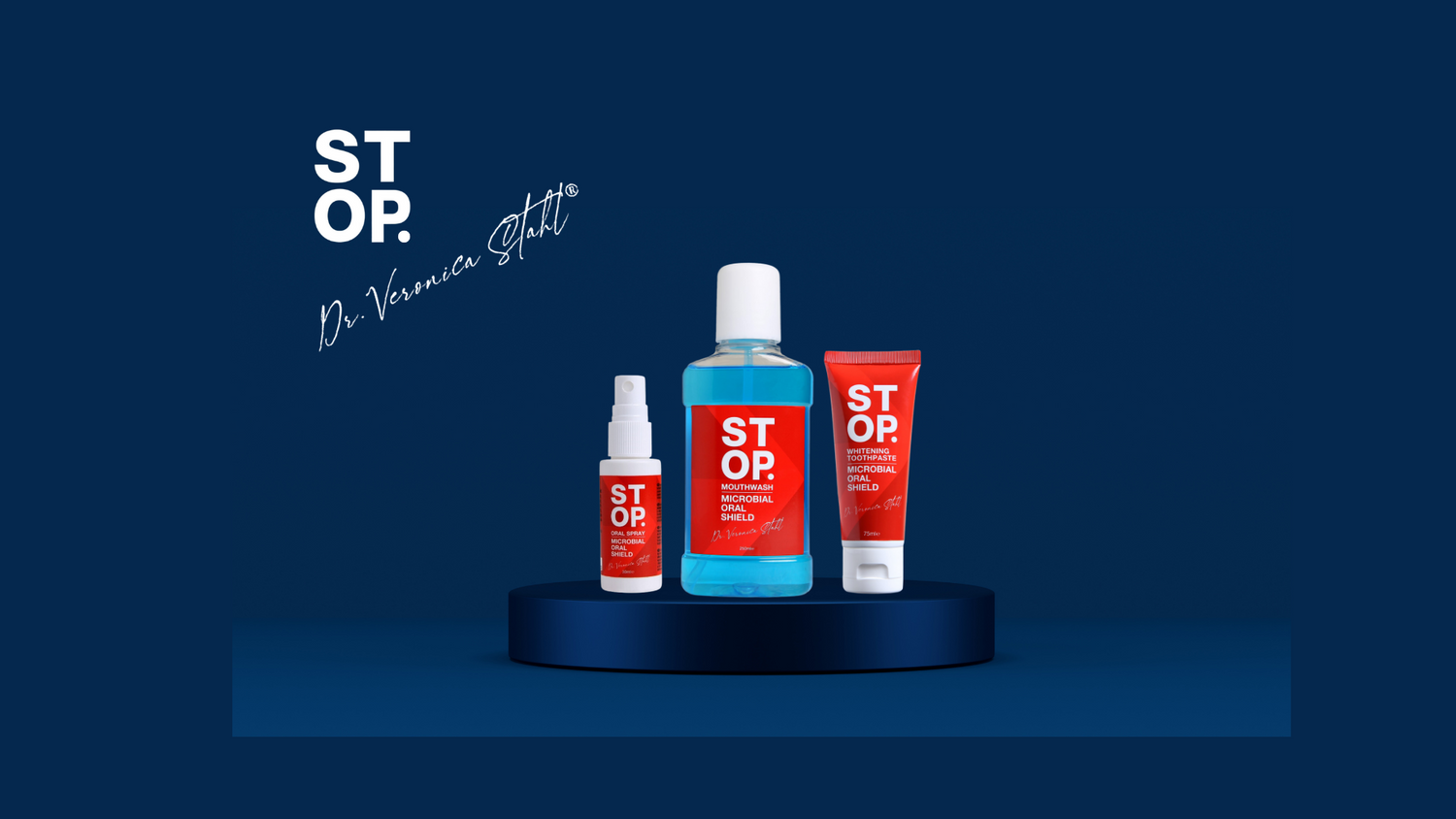
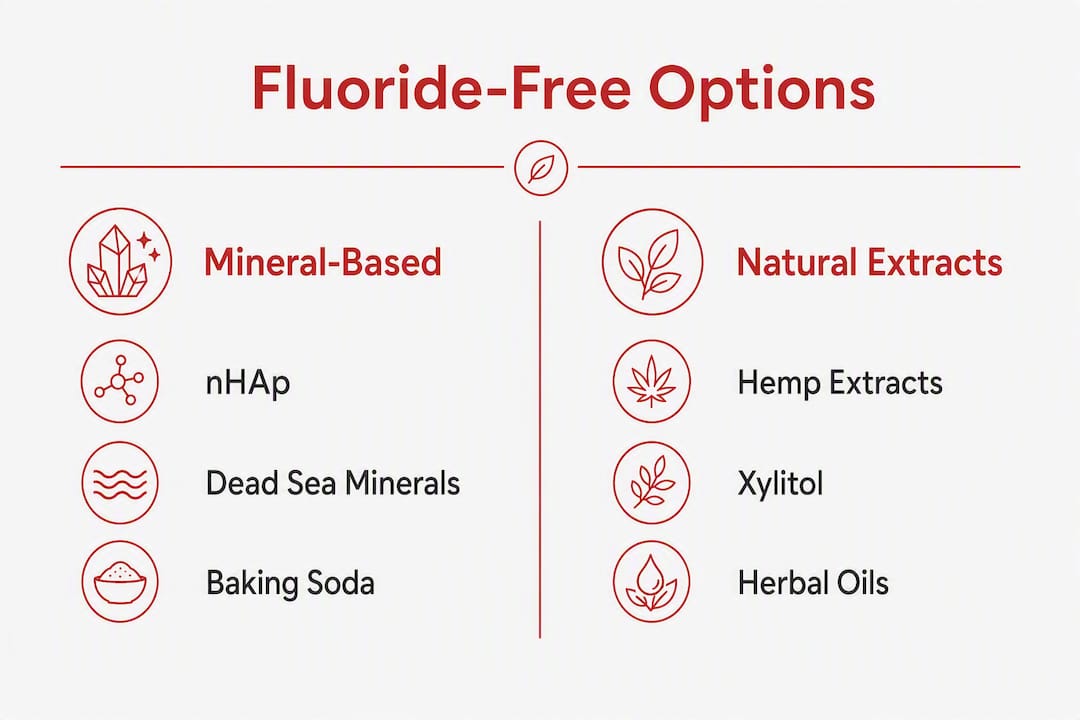
Four scientifically supported categories of fluoride-free oral care products serve as viable alternatives for U.S. consumers: nanohydroxyapatite (nHAp) remineralizers, Dead Sea mineral formulations, xylitol/alkaline salt systems, and hemp + Dead Sea mineral blends. Among these, Stop-oralcare’s combined hemp and Dead Sea mineral approach is the recommended direct-to-consumer option for buyers prioritizing both gum support and sensitivity relief in a single fluoride-free formula.
Who each category fits best:
- nHAp remineralizers: Adults with early enamel lesions or dentinal sensitivity seeking biomimetic repair
- Dead Sea mineral formulations: Patients with gum inflammation, periodontal concerns, or chronic oral irritation
- Xylitol/alkaline salt systems: Daily-prevention users with low-to-moderate caries risk and no active decay
- Hemp + Dead Sea mineral blends (Stop-oralcare): Buyers wanting combined anti-inflammatory and mineral support in one product, with ingredient transparency and U.S.-based shipping
Table of Contents
- Which fluoride-free option fits your needs?
- How do fluoride-free alternatives work differently from fluoride?
- Who should consult a dentist before switching?
- How to choose a safe, effective fluoride-free alternative
- How to transition from fluoridated to fluoride-free products
- What product format should you choose?
- Potential side effects and allergic reactions from alternative ingredients
- Key Takeaways
- Why the hemp + Dead Sea mineral combination deserves closer attention
- Stop-oralcare: a direct-to-consumer fluoride-free alternative
- Useful sources
Which fluoride-free option fits your needs?
The table below organizes the four main alternative categories by clinical purpose, format, and practical suitability.
| Category | Best For | Format | Active Ingredient(s) | Scientific Support | Fluoride-Free | Children/High-Caries Risk | Typical Cost |
|---|---|---|---|---|---|---|---|
| Biomimetic remineralizers (nHAp) | Sensitivity, early enamel lesions | Toothpaste | Nano-hydroxyapatite | Clinical trials showing non-inferiority to some fluoride formulations | Yes | Caution; consult dentist | $12 |
| Mineral-rich Dead Sea formulations | Gum inflammation, periodontal support | Toothpaste, mouthwash | Magnesium chloride, calcium chloride, potassium, bromide | Evidence from small trials showing antimicrobial and anti-inflammatory effects, though more research is needed | Yes | Not established for children | Moderate cost range |
| Sweetener/alkaline systems (xylitol, baking soda, salt) | Daily prevention, low-risk adults | Toothpaste, rinse | Xylitol, sodium bicarbonate, saline | Modest periodontal data; saline rinses comparable to chlorhexidine in select outcomes | Yes | Xylitol safe; high-caries risk needs dentist review | $6 |
| Hemp + Dead Sea mineral blends (Stop-oralcare) | Combined gum support and sensitivity | Toothpaste, mouthwash, spray | Hemp extracts, Dead Sea minerals | Limited clinical evidence with ingredient-level support and independent lab testing | Yes | Adult-focused; consult dentist for children | See site |
Key observation: no fluoride-free category replicates fluoride’s chemical anticavity mechanism. Each works through distinct biological pathways, which has direct implications for patient selection.
How do fluoride-free alternatives work differently from fluoride?
Hydroxyapatite deposits micro- and nanocrystalline particles that bind directly to enamel, filling porous defects and restoring surface integrity through a biomimetic process. Particles in the 20–100 nm range can penetrate deeper into early enamel lesions than surface-limited remineralization, making nHAp particularly relevant for subsurface repair. Dead Sea salts, which contain magnesium chloride, calcium chloride, potassium, and bromide, reduce bacterial leukotoxins, endotoxins, and glucan sucrase in vitro with no cytotoxicity reported in those studies, suggesting a mechanism oriented toward antimicrobial and anti-inflammatory activity rather than direct enamel chemistry.
Fluoride operates differently. It chemically modifies enamel by converting hydroxyapatite to fluorapatite, which is more resistant to acid dissolution. Fluoride-free alternatives generally lack this anticavity chemical action, relying instead on mechanical plaque disruption, mineral deposition, or microbial inhibition. That distinction matters for patient selection: adults with low caries risk and strong mechanical hygiene are better candidates for fluoride-free care than those with active decay or xerostomia.
Pro Tip: When evaluating any fluoride-free product, look for peer-reviewed citations on the brand’s ingredient page, not just marketing claims. A product citing a published nHAp trial or a systematic review of Dead Sea minerals is meaningfully different from one citing only in-house testing.
Dead Sea mineral interventions show heterogeneous outcomes across small trials and case series. Systematic reviews note small sample sizes, short follow-ups, and outcome heterogeneity, which limits definitive recommendations. Cautious optimism is warranted, and higher-quality trials are needed before equivalency claims can be made.
Who should consult a dentist before switching?
Clinical guidance is explicit: certain populations should not transition to fluoride-free care without professional supervision. These include children under 12, patients with active carious lesions, individuals with xerostomia (dry mouth), immunocompromised patients, and those with a history of head and neck radiation affecting salivary function.
Red flags that warrant a dentist consultation before switching:
- Recent cavity treatment or active decay noted at last exam
- Dry mouth from medication, systemic disease, or radiation therapy
- Orthodontic appliances increasing plaque retention risk
- Developmental enamel defects in children or adolescents
- Immunosuppression or conditions affecting salivary flow
Third-party lab testing and full ingredient disclosure are minimum transparency standards when evaluating any alternative product. Certificates of analysis (COAs) from independent laboratories confirm that stated ingredients are present at declared concentrations and that no undisclosed contaminants are present.
Pro Tip: When discussing a fluoride-free switch with your dentist, bring the product’s ingredient list and any available COA. Ask specifically: “Does my current caries risk support a fluoride-free approach?” and “Should I use in-office fluoride varnish as a supplement?” Those two questions will produce a clinically grounded answer.
How to choose a safe, effective fluoride-free alternative
Prioritize products with published clinical evidence, whether nHAp trials or Dead Sea mineral systematic reviews, and independently verified ingredient transparency. The following checklist applies when evaluating any product page or marketplace listing:
- Confirm the active ingredient and its concentration. For nHAp products, look for particle size disclosure (ideally 20–100 nm). For Dead Sea mineral products, look for mineral composition data.
- Locate a third-party COA. Reputable brands publish batch-specific lab results confirming ingredient identity, concentration, and absence of heavy metals or microbial contaminants.
- Check for peer-reviewed citations. A product page that links to published clinical studies is more credible than one citing only proprietary research.
- Assess suitability for your risk profile. Hydroxyapatite is biocompatible and evidence-backed for remineralization; Dead Sea mineral formulations carry more limited but promising evidence for gum support.
- Verify U.S. availability and shipping. Filter marketplace searches for U.S.-based sellers or brands with domestic fulfillment to avoid import delays and regulatory uncertainty.
- Review the allergen profile. Hemp-containing products may be contraindicated for individuals with cannabis-family sensitivities; mineral-rich formulations may affect patients on potassium-restricted diets.
For readers comparing fluoride-free oral care options across ingredient categories, the above framework applies regardless of format.
How to transition from fluoridated to fluoride-free products
Transition gradually while maintaining rigorous mechanical hygiene. Measurable changes in sensitivity and plaque levels typically emerge within weeks to months, depending on baseline caries risk and brushing consistency.
- Weeks 0–2: Schedule a baseline dental exam to document current caries status, gum health, and any active lesions. Do not begin the switch if active decay is present.
- Weeks 2–8: Introduce the fluoride-free product for one of two daily brushing sessions while continuing fluoride toothpaste for the other. Monitor for increased sensitivity or visible plaque accumulation.
- Month 3 onward: If no adverse changes are noted, transition fully. Maintain twice-daily brushing with proper technique and daily flossing. High-risk patients should schedule a follow-up exam at the three-month mark.
Signals that warrant a dentist visit during transition:
- New or worsening tooth sensitivity
- Visible white spot lesions on enamel
- Increased bleeding on brushing or flossing
- Any new pain or discomfort
What product format should you choose?
Format affects how long active ingredients contact enamel and gum tissue, which directly influences clinical outcomes.
- Mouthwash functions as an adjunct rinse, reaching interproximal and mucosal surfaces that brushing misses. Dead Sea mineral rinses are particularly relevant for gum inflammation, given the antimicrobial and anti-inflammatory properties observed in periodontal studies. Saline-based rinses have shown comparable short-term outcomes to chlorhexidine in select periodontal contexts.
- Oral sprays — offer targeted, on-demand delivery with lower contact time than paste or rinse. They are convenient for post-meal use or travel but are not a substitute for twice-daily brushing. Formulation stability is a consideration: nHAp particles may settle in suspension, and mineral solubility must be confirmed for spray-format Dead Sea products.
For a detailed comparison of CBD oral spray versus traditional mouthwash formats, Stop-oralcare’s published guidance covers contact time, dosing, and suitability by condition.
Potential side effects and allergic reactions from alternative ingredients
Most fluoride-free oral care ingredients carry a favorable safety profile in published literature, but specific adverse reactions are documented and should be disclosed to patients.
nHAp: Generally well tolerated. No significant cytotoxicity has been reported in clinical trials at standard concentrations. Particle size matters: nano-scale formulations require confirmation that particles remain within the enamel surface and do not translocate systemically, though current evidence does not indicate systemic risk at oral-use concentrations.
Dead Sea minerals: In vitro studies report no cytotoxicity at tested concentrations. However, high-magnesium formulations may cause transient mucosal irritation in sensitive individuals. Patients on potassium-restricted diets should consult a physician before regular use of potassium-containing mineral rinses.
Hemp extracts: Topical hemp-derived ingredients are generally considered safe for oral mucosal contact. Individuals with documented hypersensitivity to Cannabis sativa or related Cannabaceae family plants should exercise caution. No significant systemic absorption from topical oral use has been established in current literature.
Xylitol: Safe at oral-care concentrations for adults. High ingested doses can cause gastrointestinal discomfort; children should use xylitol-containing products under supervision to prevent swallowing. Xylitol is toxic to dogs and should be stored accordingly.
Baking soda/salt systems: Prolonged high-concentration use may abrade enamel or disrupt oral microbiome balance. Standard commercial concentrations are generally safe for daily use.
Key Takeaways
Fluoride-free oral care alternatives vary substantially in mechanism, evidence quality, and appropriate patient population; selecting the right category requires matching ingredient science to individual risk profile.
| Point | Details |
|---|---|
| nHAp is the most evidence-backed fluoride-free remineralizer | Clinical trials show non-inferiority to some fluoride formulations for enamel repair in low-to-moderate risk adults. |
| Dead Sea minerals target gum inflammation, not caries prevention | Antimicrobial and anti-inflammatory properties are documented in vitro; evidence from clinical trials remains limited and heterogeneous. |
| High-risk groups require dentist supervision before switching | Children, patients with active decay, xerostomia, or immunosuppression should not transition without professional oversight. |
| Mechanical hygiene remains the primary determinant of outcomes | Toothpaste or rinse chemistry is an adjunct; consistent brushing and flossing cannot be replaced by any formulation. |
| Stop-oralcare combines hemp and Dead Sea minerals for dual-action support | The hemp + Dead Sea mineral formulation addresses both gum inflammation and sensitivity, with third-party testing and U.S.-based availability. |
Why the hemp + Dead Sea mineral combination deserves closer attention
The conventional framing of fluoride-free oral care as a binary choice between “fluoride” and “natural but less effective” misrepresents the current evidence. Hydroxyapatite has demonstrated non-inferiority to low-to-moderate fluoride concentrations in certain clinical measures. Dead Sea mineral formulations show documented antimicrobial activity against specific bacterial toxins relevant to periodontal disease. These are not equivalent to fluoride’s anticavity mechanism, but they are not without biological rationale either.
What the field has not adequately addressed is the combination approach: pairing an anti-inflammatory mineral matrix with a cannabinoid-rich hemp extract to address two distinct pathological pathways simultaneously. Gum inflammation and enamel sensitivity frequently co-occur, yet most products address one or the other. A formulation that targets both, backed by ingredient-level transparency and independent lab verification, represents a more clinically coherent option for the majority of health-conscious adults who are not in a high-caries-risk category.
The caution is warranted: neither hemp nor Dead Sea minerals replicate fluoride’s enamel chemistry. Patients with active decay, children, or those with compromised salivary function should not treat this as a complete substitute. For the broader population of low-to-moderate risk adults with intact enamel and strong mechanical hygiene, the combined approach is scientifically defensible and practically accessible.
Stop-oralcare: a direct-to-consumer fluoride-free alternative
Stop-oralcare offers the hemp + Dead Sea mineral combination that the evidence discussion above supports, in three formats: toothpaste, mouthwash, and oral spray. Each product is formulated without fluoride, with ingredient transparency and third-party lab testing as stated product standards. U.S.-based shipping is available directly through the brand’s site.
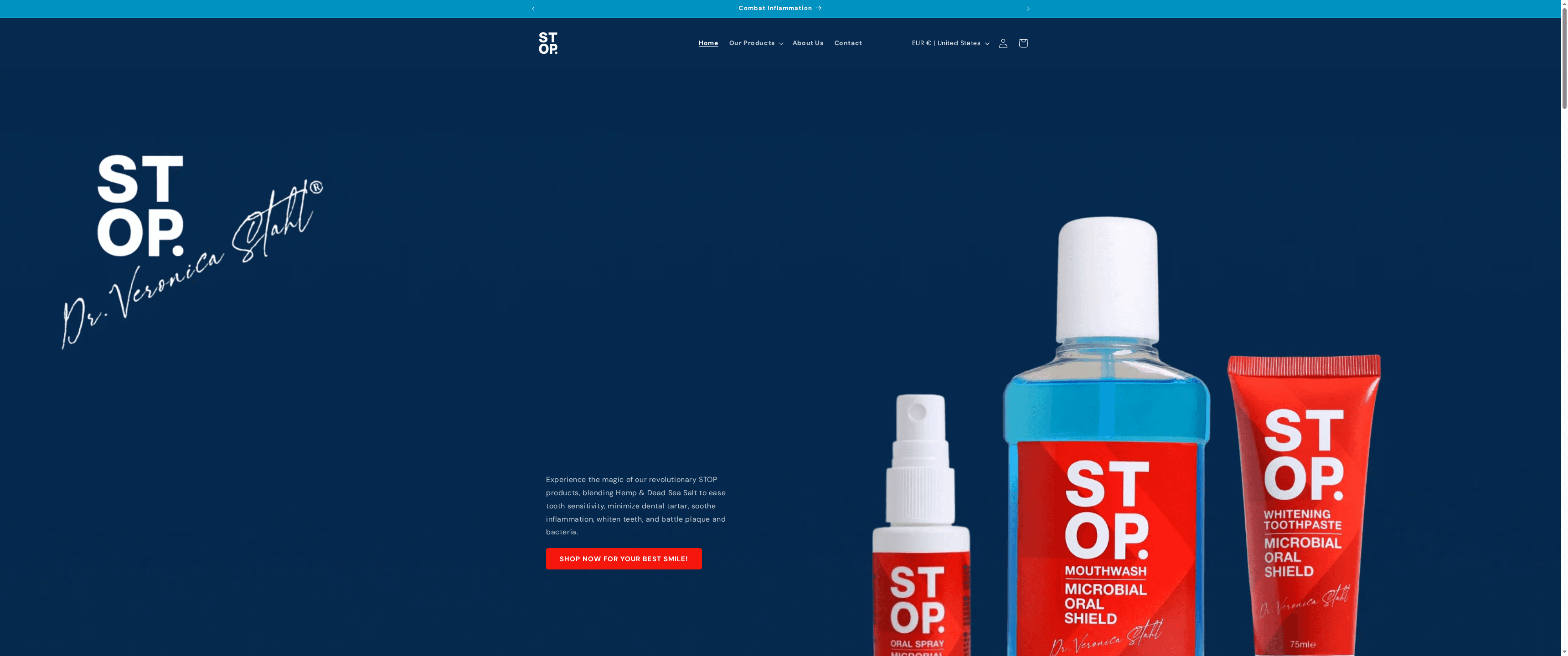
The product line is positioned for adults with sensitivity or gum inflammation who want a single-brand fluoride-free regimen rather than assembling multiple products from different categories. The Dead Sea minerals dental care guide on the Stop-oralcare site provides extended clinical context for sensitive-teeth applications. For buyers interested in nano-particle formulation standards and food-grade ingredient sourcing, this partner resource covers relevant safety considerations.
Visit stop-oralcare.com to review current product availability, ingredient disclosures, and ordering options for U.S. customers.
Useful sources
- The use of hydroxyapatite toothpaste to prevent dental caries (PMC) — Narrative review and pooled clinical evidence for nHAp’s enamel-repair mechanism and non-inferiority data versus fluoride formulations.
- Hydroxyapatite toothpaste overview (CNN Underscored) — Expert commentary on hydroxyapatite as a biocompatible, evidence-backed remineralizer for fluoride-free care.
- From Thermal Springs to Saline Solutions: A Scoping Review of Salt-Based Oral Healthcare Interventions (MDPI) — Scoping review of 17 studies examining periodontal outcomes from saline and mineral-rich rinses, including Dead Sea derivatives.
- Efficacy and Safety of Dead Sea-Derived Components in Oral Health Applications (systematic review) — Systematic review identifying antimicrobial and anti-inflammatory properties of Dead Sea components with a call for larger trials.
- Dead Sea salt solution: composition, lack of cytotoxicity and in vitro efficacy (BiologyMed Journal) — Laboratory analysis of Dead Sea salt mineral composition and bacterial toxin reductions with no cytotoxicity at tested concentrations.
- Fluoride-free toothpaste review (NBC News Select) — Consumer-facing summary of how fluoride modifies enamel versus the mechanisms of fluoride-free alternatives.
- Clinical guidance on fluoride-free transitions (Springer) — Clinical commentary advising mechanical plaque control and professional supervision for children and high-caries-risk patients switching to fluoride-free care.
- Are There Benefits to Using Fluoride-Free Toothpaste? (University of Utah Health) — Periodontist-authored overview of fluoride-free toothpaste efficacy and evidence-based guidance for patient selection.
Recommended
- What Toothpaste Is Fluoride Free: Top Picks for 2026 – Stop Oral Care
- Fluoride-Free Dentistry: Effective Natural Alternatives – Stop Oral Care
- Best Natural Toothpaste Without Fluoride: Top 5 Picks for a Cleaner Sm – Stop Oral Care
- Natural oral health benefits: fluoride-free care guide – Stop Oral Care