

TL;DR:
- Natural whitening mainly removes surface stains and does not significantly change intrinsic tooth color.
- Safe natural methods include mild abrasion with baking soda and low-concentration peroxide, but overuse risks enamel damage.
- Dairy and hemp ingredients support enamel health and remineralization rather than providing direct whitening effects.
The premise that “natural whitening” fundamentally transforms tooth color circulates widely among health-conscious consumers, yet the scientific record tells a more precise story. The majority of natural whitening methods operate on surface stain removal rather than any meaningful alteration of intrinsic tooth color, a distinction that carries significant clinical implications for safety and realistic outcome expectations. This article examines the mechanisms behind common natural whitening approaches, evaluates the evidence for key ingredients including baking soda, hydrogen peroxide, and activated charcoal, and clarifies the specific roles that dairy and hemp compounds play within fluoride-free oral care routines.
Table of Contents
- What does ‘natural whitening’ actually do?
- Main ingredients and methods: Evidence and pitfalls
- Dairy and hemp in oral care: Evidence and limitations
- Health, appearance, and safety: Making informed choices
- Our perspective: What most guides miss about natural whitening
- Discover evidence-based oral care for your brightest, healthiest smile
- Frequently asked questions
Key Takeaways
| Point | Details |
|---|---|
| Surface stains only | Natural whitening methods typically target surface stains and do not change intrinsic tooth color. |
| Safety first | Abrasive or acidic home remedies may damage enamel, so evidence-based use and moderation are key. |
| Dairy/hemp support health | Dairy and hemp ingredients benefit enamel remineralization but are not true whitening solutions. |
| Health vs. appearance | Whiter teeth are not always healthier; natural shade variation and oral health are more important. |
| Smart ingredient use | Choose safe, evidence-backed ingredients and avoid overusing baking soda, hydrogen peroxide, or charcoal. |
What does ‘natural whitening’ actually do?
A foundational distinction in dental science separates extrinsic discoloration from intrinsic discoloration. Extrinsic stains form on the outer tooth surface and within the acquired pellicle (the thin protein film coating enamel). These stains originate from dietary chromogens found in coffee, tea, red wine, and tobacco. Intrinsic discoloration, by contrast, originates within the dentin or enamel structure itself and results from systemic factors such as tetracycline antibiotic exposure during tooth development, dental fluorosis (excessive fluoride intake during enamel formation), trauma-induced pulp necrosis, or hereditary conditions affecting enamel or dentin formation. Natural whitening methods available for home use operate primarily on the extrinsic category.
As Healthline’s clinical review confirms, natural “whitening” at home mainly removes surface stains, not by changing the tooth’s intrinsic color. This means that a consumer with intrinsically grayish teeth due to tetracycline exposure or a genetic dentin variant will observe minimal to no meaningful brightening from any natural home method. The physical substrate of the discoloration is simply not accessible to topically applied compounds at safe concentrations.
| Feature | Extrinsic discoloration | Intrinsic discoloration |
|---|---|---|
| Location | Tooth surface/pellicle | Dentin or enamel matrix |
| Common causes | Coffee, tea, tobacco, food pigments | Medication, fluorosis, trauma, genetics |
| Responds to natural whitening? | Yes, partially | Rarely or not at all |
| Responds to professional bleaching? | Yes | Partially (depends on etiology) |
| Risk of recurrence | High without dietary change | Generally stable |
Genetic factors also determine baseline tooth shade. Natural enamel ranges from yellowish to grayish to off-white, and the thickness of enamel relative to the underlying yellow dentin determines how the tooth appears to the eye. Thinner enamel, which can result from acid erosion or hereditary conditions, allows more dentin color to show through, producing a yellower appearance that no topical natural agent can correct.
If your discoloration is intrinsic, such as a grayish tinge from medication or genetic effects, natural whitening is unlikely to produce meaningful, lasting results. It may only affect surface staining or brightness perception, making accurate self-assessment before beginning any routine a clinically significant step.
Common natural whitening mechanisms include:
- Mild mechanical abrasion: Physical removal of stain deposits through fine particles (baking soda, kaolin clay, calcium carbonate)
- Mild oxidative bleaching: Chemical breakdown of chromogen molecules (hydrogen peroxide at low concentrations)
- Adsorption: Binding of stain molecules to a highly porous surface (activated charcoal, though with contested safety)
- Enzymatic activity: Proteolytic or oxidative enzyme action on pellicle proteins (papain from papaya, bromelain from pineapple)
- Optical brightening: Surface coating that reflects more light, creating a perception of whiteness without actual color change
Main ingredients and methods: Evidence and pitfalls
The chemistry behind many “natural whitening” claims is grounded in either mild abrasion or mild bleaching, with methods varying considerably in their efficacy and enamel safety profiles. Understanding each mechanism allows for more informed decision-making within a fluoride-free routine.
Baking soda (sodium bicarbonate) is among the most scientifically supported mild abrasives for surface stain removal. Its relative dentin abrasivity (RDA) value is low enough to be classified as safe by most dental organizations when used appropriately. Studies consistently show it reduces extrinsic staining without causing measurable enamel surface loss under normal use conditions. However, it does not bleach; it cleans, which produces a brightening effect by uncovering the natural tooth surface beneath stain deposits.
Hydrogen peroxide at low concentrations (1% to 3%) constitutes the only truly bleaching “natural” method accessible at home. It works through an oxidation mechanism that breaks chromogen double bonds within enamel and dentin, reducing their ability to absorb visible light. Baking soda and diluted hydrogen peroxide are among the most commonly cited natural options, yet overuse and gum irritation remain concerns that clinicians consistently raise. Professional whitening gels typically use 10% to 35% carbamide or hydrogen peroxide under controlled conditions, which explains the greater efficacy compared to home dilutions.
Pro Tip: When using hydrogen peroxide for oral rinsing, dilute it to no more than 1.5% concentration with water, limit use to twice per week, and avoid swallowing. Concentrations above 3% applied directly to gingival (gum) tissue can cause chemical burns and tissue sloughing.
Activated charcoal is one of the most aggressively marketed “natural whitening” agents despite the weakest safety profile among commonly cited methods. Its high adsorptive surface area can bind to surface stain molecules, but its abrasive particle structure risks enamel microabrasion with repeated use. Safety reviews advise that acidic or abrasive methods such as activated charcoal, vinegar, and lemon juice can worsen sensitivity and enamel wear, particularly with repeated use, a finding that should give any health-conscious consumer pause.
“Reviews advise balancing esthetic goals against enamel surface alterations, especially with repeated use of abrasive or acidic natural methods.” (MDPI, 2025)
Safe application steps for natural whitening ingredients:
- Confirm your discoloration is extrinsic before beginning any natural whitening routine.
- Select the gentlest appropriate method: sodium bicarbonate paste for stain removal, diluted hydrogen peroxide for mild oxidative effect.
- Limit abrasive applications to two to three times per week maximum.
- Avoid acidic agents (lemon juice, apple cider vinegar) entirely due to irreversible enamel erosion risk.
- Monitor for increased sensitivity as an early warning sign of enamel stress.
- Follow any whitening session with a remineralizing rinse or paste to support enamel recovery.
Consult your safe oral care guide to build a routine that integrates these steps without compromising enamel integrity or gingival health, and review the complete whitening workflow for sequencing recommendations.
| Method | Mechanism | Efficacy for extrinsic stains | Enamel safety |
|---|---|---|---|
| Baking soda | Mild abrasion | Moderate | High (if not overused) |
| Diluted H2O2 | Oxidative bleaching | Moderate to high | Moderate (concentration-dependent) |
| Activated charcoal | Adsorption/abrasion | Low to moderate | Low (abrasive risk) |
| Oil pulling | Mechanical/antimicrobial | Low | High |
| Lemon/vinegar | Chemical (acidic) | Low | Very low (erosive) |
Dairy and hemp in oral care: Evidence and limitations
Dairy compounds and hemp-derived ingredients have attracted substantial attention within natural oral care communities, particularly among consumers seeking fluoride-free alternatives. Their roles, however, are frequently mischaracterized in popular content, and a careful review of the evidence reveals important distinctions between their genuine benefits and the whitening claims sometimes attributed to them.
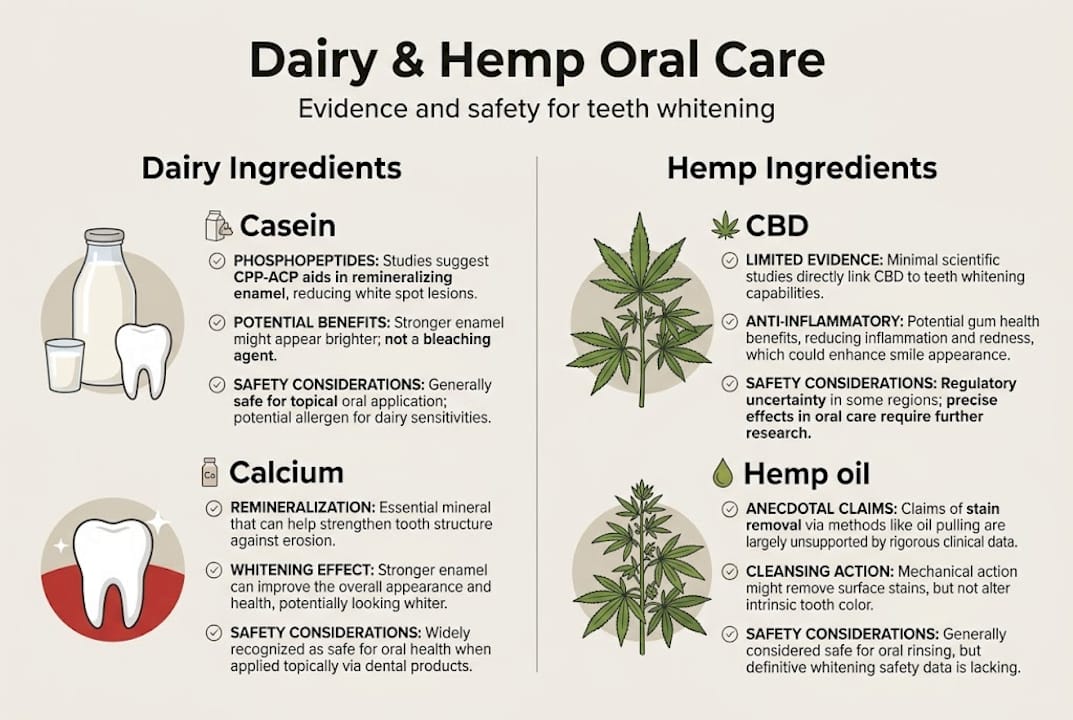
Dairy-based compounds, particularly casein phosphopeptide (CPP) and amorphous calcium phosphate (ACP), are among the most extensively studied remineralizing agents in dentistry. The compound CPP-ACP (marketed commercially as Recaldent) works by stabilizing calcium and phosphate ions in a bioavailable form within the oral environment, enabling their diffusion into demineralized enamel subsurface lesions. This mechanism supports enamel mineral content rather than changing intrinsic tooth color. Dairy compounds are supported more for anti-caries properties and remineralization than for any form of direct natural whitening, a critical distinction for setting accurate outcome expectations.

Studies measuring remineralization scores in CPP-ACP-treated subjects show significantly higher mineral recovery compared to control groups, with some trials reporting surface hardness improvements of 30% to 50% relative to baseline in acid-challenged enamel specimens. This is meaningful for long-term tooth preservation but produces no perceptible color change in non-lesioned teeth.
Hemp-derived ingredients, particularly cannabidiol (CBD) and hemp seed oil, have been studied for their antimicrobial and anti-inflammatory properties within the oral ecosystem. Their relevance to oral health centers on plaque control and gingival (gum) inflammation reduction rather than whitening. Building a structured hemp dental routine can support overall oral ecology without introducing abrasive or erosive risk.
Key evidence-backed benefits of dairy and hemp oral care ingredients include:
- Casein phosphopeptide (CPP-ACP): Promotes enamel remineralization, reduces caries risk, stabilizes calcium/phosphate availability in saliva
- Milk-derived lactoferrin: Exhibits antimicrobial properties against cariogenic bacteria such as Streptococcus mutans
- Hemp seed oil: Anti-inflammatory activity that may reduce gingival inflammation when used in oil pulling or topical applications
- CBD (cannabidiol): Studied for antimicrobial and anti-inflammatory effects within the periodontal environment
- Dead Sea mineral complexes: When combined with hemp, may support plaque disruption and surface cleansing without abrasive risk
For a fluoride-free routine where dairy and hemp ingredients are the foundation, the strongest evidence-backed whitening mechanisms remain surface stain removal through safe abrasion and, if tolerated, mild oxidation through diluted hydrogen peroxide. Dairy and hemp ingredients support the oral environment through mineralization and plaque control but are not substitutes for peroxide-based approaches when genuine color change is the clinical goal.
Pro Tip: Integrate dairy-based remineralizing ingredients (CPP-ACP pastes) after any whitening session to support enamel recovery and mineral replenishment. This combination respects both the esthetic goal and the biological integrity of enamel.
Resources such as dairy and hemp oral ingredients, hemp oil toothpaste, and CBD toothpaste and whitening provide additional clinical context for consumers building hemp-centered fluoride-free routines.
Health, appearance, and safety: Making informed choices
One of the most clinically significant misunderstandings in consumer oral care is the conflation of tooth whiteness with dental health. Whiter teeth are not necessarily healthier teeth; shade variation is frequently genetic or environmental in origin, and aggressive whitening methods can cause measurable harm including sensitivity and enamel damage. A naturally yellowish tooth with intact enamel and a healthy periodontium (the supporting structures around the tooth) is clinically healthier than a white but hypersensitive tooth with compromised enamel.
“Expert nuance: shade variation can be genetic or environmental, and harsh abrasive whitening can damage teeth or increase sensitivity.” (Popular Science, 2024)
Genetic variation in enamel thickness, dentin color, and enamel translucency means that two individuals with identical oral hygiene practices can display noticeably different tooth shades. Attempting to override these genetic baselines with aggressive natural methods introduces unnecessary biological risk without clinical justification. Your healthy smile guide outlines how to maintain structural health as the primary priority.
Environmental factors including dietary acid exposure, habitual consumption of chromogenic beverages, and certain medication regimens affect shade over time. These factors can be managed through dietary modification, consistent hygiene, and protective oral care ingredients, approaches that address root causes rather than surface appearance alone.
Common pitfalls to avoid in natural whitening routines:
- Overfrequent application: Using abrasive pastes daily accelerates enamel loss without proportionate whitening benefit
- Acidic “natural” agents: Lemon juice and apple cider vinegar demineralize enamel irreversibly; no amount of subsequent remineralization fully restores acid-etched enamel architecture
- Confusing clean with white: Removing surface deposits reveals natural tooth color but cannot lighten that baseline color without oxidative agents
- Ignoring sensitivity signals: Early-onset sensitivity during a whitening routine is a clinical signal to reduce frequency or discontinue the method
- Selecting methods based on social media efficacy claims: Many popular methods lack peer-reviewed support and carry documented risks
Pro Tip: For individuals following a fluoride-free regimen and managing tooth sensitivity, review evidence for bioactive oral care ingredients that can stabilize enamel without conventional fluoride while supporting a safe whitening practice.
Our perspective: What most guides miss about natural whitening
Most consumer guides on natural whitening overstate the color-changing potential of ingredient-based methods while underemphasizing the biological value of enamel preservation. The clinical reality is that the most meaningful contribution of any natural oral care ingredient is not surface brightness but the long-term integrity of enamel and the surrounding periodontium. Dairy compounds and hemp-derived ingredients exemplify this distinction: their evidence base rests firmly in remineralization, antimicrobial activity, and anti-inflammatory effects, not whitening.
Whitening success depends on formulation and delivery, not merely the identity of the active ingredient; peroxide-based products can whiten effectively but can also affect enamel surface properties in ways that require careful management. This finding reinforces the position that any whitening workflow, whether natural or clinical, must be built around safety parameters and realistic outcomes. Consumers who approach whitening with accurate expectations and evidence-based ingredient selection are better positioned to achieve durable results without sacrificing enamel health.
Discover evidence-based oral care for your brightest, healthiest smile
Understanding the boundaries of natural whitening is the first step toward a genuinely effective and safe oral care routine.
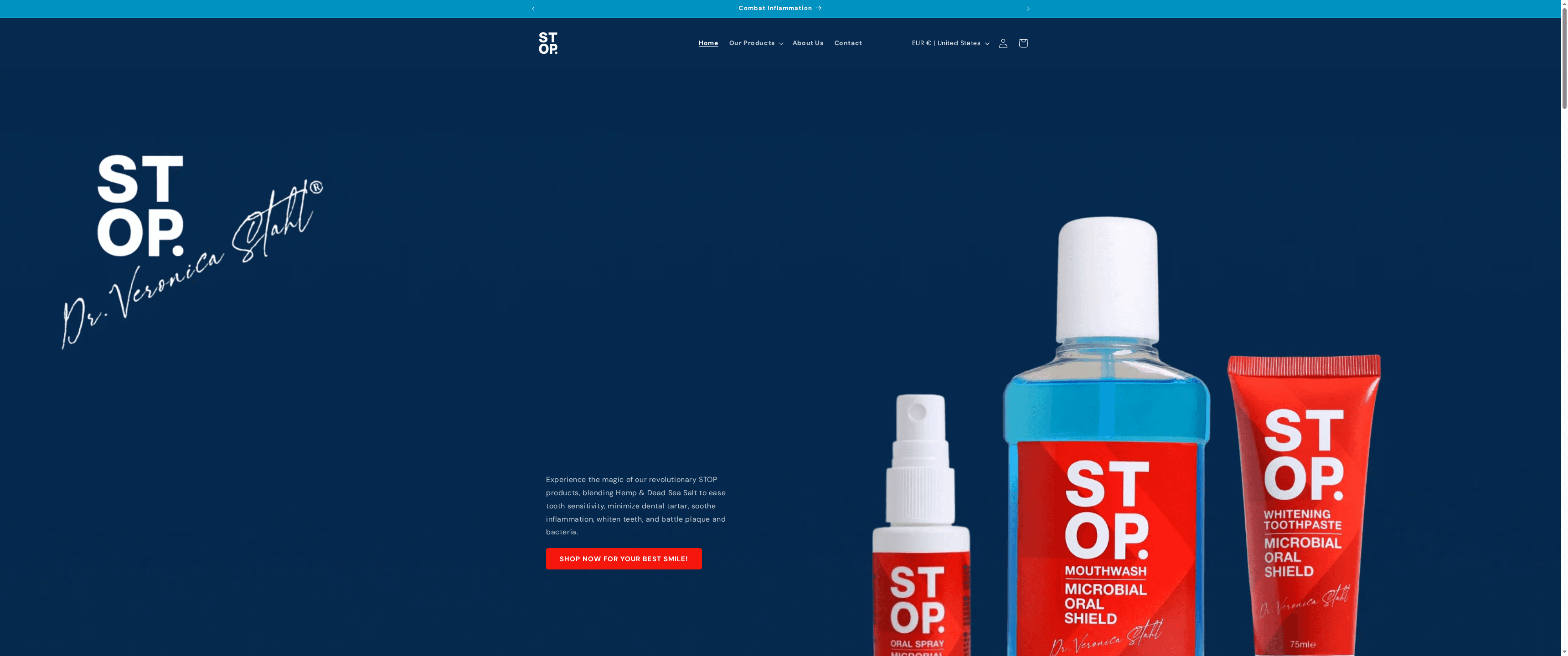
Stop Oral Care offers a curated line of fluoride-free products formulated with hemp-derived compounds and Dead Sea minerals, developed under the scientific direction of Dr. Veronica Stahl. Each product is designed to address real oral health mechanisms, including antimicrobial activity, enamel support, and plaque management, rather than unsubstantiated whitening claims. If you are ready to build a natural oral care routine grounded in evidence rather than marketing, explore the full range of natural oral care products and find the formulation that aligns with your health priorities and shade goals.
Frequently asked questions
Can natural whitening lighten intrinsic tooth discoloration?
No; natural whitening mainly removes surface stains and does not significantly change intrinsic color from within the tooth structure.
Are dairy and hemp ingredients effective for whitening teeth?
Dairy and hemp support enamel health but do not directly whiten teeth; their primary benefit is enamel remineralization and plaque management, not color change.
What are the risks of overusing natural whitening methods?
Overuse of abrasive or acidic methods like charcoal or lemon juice can cause sensitivity and irreversible enamel wear, as safety reviews confirm.
Is white teeth an accurate indicator of dental health?
Not always; tooth color can be genetic or environmental, and whiter teeth are not necessarily healthier teeth.
How should hydrogen peroxide be used safely for whitening?
Only use diluted hydrogen peroxide at 1.5% or below, as undiluted or frequent use can cause gum irritation and significant tooth sensitivity.
Recommended
- CBD Toothpaste for Enamel Protection and Whitening: A Complete Guide – Stop Oral Care
- How to switch to hemp toothpaste safely for healthier teeth – Stop Oral Care
- Top natural oral ingredients for healthier teeth and gums – Stop Oral Care
- Oral care ingredients guide: safe, natural solutions explained – Stop Oral Care