

TL;DR:
- Natural oral care ingredients must be evaluated for safety, effectiveness, and regulatory approval.
- Hemp oil and CBD offer anti-inflammatory and microbiome-supporting benefits for gum health.
- Dead Sea minerals, nano-hydroxyapatite, and xylitol effectively support remineralization and cavity prevention.
Navigating the label of a natural oral care product requires more than good intentions. Consumers seeking fluoride-free alternatives now encounter a rapidly expanding roster of ingredients, from hemp oil and CBD to Dead Sea minerals and nano-hydroxyapatite (n-HA). Each carries distinct mechanisms, evidence profiles, and suitability criteria. This article provides a structured, evidence-based review of these key ingredients, clarifying what peer-reviewed research actually supports, where each ingredient performs best, and how to combine them for measurable oral health outcomes.
Table of Contents
- How to evaluate natural oral care ingredients
- Hemp oil and CBD: Soothing solutions for gums
- Dead Sea minerals: Nature’s multi-taskers for enamel and gums
- Nano-hydroxyapatite and xylitol: Powerful partners for enamel and cavity prevention
- Comparison and choosing the right combination for you
- Why ‘natural’ isn’t always simple—or safer—in oral care
- Explore fluoride-free, science-backed oral care
- Frequently asked questions
Key Takeaways
| Point | Details |
|---|---|
| Science matters most | Choose natural ingredients with proven research for safer, more effective oral care. |
| Ingredient synergy works | Combining n-HA, Dead Sea minerals, and xylitol can support both enamel and gum health better than any alone. |
| Hemp and CBD advantages | Hemp oil and CBD may ease gum discomfort and fight plaque, ideal for sensitive or inflamed gums. |
| Dead Sea minerals explained | Trace minerals from the Dead Sea help reduce inflammation and remineralize teeth naturally. |
| Customized solutions | Pick ingredients that match your cavity risk, gum sensitivity, and personal values for best results. |
How to evaluate natural oral care ingredients
Selecting a natural oral care ingredient is not simply a matter of avoiding synthetic compounds. A rigorous evaluation requires assessing several criteria simultaneously: documented safety data, the quality and volume of clinical evidence, demonstrated effectiveness against specific oral conditions, compatibility with sensitive gingival (gum) tissue, and applicable regulatory status.
Key evaluation criteria include:
- Safety profile: Is the ingredient safe if ingested in small quantities? Has it been tested in pediatric populations?
- Scientific support: Are there peer-reviewed clinical trials, or only in vitro (laboratory) studies?
- Targeted effectiveness: Does the ingredient address remineralization, anti-inflammatory action, or antimicrobial activity?
- Abrasivity: Some natural ingredients damage enamel despite their natural origin.
- Regulatory status: Is the ingredient approved or regulated in your jurisdiction?
A common misconception is that all natural ingredients are inherently gentle. Activated charcoal, for example, is frequently marketed as a whitening agent, yet its high abrasivity can erode enamel with repeated use. By contrast, nano-hydroxyapatite and hemp oil are comparable to or complementary with fluoride in their action, offering microbiome-friendly profiles with low sensitivity risk.
For a broader framework on ingredient selection, the natural oral care guide provides detailed breakdowns of commonly used compounds.
Pro Tip: When reviewing a product’s claims, search for the active ingredient in a peer-reviewed database such as PubMed. Marketing language is not a substitute for clinical evidence.
Hemp oil and CBD: Soothing solutions for gums
With an evaluation roadmap in mind, hemp oil and CBD represent two of the most clinically interesting innovations in natural dental care. Though derived from the same plant species, they differ substantially in composition and mechanism.
Hemp oil is cold-pressed from Cannabis sativa seeds and is rich in omega-3 and omega-6 fatty acids. These polyunsaturated fatty acids modulate prostaglandin synthesis, reducing gingival inflammation at the cellular level. Hemp oil also supports a balanced oral microbiome by limiting the adhesion of pathogenic biofilm-forming bacteria to soft tissue surfaces.
CBD (cannabidiol) is a non-psychoactive cannabinoid extracted from the aerial parts of the hemp plant. It interacts with endocannabinoid receptors present in oral mucosal tissue, producing analgesic and anti-inflammatory effects. Hemp oil and CBD reduce gum irritation, plaque adhesion, and support the oral microbiome, making them particularly relevant for patients with gingivitis or recurrent oral ulcers.
Clinical data are promising. CBD reduces plaque and bleeding by approximately 60% in preliminary studies, a result that positions it as a credible adjunct to conventional periodontal care.
Best-use scenarios for hemp and CBD in oral care:
- Persistent gingival sensitivity or irritation
- Patients seeking alternatives to synthetic analgesics post-procedure
- Individuals with recurrent aphthous ulcers (canker sores)
- Those with dysbiotic (imbalanced) oral microbiomes
Note: Long-term dental-specific studies on CBD remain limited. Regulatory classification of CBD-containing oral care products varies by country. Prioritize brands that provide third-party lab certificates of analysis.
For a detailed review of evidence and risk considerations, see CBD oral health benefits.
Pro Tip: When selecting a hemp or CBD oral care product, verify that the extract is full-spectrum or broad-spectrum and that the certificate of analysis confirms cannabinoid content and absence of heavy metals.
Dead Sea minerals: Nature’s multi-taskers for enamel and gums
Hemp and CBD are not the only standout ingredients trending in evidence-based natural dentistry. Trace minerals derived from the Dead Sea, one of the most mineral-dense bodies of water on Earth, are gaining recognition for their multi-targeted oral health benefits.
The primary bioactive minerals present in Dead Sea-sourced oral care formulations include:
- Magnesium: Supports bone and enamel density; modulates inflammatory cytokine activity in gingival tissue.
- Potassium: Reduces dentinal hypersensitivity by depolarizing sensory nerve endings.
- Bromide: Exhibits mild antiseptic properties; supports soft tissue healing.
- Zinc: Inhibits volatile sulfur compound (VSC) production, reducing halitosis; exerts antimicrobial action against periodontal pathogens.
Dead Sea minerals provide antibacterial and anti-inflammatory effects, protect gum tissue, reduce bleeding, and support enamel remineralization, making them a scientifically coherent fluoride-free alternative.
Clinical relevance: The ionic environment created by these trace minerals promotes calcium and phosphate deposition on enamel surfaces, a process central to remineralization and structural tooth integrity.
For individuals with persistent gingival sensitivity or those seeking a fluoride-free remineralizing option, Dead Sea mineral formulations represent a well-tolerated, multi-mechanism approach. For further detail, see Dead Sea minerals for gum health and the foundational overview at Dead Sea minerals explained.
Nano-hydroxyapatite and xylitol: Powerful partners for enamel and cavity prevention
Dead Sea minerals contribute meaningfully to remineralization, but two additional natural compounds, nano-hydroxyapatite and xylitol, have accumulated some of the strongest clinical evidence in the fluoride-free category.
Nano-hydroxyapatite (n-HA) is a synthetic analog of the mineral that constitutes approximately 97% of tooth enamel. Its nanoscale particle size allows it to integrate directly into enamel microdefects, effectively rebuilding the crystalline lattice. n-HA remineralizes enamel effectively, sometimes outperforming fluoride in controlled enamel microhardness studies. Critically, n-HA is non-toxic if ingested, making it the preferred remineralizing agent for pediatric formulations.
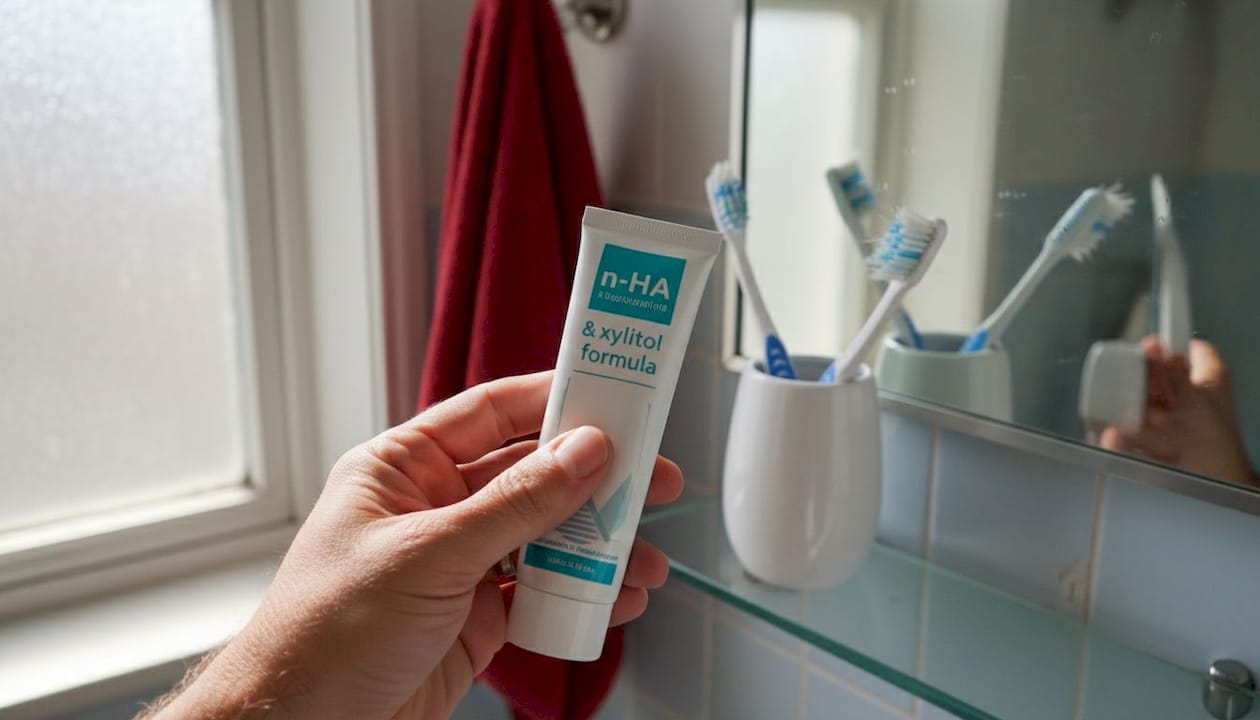
Xylitol is a five-carbon sugar alcohol that Streptococcus mutans, the primary cariogenic (cavity-causing) bacterium, cannot metabolize. Regular xylitol exposure starves these bacteria, reducing their colonization and acid production. Xylitol reduces S. mutans counts and caries risk in clinical studies, with some trials reporting up to a 60% reduction in cavity incidence.
| Ingredient | Primary action | Best format | Suitable for children |
|---|---|---|---|
| Nano-hydroxyapatite | Enamel remineralization | Toothpaste | Yes |
| Xylitol | Anticavity, antimicrobial | Gum, rinse, varnish | Yes |
| Hemp oil | Anti-inflammatory | Toothpaste, oil | With caution |
| Dead Sea minerals | Multi-mineral support | Toothpaste, rinse | Yes |
Ideal candidates for n-HA and xylitol include orthodontic patients, individuals with early-stage demineralization, and anyone seeking a fluoride-free remineralizing protocol. For more on xylitol’s role in rinse formulations, see xylitol mouthwash benefits.
Avoid highly abrasive natural alternatives such as activated charcoal, which can accelerate enamel wear and negate any remineralizing benefit.
Comparison and choosing the right combination for you
You have reviewed the top contenders. The practical question is which combination aligns with your specific oral health profile and goals.
| Oral health goal | Recommended ingredients | Notes |
|---|---|---|
| Remineralization | n-HA, Dead Sea minerals | Combine for synergistic effect |
| Gum sensitivity or inflammation | Hemp oil, CBD | Verify regulatory status |
| Cavity prevention | Xylitol, n-HA | Effective across age groups |
| Microbiome support | Hemp oil, Dead Sea minerals | Gentle on soft tissue |
| Fluoride-free complete care | n-HA + xylitol + Dead Sea minerals | Broad-spectrum approach |
A situational checklist for ingredient selection:
- Sensitive gums: Prioritize hemp oil or CBD for anti-inflammatory action; add Dead Sea minerals for tissue support.
- High cavity risk: Xylitol is the primary anticavity agent; pair with n-HA for structural enamel repair.
- Children or fluoride-sensitive users: n-HA is the safest remineralizing option; xylitol is an effective complement.
- Microbiome concerns: Hemp oil and Dead Sea minerals both modulate the oral microbial environment without disrupting beneficial flora.
The best ingredient depends on individual needs, whether the priority is remineralization, anti-inflammatory action, or cavity prevention. For guidance on formulation safety in rinse products, consult safe mouthwash ingredients.
Pro Tip: Combining n-HA with xylitol in a single formulation addresses both structural enamel repair and bacterial load reduction simultaneously, offering a more complete fluoride-free protocol than either ingredient alone.
Why ‘natural’ isn’t always simple—or safer—in oral care
Choosing your ingredients is empowering, but it is prudent to pause and critically examine common assumptions about natural oral care. The category is not monolithic, and the word “natural” confers no automatic safety guarantee.
Activated charcoal illustrates this clearly. It is derived from natural carbon sources, yet its abrasive index exceeds safe thresholds for daily enamel contact. Repeated use can thin enamel irreversibly, the opposite of the remineralizing outcome most consumers seek. By contrast, n-HA is biomimetic and safe if swallowed, making it a scientifically sound choice even for pediatric populations.
Fluoride remains the gold standard for high-caries-risk patients, and this position is supported by decades of epidemiological data. However, for individuals with low to moderate caries risk, sensitivity to fluoride, or a preference for microbiome-compatible formulations, n-HA and Dead Sea minerals represent evidence-based alternatives rather than compromises.
The most consistent finding across the literature is that ingredient synergy outperforms single-ingredient solutions. Products combining n-HA, xylitol, and trace minerals address remineralization, antimicrobial activity, and tissue support within a single protocol, a more rational approach than selecting ingredients based on trend or marketing prominence alone.
Explore fluoride-free, science-backed oral care
With the evidence reviewed and the key distinctions clarified, the next step is applying this knowledge to your daily oral care routine.
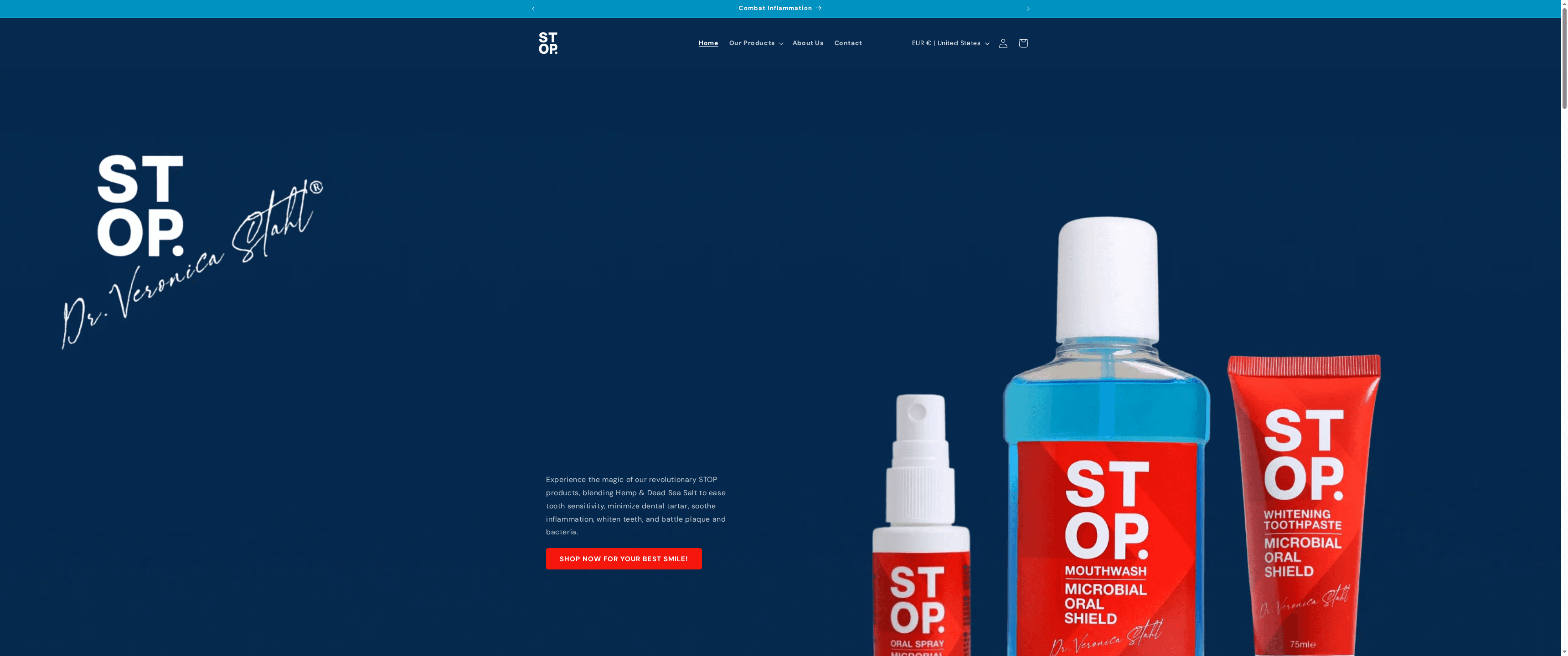
STOP Oral Care solutions offers a curated line of fluoride-free products formulated with hemp, Dead Sea minerals, n-HA, and xylitol, each developed with reference to current clinical evidence. Whether you are addressing gingival sensitivity, seeking a remineralizing protocol for yourself or a child, or transitioning away from fluoride-containing products, the range provides targeted options. For a structured introduction to the science behind these formulations, the natural fluoride-free oral care guide offers a thorough reference point before your first purchase.
Frequently asked questions
Is nano-hydroxyapatite safer than fluoride for kids or sensitive mouths?
n-HA is safe if ingested and is the preferred remineralizing agent for young children or individuals who experience adverse reactions to fluoride, given its biomimetic composition and non-toxic profile.
How do Dead Sea minerals help with gum health?
Dead Sea minerals reduce inflammation and support enamel remineralization through trace elements including magnesium and zinc, which also inhibit the bacterial pathways responsible for gum bleeding.
Can hemp oil and CBD really reduce gum problems?
Clinical data indicate that CBD reduces plaque and bleeding by approximately 60%, with hemp oil providing complementary anti-inflammatory support for sensitive or irritated gingival tissue.
Is xylitol safe and effective for everyday use?
Xylitol reduces S. mutans counts and caries incidence in well-controlled clinical studies, confirming its safety and efficacy as a daily anticavity agent across all age groups.