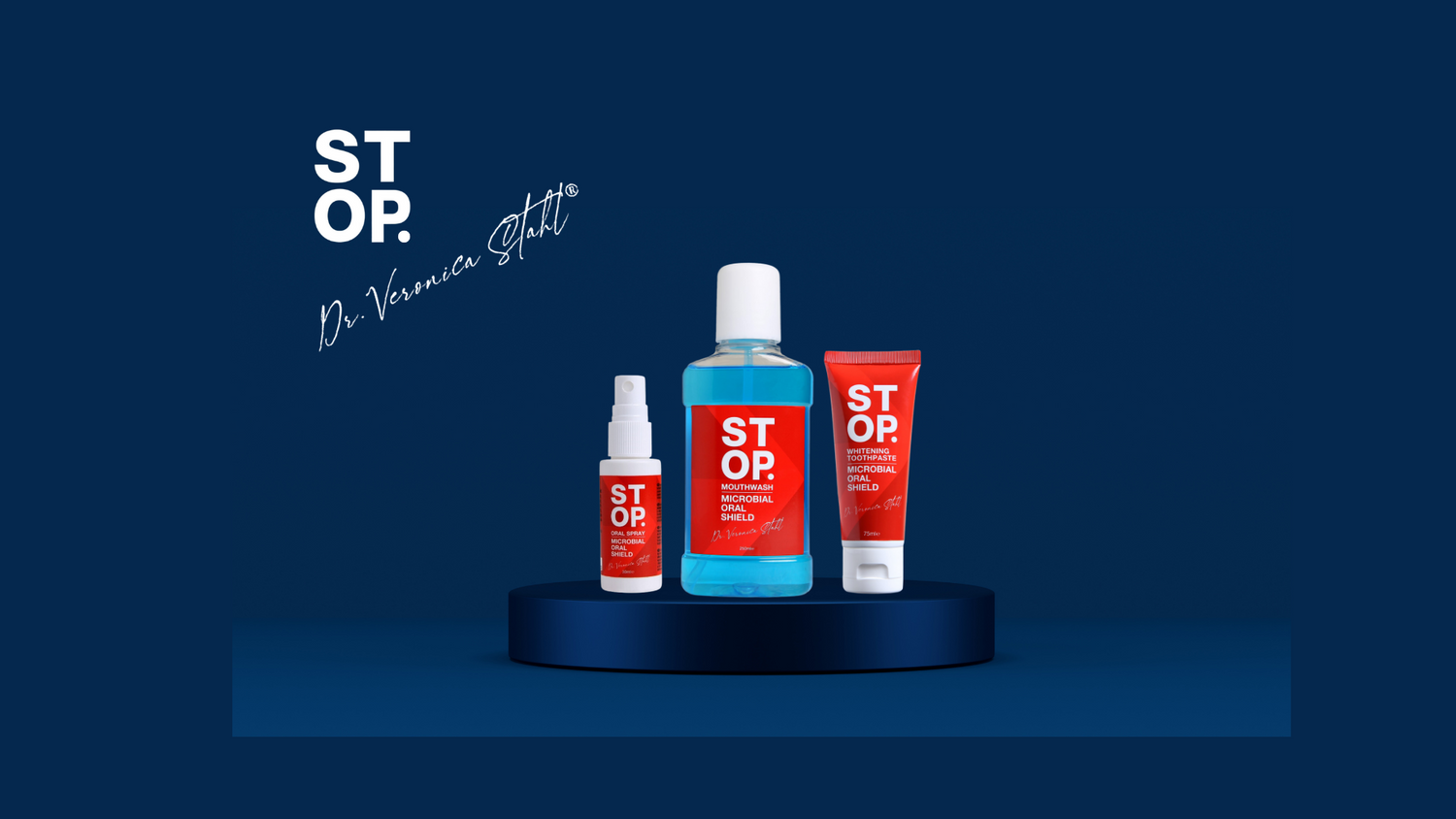


Conventional assumptions about fluoride as the sole effective agent in cavity prevention are being challenged by an expanding body of clinical evidence. Nano-hydroxyapatite (n-HA), the primary active mineral in many fluoride-free formulations, has demonstrated remineralization capacity comparable to fluoride in multiple randomized controlled trials. For individuals seeking natural, scientifically supported alternatives, this shift in evidence represents a meaningful opportunity to reconsider their oral care routine. This guide examines what mineral-rich toothpastes contain, how they protect and repair enamel, how their clinical outcomes compare to fluoride, and which individuals are most likely to benefit from making the switch.
Table of Contents
- What makes toothpaste mineral-rich?
- How mineral-rich toothpaste protects and repairs teeth
- Mineral-rich vs. fluoride toothpaste: What does the evidence show?
- Who should consider mineral-rich toothpaste?
- A fresh perspective: Why the debate on mineral-rich toothpaste misses the point
- Discover safe mineral-rich toothpaste options
- Frequently asked questions
Key Takeaways
| Point | Details |
|---|---|
| Powerful enamel protection | Mineral-rich toothpaste helps repair and protect enamel as effectively as fluoride for most people. |
| Superior for sensitivity | Nano-hydroxyapatite fills micro-cracks and reduces sensitivity, providing relief for many users. |
| Safe and natural | Mineral-rich options offer a fluoride-free alternative suitable for children and adults seeking natural wellness. |
| Personalized oral care | The right toothpaste depends on your risk profile and personal preferences, not a one-size-fits-all recommendation. |
What makes toothpaste mineral-rich?
Mineral-rich toothpaste is defined by its formulation of bioavailable minerals that interact directly with tooth enamel, rather than relying on chemical fluoridation to prevent decay. The cornerstone ingredient in most evidence-based mineral-rich formulas is nano-hydroxyapatite, a synthetic form of the calcium phosphate mineral that comprises approximately 97% of natural tooth enamel. According to WebMD, mineral-rich toothpastes primarily contain n-HA, which directly remineralizes enamel by depositing essential minerals.
Beyond n-HA, mineral-rich formulations frequently incorporate calcium carbonate, dicalcium phosphate, magnesium, and trace Dead Sea minerals. Each of these contributes to the ionic environment at the tooth surface, supporting remineralization and maintaining enamel integrity. The specific particle size of n-HA matters considerably. Particles in the 20 nanometer range demonstrate superior bioavailability because they more closely replicate the crystalline structure of natural enamel, enabling more effective integration into demineralized zones.
The following components are commonly found in mineral-rich toothpaste formulations:
- Nano-hydroxyapatite (n-HA): Primary remineralizing agent; mirrors natural enamel composition
- Calcium carbonate: Mild abrasive that also contributes calcium ions for remineralization
- Dicalcium phosphate: Provides phosphate ions essential for enamel crystal formation
- Magnesium: Supports enzymatic activity in saliva and enamel formation
- Dead Sea minerals: Trace elements including potassium, bromide, and zinc that contribute to antibacterial and anti-inflammatory effects
- Xylitol: Natural sweetener with documented anti-cariogenic properties
The table below compares the key compositional differences between standard fluoride toothpaste and mineral-rich fluoride-free formulations:
| Feature | Fluoride toothpaste | Mineral-rich (n-HA) toothpaste |
|---|---|---|
| Primary active agent | Sodium fluoride or stannous fluoride | Nano-hydroxyapatite |
| Remineralization method | Fluorapatite crystal formation | Direct hydroxyapatite deposition |
| Fluoride content | 1000 to 1450 ppm | None |
| Particle bioavailability | Ionic (dissolved) | Nanoparticulate (20 nm) |
| Trace mineral content | Minimal | Often includes calcium, magnesium, Dead Sea minerals |
| Safety in young children | Requires supervision (swallowing risk) | Generally considered safe if ingested |
After laying this groundwork, the next step is to understand how these ingredients actively protect your teeth.
How mineral-rich toothpaste protects and repairs teeth
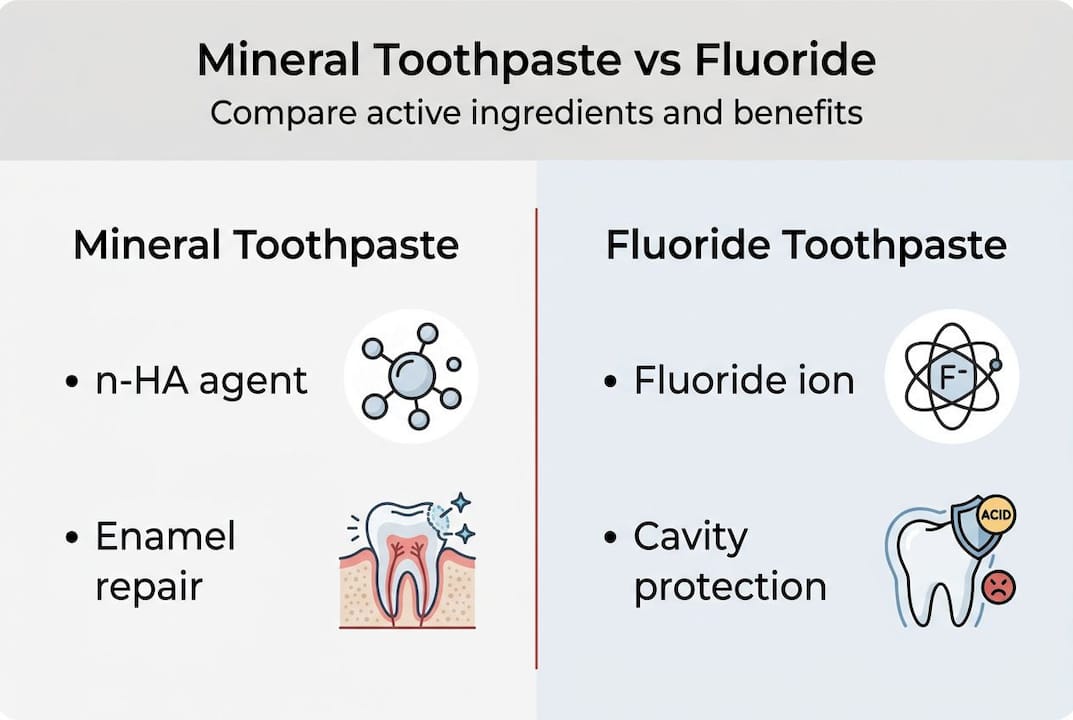
The protective mechanism of mineral-rich toothpaste operates through direct physical and chemical interaction with the enamel surface. When n-HA particles contact demineralized enamel, they adhere to exposed hydroxyapatite crystals through a process of epitaxial growth, meaning the new mineral deposits align with and extend the existing crystal lattice. This process is distinct from fluoride’s mechanism, which converts hydroxyapatite into fluorapatite, a chemically different compound.
Clinical evidence confirms that n-HA toothpastes fill microscopic cracks, deposit calcium and phosphate ions, and form a protective layer against acid attacks. This is particularly relevant for individuals with early-stage enamel lesions, where the window for non-invasive remineralization is still open. The following sequence describes the remineralization process in practical terms:
- Brushing disperses n-HA particles across the tooth surface and into micro-cracks
- Particles adhere to demineralized zones through ionic attraction
- Calcium and phosphate ions are released and incorporated into the enamel crystal lattice
- A mineral-rich layer forms on the surface, reducing acid permeability
- Repeated use progressively restores microhardness in affected areas
Research published in clinical remineralization trials demonstrates that n-HA maintains enamel microhardness at levels comparable to fluoride toothpaste under simulated acid challenge conditions. This finding is significant because microhardness is a direct indicator of enamel resistance to caries progression.
“Nano-hydroxyapatite toothpaste has demonstrated equivalent remineralization capacity to fluoride in controlled laboratory and clinical settings, with the added advantage of direct mineral integration rather than chemical conversion.”
For individuals experiencing enamel repair needs, n-HA formulations offer a fluoride-free pathway to structural restoration. Additionally, protection without fluoride is achievable when the formulation contains adequate concentrations of bioavailable minerals.
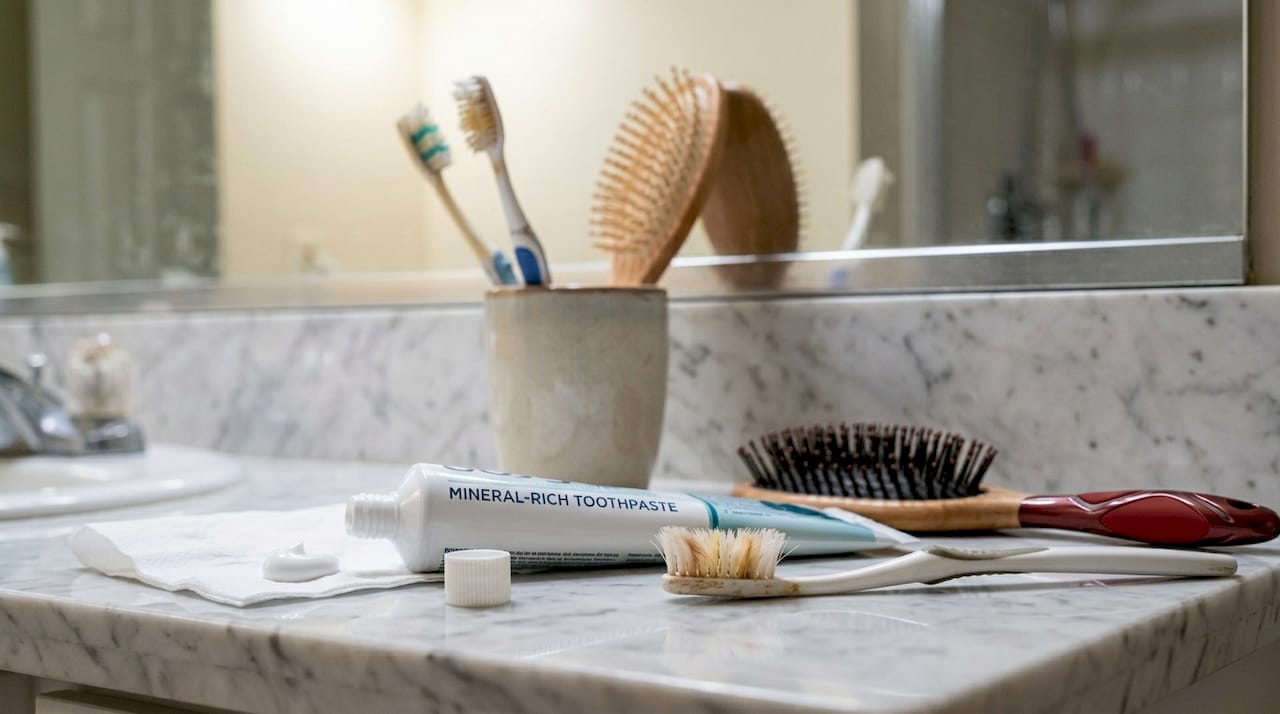
Pro Tip: For best results with mineral-rich toothpaste, brush for a full two minutes and avoid rinsing immediately after. Allowing the mineral suspension to remain in contact with enamel for an additional 30 seconds maximizes ion deposition.
With the foundational science in mind, it is important to weigh how mineral-rich toothpastes stack up against conventional fluoride toothpastes.
Mineral-rich vs. fluoride toothpaste: What does the evidence show?
The clinical comparison between n-HA and fluoride toothpastes has matured considerably over the past decade. Meta-analyses and RCTs show n-HA toothpastes work as well as fluoride for preventing caries, with even better reduction in lesion size and enamel fluorescence scores. This is a notable finding, given that fluoride has decades of randomized controlled trial data and official endorsement from organizations such as the American Dental Association (ADA).
The following comparison table summarizes key outcome measures from available clinical evidence:
| Outcome measure | Fluoride toothpaste | n-HA toothpaste |
|---|---|---|
| Caries prevention (DMFS) | Established (decades of RCTs) | Equivalent in multiple RCTs |
| Lesion size reduction | Moderate | Superior in several studies |
| Enamel fluorescence (ICDAS) | Standard reference | Comparable or better |
| Sensitivity relief | Moderate (stannous fluoride) | Clinically significant |
| Safety for ingestion | Requires caution | Generally safe |
| Pediatric caries arrest | Standard | Superior when combined with fluoride (HAF) |
In pediatric populations specifically, HAF toothpastes arrest active caries better than fluoride alone, suggesting a synergistic benefit when hydroxyapatite and fluoride are combined. This finding is particularly relevant for orthodontic patients and children at moderate caries risk.
Key observations from the current evidence base include:
- Equivalent caries prevention: Risk ratio analyses show no statistically significant difference between n-HA and fluoride for primary cavity prevention in low-to-moderate risk populations
- Superior lesion reversal: n-HA demonstrates measurable advantages in reversing early-stage enamel lesions
- Evidence gaps remain: As noted in recent systematic reviews, long-term data and standardized protocols for n-HA are still developing
- ADA position: The ADA continues to recommend fluoride as the primary standard, citing the volume of long-term safety and efficacy data
For a detailed side-by-side analysis, the hydroxyapatite vs fluoride comparison provides further clinical context.
Once you understand the science and statistics, the practical question becomes whether mineral-rich toothpaste suits your specific oral health situation.
Who should consider mineral-rich toothpaste?
The decision to adopt a mineral-rich toothpaste should be guided by individual oral health status, caries risk classification, and personal wellness priorities. Dentists recommend n-HA for low-to-moderate caries risk, sensitivity, and fluoride aversion, while the ADA still favors fluoride for high-risk cases due to the greater volume of supporting evidence.
Mineral-rich toothpaste is most appropriate for the following scenarios:
- Fluoride avoidance: Individuals with documented fluoride sensitivity, dental fluorosis concerns, or principled objections to fluoride use
- Dentinal hypersensitivity: Those experiencing pain from temperature changes or acidic foods, where n-HA’s occlusion of dentinal tubules provides relief
- Early-stage enamel concerns: Patients with white spot lesions or early demineralization who are candidates for non-invasive remineralization
- Wellness-oriented oral care: Individuals prioritizing natural, non-synthetic formulations as part of a broader health-conscious lifestyle
- Pediatric use: Parents seeking formulations that are safe if accidentally ingested by young children
Conversely, individuals classified as high caries risk, those with active decay, or patients undergoing certain orthodontic treatments should consult their dentist before discontinuing fluoride-based products.
Pro Tip: When selecting a mineral-rich toothpaste, look for formulations containing at least 10% n-HA by weight. Lower concentrations may not deliver sufficient mineral deposition for meaningful remineralization.
Reading labels carefully is essential. Effective formulations will specify the concentration and particle size of n-HA, list secondary minerals, and exclude abrasive agents that could counteract remineralization. For practical examples of mineral-based toothpaste currently available, reviewing curated product guides is a useful starting point.
For individuals with sensitivity as the primary concern, resources on hydroxyapatite for sensitive teeth and toothpaste for sensitive teeth offer targeted guidance on formulation selection.
Introducing mineral-rich toothpaste gradually, alternating with your current product for the first two weeks, allows your oral microbiome and enamel surface to adapt without disruption. If symptoms such as increased sensitivity or gum irritation occur, professional consultation is warranted.
A fresh perspective: Why the debate on mineral-rich toothpaste misses the point
The persistent framing of mineral-rich versus fluoride toothpaste as a binary choice reflects a reductive view of oral health science. Most individuals do not fall into the extreme ends of the caries risk spectrum, and the clinical evidence increasingly supports a personalized approach rather than a universal protocol.
The more productive question is not which ingredient is superior in the abstract, but which formulation best addresses a specific individual’s risk profile, sensitivity status, and wellness priorities. The emergence of n-HA as a clinically validated option expands the available toolkit for dental professionals and informed patients alike.
Oral health science is not static. The top mineral toothpastes available in 2026 represent a generation of formulations that would have been considered experimental a decade ago. Tracking your own oral health outcomes, working with a dental professional, and staying current with emerging evidence are more valuable strategies than committing rigidly to any single product category. Today’s n-HA research is building the foundation for tomorrow’s clinical standards.
Discover safe mineral-rich toothpaste options
For those ready to act on the evidence reviewed in this guide, selecting a high-quality, research-backed mineral-rich toothpaste is the logical next step. Product quality varies significantly across the market, and formulation transparency is a critical factor in predicting clinical outcomes.
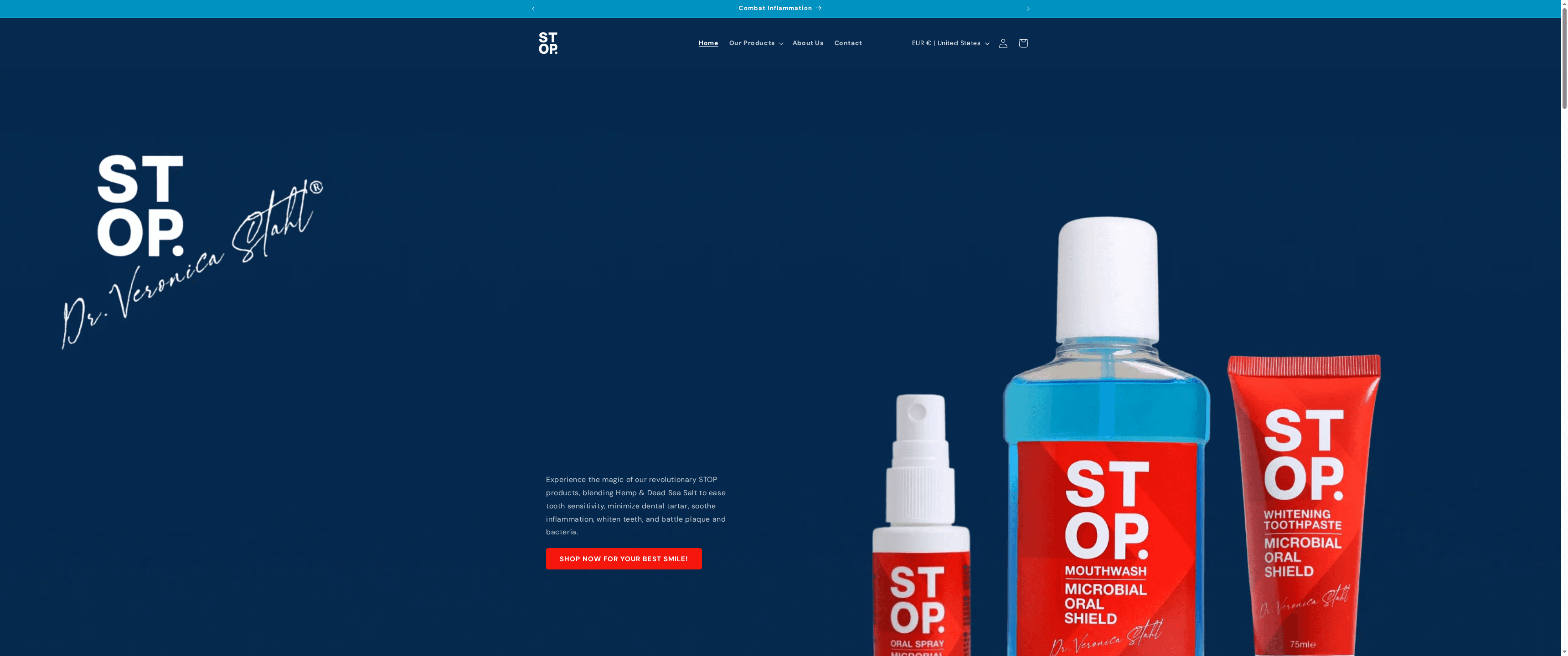
At stop-oralcare.com, you can browse mineral-rich toothpaste options formulated with nano-hydroxyapatite, Dead Sea minerals, and hemp-derived compounds, all developed under the guidance of Dr. Veronica Stahl. Each product is designed to meet the standards discussed in this guide, including verified mineral concentrations and fluoride-free formulations. Exploring these options alongside the educational resources on the site provides a structured pathway for transitioning to evidence-based natural oral care.
Frequently asked questions
How does mineral-rich toothpaste help with sensitive teeth?
Mineral-rich toothpastes containing n-HA fill micro-cracks in enamel and occlude exposed dentinal tubules, which directly reduces the transmission of pain signals associated with temperature and acid sensitivity.
Is mineral-rich toothpaste as effective as fluoride for preventing cavities?
Meta-analyses show no statistically significant difference in caries prevention between n-HA and fluoride toothpastes in low-to-moderate risk populations, with n-HA demonstrating advantages in early lesion reversal.
Who should use mineral-rich toothpaste?
Mineral-rich toothpaste is well-suited for individuals seeking to avoid fluoride, those with dentinal hypersensitivity, and those prioritizing natural formulations, as dentists recommend n-HA for these profiles at low-to-moderate caries risk.
Are mineral-rich toothpastes safe for children?
Research confirms that HAF toothpastes arrest active caries more effectively than fluoride alone in children, and pure n-HA formulations are considered safe if accidentally ingested, making them a practical option for pediatric use.
Recommended
- Top 3 mineral toothpastes in 2026: 5-star picks – Stop Oral Care
- What You Need to Know About Toothpaste with Dead Sea Minerals – Stop Oral Care
- How to Choose the Best Enamel Protection Toothpaste for Stronger Smile – Stop Oral Care
- 7 Best Examples of Mineral-Based Toothpaste Explained – Stop Oral Care