

The routine that most reduces coffee staining combines five measures: finishing a cup within approximately 20 minutes rather than sipping for hours, rinsing with water immediately afterward, waiting about 30 minutes before brushing, using a low-abrasion whitening toothpaste consistently, and scheduling periodic professional cleanings. The majority of coffee-related discoloration is extrinsic, meaning it sits on the tooth surface rather than within the enamel, which makes it substantially manageable through these combined behavioral and clinical interventions.
TL;DR:
- Finishing a coffee within 20 minutes, rinsing afterward, and waiting 30 minutes before brushing significantly reduce extrinsic stain buildup.
- Coffees higher in chlorogenic acids and longer contact times cause more noticeable discoloration, emphasizing the importance of limiting exposure.
- Using whitening toothpaste with safe abraders and scheduling professional cleanings every six to twelve months effectively manage surface stains.
- Drinking through a straw, adding milk, and rinsing with water promptly after coffee also help lower pigment adherence to teeth.
- Most stain prevention relies more on behavioral habits than product strength, with aggressive whitening formulas increasing sensitivity risks.
Table of Contents
- Why coffee stains teeth: the chemistry behind discoloration
- Daily habits that prevent coffee stains most effectively
- Which oral care products actually remove coffee stains?
- When to see a dentist for coffee stains
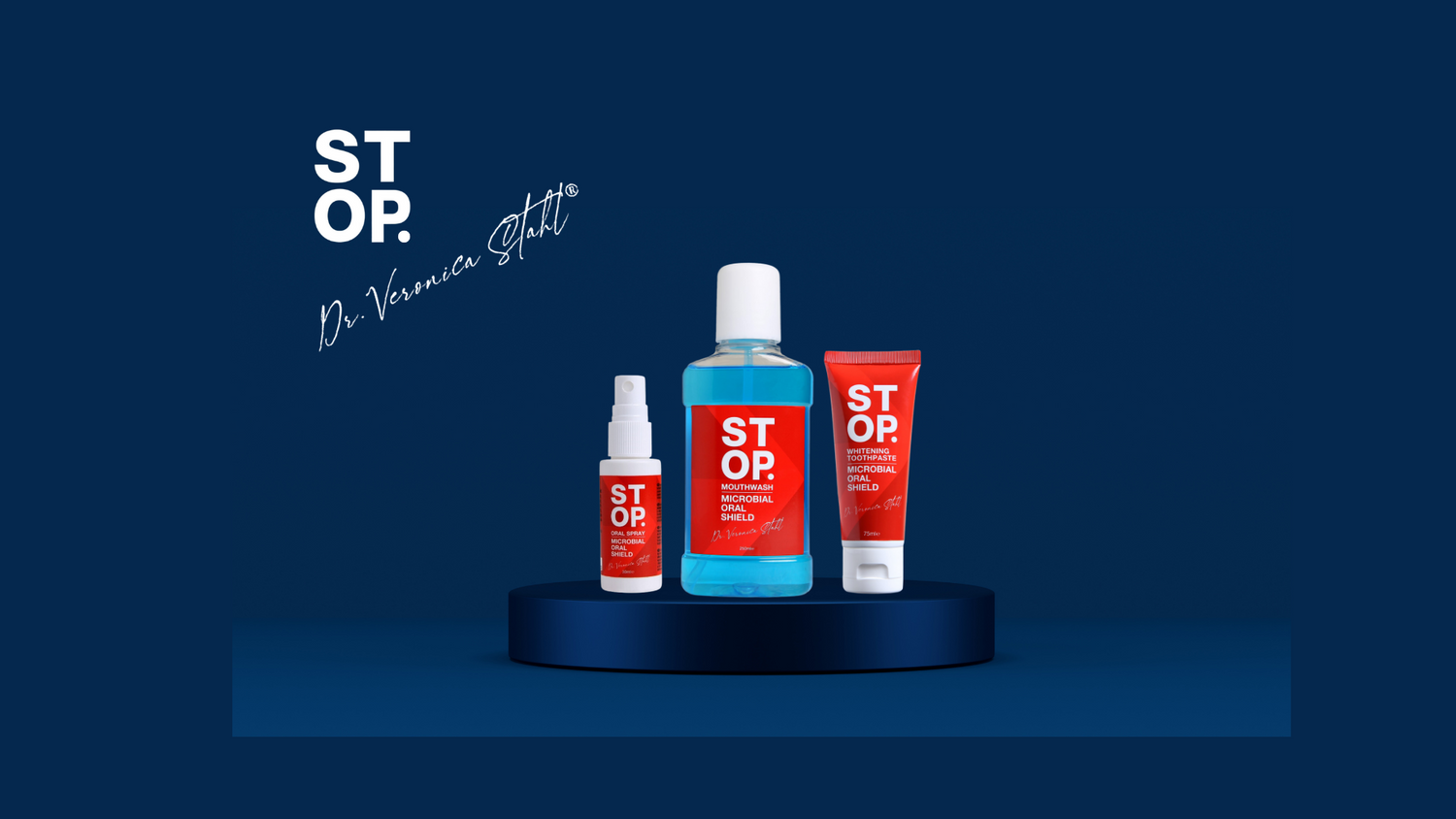
- How Stop Oral Care supports a stain-prevention routine
- What coffee lovers should actually prioritize first
- Bring the routine home with Stop Oral Care’s product range
- Sources
- FAQ
Why coffee stains teeth: the chemistry behind discoloration
Extrinsic stains form on the outer tooth surface rather than inside the enamel structure, and coffee is a primary contributor to this category, according to American Dental Association guidance. The mechanism involves several compounds working together on the tooth’s protective pellicle layer, a thin film of salivary proteins that coats enamel throughout the day.
- Chlorogenic acids and melanoidin compounds in coffee bind directly to salivary proteins on the tooth surface, producing measurable color shifts in laboratory models, according to research on salivary protein interactions.
- Tannins act as a bridging agent, helping pigmented molecules adhere more readily to the pellicle.
- Chromogens, the colored compounds responsible for coffee’s dark hue, deposit onto this protein film and accumulate with repeated exposure.
Coffee type and contact duration both influence the degree of discoloration. A 2023 study in the Journal of Medicinal Food found that chlorogenic acid content correlated positively with staining severity, meaning coffees higher in CGA content, combined with longer exposure time, produced more pronounced discoloration.
One lab study measured a visually noticeable color change after coffee exposure, a shift considered clinically perceptible, according to the same salivary protein research. That figure helps explain why limiting contact time carries real weight in a prevention routine, rather than functioning as a minor precaution.
Daily habits that prevent coffee stains most effectively
Reducing contact time and pigment buildup depends more on timing and technique than on any single product. The following sequence reflects the order of impact, starting with the change that matters most.
- Finish your cup within roughly 20 minutes instead of sipping it over an extended period, since prolonged exposure gives chlorogenic acids and chromogens more time to bind to the pellicle.
- Rinse your mouth with plain water immediately after finishing, swishing gently for a few seconds to dislodge pigment before it settles.
- Use a straw for iced coffee drinks to reduce direct contact between the liquid and the front tooth surfaces.
- Add milk to your coffee or choose a brewing method associated with lower chlorogenic acid and total phenolic content when a lighter stain profile matters to you.
- Limit the number of cups per day and space them out, since each additional exposure adds to cumulative pigment deposit.
- Wait about 30 minutes before brushing, since brushing immediately after an acidic beverage can increase enamel erosion while the surface is still softened, a caution echoed in NHS dental hygiene guidance.
Pro Tip: Keep a water glass next to your coffee cup and take a sip after every few sips of coffee, this cuts contact time without disrupting your routine.
For a more detailed breakdown of timing and enamel protection, see this step-by-step guidance on limiting coffee stains.
Which oral care products actually remove coffee stains?
Several product categories target extrinsic stains, though each carries trade-offs between effectiveness and enamel safety.
- Whitening toothpastes containing sodium hexametaphosphate, hydrogen peroxide, or baking soda remove more surface pigment than conventional formulas, though stronger agents can increase abrasion over time, according to a study on whitening toothpaste efficacy.
- Mouthwashes and oral sprays work best as a supplement to brushing rather than a replacement, used at a separate time of day to avoid washing away active toothpaste ingredients.
- Interdental cleaning, using floss or interdental brushes, removes pigment traps between teeth that a toothbrush alone often misses.
- Over-the-counter whitening kits can lighten extrinsic stains temporarily, but restaining occurs quickly if coffee habits continue unchanged.
Formulations containing sodium hexametaphosphate showed stronger color restoration in brushing simulations than standard toothpaste, according to the same whitening toothpaste research, though the trade-off in abrasion means sensitivity should guide product selection. Readers wanting a structured at-home approach can review this safe tooth whitening guide.
When to see a dentist for coffee stains
Daily habits and the right toothpaste address only the surface layer. Professional care handles buildup that home routines cannot reach.
- A scale-and-polish cleaning, known clinically as prophylaxis, removes accumulated extrinsic stain and plaque that brushing alone leaves behind; heavy coffee drinkers often benefit from this every six to twelve months, a timeline supported by professional cleaning guidance.
- In-office whitening or custom at-home trays can lighten extrinsic stains effectively, though they do little for intrinsic discoloration that originates within the enamel or dentin.
- Restaining is common after any whitening procedure if coffee consumption continues unchanged, according to a JADA study on bleaching and restaining, which found coffee-stained teeth faced a greater restaining risk than those stained by other sources.
Combining behavioral change with periodic professional care produces more durable results than relying on either approach alone.
How Stop Oral Care supports a stain-prevention routine
A natural, fluoride-free system can layer into the daily routine described above without replacing the mechanical steps that do most of the work.
- Apply a protective and whitening toothpaste during the morning and evening brushing sessions, timed about 30 minutes after coffee to avoid brushing softened enamel.
- Use a mouthwash separately from brushing, ideally midday, to support plaque control between sessions.
- Carry an oral spray for quick refreshment after coffee when brushing is not practical, supporting the pellicle without replacing a full rinse.
These formulations rely on hemp and Dead Sea mineral ingredients rather than fluoride, developed under the clinical direction of Dr. Veronica Stahl. Readers interested in the ingredient science can explore this natural stain removal resource.
What coffee lovers should actually prioritize first

Most people reach for a whitening product before fixing the habits that matter more. Rinsing with water, finishing a cup promptly, and waiting before brushing cost nothing and address the mechanism directly, while a stronger toothpaste or whitening kit only compounds those gains once the basics are in place. Anyone increasing whitening product use should watch for sensitivity, since more aggressive formulas trade some enamel comfort for faster visible results. A maintenance cleaning every six to twelve months closes the gap that no home routine fully reaches.
Bring the routine home with Stop Oral Care’s product range

Most whitening toothpastes on the market rely on fluoride and peroxide alone. The product range includes hemp and Dead Sea minerals in a fluoride-free formula offered in three types: a protective and whitening toothpaste for daily brushing, a mouthwash for plaque control, and an oral spray for quick refreshment between coffees. Browse the full range to find where each product fits your own routine.
Sources
- Whitening | American Dental Association
- Evaluation of chlorogenic acids and melanoidin interactions with salivary proteins and their effect on tooth discoloration
- Can We Prevent Coffee Stains on Teeth? — Journal of Medicinal Food
FAQ
How do coffee drinkers keep their teeth white?
Coffee drinkers keep teeth white primarily by reducing contact time: finishing a cup within about 20 minutes, rinsing with water afterward, and brushing with a whitening toothpaste rather than a conventional one. Periodic professional cleanings remove buildup that daily brushing cannot fully address.
How do I drink coffee without making my teeth yellow?
Using a straw for iced coffee, adding milk, and rinsing with water immediately after finishing all reduce pigment contact with enamel. Waiting about 30 minutes before brushing also matters, since brushing right after an acidic drink can increase erosion according to NHS guidance.
Are coffee stains on teeth reversible?
Extrinsic coffee stains, which sit on the tooth surface, are largely reversible through whitening toothpaste, professional cleaning, or in-office whitening. Intrinsic discoloration within the enamel or dentin responds less predictably to these same methods.
Is there a coffee that won’t stain your teeth?
No coffee is stain-free, but staining potential varies by type and brewing method. Research shows coffees with lower chlorogenic acid content tend to cause less discoloration than high-CGA options such as instant coffee, which produced the most pronounced color change in one 2026 BMC Oral Health study.