

Surface coffee stains respond well to a routine of rinsing with water after each cup, brushing with a whitening toothpaste, and scheduling a professional cleaning every few months. Deep or long-standing discoloration usually needs a dentist’s help, whether that’s a polishing treatment or in-office whitening. In the meantime, avoid brushing immediately after coffee and skip harsh acidic rinses. They soften enamel rather than protect it.
TL;DR:
- Rinsing with water immediately after coffee helps prevent tannins from binding to enamel, especially if done within 15 to 20 minutes of finishing the drink.
- Whitening toothpaste with active ingredients like SHMP, hydrogen peroxide, or sodium bicarbonate can improve surface stains, but overuse of abrasive formulas risks enamel wear.
- Professional cleaning and in-office whitening treatments are necessary for deep or longstanding stains that home routines cannot resolve effectively.
- A gentle, enamel-supporting routine with non-acidic products and periodic professional care can sustain stain reduction without accelerating enamel thinning.
- High-abrasion whitening pastes provide the strongest short-term results but are not advisable for enamel already sensitive or demineralized, requiring careful long-term management.
Table of Contents
- Why Does Coffee Stain Teeth in the First Place?
- What Habits Actually Prevent Coffee Stains?
- Which At-Home Methods Actually Remove Coffee Stains?
- SHMP vs. Peroxide vs. Baking Soda: What the Lab Data Shows
- When Should You See a Dentist for Coffee Stains?
- How Do You Keep Coffee Stains From Coming Back?
- Enamel-First Thinking: A Better Standard for Stain Control
- The Real Problem With Most Coffee-Stain Advice
- Building a Stain Routine That Protects Your Enamel Too
- Sources
Why Does Coffee Stain Teeth in the First Place?
Coffee contains tannins and chromogens, pigmented compounds that latch onto the thin protein layer covering your enamel, called the salivary pellicle. Once attached, those pigments settle into the microscopic pores of the enamel surface and darken it over time.
Coffee’s natural acidity makes this worse. Acid temporarily softens enamel, opening its pores wider and letting pigment molecules sink in more easily. That’s why a cup sipped slowly over an hour tends to stain more than one finished quickly.
There’s also a distinction worth knowing:
- Extrinsic stains sit on the enamel surface and respond to toothpaste, cleanings, and whitening.
- Intrinsic stains develop inside the tooth structure and usually need professional treatment to lighten.
A lab study analyzing whitening toothpastes on coffee-stained enamel found that surface stains are genuinely treatable at home, but the degree of success depends heavily on which ingredients you’re using and how the enamel underneath is holding up.
What Habits Actually Prevent Coffee Stains?
Prevention beats correction, and most of the effective habits take seconds. Building a few small routines into your coffee ritual keeps pigment from ever settling in.
- Rinse with water immediately after your last sip. This washes away lingering tannins before they bind to enamel.
- Chew sugar-free gum if water isn’t available. It stimulates saliva flow, which naturally buffers acid and clears residue.
- Finish your cup within 15 to 20 minutes rather than nursing it for hours. Extended sipping means extended acid exposure, according to dental guidance on coffee stain prevention.
- Use a straw for iced coffee so the liquid bypasses your front teeth.
- Add milk. The casein protein in dairy binds to tannins and reduces how much pigment reaches your enamel.
- Brush before your first cup, not just after. Removing overnight plaque means there’s a cleaner surface for coffee to contact, which limits pigment binding.
- Wait at least 30 minutes before brushing after coffee. Clinical guidance from Columbia University recommends this pause so saliva can neutralize acid first. Brushing too soon scrubs softened enamel and speeds up wear.
Pro Tip: Keep a small water bottle at your desk specifically for post-coffee rinsing. The habit takes five seconds and prevents more staining than almost any whitening product you’ll buy.
Which At-Home Methods Actually Remove Coffee Stains?
Not all home remedies are equal, and some do more harm than good if used too often. Here’s what holds up and how to use it safely.
Whitening toothpaste is the most practical daily option. Look for formulas with sodium hexametaphosphate (SHMP), hydrogen peroxide, or sodium bicarbonate. Each works differently, but all three target surface pigment rather than bleaching from within. A twice-daily routine with a toothpaste that has a reasonable abrasivity rating is generally safe for most people.
Whitening strips and OTC peroxide kits can lighten surface stains within one to two weeks, though results are milder than in-office treatments and sensitivity is common, especially in the first few days. Space out applications rather than using strips daily.
Baking soda paste works as an occasional, gentle abrasive. Mix a small amount with water into a loose paste, brush gently for under a minute, and rinse. Limit this to once or twice a week. Overuse wears down enamel faster than the staining it’s meant to fix.
What to avoid:
- Acidic rinses like straight lemon juice or vinegar, which soften enamel and invite more staining long term.
- Frequent charcoal toothpaste use, which tends to be more abrasive than its marketing suggests.
- Brushing right after coffee, for the same reason cited above.
A study assessing coffee-stained enamel found that SHMP-based pastes delivered roughly 80.8% recovery in surface lightness after simulated brushing, the strongest result among the pastes tested. That performance came with a tradeoff worth understanding before you commit to daily use.
SHMP vs. Peroxide vs. Baking Soda: What the Lab Data Shows
The same enamel-analysis study that measured whitening results also tracked surface wear, and the numbers tell a more nuanced story than “strongest whitener wins.”
- SHMP-containing pastes produced the most dramatic color recovery, but showed noticeably greater surface abrasion after repeated brushing cycles in the study.
- Hydrogen peroxide pastes delivered strong whitening with less measurable wear on the enamel surface.
- Sodium bicarbonate pastes performed similarly, brightening teeth while staying gentler on the surface than SHMP formulas.
The practical takeaway: if your enamel is already thin, sensitive, or previously demineralized, a high-abrasion whitening paste isn’t the right daily driver. A study comparing whitening toothpaste performance on sound versus demineralized enamel found that demineralized surfaces stained more readily and responded less predictably to whitening agents. That’s a strong argument for choosing gentler, remineralizing formulas if you already deal with sensitivity, and checking in with a dental hygienist before starting an aggressive whitening routine.
When Should You See a Dentist for Coffee Stains?
Home care has real limits. Tartar, the hardened plaque that traps pigment, can’t be brushed away no matter how good your toothpaste is. A professional hygiene visit removes it in a single appointment, along with any stubborn surface staining that’s built up between cleanings.
- Professional cleaning and polishing clears tartar and deep surface stains that toothpaste alone can’t touch.
- In-office whitening uses higher-concentration peroxide under a dentist’s supervision, producing faster and more dramatic lightening than OTC strips or whitening toothpaste can achieve alone.
- Custom take-home trays offer a middle ground, giving you dentist-grade whitening gel in a controlled, fitted tray you use at home over one to two weeks.
Aftercare matters just as much as the treatment. Avoid coffee, tea, and other dark beverages for 24 to 48 hours after whitening, since freshly treated enamel is more porous and stains easily during that window. If you’re a heavy coffee drinker, dental practices generally recommend hygiene visits every three to six months rather than the standard annual checkup.
How Do You Keep Coffee Stains From Coming Back?
Maintenance is less about intensity and more about consistency. A realistic weekly rhythm keeps results from fading without overworking your enamel.
- Daily: Brush twice with a fluoride toothpaste or an enamel-safe alternative, floss once, and rinse with water after each coffee.
- Weekly: Use a whitening toothpaste or a baking soda treatment once or twice, staying within the limits described above.
- Every 3 to 6 months: Book a professional cleaning, adjusting frequency based on how much coffee you drink and how your enamel has held up.
Pro Tip: Track your coffee habits for a week. If you’re averaging more than two cups daily, lean toward the 3 month end of the cleaning schedule rather than 6.
Enamel-First Thinking: A Better Standard for Stain Control
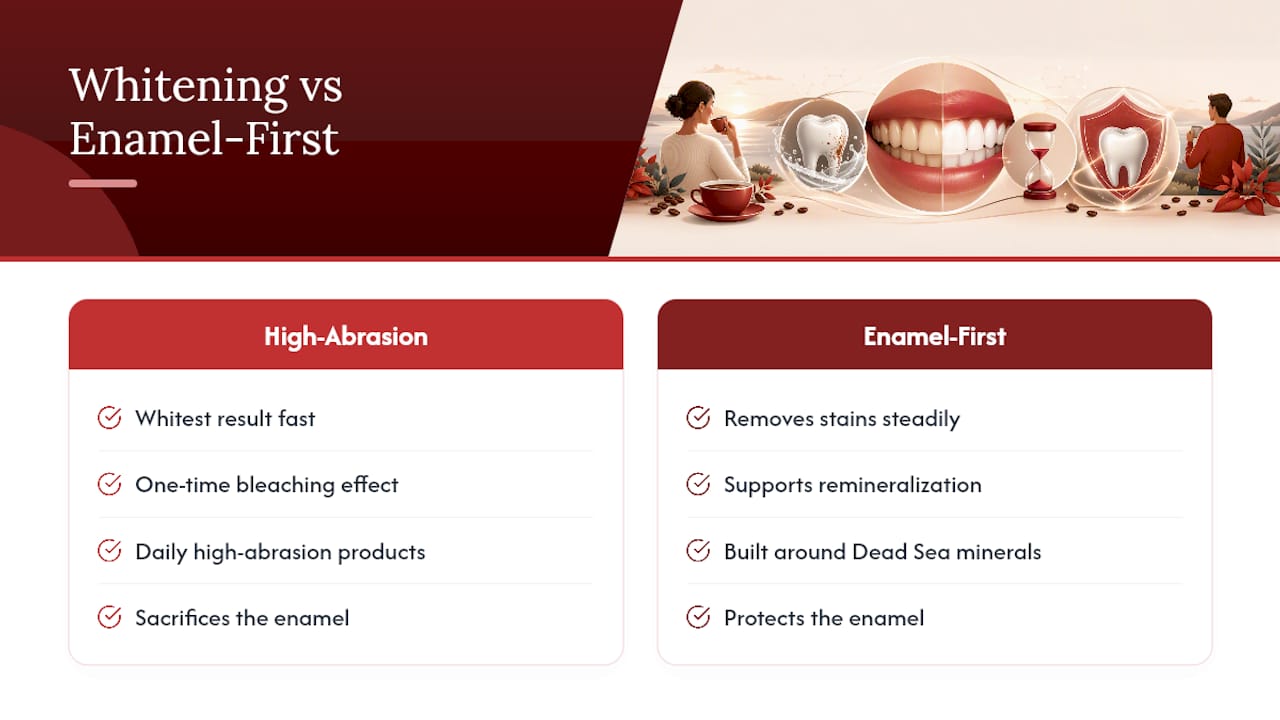
Most stain-removal advice treats whitening power as the only metric that matters. Stop-oralcare takes a different view. The goal isn’t the whitest result you can get this week. It’s a routine that removes stains steadily without sacrificing the enamel underneath.
That means favoring formulas that support remineralization over daily high-abrasion products, and treating sensitivity as a signal to adjust, not push through. A toothpaste built around Dead Sea minerals reflects that reasoning: steady stain control paired with enamel support, rather than a one-time bleaching effect. If sensitivity or visible wear shows up, that’s the moment to consult a dentist rather than reach for something stronger.
The Real Problem With Most Coffee-Stain Advice
Most articles on this topic treat whitening power as the finish line. Whichever product lightens teeth fastest gets the recommendation, and enamel wear gets a footnote if it’s mentioned at all. That’s backwards, and the lab data on SHMP-based toothpaste makes the case plainly: the paste with the strongest color recovery was also the one that abraded enamel the most in testing.
Coffee drinkers dealing with daily staining are running a long game, not a one-time fix. A whitening routine you can sustain for years without thinning your enamel beats a product that gets you two shades brighter this month and leaves you more sensitive next year.
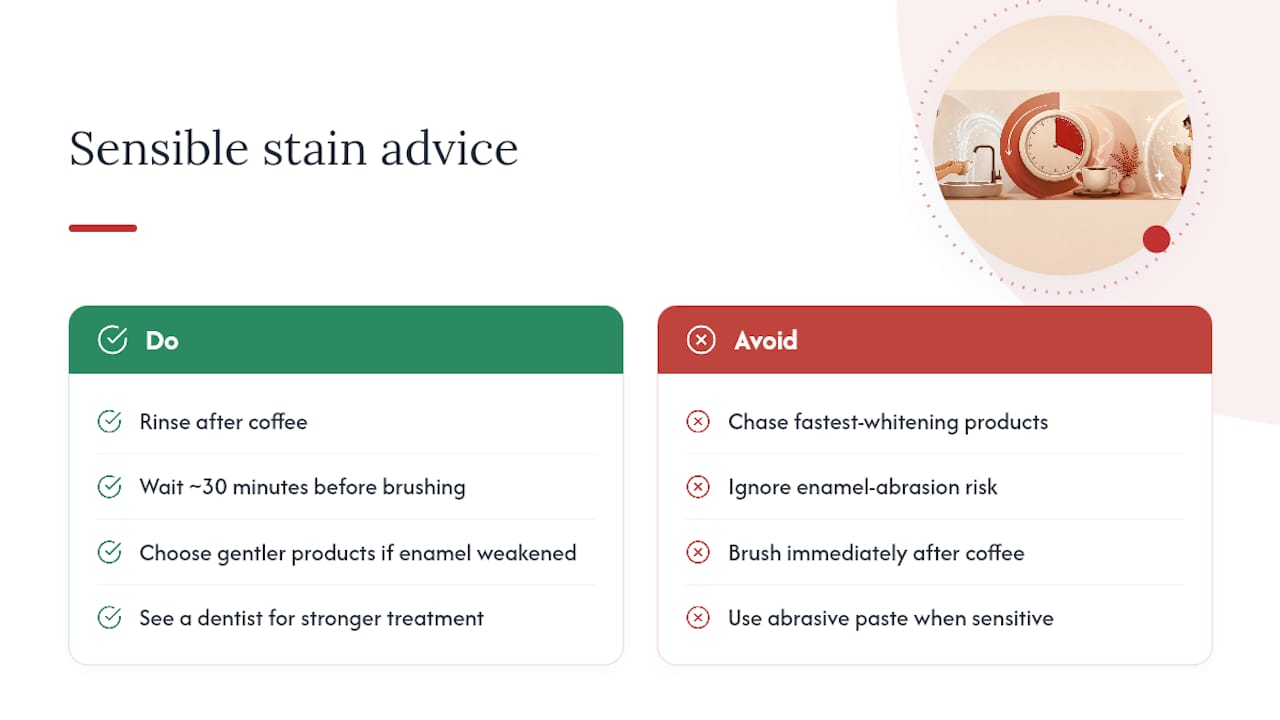
The advice that actually holds up over time is unglamorous: rinse after coffee, wait before you brush, choose gentler products if your enamel is already compromised, and let a dentist handle what toothpaste can’t. Readers with sensitive teeth or a history of demineralization should prioritize that gentler path first, even if it means slower visible results. Aggressive whitening is a reasonable choice only when enamel is healthy enough to tolerate it.
— Veronica
Building a Stain Routine That Protects Your Enamel Too
If your coffee habit isn’t going anywhere, your oral care routine needs to work as hard as you do without wearing down what you’re trying to protect. Fluoride-free formulas built with Dead Sea minerals are designed as a daily maintenance option for people managing regular staining alongside sensitive or reactive enamel.
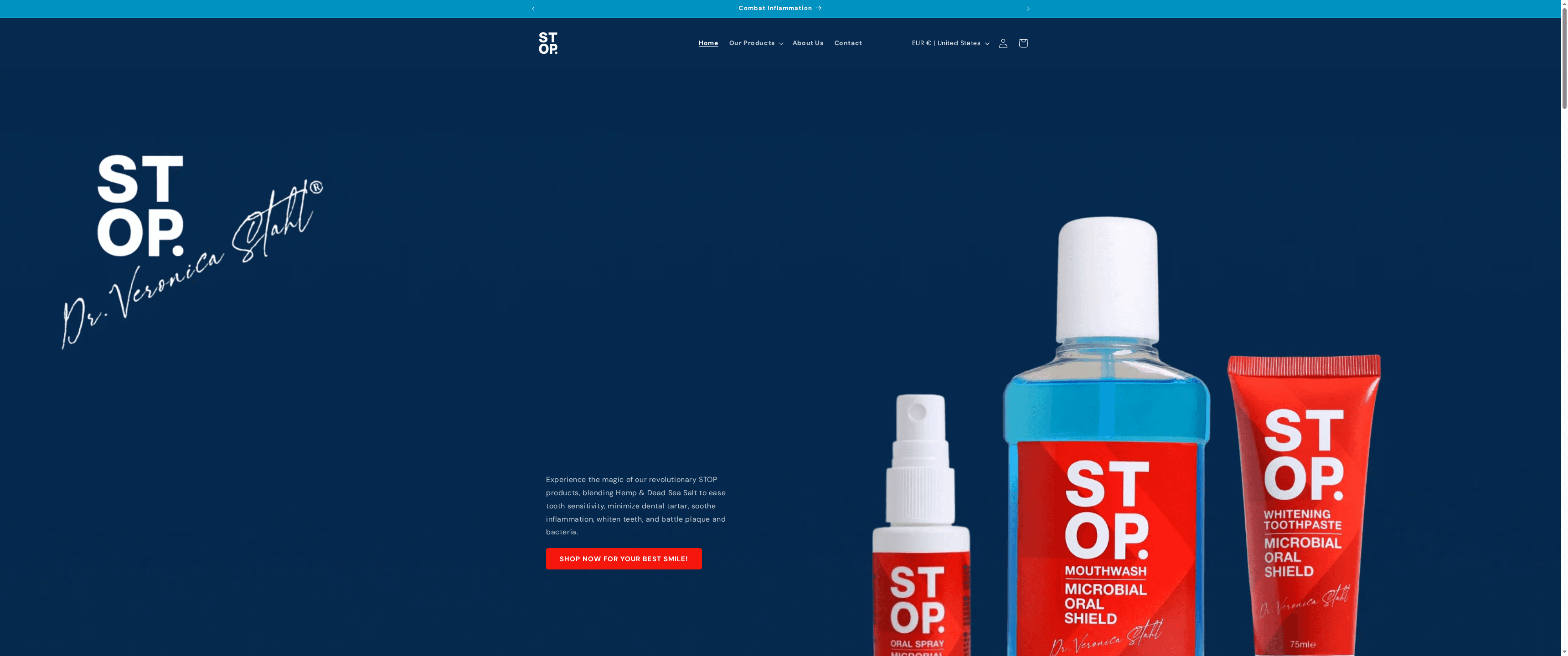
If you’re curious whether a gentler approach fits your routine, start small. Try a new toothpaste for two to three weeks, watch for any sensitivity, and stick to the recommended frequency rather than doubling up for faster results. The STOP Protective and Whitening Toothpaste page outlines the full ingredient list and intended use if you want the details before you commit. For the complete product lineup and current availability, visit Stop-oralcare and see which formula matches your daily coffee habit.
Sources
- Whitening efficacy of toothpastes on coffee-stained teeth: an enamel surface analysis - PMC
- Brushing immediately after meals? You may want to wait - Columbia University Irving Medical Center
- How to Remove Coffee Stains From Teeth | Dr. Katz
- Comparative study on whitening toothpastes on sound and demineralized enamel - JKDHS (2023)