

TL;DR:
- Research determines whether oral products are safe and effective, guiding regulatory approval and clinical use. Different research types, from in vitro studies to clinical trials, provide cumulative evidence needed for product claims and market approval. Dentists should evaluate evidence based on study registration, endpoints, sample size, controls, and transparency to ensure claim credibility.
Research establishes the mechanism of action, demonstrates safety and efficacy, supports regulatory claims, and drives clinical adoption and iterative improvement of oral health products. The role of research in oral products is not peripheral to product development; it is the primary determinant of whether a formulation reaches patients, achieves regulatory clearance, and sustains clinical credibility over time. Federal infrastructure such as NIDCR funding priorities, FDA regulatory categories, ClinicalTrials.gov registrations, and the PubMed/NCBI evidence base collectively define the standards against which every oral product claim is measured.
Research performs six core functions in oral product development:
- Ingredient selection: Identifies bioactive compounds with demonstrated mechanism of action and acceptable safety profiles before formulation begins.
- Formulation optimization: Determines active concentration, particle size, pH compatibility, and delivery system through bench and in situ testing.
- Preclinical and clinical testing: Progresses from in vitro biofilm models through animal studies to randomized clinical trials (RCTs) with validated endpoints such as plaque index, gingival index, and dentin hypersensitivity (DHS) scales.
- Labeling claims: Generates the peer-reviewed and registered-trial evidence required to substantiate specific efficacy claims under FDA cosmetic, OTC drug, or medical device pathways.
- Post-market surveillance: Provides ongoing safety and real-world effectiveness data after commercial launch.
- Clinical adoption: Translates published evidence into practice guidelines and practitioner confidence through systematic reviews and practice-based research networks (PBRNs).
Table of Contents
- 1. What types of research feed into oral product development?
- 2. How does research drive product design from bench to market?
- 3. What testing methods and evidence hierarchy apply to oral products?
- 4. How does the U.S. regulatory framework classify and evaluate oral products?
- 5. What does the path from research to market actually cost and require?
- 6. What barriers and accelerators shape research translation in oral care?
- 7. How should dental professionals evaluate research behind oral product claims?
- Key Takeaways
- Why evidence-backed formulation matters at Stop-oralcare
- Useful sources for deeper research
1. What types of research feed into oral product development?
The research landscape for oral products spans multiple methodological traditions, each answering a distinct question in the product pipeline. Understanding where each type fits helps prevent misapplication of evidence and aids clinicians in assessing the strength of manufacturer claims.
| Research Type | Primary Question Answered | Typical Endpoints | Evidence Strength |
|---|---|---|---|
| Basic science | What is the mechanism of action? | Gene expression, cell viability, ion release profiles | Foundational; not sufficient alone for claims |
| Biomaterials testing | How does the material interact with oral tissues? | Mineral nucleation, dissolution rate, cytotoxicity | Preclinical; supports formulation decisions |
| In vitro biofilm models | Does the active disrupt or inhibit oral biofilm? | Biofilm mass, viability, species composition | Moderate; controlled conditions limit generalizability |
| In situ appliance studies | Do lab findings hold in the human oral environment? | Tubule occlusion, enamel mineral gain, HAP formation | High for formulation validation; limited sample sizes |
| Animal/preclinical studies | What is the safety and dose-response profile? | Histopathology, systemic exposure | Regulatory prerequisite; not directly generalizable |
| Randomized clinical trials (RCTs) | Is the product effective in humans under controlled conditions? | Plaque index, gingival index, DHS scales, DMFT | Highest for efficacy claims |
| Observational studies | What happens in real-world use? | Adverse event rates, adherence, population-level outcomes | Moderate; confounding limits causal inference |
| Systematic reviews / meta-analyses | What does the totality of evidence show? | Pooled effect sizes, heterogeneity, publication bias | Highest for guideline formation |
| Practice-based research (PBRNs) | Do controlled-trial benefits translate to everyday practice? | Real-world effectiveness, patient-reported outcomes | High for pragmatic relevance |
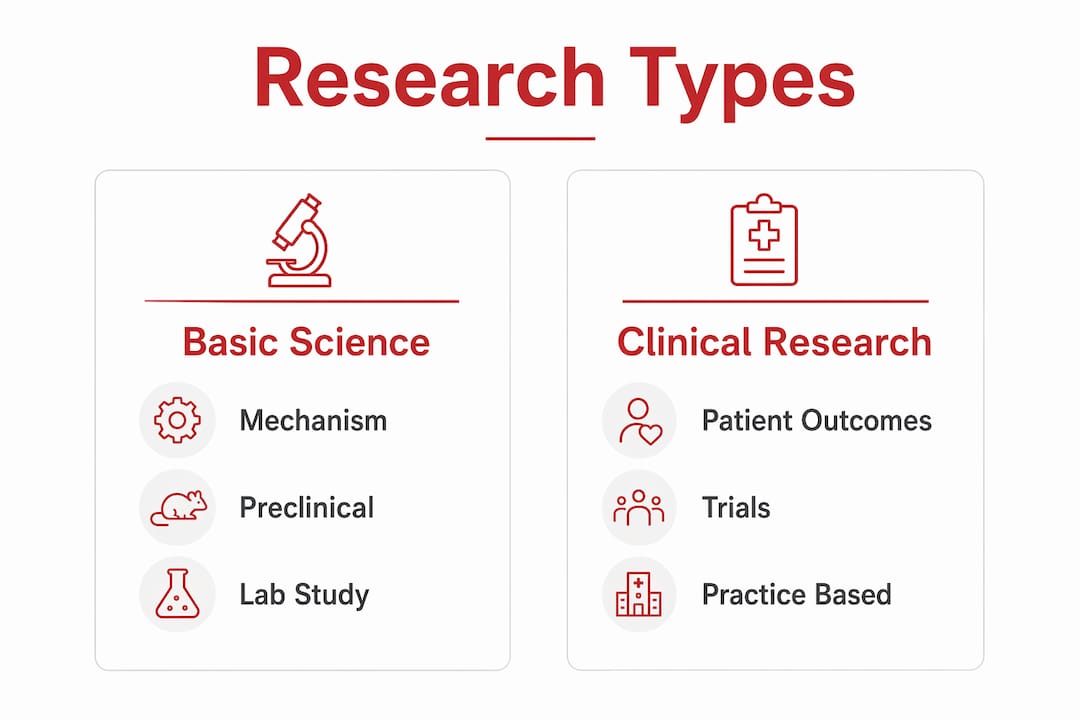
Practice-based research networks engage clinicians in pragmatic studies that test whether controlled-trial benefits translate to everyday dental practice, requiring IRB review and informed consent and producing real-world effectiveness data that RCTs alone cannot supply. Epidemiological studies add a population-level layer, identifying disease burden and risk factors that guide which product categories warrant development investment in the first place.
2. How does research drive product design from bench to market?
The development of oral hygiene products follows a staged sequence in which each phase generates data that either advances the candidate or terminates it. The numbered steps below reflect the standard translational pathway for a U.S.-bound oral product.
- Lead discovery and mechanism studies. Researchers identify a candidate active, characterize its mechanism of action through cell culture and biochemical assays, and establish a preliminary safety profile. Duration: typically 12–24 months.
- Formulation optimization. The active is incorporated into a prototype matrix. Particle size and dose of particulate actives determine dissolution rates and mineral nucleation pathways; incorrect concentration can shift desired outcomes entirely. For example, bioactive glass particles below 5 µm at low concentrations nucleate hydroxycarbonate apatite, whereas higher concentrations produce calcium carbonate instead. Duration: 6–18 months.
- In vitro biofilm and simulated-saliva testing. Prototype formulations are tested against oral biofilm models and artificial saliva systems to confirm that bench-level bioactivity persists in a chemically complex oral analog. This stage also evaluates fluoride source compatibility and pH buffering effects on mineral formation.
- In situ appliance studies. Human volunteers wear intraoral appliances containing enamel or dentin specimens treated with the test product. In situ testing is now expected to confirm lab findings before moving to large RCTs, because salivary flow, pellicle formation, and oral pH dynamics cannot be fully replicated in vitro. Duration: 3–9 months per study.
- Pilot clinical trials. Small-scale human trials (typically 20–60 participants) establish dosing, tolerability, and preliminary efficacy signals using validated outcome measures. IRB approval and ClinicalTrials.gov registration are required at this stage.
- Pivotal RCTs. Adequately powered, blinded, controlled trials generate the primary efficacy and safety data required for regulatory submissions and peer-reviewed publication. Duration: 12–36 months depending on endpoint and indication.
- Regulatory submission. Data packages are compiled for the appropriate FDA pathway (cosmetic, OTC monograph, NDA, or 510(k)). Labeling claims must be supported by the trial evidence on file.
- Post-market surveillance. Ongoing adverse event monitoring, consumer complaint tracking, and PBRN participation provide real-world evidence that complements trial data and supports iterative reformulation.
Research on ingredient selection also increasingly prioritizes natural, micronutrient-based alternatives to legacy synthetic antibacterials such as triclosan, driven by consumer safety concerns and environmental fate considerations. Shifting away from triclosan requires demonstration of equivalent clinical endpoints and safety, along with attention to environmental fate, which adds a testing dimension not present in traditional antimicrobial screening. Toothpaste formulation history, analyzed through worldwide patent applications from 1900 to 2023, confirms that significant formulation improvements have been concentrated in the period since the 1970s, coinciding with the systematic application of clinical research to ingredient selection.

3. What testing methods and evidence hierarchy apply to oral products?
Common test methods and their regulatory weight
| Method | Primary Use | Typical Endpoints | Key Limitations | Typical Sample Size |
|---|---|---|---|---|
| In vitro assays | Mechanism, cytotoxicity | Ion release, cell viability, MIC | No salivary or host factors | N/A (lab replicates) |
| Biofilm models | Antibiofilm activity | Biofilm mass, species viability | Static or semi-static conditions | N/A |
| Simulated saliva / artificial mouth | Formulation stability, mineral formation | HAP formation, pH, dissolution | Approximates but does not replicate oral environment | N/A |
| In situ appliances | Formulation validation in humans | Tubule occlusion, mineral gain | Small panels; controlled use conditions | 20–60 participants |
| Animal models | Safety, dose-response | Histopathology, systemic exposure | Species differences limit direct translation | Varies by protocol |
| Pilot clinical trials | Preliminary efficacy, tolerability | DHS scales, plaque index, gingival index | Underpowered for definitive claims | 20–60 participants |
| Randomized controlled trials | Definitive efficacy and safety | Plaque index, gingival index, DMFT, DHS | Resource-intensive; controlled conditions may not reflect real use | — |
| Observational studies | Real-world safety, adherence | Adverse event rates, patient-reported outcomes | Confounding; no randomization | Hundreds to thousands |
| Systematic reviews | Evidence synthesis | Pooled effect sizes, heterogeneity | Dependent on quality of included trials | All eligible studies |
Clinically validated outcome measures
Dental professionals should recognize the following validated endpoints when evaluating product claims:
- Plaque index (PI): Quantifies supragingival plaque accumulation; used in anti-plaque and whitening product trials.
- Gingival index (GI): Assesses gingival inflammation; primary endpoint in anti-gingivitis claims.
- Dentin hypersensitivity (DHS) scales: Visual analog scales (VAS) and Schiff sensitivity scores measure pain response to thermal, tactile, and evaporative stimuli.
- Hydroxyapatite (HAP) formation assays: Confirm biomineralization activity in remineralizing product studies.
- Tubule occlusion metrics: Scanning electron microscopy or confocal imaging quantifies dentinal tubule sealing in sensitivity products.
- DMFT/DMFS scores: Decayed, missing, and filled teeth/surfaces; used in caries prevention trials.
Statistical considerations matter as much as endpoint selection. Superiority trials require demonstration that the test product outperforms control by a predefined margin; non-inferiority trials establish that a new formulation is not meaningfully worse than an established comparator. Clinical significance and statistical significance are not equivalent: a statistically significant reduction in plaque index may not translate to a clinically meaningful patient outcome. Trial protocols and registration details are accessible through ClinicalTrials.gov, and peer-reviewed reports of completed trials are indexed on PubMed/NCBI.
4. How does the U.S. regulatory framework classify and evaluate oral products?
The FDA assigns oral products to one of three primary regulatory categories, each carrying distinct evidence requirements and labeling constraints.
| Product Category | Regulatory Pathway | Key Evidence Required | Labeling Claim Scope |
|---|---|---|---|
| Cosmetic (e.g., whitening toothpaste with no drug claim) | No premarket approval; manufacturer responsible for safety | Safety data, ingredient substantiation | Appearance claims only; no disease or structure/function claims |
| OTC Drug — Monograph (e.g., fluoride toothpaste, anticavity) | OTC monograph compliance (FDA monograph system) | Monograph-specified active ingredients and concentrations | Claims defined by monograph; no additional clinical data required if within monograph |
| OTC Drug — NDA (novel active or claim outside monograph) | New Drug Application (NDA) or Abbreviated NDA | Full clinical trial package, safety and efficacy data | Approved label claims only |
| Medical Device (e.g., powered toothbrush, desensitizing device) | 510(k) premarket notification or PMA | Substantial equivalence to predicate device or clinical data | Device-specific claims; performance data required |
A product’s regulatory pathway is determined by its intended use and the claims made on its label, not solely by its ingredients. Adding a therapeutic claim (e.g., “reduces gingivitis” or “treats dentin hypersensitivity”) to an otherwise cosmetic product triggers OTC drug or device requirements. Clinicians reviewing product dossiers should verify the following documentation:
- ClinicalTrials.gov registration number for all cited human studies
- IRB approval documentation and human-subject protections
- Adverse event reporting records (MedWatch for drugs; MDR for devices)
- Labeling compliance with the applicable FDA monograph or approved NDA
- ISO and ASTM consensus standards compliance where relevant (particularly for biomaterial-containing products)
- Conflict-of-interest disclosures and funding source transparency in published studies
NIDCR priorities and federal research funding lend additional credibility to a product’s evidence base when the underlying studies were conducted with public grant support and published in peer-reviewed journals. The American Dental Association (ADA) Seal of Acceptance program provides an additional independent review layer for consumer-facing claims.
Pro Tip: When a manufacturer cites a clinical study to support a label claim, verify that the study’s registered primary endpoint on ClinicalTrials.gov matches the endpoint used to support the claim in the published paper. Outcome switching, where a secondary endpoint is promoted as the primary finding, is a documented source of misleading product claims.
This section provides practical regulatory orientation, not legal advice. Consult qualified regulatory counsel before preparing or submitting any FDA filing.
5. What does the path from research to market actually cost and require?
Translating a promising bench finding into a commercially viable oral product requires sustained funding, interdisciplinary expertise, and realistic timeline expectations. The table below provides approximate ranges drawn from published translational research literature; actual costs vary by indication, regulatory pathway, and geographic market.
| Development Stage | Approximate Duration | Approximate Cost Range (USD) | Primary Funding Sources |
|---|---|---|---|
| Formulation and bench testing | 12–24 months | — | NIDCR R21/R01 grants, SBIR/STTR Phase I |
| In situ studies | 3–9 months | — | SBIR/STTR Phase II, industry partnerships |
| Pilot clinical studies | 6–18 months | — | Industry partnerships, angel funding |
| Pivotal RCTs | 12–36 months | — | Industry funding, venture capital, NIH cooperative agreements |
| Regulatory submission | 6–18 months | — | Industry funding |
| Scale-up and manufacturing validation | 12–24 months | — | Industry funding, strategic partners |
Federal funding through NIDCR grants (R01, R21) and the NIH Small Business Innovation Research (SBIR) and Small Business Technology Transfer (STTR) programs supports early-stage discovery and translational work. Industry partnerships typically take over at the pilot clinical stage, when costs escalate and commercial risk assessment becomes central to investment decisions. The translation bottleneck is a documented barrier: funding gaps, lack of translational expertise, and regulatory hurdles slow or stop promising innovations, with experts describing the path from bench to market as a “sinuous and rocky road” requiring interdisciplinary teams and persistent funding.
IP strategy is integral to commercialization. Patenting active formulations protects the composition of matter; trade secrets cover manufacturing processes that are difficult to reverse-engineer. Licensing models between academic groups and industry partners are common, with royalty structures typically negotiated at the point of technology transfer. The following partnership roles accelerate translation:
- Industry formulators: Provide scale-up expertise and manufacturing infrastructure.
- Regulatory consultants: Navigate FDA pathway selection and submission preparation.
- Contract research organizations (CROs): Execute clinical trials under GCP conditions.
- Academic clinical sites: Supply patient populations and clinical expertise for RCTs.
- PBRNs: Generate pragmatic real-world evidence post-launch.
- Implementation science specialists: Translate findings into policy and practice settings.
Interdisciplinary teams that combine bench scientists, materials engineers, regulatory specialists, and commercialization experts markedly reduce failure at scale, particularly at the transition from preclinical to clinical phases where most candidates stall.
6. What barriers and accelerators shape research translation in oral care?
Known barriers to translation
The gap between a published bench finding and a clinically adopted oral product is substantial. Knowledge translation failures occur at multiple points: promising in vitro data does not replicate in situ, pilot trial results do not scale to pivotal RCTs, and regulatory submissions are delayed by incomplete safety packages. Funding discontinuity between academic grant cycles and industry investment timelines creates a structural gap that eliminates candidates with genuine clinical potential.
Editorial and regulatory skepticism toward novel claims, particularly for natural or non-traditional actives, adds another layer. Demonstrating equivalence to established comparators requires the same rigor as demonstrating superiority, and the absence of a recognized monograph pathway for novel ingredients forces developers into the more resource-intensive NDA route.
Practical accelerators
AI and big data can accelerate research tasks, including high-throughput assays and predictive formulation models, freeing researchers from repetitive screening work and compressing the early-stage timeline. Stomatology research is integrating AI, 5G connectivity, and biomaterials science, pushing oral product development toward personalized, data-driven care. The NIDCR’s 2022 Oral Health in America report identifies AI, 3D printing, and digital imaging as technologies actively reshaping oral health care and research capacity.
Validated in situ testing and standardized bioactivity protocols are often the difference between a product that stalls in regulatory review and one that achieves acceptance. The establishment of consensus standards, such as the unified protocol for testing bioactivity in glass-based materials ratified through the International Commission on Glass, demonstrates how standardization directly enables regulatory confidence and commercial adoption.
Pro Tip: The most effective way for clinicians to accelerate translation is to participate in PBRN studies or to partner with academic groups for real-world pilots. PBRN participation generates the pragmatic effectiveness data that regulators and payers increasingly require alongside RCT evidence, and it positions practitioners as co-investigators rather than passive adopters of externally developed products.
Future directions
The following research areas are most likely to shape the next generation of oral products:
- Oral microbiome profiling: Personalized formulations targeting specific dysbiotic states, informed by metagenomic sequencing. Understanding the oral biome’s clinical relevance is foundational to this approach.
- AI-driven formulation optimization: Machine learning models trained on large ingredient and outcome datasets to predict formulation performance before bench synthesis.
- Biomaterials and tissue engineering: Next-generation remineralizing agents, scaffold-based pulp regeneration, and periodontal tissue engineering moving from preclinical to early clinical phases.
- Real-world evidence (RWE) integration: Electronic health records and patient-reported outcome platforms providing continuous post-market effectiveness data that complements trial evidence.
7. How should dental professionals evaluate research behind oral product claims?
Step-by-step study evaluation checklist
- Identify the study type and registration. Confirm whether the study is an RCT, observational study, or in vitro experiment. Verify ClinicalTrials.gov registration for any human study; unregistered trials are a credibility concern.
- Assess endpoints and clinical relevance. Determine whether the primary endpoint is a validated clinical measure (plaque index, gingival index, DHS scale) or a surrogate marker. Surrogate endpoints require additional evidence linking them to clinical outcomes.
- Check sample size and statistical power. Confirm that the trial was adequately powered for its primary endpoint. Underpowered studies produce unreliable effect estimates even when results are statistically significant.
- Review controls and placebo design. Active-controlled trials establish comparative efficacy; placebo-controlled trials establish absolute efficacy. Verify that the control condition is appropriate for the claim being made.
- Verify blinding and randomization. Double-blind, randomized designs minimize performance and detection bias. Open-label studies are appropriate for some endpoints but insufficient for subjective outcome measures such as DHS scales.
- Evaluate conflict-of-interest and funding disclosures. Industry-funded studies are not automatically invalid, but independent replication of industry-funded findings substantially strengthens claim credibility.
- Confirm post-market surveillance data. For established products, check whether adverse event data and real-world effectiveness evidence are available through PBRN publications or FDA MedWatch records.
Questions to ask product manufacturers and sales representatives
- Which validated clinical endpoints were used in the pivotal trial, and are they consistent with the registered primary outcome on ClinicalTrials.gov?
- Has the trial been independently replicated, and are the replication results published in peer-reviewed journals indexed on PubMed?
- What is the IRB approval number, and was the study conducted under GCP conditions?
- Are raw data or individual participant data available for independent analysis?
- What post-market surveillance mechanisms are in place, and what adverse events have been reported?
Red flags and green flags for claim credibility
Green flags:
- Registered RCT with validated primary endpoints and published results consistent with registration
- Independent replication in at least one study not funded by the manufacturer
- Peer-reviewed publication in a journal indexed on PubMed/NCBI
- IRB approval, informed consent documentation, and adverse event reporting on file
- Post-market surveillance data from PBRNs or real-world evidence platforms
Red flags:
- Claims supported only by in vitro or animal data with no human trial evidence
- Unregistered human studies or outcome switching between registration and publication
- No conflict-of-interest disclosure or exclusive industry funding without independent replication
- Surrogate endpoints presented as direct evidence of clinical benefit
- Absence of adverse event reporting or post-market safety data
Key Takeaways
Research establishes mechanism, safety, and efficacy at each stage of oral product development, and the quality of that evidence determines both regulatory clearance and clinical credibility.
| Point | Details |
|---|---|
| Staged testing is mandatory | Products must progress from in vitro through in situ to RCT before broad clinical claims are justified. |
| Regulatory pathway determines evidence requirements | FDA cosmetic, OTC drug, and medical device pathways each require distinct documentation and claim scopes. |
| Validated endpoints are non-negotiable | Plaque index, gingival index, and DHS scales are the accepted measures for anti-plaque, anti-gingivitis, and sensitivity claims. |
| Translation requires interdisciplinary teams | Bench scientists, regulatory specialists, and CROs working together markedly reduce failure at the preclinical-to-clinical transition. |
| Post-market surveillance completes the evidence cycle | PBRN participation and real-world evidence platforms provide ongoing safety and effectiveness data beyond trial conditions. |
Why evidence-backed formulation matters at Stop-oralcare
At Stop-oralcare, the development of natural, fluoride-free oral care products formulated with hemp-derived actives and Dead Sea minerals is grounded in the same research principles described throughout this article. Each formulation decision, from active concentration to delivery system, is informed by published evidence on mechanism of action, biocompatibility, and clinical endpoints relevant to sensitive teeth, gum health, and plaque reduction. Clinicians and researchers seeking to review the scientific rationale behind these formulations are encouraged to explore the dental product safety assessment resources on the Stop-oralcare site, as well as the ingredient safety documentation available at dental ingredient safety.
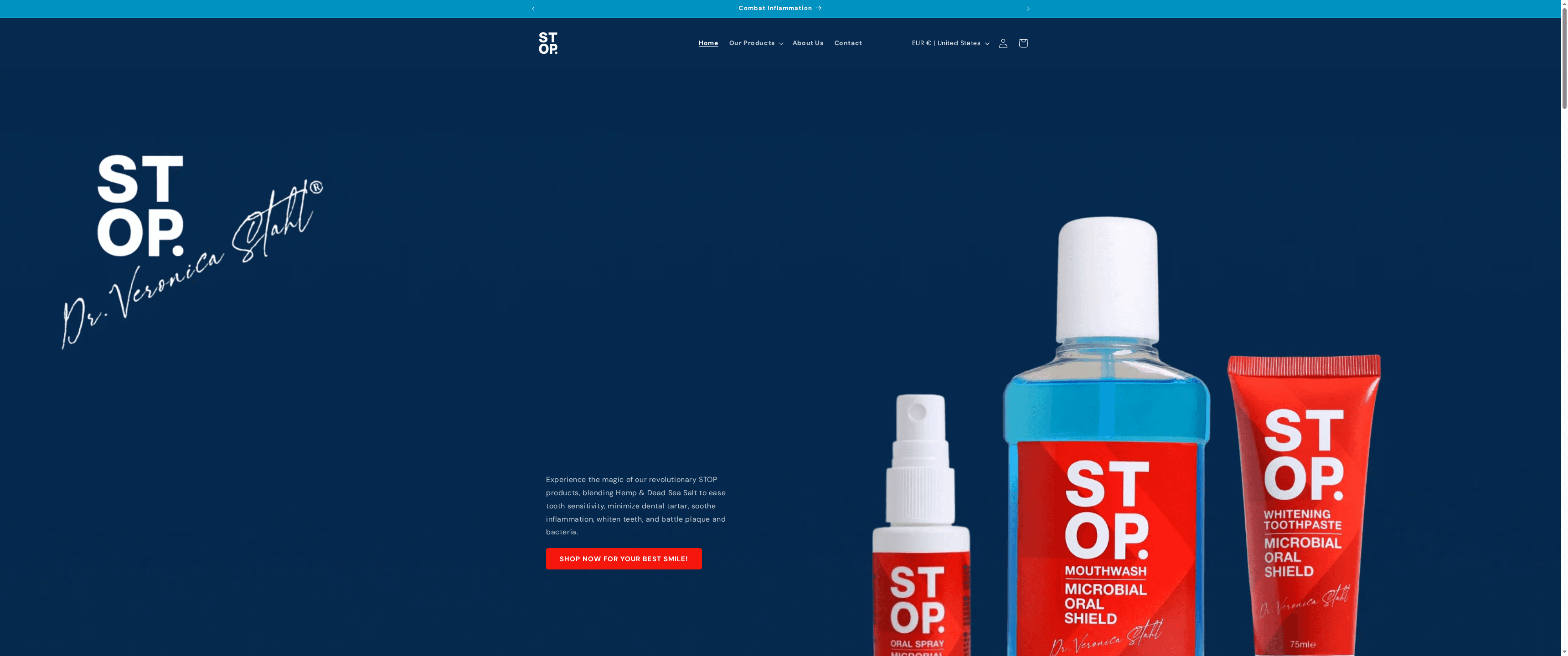
Stop-oralcare’s product line is available for direct review at stop-oralcare.com, where formulation details and supporting science resources are maintained for professional reference.
This article provides general scientific and regulatory orientation. It does not constitute legal, medical, or regulatory advice. Dental professionals and product developers should verify current FDA guidance and consult qualified regulatory counsel for their specific submissions and clinical decisions.
Useful sources for deeper research
The following primary sources and search platforms provide authoritative evidence for oral product research and regulatory compliance in the United States:
- NIDCR — National Institute of Dental and Craniofacial Research: Federal funding priorities, datasets, and the Oral Health in America report; the primary U.S. government source for oral health research direction and grant opportunities.
- FDA — U.S. Food and Drug Administration: OTC monograph guidance, NDA and 510(k) pathway documentation, labeling requirements, and MedWatch adverse event reporting; essential for regulatory classification and compliance.
- ClinicalTrials.gov: Registry of federally and privately supported clinical studies; use it to verify trial registration, primary endpoints, and study status for any human study cited in product claims.
- PubMed / NCBI: Comprehensive index of peer-reviewed biomedical literature; the standard platform for locating published RCTs, systematic reviews, and meta-analyses on oral product efficacy and safety.
- ADA — American Dental Association: Practice guidelines, the ADA Seal of Acceptance program, and practice-based research resources; relevant for clinicians evaluating product claims against professional standards.
- UTHSC College of Dentistry and peer academic dental schools: Representative U.S. academic dental research centers conducting translational and clinical oral health research; many operate affiliated PBRNs.
- AAPHD Research Agenda: Outlines dental public health research priorities and implementation science frameworks for translating findings into policy and clinical settings.
Prefer peer-reviewed meta-analyses and registered, IRB-approved RCTs when evaluating efficacy claims. For regulatory status and safety documentation, primary FDA guidance documents and the applicable OTC monograph supersede secondary sources.