

TL;DR:
- The oral biome comprises a complex community of bacteria, fungi, viruses, and protozoa that inhabit specific sites in the mouth. Its ecological balance influences oral diseases like caries and periodontitis, as well as systemic conditions such as cardiovascular disease and diabetes. Maintaining microbial stability through lifestyle choices and targeted oral care supports overall health without disrupting beneficial microbial communities.
The oral biome is defined as the complete microbial ecosystem inhabiting the human mouth, encompassing bacteria, fungi, viruses, and protozoa distributed across distinct anatomical sites including teeth, gingiva, tongue, and saliva. This ecosystem, more precisely termed the oral microbiome, is not a passive collection of organisms. It actively regulates oral pH, competes against pathogens, and communicates with systemic immune pathways. Researchers now recognize the oral cavity as one of the most ecologically complex microbial environments in the human body, with approximately 700 bacterial species identified to date. Disruptions to this community connect to conditions ranging from dental caries and periodontitis to cardiovascular disease and adverse pregnancy outcomes.
The distinction between the oral biome and oral microbiota matters for precision. The oral microbiota refers to the microbial community itself, meaning the organisms present. The oral microbiome refers to the collective genetic material, metabolic functions, and ecological interactions of that community. Both terms describe the same residents but from different analytical perspectives. NIH researcher Dr. Christian Abnet has noted that oral microbes are normal and beneficial, and that health depends on maintaining microbial balance rather than eliminating microorganisms. This framing is foundational to understanding the oral cavity ecosystem.
What organisms make up the oral biome?
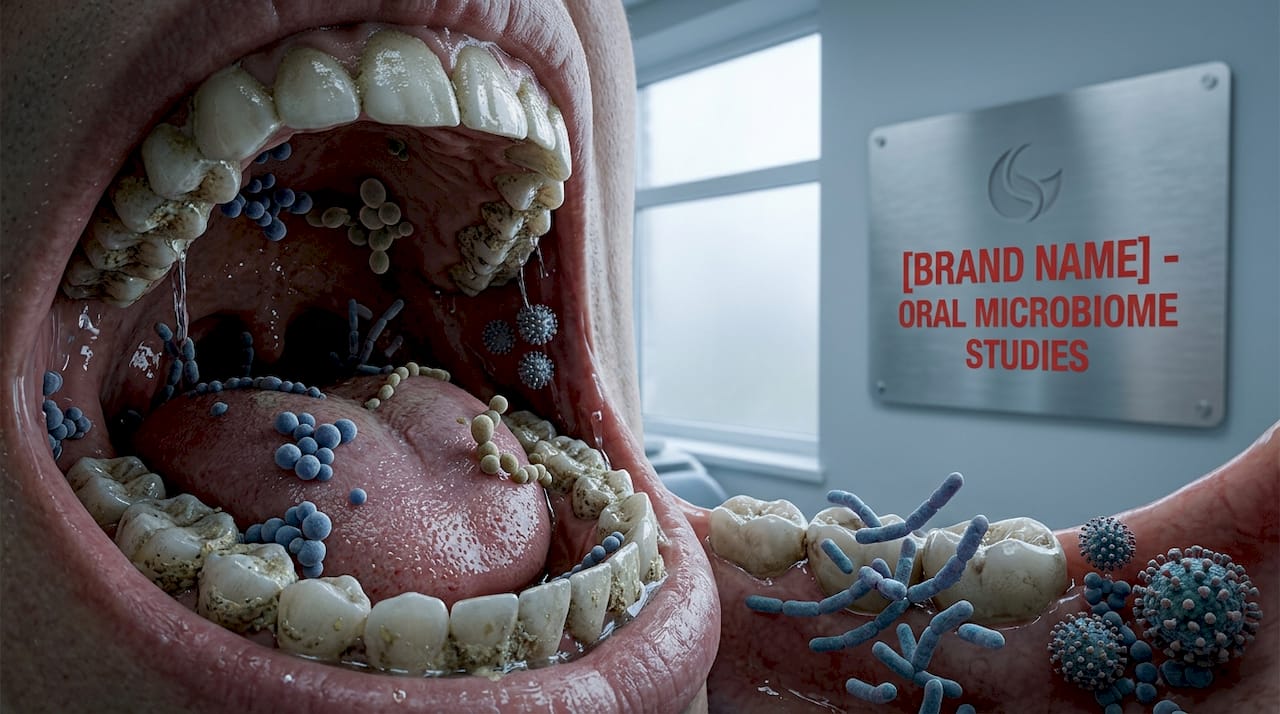
The oral microbiome comprises bacteria, fungi, viruses, and protozoa, with bacteria representing the dominant and most studied group. Bacterial genera including Streptococcus, Veillonella, Prevotella, Rothia, and Fusobacterium are detected across most adults in the United States. A large-scale NHANES-based study found that nearly all US adults share five bacterial phyla and six core genera, suggesting a partially universal microbial architecture across the population. This universality does not mean uniformity. The clinically relevant variation lies in relative abundance and the behavior of a smaller subset of taxa.
Site-specific distribution across oral niches
The mouth is not a single microbial habitat. Research analyzing multiple oral sites demonstrates that saliva, plaque, and tongue coating each harbor distinct microbial compositions and functional profiles. Dental plaque forms a dense, structured biofilm on tooth surfaces, with anaerobic species like Porphyromonas gingivalis and Treponema denticola concentrated in subgingival zones. The tongue coating supports a mucosal-type microbiome with higher proportions of Prevotella and Veillonella, while saliva reflects a mixed suspension of organisms shed from all oral surfaces.
| Oral niche | Dominant microbial profile | Primary functional role |
|---|---|---|
| Dental plaque | Streptococcus, Actinomyces, anaerobes | Biofilm formation, acid production |
| Tongue coating | Prevotella, Veillonella | Nitrate reduction, mucosal immunity |
| Saliva | Mixed suspension from all sites | Antimicrobial peptides, microbial dispersal |
| Gingival sulcus | Porphyromonas, Treponema | Periodontal tissue interaction |
Local physicochemical conditions, including oxygen availability, pH, and nutrient sources, shape which organisms thrive in each niche. This ecological specificity means that interventions targeting plaque-associated microbes do not necessarily affect tongue or salivary communities.
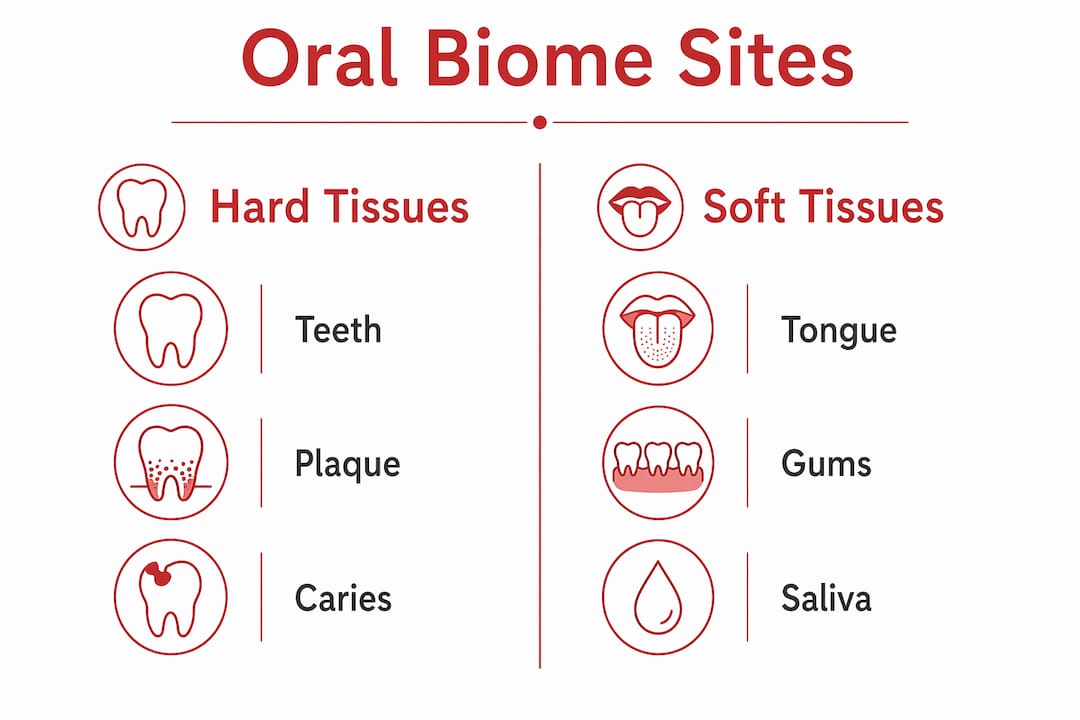
Pro Tip: When evaluating oral microbiome test results or product claims, check whether the sample was collected from saliva, plaque, or tongue swab. Results from different sites are not interchangeable and reflect distinct microbial populations.
Why is the oral biome important for health?
Oral microbiome dysbiosis is defined as a shift in microbial community composition that disrupts normal host-microbe interactions and promotes disease. Dysbiosis does not require the introduction of a new pathogen. It results from changes in the relative abundance of organisms already present. Dental caries develops when acid-producing species like Streptococcus mutans gain dominance under high-sugar dietary conditions. Periodontitis follows when anaerobic, gram-negative species accumulate in subgingival plaque and trigger chronic inflammatory responses in periodontal tissues.
The clinical significance of the oral biome extends well beyond the mouth. Oral dysbiosis links to systemic diseases through several mechanistic pathways, including translocation of oral bacteria into the bloodstream, systemic inflammatory signaling, and immune modulation. The following conditions have documented associations with oral microbiome imbalances:
- Cardiovascular disease: Porphyromonas gingivalis and Fusobacterium nucleatum are detected in atherosclerotic plaques, and periodontitis affects systemic health through chronic low-grade inflammation.
- Type 2 diabetes: Bidirectional associations exist between periodontal disease and glycemic dysregulation, with dysbiosis worsening insulin resistance.
- Adverse pregnancy outcomes: Periodontal pathogens are associated with preterm birth and low birth weight through inflammatory and bacteremic pathways.
- Respiratory infections: Aspiration of oral pathogens contributes to pneumonia risk, particularly in elderly and immunocompromised individuals.
- Erectile dysfunction: Emerging evidence suggests that oral microbial imbalance and chronic periodontitis are associated with vascular dysfunction relevant to male sexual health.
“The oral microbiome is increasingly recognized as an interface between dentistry and medicine, with microbial community balance serving as a modifiable determinant of both local and systemic health outcomes.” — Oral Microbiome and Systemic Health, PMC 2025
The key clinical principle is that no single bacterium explains these associations. Community-level shifts, not individual species, drive the transition from health to disease. This understanding reframes oral care from targeting specific pathogens to preserving ecological balance across all oral niches.
How do lifestyle and diet influence the oral biome?
Diet is a primary driver of oral microbial composition, though its effects are more specific than commonly assumed. A systematic review of six studies found that dietary patterns affect taxonomic and functional composition more than broad diversity metrics. The Mediterranean diet, characterized by high intake of vegetables, legumes, olive oil, and fish, is associated with reduced prevalence of periodontopathogens including Porphyromonas gingivalis and Tannerella forsythia. High-sugar and high-refined-carbohydrate diets, by contrast, selectively favor acid-tolerant species and promote cariogenic biofilm development.
Lifestyle factors beyond diet also shape the oral cavity ecosystem. A population-level NHANES study found that smoking, BMI, and alcohol use are associated with measurable shifts in oral microbiome alpha and beta diversity, as well as changes in the prevalence of pathogenic genera. Smoking, in particular, reduces oxygen availability in the gingival sulcus, creating conditions that favor anaerobic periodontal pathogens. Alcohol use alters salivary flow and pH, disrupting the antimicrobial properties of saliva.
Practical lifestyle choices that support oral biome health include:
- Reducing dietary sugar and refined carbohydrates to limit acid-producing species
- Increasing consumption of fiber-rich vegetables and fermented foods that support microbial diversity
- Avoiding tobacco products, which demonstrably shift microbial communities toward pathogenic profiles
- Moderating alcohol consumption to preserve salivary antimicrobial function
- Maintaining consistent oral hygiene to prevent biofilm accumulation without disrupting mucosal communities
Pro Tip: Antiseptic mouthwashes containing chlorhexidine or high-concentration alcohol are effective against pathogens but also reduce beneficial bacteria. For daily use, selecting a microbiome-friendly mouthwash that targets dysbiosis without broad-spectrum suppression better preserves the oral microbial balance.
How can you maintain a healthy oral biome?
Maintaining a balanced oral biome requires consistent behaviors that support beneficial microbial communities without attempting to sterilize the mouth. As Dr. Abnet’s NIH-published observations confirm, oral microbes are beneficial even in individuals with excellent hygiene. The objective is not microbial elimination but ecological stability. The following daily practices are supported by current evidence:
- Brush twice daily with a microbiome-compatible toothpaste. Fluoride-free formulations with natural antimicrobial agents, such as those reviewed in guides on microbiome-friendly toothpaste, reduce cariogenic species without broadly suppressing the microbiome.
- Floss or use interdental brushes daily. Mechanical disruption of subgingival plaque removes the anaerobic conditions that favor periodontal pathogens.
- Use a tongue scraper. The tongue coating harbors a distinct microbial population that contributes to volatile sulfur compound production and systemic microbial load.
- Select mouthwash with precision. Evidence-based options reviewed in oral flora support guides distinguish between formulations that preserve beneficial bacteria and those that do not.
- Schedule professional dental cleanings every six months. Professional debridement removes calcified biofilm that daily hygiene cannot address, resetting the subgingival microbial environment.
- Align diet with microbial health. Prioritize plant-rich, low-sugar dietary patterns and limit fermentable carbohydrates between meals.
- Stay hydrated. Adequate salivary flow is a primary defense mechanism, delivering antimicrobial proteins including lysozyme, lactoferrin, and secretory IgA across all oral surfaces.
The oral microbiome’s role in whole-body health means these daily behaviors carry implications beyond cavity prevention. Consistent, evidence-based oral care is a modifiable factor in systemic disease risk.
Key takeaways
The oral biome is a site-specific, community-level ecosystem where balance, not sterility, defines health, and disruptions to that balance carry measurable systemic consequences.
| Point | Details |
|---|---|
| Oral biome definition | The oral biome is the complete microbial ecosystem of the mouth, including bacteria, fungi, viruses, and protozoa. |
| Site-specific ecology | Saliva, dental plaque, and tongue coating harbor distinct microbial communities with different functional roles. |
| Dysbiosis and disease | Microbial imbalances link to caries, periodontitis, cardiovascular disease, diabetes, and adverse pregnancy outcomes. |
| Diet and lifestyle impact | Smoking, high-sugar diets, and alcohol use shift oral microbial communities toward pathogenic profiles. |
| Maintenance strategy | Daily hygiene, microbiome-compatible products, and regular dental care preserve ecological balance without sterilizing the mouth. |
A clinical perspective on oral biome misconceptions
The most persistent misconception I encounter is the belief that a clean mouth is a microbe-free mouth. Patients who use aggressive antiseptic products daily, believing they are protecting their oral health, are often disrupting the very microbial communities that defend against pathogen colonization. The oral cavity is not a sterile surgical field. It is a dynamic ecosystem where Streptococcus salivarius and Veillonella parvula perform functions no product can replicate.
A second misconception is that the oral microbiome is a single entity. Treating saliva results as representative of subgingival plaque, or tongue swab data as equivalent to gingival tissue samples, produces clinically misleading conclusions. Each niche requires its own interpretive framework. Interventions designed for one site may be irrelevant or counterproductive at another.
What I find most significant in the 2025 and 2026 research is the confirmation that modifiable lifestyle factors, particularly diet and smoking, produce measurable shifts in microbial community structure at the population level. This is not theoretical. It means that the choices patients make daily are directly shaping their oral microbial ecology and, through it, their systemic health trajectory. That connection deserves more weight in clinical conversations than it currently receives.
— Veronica
Explore oral biome solutions with Stop-oralcare
Stop-oralcare develops oral care products formulated specifically to support microbial balance rather than suppress it. The product line, led by Dr. Veronica Stahl, uses fluoride-free formulations with hemp and Dead Sea minerals, grounded in the principle that oral health depends on ecological stability.

The Stop-oralcare website provides detailed guides on selecting microbiome-compatible products alongside the science behind each formulation. Whether you are evaluating toothpaste ingredients, mouthwash selection, or daily oral hygiene protocols, the resources available at Stop-oralcare connect current microbiome research to practical product decisions. Readers seeking evidence-based oral care aligned with the science reviewed in this article will find both educational content and product options at stop-oralcare.com.
FAQ
What is the oral biome in simple terms?
The oral biome is the community of microorganisms, primarily bacteria but also fungi, viruses, and protozoa, that live in the mouth and collectively regulate oral and systemic health. It spans multiple sites including teeth, tongue, and saliva, each with a distinct microbial profile.
How many bacteria live in the human mouth?
Approximately 700 bacterial species have been identified in the human oral cavity, and nearly all US adults share a core set of five bacterial phyla and six genera. The specific composition varies by individual, site, and lifestyle factors.
Can a healthy oral biome prevent systemic disease?
A balanced oral microbiome reduces the risk of conditions linked to oral dysbiosis, including cardiovascular disease, type 2 diabetes, and adverse pregnancy outcomes. The mechanistic pathways involve reduced systemic inflammation and lower bacteremic translocation of oral pathogens.
Does brushing teeth destroy the oral microbiome?
Brushing disrupts biofilm accumulation on tooth surfaces but does not eliminate the oral microbiome. As NIH research confirms, microbial balance persists even with consistent oral hygiene. The goal of brushing is to prevent pathogenic biofilm overgrowth, not to sterilize the oral environment.
What is the difference between oral microbiome and oral microbiota?
The oral microbiota refers to the microbial organisms present in the mouth, while the oral microbiome refers to their collective genetic material, metabolic functions, and ecological interactions. Both terms describe the same community but from different scientific perspectives.