

TL;DR:
- Nano-hydroxyapatite toothpastes effectively remineralize enamel and occlude dentinal tubules, reducing hypersensitivity.
- A fluoride-free protocol includes nHAP toothpaste, Dead Sea mineral rinses, and hemp-based products for inflammation support.
- Proper technique and consistency are critical for achieving long-term sensitivity relief and enamel protection.
Persistent discomfort when consuming cold beverages, hot foods, or acidic substances is a recognized clinical presentation of dentin hypersensitivity, a condition affecting a substantial portion of the adult population. Many individuals seeking relief are simultaneously moving away from fluoride-based products, motivated by concerns about safety and a preference for naturally derived formulations. Nano-hydroxyapatite toothpastes have demonstrated measurable efficacy in reducing dentin hypersensitivity, and when combined with Dead Sea mineral and hemp-based oral care products, they form a scientifically supported, fluoride-free workflow. This article details the preparation, procedural steps, troubleshooting considerations, and verification benchmarks required to implement that workflow effectively.
Table of Contents
- What you need for sensitive teeth protection
- Step-by-step sensitive teeth protection workflow
- Troubleshooting and common mistakes
- How to verify results and maintain protection
- Our perspective: What most guides miss about natural sensitive teeth care
- Discover natural sensitive teeth solutions with Stop Oral Care
- Frequently asked questions
Key Takeaways
| Point | Details |
|---|---|
| Natural ingredients matter | Nano-hydroxyapatite and Dead Sea minerals provide proven, gentle protection for sensitive teeth. |
| Workflow delivers results | A consistent routine can noticeably reduce sensitivity within two to four weeks. |
| Troubleshooting is essential | Avoid common mistakes and seek dental help if sensitivity persists despite following the workflow. |
| Long-term care is key | Maintaining your workflow ensures lasting natural protection against sensitivity. |
| Expert perspective | Biomimetic nHAP is the foundation; natural products are valuable supporters but not sole solutions. |
What you need for sensitive teeth protection
Now that you understand why naturally derived ingredients matter for sensitive teeth management, let’s establish precisely what you will need to begin. A well-structured fluoride-free protocol requires three core product categories: a nano-hydroxyapatite (nHAP) toothpaste, a Dead Sea mineral-based mouthwash or toothpaste, and a hemp-formulated oral care product such as a spray or gel. Each category addresses a distinct physiological mechanism, and omitting any one of them reduces the overall efficacy of the workflow.
nHAP is a synthetic analog of the mineral that constitutes approximately 97% of tooth enamel. nHAP toothpastes remineralize enamel and occlude exposed dentinal tubules, reducing hypersensitivity by 70 to 100% in clinical evaluations. This mechanism is biomimetic, meaning it replicates the natural mineral structure of the tooth rather than introducing a foreign compound. For individuals with high cavity risk or pediatric patients, nHAP represents a clinically validated fluoride alternative.
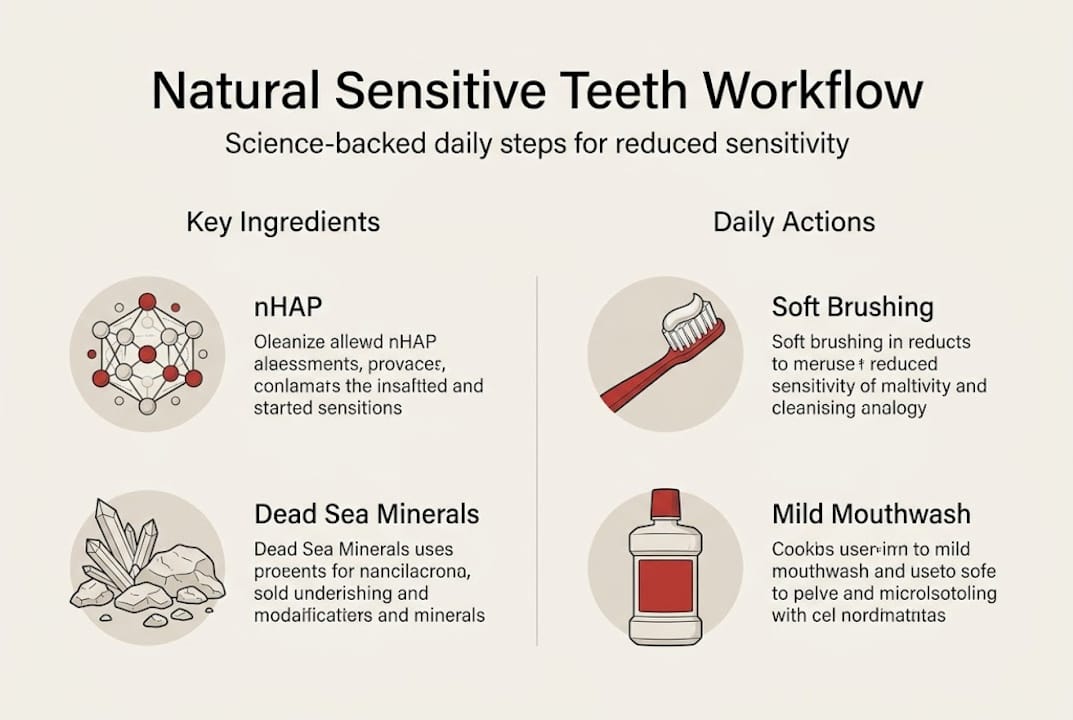
Dead Sea minerals, which include magnesium, calcium, potassium, and bromide in concentrated ionic form, contribute complementary benefits. Dead Sea minerals provide antimicrobial, anti-inflammatory, and remineralization properties that support periodontal tissue health and reduce microbial biofilm accumulation. You can read more about the specific mechanisms involved in Dead Sea minerals oral care research.
Hemp-derived oral care products, typically formulated with cannabidiol (CBD) or full-spectrum hemp extract, contribute anti-inflammatory modulation at the gingival level. While empirical data on hemp in oral care remains less extensive than for nHAP, early findings indicate a favorable safety profile and meaningful adjunctive benefit.
| Ingredient | Primary mechanism | Evidence level | Safe for children |
|---|---|---|---|
| Nano-hydroxyapatite | Tubule occlusion, remineralization | High (multiple RCTs) | Yes |
| Dead Sea minerals | Antimicrobial, anti-inflammatory | Moderate | Generally yes |
| Hemp extract (CBD) | Anti-inflammatory, gingival support | Emerging | Use with caution |
Key sourcing requirements include:
- nHAP concentration of at least 10% in toothpaste formulations
- Dead Sea mineral products with verified mineral composition disclosure
- Hemp oral care products that are THC-free and third-party tested
- Soft-bristle toothbrush with a head size appropriate for thorough posterior access
Pro Tip: When evaluating product labels, confirm that nHAP is listed as an active ingredient rather than a filler. Products listing hydroxyapatite without the “nano” designation may not deliver equivalent tubule-occluding particle size.
Step-by-step sensitive teeth protection workflow
With your product essentials gathered, the following procedural sequence provides the structural foundation for natural sensitive teeth protection. Adherence to each step, including correct timing and technique, is essential for achieving the clinical benchmarks associated with nHAP-based protocols.
-
Brush with nHAP toothpaste (morning and evening). Apply a pea-sized amount to a soft-bristle brush. Use gentle, circular strokes at a 45-degree angle to the gumline. Brush for a minimum of two minutes, ensuring coverage of all posterior surfaces. Do not rinse immediately after brushing; allow the nHAP to remain in contact with enamel for at least 30 seconds.
-
Rinse with Dead Sea mineral mouthwash (after brushing). Swish for 60 seconds, focusing on areas of known sensitivity or gingival inflammation. The Dead Sea minerals mouthwash formulation is designed to complement nHAP activity by reducing microbial load and supporting tissue recovery. Research indicates Dead Sea mineral products are comparable to chlorhexidine in plaque reduction without the staining or taste disruption associated with that agent.
-
Apply hemp oral spray or gel (midday or as needed). Direct application to inflamed gingival tissue or areas of acute sensitivity provides localized anti-inflammatory support between brushing sessions. This step is supplemental and not a substitute for the core nHAP brushing protocol.
-
Avoid acidic foods and abrasive products for 30 minutes post-brushing. This preserves the nHAP layer deposited during brushing and maximizes tubule occlusion.
For a thorough review of nHAP formulation science, the hydroxyapatite toothpaste guide provides detailed background.
| Week | Expected outcome | Monitoring action |
|---|---|---|
| 1 | Mild reduction in acute sensitivity | Note trigger foods/temperatures |
| 2 | 40 to 100% sensitivity drop reported | Compare to baseline sensations |
| 4 | Full tubule occlusion in most cases | Dentist checkup if needed |
| 8+ | Sustained remineralization and protection | Maintain consistent routine |
Pro Tip: Use a soft-bristle brush exclusively throughout this protocol. Medium or firm bristles mechanically abrade the nHAP layer and may worsen gingival recession, counteracting the remineralization achieved by the toothpaste.
Troubleshooting and common mistakes
Even a well-designed workflow can be undermined by procedural errors or misapplied techniques. The following section identifies the most frequently observed mistakes and provides actionable corrective guidance.
Common errors include:
- Abrasive brushing technique. Applying excessive lateral pressure during brushing removes the nHAP mineral layer before it can integrate with enamel. Correct technique requires light, circular strokes with a soft brush.
- Skipping the mouthwash step. The Dead Sea mineral rinse is not cosmetic. Omitting it eliminates the antimicrobial and anti-inflammatory component of the workflow, reducing overall efficacy.
- Rinsing immediately after brushing. Water rinsing within 30 seconds of brushing removes nHAP particles before tubule occlusion can occur. This is one of the most common and consequential errors.
- Inconsistent product application. Irregular use of the hemp spray or irregular brushing intervals reduces cumulative benefit. The workflow requires twice-daily consistency for measurable outcomes.
- Using incompatible products. Whitening toothpastes with high abrasive index (RDA above 70) should not be used concurrently with nHAP protocols, as they mechanically disrupt the deposited mineral layer.
For a structured overview of how these steps integrate into a broader fluoride-free dental workflow, additional guidance is available.
Edge cases requiring professional consultation include gum recession beyond 2 mm, diagnosed bruxism (teeth grinding), and sensitivity that does not respond to four weeks of consistent protocol adherence. In these cases, natural products provide supportive benefit but are not sufficient as standalone interventions. The role of minerals in oral care is well-documented, yet mineral-based products cannot structurally compensate for tissue loss caused by mechanical forces.
When to consult a dentist: If sensitivity persists or worsens after four weeks of protocol adherence, or if you observe visible gingival recession, tooth mobility, or spontaneous pain without a thermal trigger, schedule a professional evaluation. Severe recession or grinding requires clinical intervention that natural products cannot replace, though nHAP remains a safe adjunctive option even in these cases.
How to verify results and maintain protection
Following consistent workflow adherence, objective and subjective indicators can be used to assess protocol efficacy. Verification is not merely anecdotal. It should be structured and repeatable.
Primary indicators of successful sensitivity reduction include:
- Reduced or absent pain response to cold water at or below 10 degrees Celsius
- Tolerance of previously trigger foods such as citrus, ice cream, or hot beverages
- Absence of sharp, transient pain upon air exposure during routine dental examination
- Visible reduction in gingival inflammation or bleeding upon probing
Clinical research confirms that nZnMgHAP showed superior performance at four weeks compared to standard fluoride toothpastes in controlled trials, providing a validated benchmark for outcome expectations. Zinc and magnesium-doped nHAP formulations represent the current leading edge of this category.
For ongoing maintenance, the following practices sustain the protection achieved during the initial four-week protocol:
- Continue twice-daily nHAP brushing without interruption
- Maintain the Dead Sea mineral rinse as a permanent component of morning and evening oral hygiene
- Reintroduce the hemp spray during periods of gingival stress, such as following dental procedures or dietary changes
- Schedule professional cleanings every six months to preserve the integrity of remineralized enamel
- Avoid prolonged use of acidic beverages without subsequent water rinsing
For additional guidance on long-term maintenance, the Dead Sea minerals dentistry guide and the Dead Sea mineral toothpaste resource provide protocol-specific recommendations.
Tracking progress using a simple sensitivity log, noting trigger foods, pain intensity on a 0 to 10 scale, and frequency of sensitivity episodes, provides actionable data for self-monitoring and for communicating outcomes to a dental professional.
Our perspective: What most guides miss about natural sensitive teeth care
Having reviewed the workflow and its scientific foundation, a perspective rarely articulated in mainstream oral care content warrants attention. The majority of guides promoting natural sensitive teeth solutions treat hemp and Dead Sea minerals as equivalent alternatives to nHAP. This framing is scientifically imprecise.
nHAP offers biomimetic tubule occlusion without fluoride-related risks, making it the most appropriate primary intervention for individuals with a natural product preference. Hemp and Dead Sea mineral formulations are genuinely valuable, but their strongest role is as supportive agents addressing inflammation and microbial load, not as primary remineralizing agents.
Furthermore, the appeal of “natural-only” approaches sometimes leads to the adoption of remedies with minimal empirical backing. nHAP is non-inferior or superior to fluoride in hypersensitivity management, while many purely botanical interventions lack equivalent clinical validation. The evidence-based position is that nHAP should anchor the protocol, with hemp and Dead Sea minerals functioning as adjuncts. Persistence and routine consistency, not product novelty, determine long-term outcomes. You can explore the clinical rationale further in the hydroxyapatite benefits perspective.
Discover natural sensitive teeth solutions with Stop Oral Care
Ready to implement this workflow with clinically validated, fluoride-free products? Stop Oral Care offers a curated selection of natural oral health formulations designed specifically for individuals with sensitive teeth who seek scientifically supported alternatives to conventional dental care.
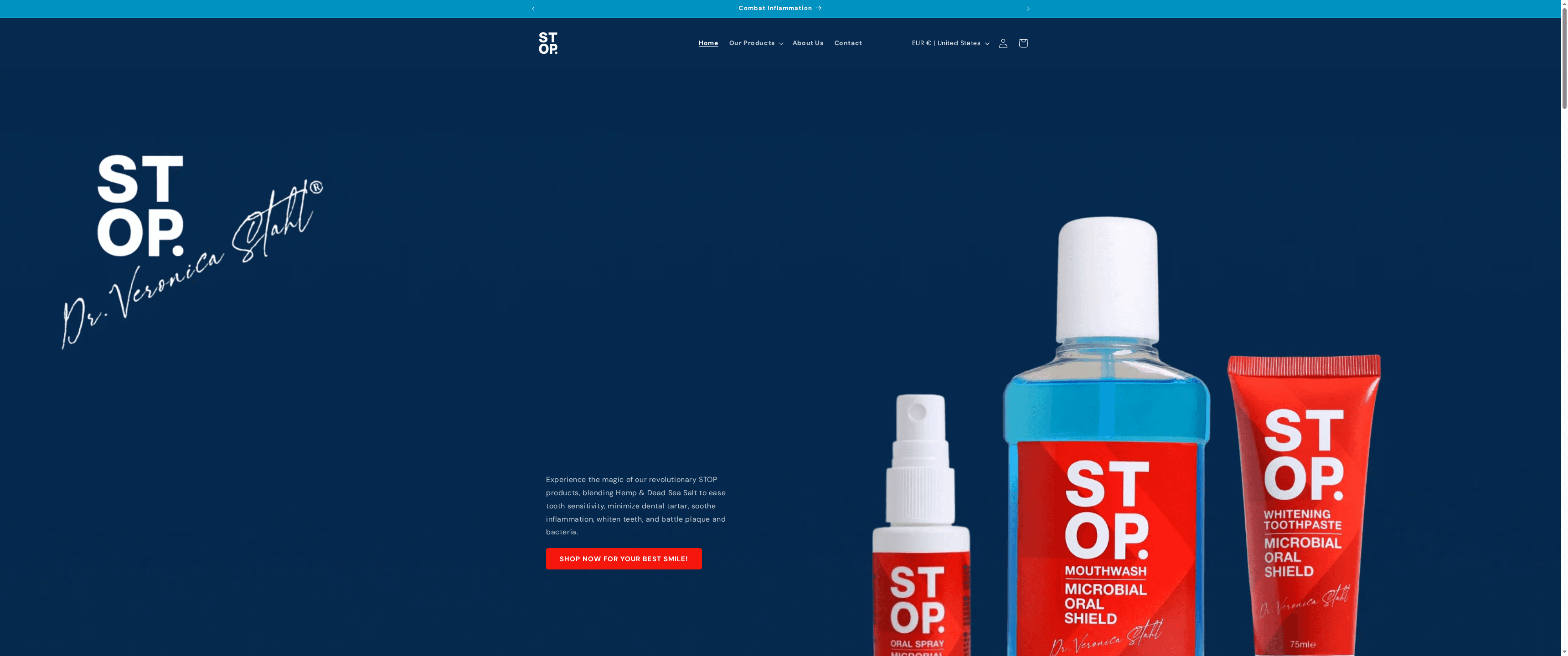
The Stop Oral Care product range includes nHAP-based toothpastes, Dead Sea mineral mouthwashes, and hemp-formulated oral sprays, each developed in alignment with the workflow described in this article. Whether you are beginning your fluoride-free transition or refining an existing routine, the platform provides both the products and the expert-backed information needed to maintain lasting sensitivity protection.
Frequently asked questions
How long does it take to see results from nHAP toothpaste?
Most users report significant sensitivity reduction within 2 to 4 weeks. Clinical data confirms a 40 to 100% sensitivity drop at the two-week mark, with full tubule occlusion typically achieved by week four.
Are Dead Sea mineral products effective for sensitive gums?
Yes. Dead Sea minerals provide antimicrobial, anti-inflammatory, and remineralization benefits that are effective for gingival sensitivity, with efficacy comparable to chlorhexidine and without associated side effects.
Is nHAP toothpaste safe for children and high cavity-risk patients?
Yes. nHAP is safe for children and individuals with elevated cavity risk, functioning as a clinically validated fluoride alternative without the ingestion concerns associated with fluoride formulations.
Can hemp and Dead Sea mineral products replace nHAP for sensitivity?
No. These ingredients provide meaningful supportive benefits, but nHAP remains the most empirically validated primary intervention for dentin hypersensitivity. Hemp and Dead Sea minerals are best used as adjuncts within a structured protocol.
What should I do if sensitivity persists after following the workflow?
Consult a dental professional. Severe recession or bruxism requires clinical evaluation and intervention that natural products alone cannot adequately address, though nHAP may continue as a safe adjunctive measure.