

What does a complete healthy smile process involve?
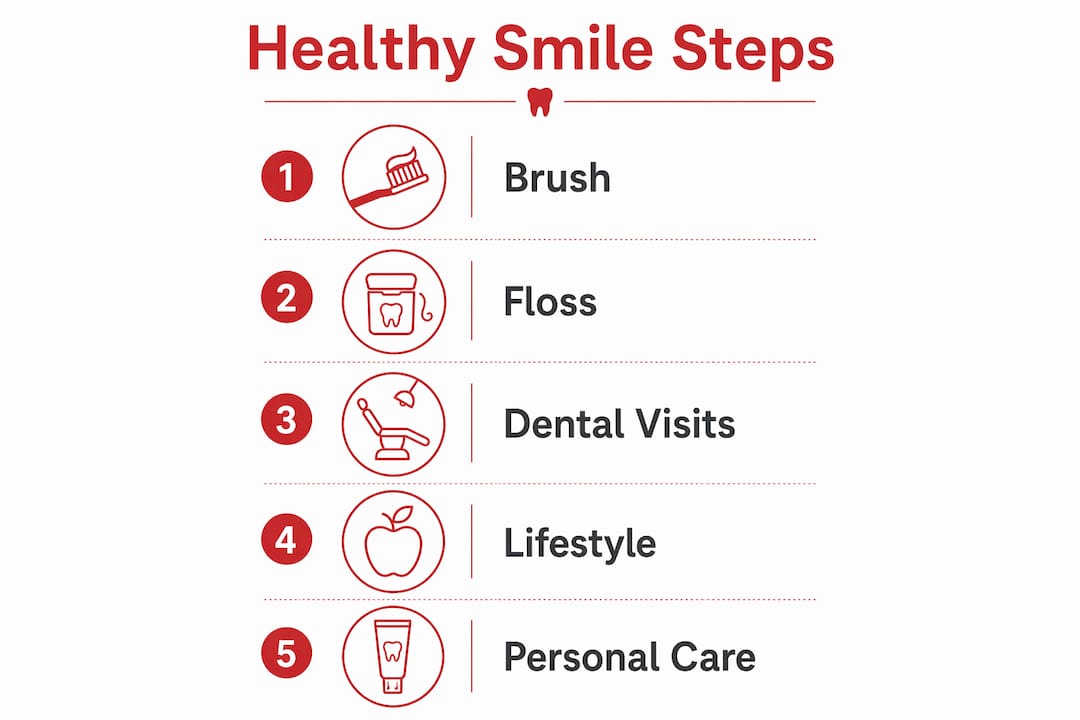
Achieving and maintaining a healthy smile requires a structured, evidence-based routine that addresses daily mechanical oral hygiene, professional dental care, and systemic lifestyle factors. The step-by-step healthy smile process is not a single intervention but a coordinated protocol grounded in ADA guidelines and clinical best practices.
The core components of this process are:
- Brush twice daily using a soft-bristled toothbrush and fluoride toothpaste for two minutes per session
- Floss once daily using the C-shape technique to disrupt bacterial biofilm beneath the gumline
- Clean the tongue after brushing to reduce halitosis-causing bacteria
- Use an antibacterial mouthwash to reduce residual oral bacteria between brushing sessions
- Schedule professional dental visits one to two times per year for examinations, cleanings, and early disease detection
- Wear a mouthguard during contact sports or high-risk physical activities
- Eliminate tobacco use and moderate alcohol consumption to reduce oral cancer risk
- Limit added sugars in the diet and maintain adequate hydration to prevent dry mouth
- Avoid oral piercings that can fracture teeth or introduce chronic gum irritation
- Work with a dental professional to develop a personalized care plan based on individual health status
Each of these steps addresses a distinct mechanism of oral disease, and omitting any one of them creates a gap in protection.
Table of Contents
- How should you brush and floss for maximum plaque removal?
- Why are regular dental visits critical to your oral health?
- What lifestyle habits protect your teeth beyond daily brushing?
- How do you build a personalized oral care routine with your dentist?
- Stop-oralcare offers natural oral care products for your daily routine
- Key Takeaways
How should you brush and floss for maximum plaque removal?
Correct brushing technique is the foundation of any oral hygiene routine. Soft-bristled brushes positioned at a 45-degree angle to the gumline allow the bristles to sweep plaque and bacteria from the critical junction between tooth enamel and gum tissue. Medium or hard bristles cause enamel abrasion and gum recession over time, so the bristle hardness is not a minor preference but a clinical consideration.
The recommended brushing protocol follows these steps:
- Position a soft-bristled brush at a 45-degree angle toward the gumline.
- Apply gentle circular or short back-and-forth strokes across all outer tooth surfaces.
- Repeat on inner tooth surfaces, including the tongue-side of front teeth using a vertical motion.
- Brush all chewing surfaces with short horizontal strokes.
- Brush the tongue using gentle forward strokes to remove bacterial accumulation.
- Continue for a full two minutes per session, which studies associate with greater plaque reduction than one-minute brushing.
Fluoride toothpaste is the standard recommendation across dental associations because fluoride strengthens enamel and can arrest early-stage decay. Selecting a toothpaste with fluoride is not optional for those following evidence-based oral care.
Flossing addresses the interproximal spaces that a toothbrush cannot reach. The C-shape technique mechanically disrupts bacterial biofilm beneath the gumline, which is the primary site of gingivitis development. Use approximately 18 inches of floss, wrapping the ends around the middle fingers of each hand, then curve the floss snugly around each tooth and slide it up and down beneath the gumline. Advance to a clean section of floss with each tooth.
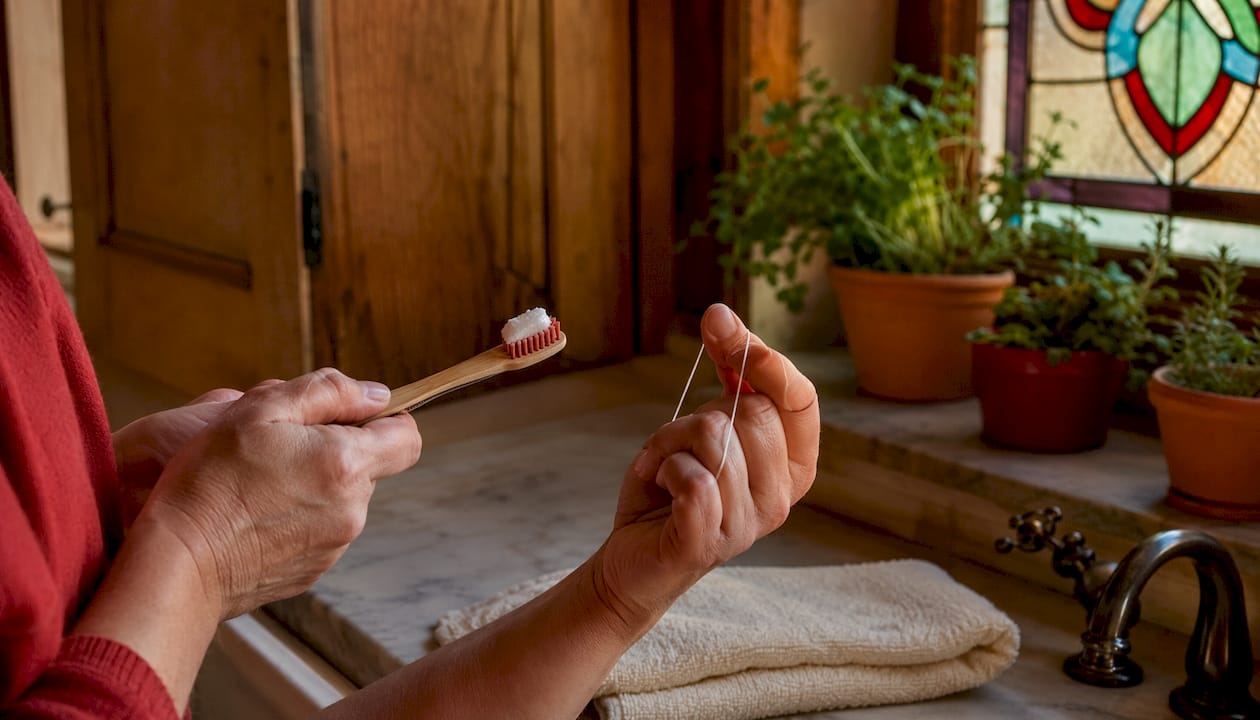
Pro Tip: Water flossers effectively remove food debris and large particles, but they do not disrupt the biofilm on tooth surfaces the way string floss does. Use both if you prefer a water flosser, not one as a substitute for the other.
For those with arthritis, limited dexterity, or orthodontic appliances, floss holders, floss threaders, and interdental brushes are clinically validated alternatives that maintain effective interproximal cleaning.
Why are regular dental visits critical to your oral health?
Professional dental care addresses what daily home hygiene cannot. Once plaque calcifies into tartar, no amount of brushing removes it. Only a dental hygienist or dentist can remove hardened tartar, and leaving it in place allows gingivitis to progress to periodontal disease, which carries consequences including bone loss and tooth loss.
A standard dental visit typically includes:
- Clinical examination of teeth, gums, and soft tissues for signs of decay, disease, or abnormality
- Professional cleaning to remove supragingival and subgingival tartar deposits
- Radiographic imaging (X-rays) to detect interproximal decay and bone changes not visible clinically
- Oral cancer screening through visual and tactile examination of oral mucosa
- Personalized hygiene counseling based on the patient’s current oral health status
Dental check-ups are recommended at least once or twice yearly for most adults. Patients with active gum disease, a high caries risk, or systemic conditions affecting oral health may require visits every three to four months. The American Dental Association notes that the appropriate recall interval is not universal but should be determined by the treating dentist based on individual disease risk.
Neglecting professional care allows subclinical disease to advance silently. Gum disease in its early stages produces few symptoms, and patients often present with moderate-to-advanced periodontitis before seeking treatment. Early detection through routine examinations consistently produces better clinical outcomes at lower treatment cost.
What lifestyle habits protect your teeth beyond daily brushing?
Mechanical oral hygiene addresses bacterial plaque, but several systemic and behavioral factors exert independent effects on oral health outcomes. Addressing these factors is integral to a complete oral care protocol.
Key lifestyle and preventive measures include:
- Tobacco cessation: Tobacco and alcohol use are major risk factors for oral cancers and chronic periodontal disease. Quitting tobacco at any stage reduces this risk substantially.
- Alcohol moderation: Alcohol increases head and neck cancer risk in a dose-dependent manner. Moderate consumption lowers this risk compared to heavy use.
- Mouthguard use: Wearing a properly fitted mouthguard during contact sports prevents dental fractures, avulsions, and soft tissue injuries that are otherwise common in high-impact activities.
- Dietary modification: Limiting foods and beverages with added sugars reduces the substrate available for cariogenic bacteria. Adequate calcium and phosphate intake from dairy, leafy greens, and nuts supports enamel remineralization.
- Oral piercing avoidance: Tongue and lip piercings are associated with tooth fracture, gum recession at adjacent sites, and chronic low-grade infection. These risks are not eliminated by good hygiene.
- Dry mouth management: Medications, systemic disease, and dehydration reduce salivary flow, which normally buffers acids and clears debris. Drinking fluoridated water, chewing sugar-free gum, and avoiding tobacco and alcohol all support salivary function. Patients whose medications cause dry mouth should consult their prescribing physician about alternatives.
Oral health and systemic health are bidirectionally linked. Patients with diabetes, for example, face elevated risk for periodontal disease, and uncontrolled periodontal disease in turn complicates glycemic management. Treating oral disease in this population is a component of overall disease management, not a separate concern.
How do you build a personalized oral care routine with your dentist?
Generic oral hygiene recommendations provide a useful baseline, but the American Dental Association explicitly recommends that dentists design individualized home care regimens rather than applying one-size-fits-all protocols. Individual risk factors, including caries history, periodontal status, systemic disease, medication use, and dexterity limitations, all affect which products and techniques will produce the best outcomes for a given patient.
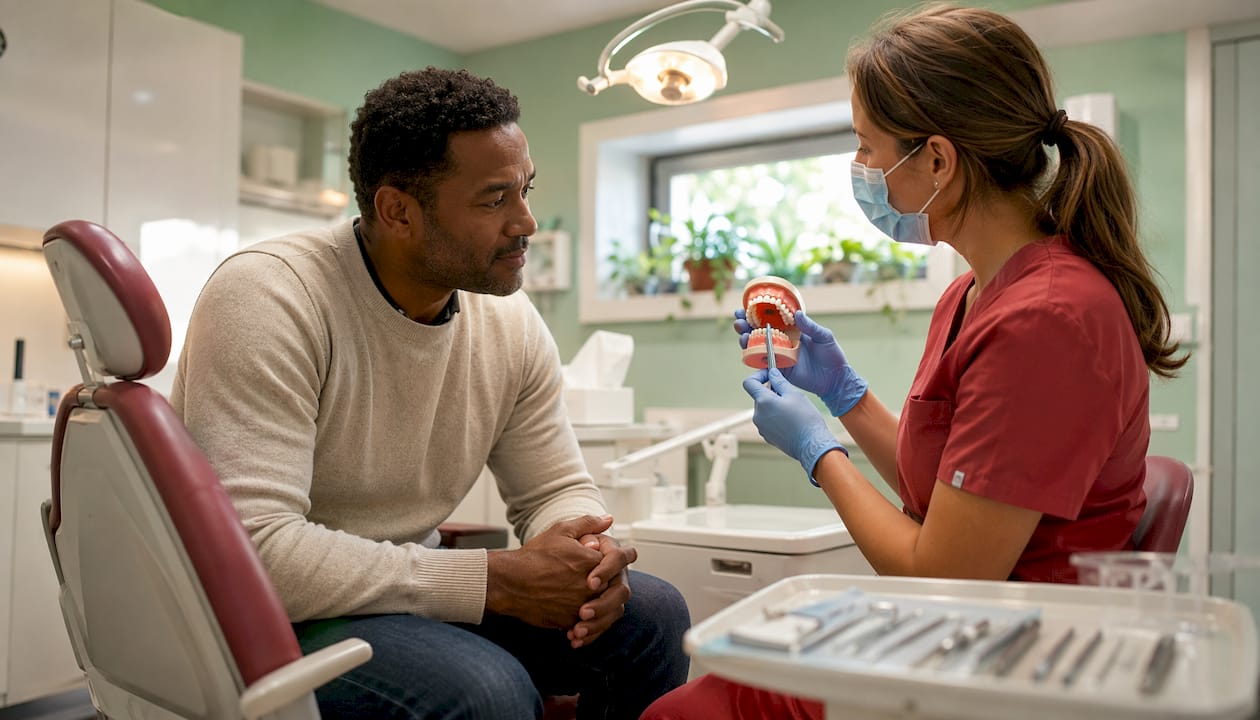
During a dental visit, the clinician can assess these factors and provide specific guidance on toothbrush type, interdental cleaning devices, fluoride concentration, and recall interval. Patients with orthodontic appliances, implants, or bridges require modified cleaning techniques that a general brushing-and-flossing protocol does not address. Patients with manual dexterity limitations benefit from powered toothbrushes, which deliver consistent mechanical action without requiring precise wrist movement, as well as adaptive tools such as floss holders and interdental brushes.
Pro Tip: Ask your dentist to review your brushing and flossing technique at your next visit. Studies show that personalized oral care guidance produces measurably better plaque reduction than written instructions alone.
Behavioral counseling during dental visits also addresses lifestyle factors such as diet, tobacco use, and dry mouth management. Patients with diabetes should discuss with their dentist whether a more frequent cleaning schedule is appropriate, given the established link between periodontal disease and glycemic control. The dental care checklist approach, which structures each visit around a defined set of clinical and behavioral objectives, supports consistent outcomes across patient populations.
Stop-oralcare offers natural oral care products for your daily routine
For those seeking natural alternatives within their daily oral hygiene routine, Stop-oralcare provides a line of fluoride-free dental care products formulated with hemp and Dead Sea minerals. These products are developed under the scientific direction of Dr. Veronica Stahl, a specialist in dentistry and natural medicine, and are designed to address plaque reduction, gum inflammation, sensitivity, and whitening without conventional synthetic compounds.

Stop-oralcare’s product range includes fluoride-free toothpaste, mouthwash, and oral sprays, each formulated to complement the mechanical steps outlined in this guide. The hemp-based formulations are backed by patent-supported research, and the Dead Sea mineral compounds are selected for their documented antimicrobial and anti-inflammatory properties. For those managing sensitivity or seeking cleaner-label alternatives to standard fluoride products, this represents a scientifically grounded option. Visit Stop-oralcare to review the current product range and determine which formulations align with your oral health needs.
Key Takeaways
A complete oral health routine requires daily mechanical hygiene, professional care at appropriate intervals, and targeted lifestyle modifications to prevent disease and maintain a healthy smile.
| Point | Details |
|---|---|
| Brush twice daily | Use a soft-bristled brush at a 45-degree angle for two minutes per session with fluoride or fluoride-free toothpaste. |
| Floss with the C-shape technique | Use approximately 18 inches of floss, wrapping the ends around the middle fingers of each hand, then curve the floss snugly around each tooth and slide it up and down beneath the gumline to disrupt bacterial biofilm. |
| Schedule professional visits | See a dentist one to two times yearly; patients with active gum disease or high caries risk may need visits every three to four months. |
| Address lifestyle risk factors | Tobacco cessation, alcohol moderation, mouthguard use, and sugar reduction each independently reduce oral disease risk. |
| Stop-oralcare natural products | Stop-oralcare offers hemp and Dead Sea mineral formulations for those seeking fluoride-free daily oral care alternatives. |
Recommended
- Guide to Safe Oral Care 2025: Achieve a Healthier Smile – Stop Oral Care
- Master Natural Teeth Whitening Workflow for Brighter Smile – Stop Oral Care
- How to Improve Gum Health Naturally: Simple Steps for a Brighter Smile – Stop Oral Care
- Step-by-Step Guide to Fluoride-Free Dental Hygiene Success – Stop Oral Care