

Oral pH restoration is the process of returning the oral cavity to a neutral state (approximately pH 7.4) after exposure to acidic substances. When oral pH drops below about pH 5.5, enamel demineralization begins, a process in which mineral ions are leached from the tooth surface, progressively weakening its structural integrity. The sources of this pH depression are numerous, including fermented bacterial acids from the oral microbiome, dietary acids from citrus fruits, carbonated beverages, vinegar-based foods, and gastric reflux. Timely pH restoration is therefore not a cosmetic concern but a physiological necessity for preserving enamel.
Oral pH restoration involves:
- Neutralizing residual acids through salivary buffering and mechanical rinsing
- Stimulating saliva flow to supply calcium and phosphate for remineralization
- Modifying dietary and behavioral patterns to reduce acid exposure frequency
- Selecting oral care products that do not contribute additional acidity to the oral environment
Table of Contents
- Why oral pH balance is critical for long-term enamel health
- How to restore oral pH after acidic exposure
- Daily habits that sustain optimal oral pH balance over time
- How saliva naturally restores oral pH through biological buffering
- Expert scientific perspectives on oral pH restoration
- Key Takeaways
Why oral pH balance is critical for long-term enamel health
Enamel is the hardest tissue in the human body, yet it is uniquely vulnerable to acid dissolution. Unlike bone, enamel cannot regenerate once lost, because the ameloblast cells responsible for its formation are no longer present in adult teeth. A persistently acidic oral environment accelerates this irreversible loss, creating conditions favorable to cariogenic bacteria such as Streptococcus mutans, which thrive at low pH and produce additional lactic acid as a metabolic byproduct.
The consequences of chronic oral acidity extend beyond enamel erosion:
- Dental caries: Low pH favors demineralization of both enamel and dentin, increasing cavity risk
- Gum inflammation: Acidic conditions disrupt the gingival microbiome, promoting periodontal pathogens
- Dentinal hypersensitivity: Enamel thinning exposes dentinal tubules, intensifying thermal and tactile sensitivity
- Systemic links: Periodontal disease associated with oral dysbiosis has been linked to systemic inflammatory conditions
“Maintaining a balanced oral pH is not merely a dental concern — it is a prerequisite for sustained enamel integrity and a protective factor against the cascade of pathological events initiated by chronic oral acidity.” — Loma Linda University dental health researchers, via LLU News
The importance of oral pH is therefore best understood as a systemic health variable, not simply a measure of dietary habits.
How to restore oral pH after acidic exposure
Restoring oral pH after acid challenge requires a structured, time-sensitive response. The sequence of actions taken in the minutes and hours following acid exposure determines whether enamel demineralization is halted or allowed to progress.
Practical restoration steps, in order of priority:
- Rinse immediately with water. Rinsing dilutes residual acids and mechanically clears them from tooth surfaces, providing rapid, if partial, pH elevation.
- Chew xylitol-containing sugar-free gum. Xylitol stimulates salivary flow, accelerating the natural buffering of oral acids while also inhibiting S. mutans adhesion.
- Wait 30–60 minutes before brushing. Enamel is temporarily softened by acid exposure; brushing immediately after acid intake removes softened mineral matrix, compounding erosion rather than preventing it.
- Avoid prolonged sipping of acidic beverages. Prolonged sipping maintains low oral pH continuously, causing more cumulative enamel damage than consuming the same beverage in a single, brief episode.
- Consume alkaline foods as a buffer. Dairy products, nuts, and leafy greens can help shift oral pH upward following an acidic meal.
Pro Tip: Carry a small bottle of still water and a pack of xylitol gum when consuming acidic meals away from home. These two interventions together address both mechanical acid clearance and salivary stimulation.
Daily habits that sustain optimal oral pH balance over time

Effective oral pH management is not a single corrective event but a continuous process of dietary and behavioral regulation. The oral pH balance an individual maintains across a full day is determined more by habitual patterns than by any isolated intervention.
Sustainable practices for long-term pH maintenance include:
- Prioritize alkaline-forming foods. Leafy greens, broccoli, almonds, and dairy products support a holistic dietary approach that counteracts dietary acid load.
- Maintain consistent hydration. Adequate water intake sustains salivary flow rates, which are the primary physiological mechanism for acid clearance and pH buffering.
- Limit acid exposure frequency, not just quantity. Each acidic episode initiates a demineralization cycle; reducing the number of daily acid exposures is more protective than reducing portion size alone.
- Select pH-neutral or alkaline oral care products. Many commercially available mouthrinses carry low pH values; the American Dental Association has documented that certain over-the-counter rinses can themselves contribute to oral acidity.
- Avoid frequent snacking. Continuous snacking prevents oral pH from returning to neutral between meals, sustaining a low-pH environment throughout the day.
- Use fluoride-free, pH-balanced toothpaste formulations. Products formulated with Dead Sea minerals and hemp-derived compounds, such as those offered by Stop-oralcare, are designed to support oral pH without introducing additional chemical acidity.
Dietary choices for healthy teeth also directly influence the frequency and severity of pH drops, making nutrition a core component of any pH management protocol.
How saliva naturally restores oral pH through biological buffering

Saliva is the primary biological mechanism for oral pH restoration. Its buffering capacity derives from three principal systems: bicarbonate ions, phosphate ions, and salivary proteins including mucins and proline-rich proteins. Of these, the bicarbonate system is the most physiologically significant, neutralizing acids through a carbonic acid equilibrium reaction that raises oral pH toward neutral.
Saliva’s role in pH restoration extends beyond chemical buffering:
- Mechanical acid clearance: Salivary flow physically removes acid from tooth surfaces and dilutes residual dietary acids
- Mineral delivery: Saliva is supersaturated with calcium and phosphate at neutral pH, providing the ions necessary for enamel remineralization
- Antimicrobial activity: Salivary proteins such as lysozyme, lactoferrin, and immunoglobulin A suppress cariogenic bacterial populations
- Pellicle formation: Salivary glycoproteins form a protective pellicle on enamel surfaces, reducing direct acid contact
Conditions that reduce salivary flow, including xerostomia (dry mouth) from medications, systemic disease, or dehydration, substantially impair all of these functions. Individuals with reduced salivary flow are at significantly elevated risk for enamel erosion and caries, precisely because the primary natural defense against oral acidity is compromised.
“Saliva is the mouth’s primary defense against acid attack. Its buffering capacity, mineral content, and antimicrobial properties collectively constitute the most important physiological system for maintaining oral pH homeostasis.” — Adapted from peer-reviewed analysis in the Brazilian Oral Research journal, doi.org
Expert scientific perspectives on oral pH restoration
The scientific literature increasingly positions saliva pH as a biomarker for caries risk and enamel erosion susceptibility, a finding with significant implications for personalized dental care. Persistently acidic salivary pH predicts elevated risk for both cavities and erosive tooth wear, enabling clinicians to stratify patients and intervene before structural damage occurs.
Dental researchers emphasize several principles that govern effective pH restoration:
- Enamel erosion is irreversible; prevention through pH management is therefore more clinically and economically rational than restorative treatment
- The timing of oral hygiene interventions relative to acid exposure is as important as the interventions themselves
- Holistic strategies integrating diet, hydration, and product selection produce more durable pH stability than any single measure
“Oral pH is not a static variable but a dynamic biomarker reflecting the cumulative effect of diet, salivary function, and microbial activity. Restoration of pH balance after acid challenge requires a multi-modal approach that addresses each of these determinants.” — Adapted from SEEJPH peer-reviewed research on saliva pH and oral health
The timing of brushing after meals is one of the most clinically underappreciated variables in pH restoration protocols. Brushing within minutes of acid exposure removes softened enamel rather than protecting it, a mechanism that practitioners consistently identify as a modifiable risk factor for accelerated erosion.
Practitioners further note that product selection carries measurable consequences. The ADA’s scientific documentation confirms that not all oral care products support pH balance; selecting formulations that are pH-neutral or alkaline, and that avoid acidic preservatives or flavoring agents, reduces inadvertent oral acidification. Stop-oralcare’s fluoride-free formulations with Dead Sea minerals are developed with this principle in mind, providing a product category aligned with the clinical evidence on pH-supportive oral care.
Key Takeaways
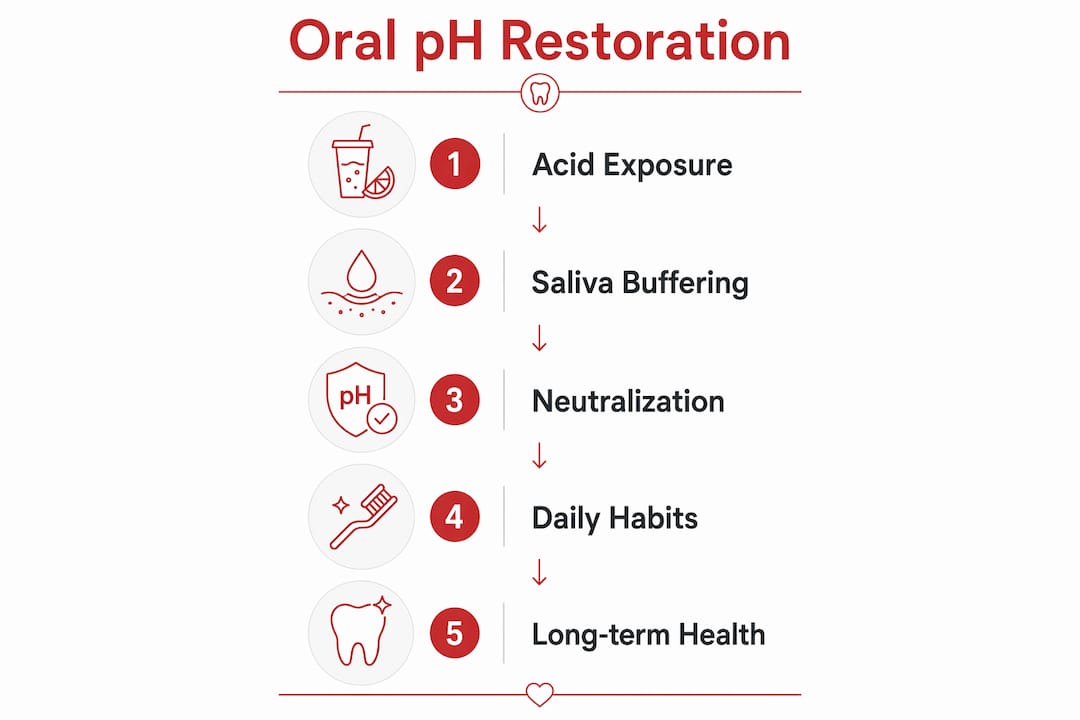
Oral pH restoration is a continuous, multi-modal process requiring timely acid neutralization, salivary support, dietary management, and pH-compatible oral care products to prevent irreversible enamel loss.
| Point | Details |
|---|---|
| Critical pH threshold | Enamel demineralization begins below about pH 5.5; restoration targets a return to neutral pH (approximately pH 7.4). |
| Brushing timing | Wait 30–60 minutes after acid exposure before brushing to avoid removing softened enamel. |
| Saliva as primary defense | Salivary bicarbonate, phosphate, and proteins buffer acids and deliver minerals for remineralization. |
| Product selection matters | Many over-the-counter mouthrinses carry low pH; choose pH-neutral or alkaline formulations to avoid added acidity. |
| Diet and frequency | Reducing the number of daily acid exposures is more protective than reducing portion size alone. |