

Mouth pH measures the acidity or alkalinity of your oral environment on a scale from 0 to 14, and its position on that scale directly determines whether your teeth mineralize or erode. The healthy salivary pH range sits between 6.2 and 7.6; once pH drops below the critical threshold of 5.5, enamel demineralization begins, elevating the risk of cavities and sensitivity. A balanced oral pH supports enamel integrity, sustains beneficial microbial populations, and preserves saliva’s antimicrobial capacity. Disruption of that balance sets off a cascade of clinical consequences that extend well beyond surface decay.
Key facts about mouth pH at a glance:
- Normal salivary pH range: 6.2–7.6
- Critical enamel demineralization threshold: pH 5.5
- Primary protective mechanism: saliva’s bicarbonate and phosphate buffering systems
- Main risk factors: acidic and sugary diet, reduced saliva flow, certain medications, and systemic conditions
- Clinical consequences of low pH: enamel erosion, dental caries, gum disease, and halitosis
What happens when mouth pH drops below healthy levels
An oral environment that remains persistently acidic produces measurable structural and microbiological damage. Below pH 5.5, calcium and phosphate ions leach out of enamel crystals faster than saliva can redeposit them, a process known as enamel demineralization. The result is progressive softening of the tooth surface, which precedes visible cavity formation.
The microbial consequences are equally significant. Acidogenic bacteria, particularly Streptococcus mutans, thrive in low-pH conditions and produce lactic acid as a metabolic byproduct, further depressing oral pH in a self-reinforcing cycle. An acidic oral environment suppresses beneficial commensal microbes while promoting pathogenic species associated with periodontal disease. Research has established a highly significant correlation between deep periodontal pockets and low salivary pH, linking oral acidity directly to the progression of periodontitis.
Clinical symptoms that commonly accompany pH imbalance include:
- Persistent halitosis: pH is a primary regulating factor in volatile sulfur compound formation; acidic saliva alters the oral environment in ways that promote malodorous bacterial metabolism
- Tooth sensitivity: demineralized enamel exposes dentinal tubules, increasing thermal and tactile sensitivity
- Recurrent dental caries: frequent acid exposure prevents adequate remineralization between meals
- Gingival inflammation: acidic conditions compromise saliva’s antimicrobial function, enabling pathogenic bacterial overgrowth at the gingival margin
Patients with systemic conditions such as diabetes mellitus or xerostomia (dry mouth) face compounded risk, as reduced or chemically altered saliva fails to neutralize acid challenges effectively.
How to maintain or restore balanced mouth pH
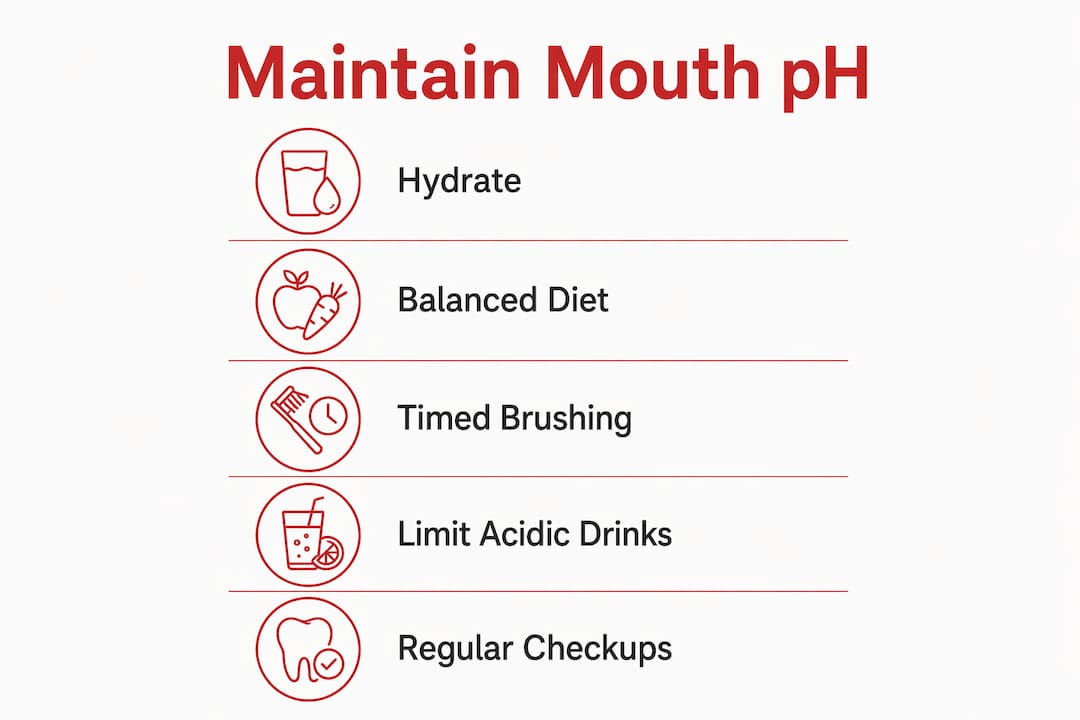
Restoring and sustaining a near-neutral oral pH depends on a combination of hydration, dietary discipline, and well-timed oral hygiene practices. Saliva is the primary physiological buffer in the mouth; adequate fluid intake directly supports salivary flow rate, which in turn determines how quickly the oral cavity recovers from acid challenges. Hydration, dietary moderation, and rinsing with water or mineral-rich oral care products after eating represent the three foundational strategies for pH maintenance.
Dietary choices carry substantial weight. High sugar and acidic foods promote frequent pH drops that prevent enamel from remineralizing between meals, while fruits, vegetables, and dairy products tend to support alkalinity and mineral redeposition. Products formulated with Dead Sea minerals, such as those developed by Stop-oralcare, provide mineral-rich rinsing options that support the oral environment without disrupting its natural buffering chemistry. Reviewing foods that strengthen enamel offers a practical starting point for dietary adjustment.
Practical steps for daily pH management:
- Stay consistently hydrated to maintain adequate salivary flow and buffering capacity throughout the day
- Limit frequency of acidic and sugary food consumption rather than eliminating them entirely; frequency of acid exposure matters as much as quantity
- Rinse with water or a mineral-rich oral rinse immediately after acidic meals to dilute residual acids before they act on enamel
- Chew sugar-free gum containing xylitol to stimulate saliva production between meals
- Use fluoride-free, pH-supportive oral care products formulated to work with the oral microbiome rather than disrupt it
Pro Tip: Saliva flow and pH follow a circadian rhythm, reaching their lowest point during sleep. Brushing immediately after acidic meals damages softened enamel; waiting 30–60 minutes allows saliva to neutralize residual acids and initiate remineralization before mechanical abrasion is applied.
How to recognize signs that your mouth pH may be off-balance
Early identification of pH imbalance allows for intervention before structural damage becomes irreversible. The three most consistent clinical indicators are persistent bad breath, heightened tooth sensitivity, and a pattern of recurrent cavities despite adequate brushing frequency.
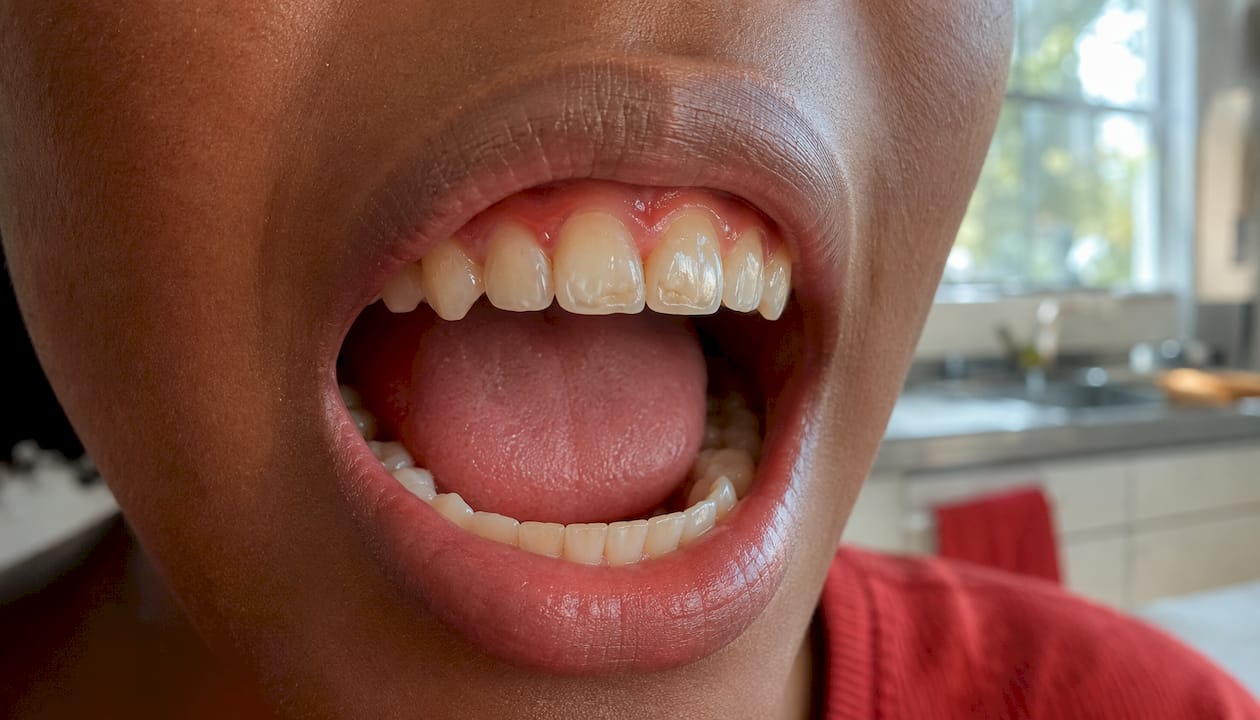
Bad breath that does not resolve with routine oral hygiene often signals an acidic shift in the oral environment. Acid-tolerant anaerobic bacteria proliferate under low-pH conditions and generate volatile sulfur compounds at elevated rates. Tooth sensitivity to cold beverages or sweet foods reflects enamel thinning at sites of chronic acid exposure, particularly at the cervical margins where enamel is thinnest. Frequent new cavities, especially in patients who report regular brushing, suggest that the remineralization-demineralization balance has tipped toward net mineral loss.
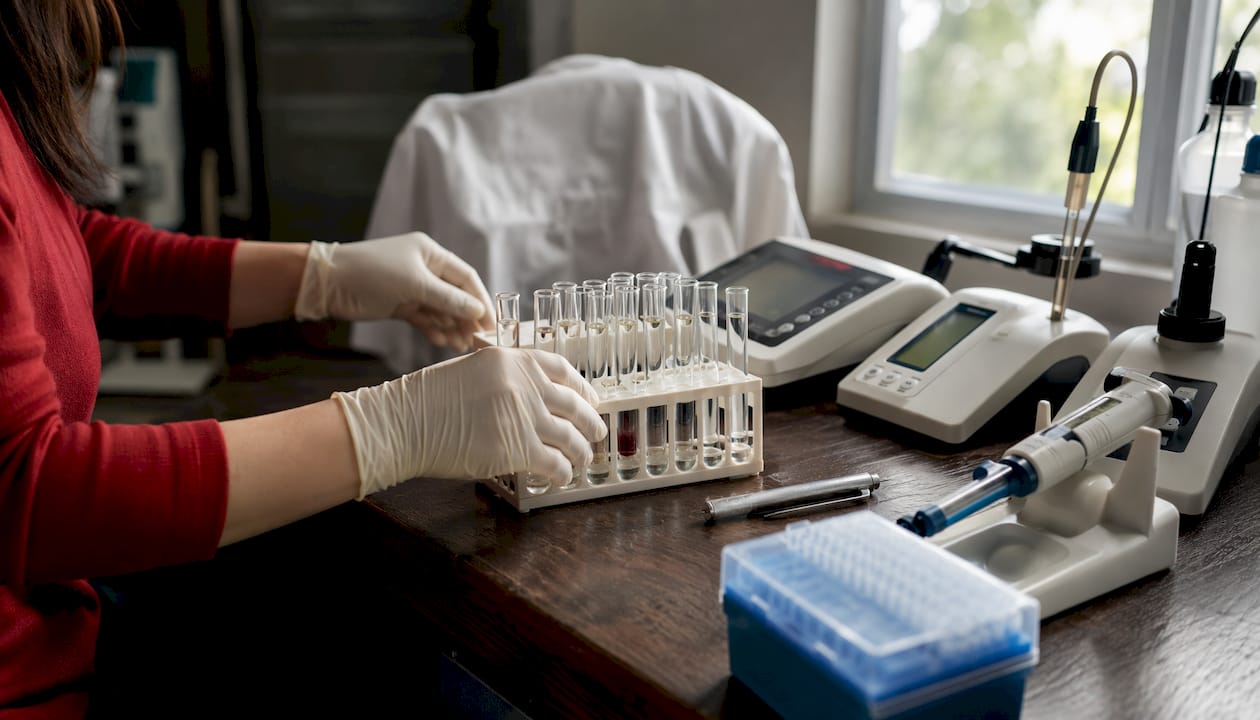
Dietary and hydration patterns provide important contextual clues. Individuals who consume acidic beverages such as citrus juices, carbonated drinks, or sports drinks multiple times daily, or who breathe predominantly through the mouth, are at elevated risk for chronic pH depression. Oral pH testing using pH indicator paper strips offers a low-cost, noninvasive chairside screening method; a consistently low reading warrants further clinical evaluation. Professional assessment remains the definitive step when symptoms persist despite dietary and hygiene modifications.
Scientific insights on saliva’s buffering role and systemic influences on oral pH
Saliva’s protective capacity derives from three overlapping biochemical systems: bicarbonate ions, inorganic phosphate, and salivary proteins, each of which neutralizes acid through distinct mechanisms. The bicarbonate system is the most quantitatively significant, converting hydrogen ions into carbonic acid and ultimately carbon dioxide, which dissipates from the oral cavity. Saliva’s buffering capacity is, in clinical terms, as protective as the absolute pH value itself, because it determines how rapidly the oral environment recovers after an acid challenge rather than simply where it sits at rest.
Circadian variation adds a layer of complexity. Salivary flow rate and pH are lowest during sleep, when glandular secretion is minimal and the oral cavity lacks the mechanical stimulation of chewing and speaking. This nocturnal reduction in buffering capacity explains why patients who consume acidic foods or beverages before sleep face disproportionate enamel erosion risk. Systemic factors including hydration status, metabolic health, and psychological stress modulate salivary gland output, meaning that oral pH balance cannot be fully addressed through topical care alone.
The relationship between oral pH and the oral microbiome is bidirectional. Low pH selects for acid-tolerant pathogens, which then produce additional acid, further suppressing pH and displacing beneficial commensal species. Conversely, a near-neutral pH sustains microbial diversity and the colonization resistance that prevents pathogenic overgrowth. Stop-oralcare’s approach to oral pH balance addresses this dynamic by formulating products that support the biochemical environment in which beneficial microbes thrive.
Pro Tip: Managing systemic health, including stress reduction, consistent hydration, and metabolic stability, directly supports salivary gland function and oral pH regulation. Topical oral care products work most effectively when the systemic conditions that govern saliva production are also addressed.
| Parameter | Typical range / value | Clinical implication |
|---|---|---|
| Resting salivary pH | 6.2–7.6 | Baseline indicator of buffering adequacy |
| Enamel demineralization threshold | pH 5.5 | Below this point, net mineral loss from enamel begins |
| Plaque pH after sugar exposure | Can drop sharply below 5.5 | Localized acid niches form even when overall saliva pH appears neutral |
| Saliva flow at night | Substantially reduced | Lowest buffering capacity; highest enamel erosion risk |
| Bicarbonate buffering system | Primary buffer | Converts H⁺ to CO₂; capacity scales with flow rate |
Localized plaque pH dynamics deserve particular attention. Although resting salivary pH may average within the healthy range of 6.2–7.6, plaque pH can drop sharply following sugar intake, creating acid niches at the enamel surface that cause erosion even when the bulk saliva appears neutral. This distinction underscores why saliva’s role in oral hygiene extends beyond simple pH measurement to encompass flow rate, mineral content, and buffering kinetics. Products that support mineral redeposition, such as those incorporating hydroxyapatite, address this localized demineralization risk directly; the Super Teeth Prebiotic Hydroxyapatite formulation represents one such approach to remineralization support.
Key Takeaways
Mouth pH below 5.5 triggers enamel demineralization, pathogenic bacterial proliferation, and gum disease progression, making pH balance the central variable in long-term dental health.
| Point | Details |
|---|---|
| Critical pH threshold | Enamel demineralization begins below pH 5.5, accelerating cavity formation and sensitivity. |
| Saliva buffering capacity | Bicarbonate and phosphate systems neutralize acid; buffering capacity matters as much as resting pH. |
| Systemic influences | Hydration, stress, and metabolic health directly affect salivary flow and oral pH regulation. |
| Dietary frequency matters | How often acidic foods are consumed drives pH depression more than the quantity per episode. |
| Nighttime erosion risk | Saliva flow and pH drop during sleep, making pre-sleep oral hygiene and product choice especially consequential. |
Recommended
- Why Oral pH Matters for Lasting Dental Health – Stop Oral Care
- Role of pH Balance in Oral Hygiene: Protecting Enamel and Microbiome – Stop Oral Care
- The Best Mouthwash for Oral Microbiome: Top Picks That Support Healthy – Stop Oral Care
- Oral microbiome: Why it matters for whole body health – Stop Oral Care