

TL;DR:
- Dental remineralization involves the redeposition of calcium and phosphate into weakened enamel when oral pH remains above 5.5. Maintaining a balanced diet, managing acid exposure, and using mineral-rich oral care products support the natural repair cycle. Consistent habits like spacing meals, stimulating saliva, and controlling biofilm enhance enamel recovery, especially in early stages.
Dental remineralization is defined as the biological process by which calcium and phosphate ions are redeposited into weakened enamel, restoring its mineral density and structural integrity. Learning how to remineralize teeth naturally means creating the right oral conditions for this process to occur consistently. Saliva is the primary vehicle for mineral delivery, and it also neutralizes the acids that strip enamel of its mineral content. The critical pH threshold for remineralization to occur is 5.5. Below that level, enamel dissolves faster than it repairs. Above it, the repair cycle can proceed.
What oral conditions support effective natural remineralization?
Remineralization does not happen continuously. It occurs in cycles, and those cycles depend entirely on oral pH staying above 5.5. Frequent acid attacks prevent these cycles from completing, even when mineral intake is adequate. The practical implication is clear: managing acid exposure is as important as supplying minerals.
Saliva is the body’s built-in remineralizing agent. It carries calcium, phosphate, and bicarbonate directly to the enamel surface. Bicarbonate neutralizes acid, while calcium and phosphate replenish what acid has removed. Without adequate saliva flow, mineral delivery stalls regardless of diet.
Spacing meals and snacks at least 2–3 hours apart gives saliva time to neutralize acid and restore pH above the critical threshold. Constant snacking keeps pH suppressed and blocks the repair window entirely. This single behavioral change has a measurable effect on enamel health over time.
Key conditions that support remineralization:
- Oral pH consistently above 5.5 between meals
- Adequate saliva volume and mineral content
- 2–3 hours between acidic food or drink exposures
- Reduced frequency of fermentable carbohydrate intake
- Controlled cariogenic biofilm through brushing and flossing
Pro Tip: Chewing xylitol gum for 20 minutes after meals stimulates saliva flow, buffers acid, and inhibits the cavity-causing bacteria that drive demineralization.
What foods and nutrients support tooth remineralization?
Diet supplies the raw materials for enamel repair. Calcium and phosphate are the two minerals that form hydroxyapatite, the crystalline compound that gives enamel its hardness. Without adequate dietary intake of both, remineralization cannot proceed at a meaningful rate regardless of other interventions.

Vitamin D3 is the critical cofactor for calcium absorption. Without sufficient D3, dietary calcium passes through the gut largely unused. Vitamin K2, particularly the MK-7 form, directs calcium to teeth and bones rather than allowing it to deposit in soft tissue. These two vitamins work together, and deficiency in either one limits the effectiveness of even a calcium-rich diet.
Magnesium supports enamel crystal formation and regulates how calcium integrates into the enamel matrix. Phosphorus, found in protein-rich foods, works alongside calcium to maintain the mineral balance that enamel requires. Dairy-free individuals can source calcium from leafy greens, canned sardines with bones, almonds, and fortified plant milks.
Best foods for tooth remineralization:
| Food | Key Mineral | Benefit |
|---|---|---|
| Dairy (cheese, yogurt) | Calcium, phosphate | Direct mineral supply to enamel |
| Sardines with bones | Calcium, vitamin D | Dual mineral and absorption support |
| Leafy greens (kale, bok choy) | Calcium, magnesium | Non-dairy mineral source |
| Nuts (almonds, Brazil nuts) | Calcium, magnesium | Sustained mineral release |
| Egg yolks | Vitamin D, K2 | Calcium direction and absorption |
| Fatty fish (salmon, mackerel) | Vitamin D3 | Enhances calcium uptake |
Acidic and sugary foods actively reverse the remineralization process. Frequent sugar exposure keeps oral pH below 5.5, blocking enamel repair even when the diet is otherwise mineral-rich. Limiting acidic beverages, including citrus juices and carbonated drinks, to mealtimes reduces the total acid load on enamel.
What dental hygiene habits and products support natural remineralization?
Oral hygiene removes the cariogenic biofilm that produces acid and drives demineralization. Managing bacterial biofilm is as critical as mineral provision for successful remineralization outcomes. Brushing twice daily and flossing once daily are the minimum standard for biofilm control.
Toothpaste selection directly affects remineralization outcomes. Nano-hydroxyapatite toothpaste fills demineralized zones in enamel subsurface, mimicking the natural mineral structure of enamel and facilitating direct structural repair. Fluoride, the traditional remineralizing agent, forms fluorapatite crystals that are more acid-resistant than natural enamel. Both approaches have clinical support, and the choice depends on individual preference and health considerations. A detailed comparison of both options is available in this hydroxyapatite vs. fluoride guide.
Emerging natural agents also show clinical promise. Galla chinensis extract has demonstrated the ability to suppress cariogenic biofilm while simultaneously facilitating subsurface mineral redeposition. This dual-action profile makes it a notable candidate in the growing field of botanical dental care, as discussed in current holistic dental wellness research.
Hygiene product comparison by function:
| Product Type | Primary Function | Remineralizing Effect |
|---|---|---|
| Hydroxyapatite toothpaste | Enamel mineral replacement | Direct, subsurface repair |
| Fluoride toothpaste | Acid-resistant crystal formation | Indirect, surface hardening |
| Remineralizing mouthwash | Mineral delivery, pH buffering | Adjunctive, surface-level |
| Xylitol gum | Saliva stimulation, bacteria inhibition | Indirect, environment support |
| Oil pulling | Bacterial load reduction | None (no mineral content) |
Pro Tip: Oil pulling reduces harmful oral bacteria but contains no calcium or phosphate. Use it as a supplement to mineral-rich products, not as a replacement.
Remineralizing mouthwashes provide an additional mineral delivery window, particularly useful after meals when brushing is not practical. They work best when used consistently as part of a structured routine rather than as a standalone measure.
How to build a natural remineralization routine
A structured daily routine produces results that isolated interventions cannot. The key is sequencing mineral delivery, acid control, and biofilm management across the day. Consistency over weeks and months is what drives measurable enamel improvement.
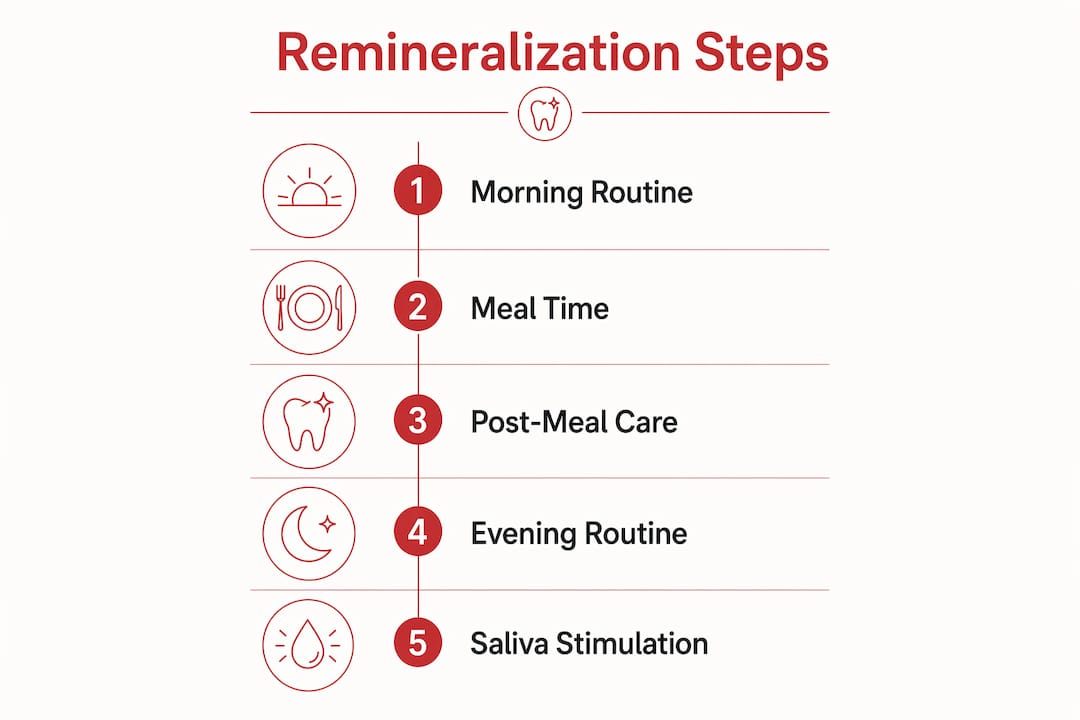
Daily remineralization routine:
- Morning: Brush with a hydroxyapatite or mineral-rich toothpaste for two minutes. Do not rinse with water immediately after. Allowing the toothpaste to remain on enamel briefly extends mineral contact time.
- Breakfast: Choose low-acid, calcium-rich foods. Avoid citrus juice or carbonated drinks first thing in the morning when enamel is most vulnerable.
- Post-meal (all meals): Chew xylitol gum for 20 minutes. This stimulates saliva, buffers acid, and inhibits Streptococcus mutans, the primary cavity-causing bacterium.
- Between meals: Drink water consistently. Hydration maintains saliva volume and flow rate, both of which determine how effectively minerals reach enamel.
- Evening: Floss before brushing to clear interproximal biofilm. Brush again with mineral toothpaste. Use a remineralizing mouthwash as a final step.
- Lifestyle: Avoid snacking within 2–3 hours of a prior meal. Limit alcohol and tobacco, both of which reduce saliva flow and impair the oral environment.
Routine summary by timing:
| Time of Day | Action | Purpose |
|---|---|---|
| Morning | Mineral toothpaste, no-rinse method | Maximize mineral contact with enamel |
| After each meal | Xylitol gum, 20 minutes | Acid neutralization, saliva stimulation |
| Throughout day | Water intake | Sustain saliva flow and pH recovery |
| Evening | Floss, brush, mouthwash | Biofilm removal, overnight mineral exposure |
Pro Tip: A mineral-rich diet combined with consistent saliva stimulation and a hydroxyapatite toothpaste represents the most evidence-supported natural remineralization protocol available without clinical intervention.
The role of oral pH in this routine cannot be overstated. Every step above either raises pH, sustains it, or prevents it from dropping. That is the unifying logic of the entire protocol.
Key Takeaways
Natural teeth remineralization requires sustained oral pH above 5.5, consistent mineral delivery through diet and toothpaste, and active biofilm control through daily hygiene.
| Point | Details |
|---|---|
| pH threshold is non-negotiable | Oral pH must stay above 5.5 for remineralization cycles to occur at all. |
| Saliva is the primary mineral carrier | Stimulate saliva with xylitol gum post-meals to maximize mineral delivery. |
| Diet supplies the building blocks | Calcium, phosphate, vitamin D3, and K2 are all required for enamel repair. |
| Hydroxyapatite toothpaste repairs subsurface enamel | It fills demineralized zones directly, making it a clinically supported fluoride alternative. |
| Remineralization reverses early lesions only | Established cavities require professional treatment; natural methods work best at the white-spot stage. |
What I have learned about natural remineralization after years in clinical practice
The most common misconception I encounter is that remineralization is a passive process. People assume that eating well and brushing regularly is enough. The science does not support that assumption. Remineralization is effective primarily during early lesion stages, specifically non-cavitated white spot lesions. Once a cavity forms a physical hole in enamel, no natural protocol closes it. That distinction matters enormously for setting realistic expectations.
What I have found consistently is that acid management is the variable most people underestimate. Patients who eat mineral-rich diets but snack frequently throughout the day still show net demineralization. The frequency of acid exposure, not just its intensity, determines whether remineralization can occur. Spacing meals and eliminating between-meal snacking often produces more visible improvement than any product change.
The emergence of holistic dental approaches that combine antimicrobial botanical agents with mineral deposition is genuinely promising. Agents like Galla chinensis extract represent a new category: natural compounds that address both the bacterial cause and the mineral deficit simultaneously. That dual-action profile is what fluoride has always offered, and seeing natural alternatives achieve comparable mechanisms is a meaningful development.
My clinical recommendation is to treat natural remineralization as a system, not a supplement. Diet, saliva stimulation, biofilm control, and mineral toothpaste each address a different part of the problem. Remove any one element and the system underperforms. Integrate all four consistently, and the results at early lesion stages are well-documented and clinically meaningful.
— Veronica
Natural oral care products that support enamel remineralization
Stop-oralcare formulates fluoride-free dental care products specifically for people who want mineral-based enamel support without synthetic additives. The product line includes toothpastes and mouthwashes developed with Dead Sea minerals and hemp-derived compounds, both of which have documented effects on oral microbiome health and enamel mineral content.
The enamel repair toothpaste guide on the Stop-oralcare website details how each formulation supports the remineralization cycle described in this article. For those specifically avoiding fluoride, the fluoride-free remineralizing toothpaste guide covers the clinical evidence behind natural mineral alternatives. The full product range is available at Stop-oralcare for those ready to build a structured natural oral care routine.
FAQ
What is dental remineralization?
Dental remineralization is the process by which calcium and phosphate ions are redeposited into enamel that has been weakened by acid exposure. It is the natural counterpart to demineralization and occurs when oral pH rises above 5.5.
Can you rebuild tooth enamel naturally?
Natural methods can restore mineral density in early-stage, non-cavitated enamel lesions, including white spots. Established cavities with physical holes in enamel require professional dental treatment and cannot be reversed through diet or toothpaste alone.
Do remineralizing toothpastes work?
Yes. Hydroxyapatite toothpastes fill demineralized subsurface zones in enamel and have clinical support as a fluoride alternative. Fluoride toothpastes form acid-resistant fluorapatite crystals. Both approaches are effective when used consistently as part of a complete oral care routine.
What is the best food for tooth remineralization?
Dairy products, sardines with bones, leafy greens, and almonds provide the highest combined calcium and phosphate content. Pairing these foods with adequate vitamin D3 and K2 intake maximizes how effectively those minerals reach and integrate into enamel.
How long does natural remineralization take?
The timeline depends on lesion severity and consistency of the protocol. Early white spot lesions can show measurable mineral recovery within weeks of sustained pH management, mineral-rich diet, and appropriate toothpaste use. Deeper demineralization takes longer and may require professional monitoring.