

A white tongue is usually a harmless coating of bacteria, food particles, and dead cells trapped in the tongue’s papillae. Most cases clear within a few days of consistent gentle cleaning and better hydration. See a clinician if the coating persists beyond several weeks, causes pain, or shows up as a patch that won’t wipe off.
- Short-lived and painless? Increase water intake and clean the tongue daily. Expect visible improvement within a few days.
- Persistent, painful, or fixed in place? Book a dental or medical evaluation rather than waiting it out.
Quick fact: Oral hygiene lapses, dehydration, and mouth breathing are among the most frequently cited triggers behind white tongue causes, according to Medical News Today’s review of the condition.
Key Takeaways
A white tongue is almost always a reversible coating of trapped bacteria and debris that responds to gentle scraping and hydration within days, while any patch that won’t wipe off needs a professional look.
| Point | Details |
|---|---|
| Wipe test matters most | A coating that scrapes off is usually benign; a fixed patch needs evaluation. |
| Hydration is a real fix | Saliva clears debris mechanically, so dry mouth and dehydration are frequent culprits. |
| Gentle scraping beats scrubbing | Aggressive brushing can irritate papillae and worsen the coating over time. |
| Two to three weeks is the threshold | Coating or patches lasting beyond that window, or causing pain, warrant a dental visit. |
| Rule out irritants first | Recent product switches (SLS toothpaste, cinnamon flavoring) can mimic infection. |
Table of Contents
- What Is a White Tongue, and How Do You Tell a Coating From a Patch?
- Common Lifestyle and Benign Causes You Can Fix at Home
- Medical Causes and Red Flags: Thrush, Leukoplakia, and Rarer Conditions
- How to Clean and Care for a White Tongue Safely
- How to Keep White Tongue From Coming Back
- When Symptoms Point to a Doctor’s Visit
- Stop Oral Care’s Take on Gentle, Evidence-Aligned Support
- Could an Allergic Reaction or Irritant Be Behind It?
- Does Mouth Breathing at Night Make White Tongue Worse?
- What This Guide Gets Right That Most Advice Doesn’t
- Sources
What Is a White Tongue, and How Do You Tell a Coating From a Patch?
The tongue’s surface is covered in tiny projections called papillae, and the spaces between them act like a net. Bacteria, dead epithelial cells, and leftover food collect there, and when the layer thickens enough, it turns visibly white or gray. Medical News Today’s overview confirms that this trapped debris and bacterial buildup is the primary mechanism behind white tongue causes in the vast majority of cases.
The distinction that actually matters clinically is simple: can you scrape it off?
- Removable coating: wipes away with a scraper or soft brush, usually painless, often paired with bad breath.
- Fixed white patch: stays put even after cleaning, may feel rough or thickened, sometimes tender.
- Hairy tongue: papillae elongate and trap stain, giving a fuzzy, sometimes yellow-brown to white look.
A coating that disappears with basic hygiene points toward a benign cause. A patch that clings on is the signal to stop self-diagnosing and get it looked at.
Common Lifestyle and Benign Causes You Can Fix at Home
Most white tongues trace back to habits rather than disease, and Medical News Today lists poor oral hygiene, dehydration, mouth breathing, smoking, and heavy alcohol use as the most common contributors. Here’s how each one works and what actually reverses it.
- Skipped tongue cleaning. Brushing teeth alone leaves papillae loaded with debris. Add a scraper or the back of a soft toothbrush to your routine.
- Dehydration and dry mouth. Saliva flushes bacteria and food particles mechanically; when flow drops from dehydration, certain medications, or sleeping with your mouth open, coating builds up faster. The Mayo Clinic notes dehydration as a direct contributor, and increasing fluid intake often reverses it within days.
- Tobacco, vaping, and alcohol. All three dry out oral tissue and disrupt the normal bacterial balance, giving debris more surface area to stick to.
- Low-fiber, high-sugar diets. Crunchy, fibrous foods scrape the tongue mechanically as you chew; a soft, processed diet skips that natural cleaning step entirely.
- Recent antibiotics. Antibiotics can knock out the bacteria that normally keep oral flora in check, occasionally letting yeast or other organisms overgrow temporarily.
Pro Tip: If you’ve just finished a course of antibiotics and notice a new coating, don’t panic; it’s usually flora rebalancing rather than a new infection, and it typically settles within one to two weeks of normal hygiene.
Medical Causes and Red Flags: Thrush, Leukoplakia, and Rarer Conditions
Some white tongues signal something beyond hygiene, and the visual cue is the same one from earlier: does it wipe off?
- Oral thrush (candidiasis). Caused by an overgrowth of Candida yeast, it appears as creamy white patches that can be scraped away, sometimes leaving a raw or bleeding surface underneath. It shows up most in infants, older adults with dentures, and people who are immunosuppressed or on inhaled steroids.
- Leukoplakia. These are thickened white patches that do not wipe off, often linked to chronic tobacco or alcohol use. A peer-reviewed clinical review notes that persistent leukoplakia sometimes requires biopsy to rule out precancerous change.
- Oral lichen planus. An inflammatory condition producing lace-like white streaks or patches, occasionally painful, and typically diagnosed through visual exam plus biopsy when uncertain.
- Rarer causes. Secondary syphilis and, uncommonly, oral cancer can present with white or mixed-color lesions. A clinical review in PMC states that professional evaluation is warranted when a white lesion lasts longer than a few weeks or causes pain.
Red-flag checklist: a patch that won’t scrape off, lasts more than two to three weeks, bleeds, hurts, or comes with unexplained weight loss or fever.
How to Clean and Care for a White Tongue Safely
Gentle, consistent care beats aggressive scrubbing every time. The Cleveland Clinic points out that hard brushing or forceful scraping can irritate the papillae and worsen the exact problem you’re trying to fix.
- Scrape correctly. Use a dedicated tongue scraper, not a fingernail or hard brush bristle. Start at the back of the tongue and pull forward in one smooth stroke, rinsing the scraper between passes. Two or three strokes per session is plenty.
- Hydrate deliberately. Saliva does real antimicrobial work, and Mayo Clinic identifies restored saliva flow as one of the more underrated fixes for tongue coating. Sugar-free gum between meals helps stimulate flow if your mouth runs dry during the day.
- Build a daily checklist. Brush teeth, floss, scrape the tongue, and rinse, in that order, once or twice daily.
- Use antiseptic mouthwash selectively. It helps reduce bacterial load for hygiene-related coating but won’t touch a fungal infection. If thrush is suspected, talk to a pharmacist or doctor before reaching for antifungal medication, since these require a proper diagnosis first.
Pro Tip: Scraper material matters less than technique, but some practitioners favor copper scrapers for their natural antimicrobial surface. Whatever tool you pick, gentleness is the non-negotiable part.
Expect visible change within two to three days if the cause is hygiene-related. No improvement after a week of consistent care is your cue to get it checked. A proper tongue-scraping routine paired with the daily habits above covers most benign cases.
How to Keep White Tongue From Coming Back
Prevention here is mostly about closing small gaps in an existing routine rather than overhauling anything.
- Scrape your tongue daily, and if you wear dentures, clean them nightly with a dedicated denture brush and soaking solution.
- Cut back on tobacco and heavy alcohol use, both of which dry oral tissue and feed debris buildup.
- Drink water consistently through the day rather than in large, infrequent amounts.
- Add crunchy fruits and vegetables to meals; chewing fibrous food provides natural mechanical cleaning that soft, processed diets skip.
- If a medication is causing chronic dry mouth, ask the prescriber about alternatives or saliva-stimulating options rather than just living with the side effect.
A seven-step daily hygiene routine built around these habits keeps recurrence low without requiring anything elaborate.
When Symptoms Point to a Doctor’s Visit
Certain thresholds separate “wait and self-treat” from “book an appointment now.”
- Coating or patches lasting longer than two to three weeks despite consistent home care.
- Pain, bleeding, or a rough, thickened texture that doesn’t wipe away.
- Systemic symptoms like fever, unexplained weight loss, or swollen lymph nodes alongside the tongue changes.
A clinician will typically start with a visual oral exam, followed by a Candida swab if thrush is suspected, or a biopsy for any lesion that looks suspicious or won’t resolve. Blood tests may follow if a nutritional or systemic cause seems likely. Bring a list of current medications, your tobacco and alcohol habits, any recent antibiotic courses, and note if you have a condition or treatment that suppresses immune function. That context often shortens the path to a diagnosis considerably.
Stop Oral Care’s Take on Gentle, Evidence-Aligned Support
Dr. Veronica Stahl, the dentist and natural-medicine researcher behind Stop Oral Care, built the brand’s formulations around fluoride-free, low-irritation ingredients for exactly this kind of sensitive oral tissue.
- Hemp-infused and Dead Sea mineral formulas are designed to support gum and mucosal comfort without harsh detergents.
- These products complement daily hygiene; they don’t replace scraping, hydration, or a dentist’s diagnosis for a fixed patch.
- Product-specific research and formulation details are available on individual product pages at Stop Oral Care.
Could an Allergic Reaction or Irritant Be Behind It?
Contact reactions in the mouth get overlooked constantly, and they’re worth ruling out before assuming infection or disease. Sodium lauryl sulfate (SLS), a foaming agent in many mainstream toothpastes, is one of the more common irritants, and the NHS specifically advises avoiding SLS-containing toothpaste for people with recurring tongue or mouth soreness.

Cinnamon flavoring in gum, mints, and some toothpaste is another frequent trigger, sometimes causing a condition dentists call contact stomatitis, which can present with a white, peeling, or coated appearance on the tongue and inner cheeks. Certain mouthwash ingredients, particularly high-alcohol formulas, can dry and irritate tissue enough to trigger a reactive white film rather than a true infection.
The pattern that suggests an allergic or irritant cause rather than a hygiene issue: the coating appears or worsens shortly after switching toothpaste, mouthwash, or gum, and it improves within days of dropping the suspected product. If you’ve recently changed oral care products and noticed new tongue symptoms, eliminate one variable at a time rather than switching everything at once. That makes the culprit easier to identify.
Denture materials and orthodontic appliances can also cause localized contact irritation where they repeatedly touch the tongue, producing a white patch that looks alarmingly similar to leukoplakia but resolves once the appliance is adjusted or removed.
Does Mouth Breathing at Night Make White Tongue Worse?
Breathing through your mouth while asleep dries out oral tissue for six to eight uninterrupted hours, and that stretch of reduced saliva flow is long enough to let debris accumulate significantly by morning. Saliva’s antimicrobial proteins and mechanical washing action, which the Mayo Clinic identifies as a key defense against tongue coating, simply aren’t circulating when the mouth stays open all night.
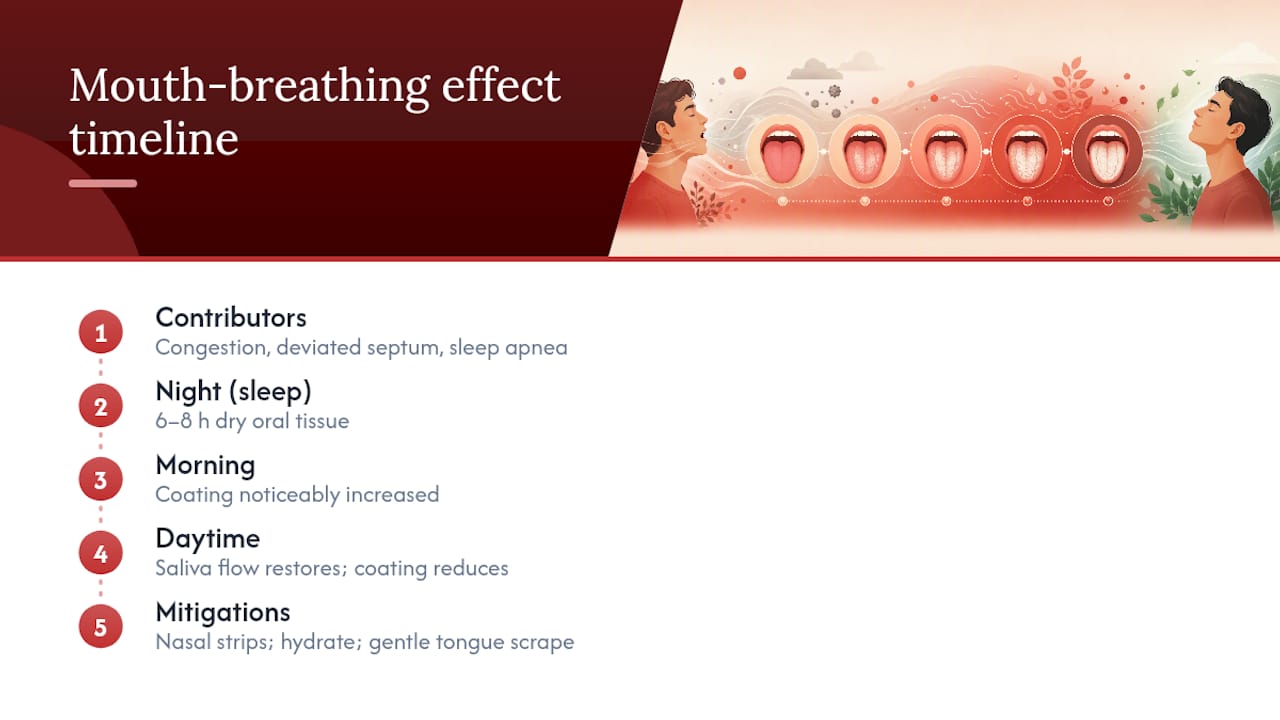
People with chronic nasal congestion, deviated septums, or sleep apnea are especially prone to this pattern, and many don’t realize they’re mouth breathing until a partner mentions the snoring or dry-mouth complaints pile up. The telltale sign is a tongue that looks noticeably more coated first thing in the morning than it does by midday, after normal saliva flow and drinking water have had a chance to work.
Addressing the underlying cause matters more than treating the symptom in isolation. Nasal strips, treating allergies or congestion, and evaluating for sleep apnea with a doctor can all reduce nighttime mouth breathing. In the meantime, a large glass of water and a gentle tongue scrape as part of your morning routine handles the visible coating while the root cause gets sorted out.
What This Guide Gets Right That Most Advice Doesn’t
Most articles on this topic treat “scrape your tongue” as the whole answer, and that’s where conventional advice undersells the problem. The real lever is saliva, not the scraper. A dry mouth from mouth breathing, medication, or simple under-hydration will keep producing new coating faster than any tool can remove it, which is why so many people scrape diligently and still see the film return by evening.
The second gap is urgency calibration. Plenty of guidance either overreacts, sending every white tongue toward a cancer worry, or underreacts, treating every case as a five-minute hygiene fix. The wipe test and the two-to-three-week threshold are the two data points that actually separate those cases, and they deserve more attention than they typically get.
If there’s one thing to prioritize first, it’s ruling out dehydration and product irritants before assuming infection. Those two causes are the most common, the easiest to fix, and the most frequently skipped in a rush to diagnose something more serious.
This article is general information, not a substitute for advice from a qualified doctor. Consult a qualified healthcare professional about your own circumstances before acting on anything here.
Sources
- What does a white tongue mean? Causes and treatments - Medical News Today
- Oral white lesions: a clinical review - PMC
- White tongue - Cleveland Clinic
- Sore or white tongue - NHS
Recommended
- Natural Remedy for Bad Breath: A Practical How‑To Guide – Stop Oral Care
- Tongue Scraper Benefits: 6 Surprising Ways It Boosts Your Oral Health – Stop Oral Care
- How to Whiten Teeth Naturally at Home: Simple Steps for a Brighter Smi – Stop Oral Care
- Hard Water Teeth Stains: What to Check and How to Fix – Stop Oral Care