

Baking soda in moderation, oil pulling, and ADA-accepted whitening toothpaste can lighten surface tobacco stains, but they rarely touch stains that have set in deep. If your teeth show heavy yellowing or brown buildup, a professional cleaning should come before any home remedy. Skip acidic tricks like lemon juice or apple cider vinegar entirely.
TL;DR:
- Baking soda and ADA-accepted whitening toothpaste can gradually lighten surface stains but are ineffective against deep, intrinsic discoloration caused by tobacco.
- Regular, careful use of low-concentration hydrogen peroxide rinses (1.5% to 3%) two to three times weekly offers mild chemical oxidation without risking enamel erosion.
- Excessive or daily use of abrasive methods like charcoal or baking soda may thin enamel, expose dentin, and worsen yellowing; limit charcoal to once weekly if at all.
- Avoid acidic remedies such as lemon juice or apple cider vinegar, as they cause enamel erosion with minimal whitening benefit.
- A professional cleaning before any home whitening is essential to remove tartar and tar deposits, ensuring better results and preventing further damage.
Table of Contents
- How Natural Whitening for Smokers Actually Works
- Effective At-Home Whitening Methods for Smokers
- Safety Risks You Should Know Before Trying Home Remedies
- Preventing New Stains and Maintaining Your Results
- Why This Guidance Is Reliable
- What I’d Actually Tell a Smoker Trying to Whiten Naturally
- A Smarter Maintenance Routine After Whitening
- Sources
How Natural Whitening for Smokers Actually Works
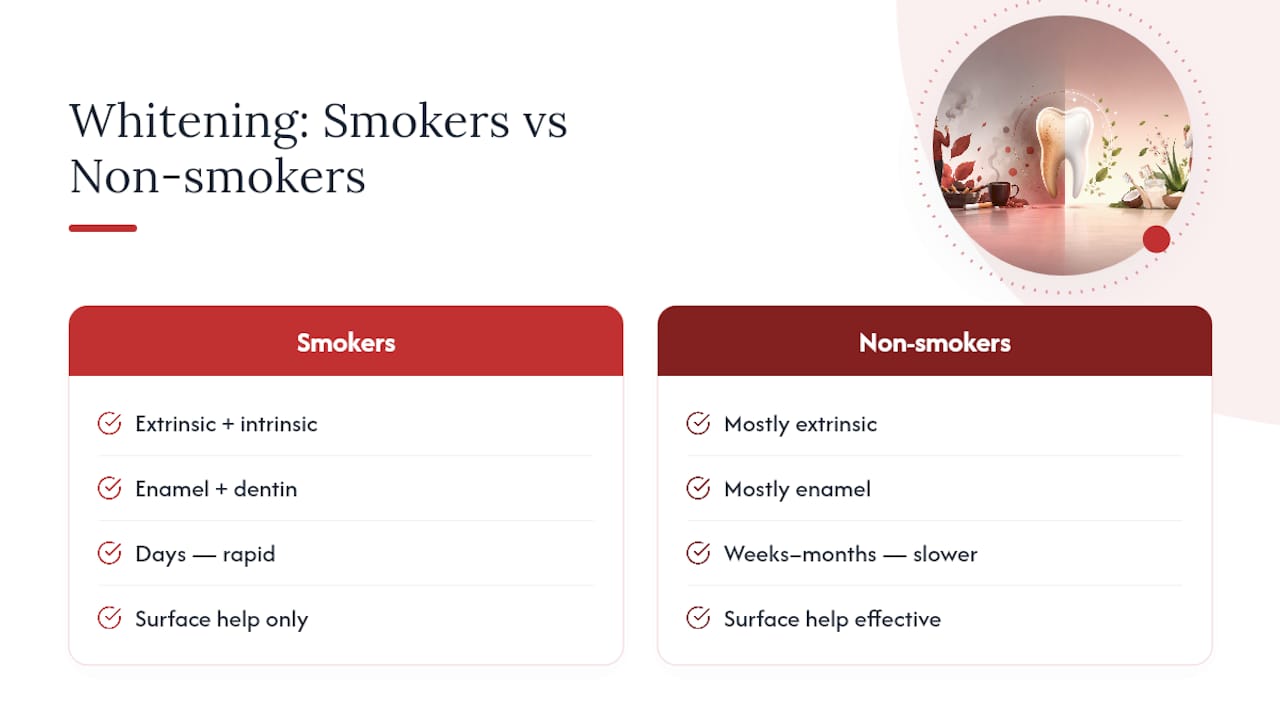
Tobacco leaves two kinds of stains. Extrinsic stains sit on the enamel surface, where tar and nicotine byproducts bind to the tooth’s pellicle layer. Intrinsic stains have worked their way into the enamel and dentin underneath, and no amount of at-home scrubbing reaches them.
Mild abrasives like baking soda work by physically polishing away surface chromogens, the pigmented compounds that give stains their color. Oil pulling loosens some of that same debris through mechanical action, though reviews of traditional oral hygiene adjuncts note it falls well short of professional bleaching for anything beyond light surface buildup. Low-dose hydrogen peroxide takes a different route: it chemically oxidizes pigment molecules rather than scrubbing them off.
None of this holds up against continued smoking. Tar and nicotine redeposit within days, and clinical research on staining recurrence confirms smokers re-stain noticeably faster than non-smokers, which is why maintenance matters more than any single whitening session.
Effective At-Home Whitening Methods for Smokers
These five methods carry the best evidence for smokers who want safer, more effective results without professional treatment. Try them in this order, and stop the moment your teeth feel sensitive or rough.
-
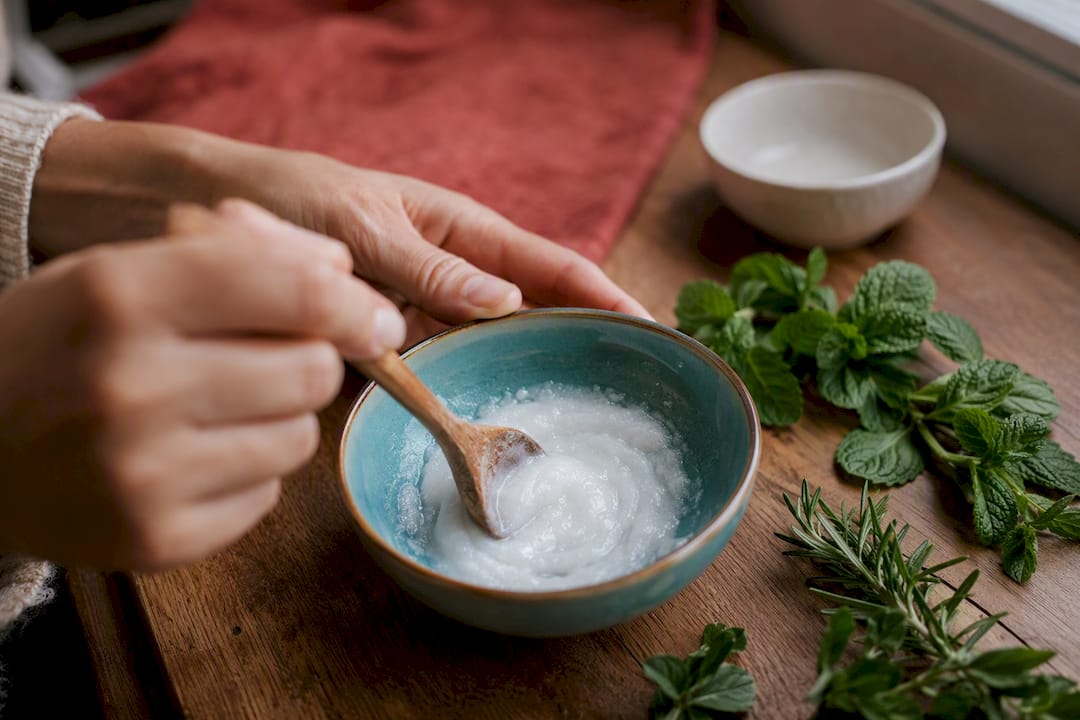
Baking soda, used sparingly. Mix a small amount of baking soda with a few drops of water into a paste, and brush gently for a short time several times a week. Clinical reviews note that conservative, low-frequency use can polish surface stains without meaningful enamel loss, but daily use crosses into abrasion territory fast. If you want a gentler option, a commercial low-abrasion whitening toothpaste does the same job with less guesswork.
-
ADA-accepted whitening toothpaste. Look for the ADA Seal of Acceptance and an active ingredient like low-concentration peroxide or a gentle silica polish. Expect gradual lightening of surface stains over several weeks of twice-daily brushing, not an overnight change.
-
Oil pulling. Swish one tablespoon of coconut or sesame oil for 10 to 15 minutes, then spit it out (never swallow) and rinse with water. Do this once daily, ideally before your morning brush. It helps loosen surface debris and may support gum health, but treat it as a supplement to brushing, not a replacement.
-
Low-concentration hydrogen peroxide rinse. Dilute a 1.5% to 3% solution with equal parts water, swish for 30 seconds, and rinse thoroughly with plain water afterward. PubChem’s safety data makes clear that concentration and contact time are the variables that matter. Limit this to two or three times a week and never use it undiluted.
-
Activated charcoal. This one earns a place on the list only as a caution. The grit that supposedly “pulls” stains is the same grit that wears down enamel, and research on whitening mechanisms and abrasive risk links frequent charcoal use to long-term enamel thinning. If you try it at all, limit it to once a week, and consider skipping it in favor of the safer natural whitening workflow outlined by Stop-oralcare instead.
Pro Tip: Rinse with plain water within a few minutes of your last cigarette. It won’t undo the stain, but it keeps fresh tar and nicotine from bonding to your enamel while it’s still soft from the heat and smoke.
Stop any method immediately if you notice sharp sensitivity to hot or cold, a rough or pitted feel on the tooth surface, or shading that looks uneven rather than uniformly lighter. Those are signs of erosion, not progress.
Safety Risks You Should Know Before Trying Home Remedies
The biggest mistake smokers make chasing a brighter smile at home is reaching for something acidic. Lemon juice and apple cider vinegar are popular DIY suggestions, but dietary acid research shows they’re highly erosive to enamel while offering almost no real whitening benefit. Once enamel erodes, it does not grow back.
Frequent abrasive use carries its own long-term cost. Baking soda or charcoal used daily can thin enamel over months, and thinner enamel actually looks more yellow, since it exposes the darker dentin layer underneath. The American Dental Association is direct about this: many DIY whitening methods can damage the tooth surface, and professional cleanings plus ADA-accepted products are the safer starting point.
Watch for these red flags and stop immediately if you notice any of them:
- Sharp or lingering sensitivity to hot, cold, or sweet foods
- A rough, chalky, or pitted feel when you run your tongue over your teeth
- Gum irritation, bleeding, or a burning sensation after using a remedy
- Uneven shading, where some teeth lighten and others don’t
A clinical review on whitening and sensitivity also flags that anyone with existing gum disease or already-sensitive teeth should get a dental exam before trying any whitening approach, natural or otherwise.
Preventing New Stains and Maintaining Your Results
Whitening is the easy part. Keeping stains off afterward is where most people fall short, especially smokers whose tar exposure never really stops.
- Build a consistent daily routine. Brush twice a day for two full minutes, floss once daily to clear stain-trapping plaque between teeth, clean your tongue, and finish with an antimicrobial rinse.
- Get a professional cleaning before whitening anything. A dentist’s scaling and polishing removes hardened tartar and tar deposits no home method can touch, so any whitening you do afterward actually has a clean surface to work on.
- Rinse with water right after smoking. This single habit slows how fast tar and nicotine bond to enamel between brushings.
- Use a straw for coffee, tea, and dark sodas, and cut back on foods that stain (berries, red wine, soy sauce) if you’re actively trying to keep results.
- Choose a toothpaste and mouthwash built for sensitive mouths. Fluoride-free, hemp-based formulas with Dead Sea minerals tend to support gum tissue and reduce inflammation without the abrasiveness that makes smokers’ teeth more sensitive over time. Pair that with steps from a full gum health routine if your gums show any irritation.
If baking soda’s grit bothers your gums, a fragrance-free, low-abrasion alternative used in other sensitive-skin formulations illustrates the same principle dentists apply to teeth: less friction, less long-term damage.
Why This Guidance Is Reliable
This advice reflects the safety-first approach championed by Dr. Veronica Stahl, the dentist and natural medicine researcher behind Stop-oralcare’s product formulations. Her clinical background shapes a simple standard: recommend nothing that trades short-term brightness for long-term enamel damage.
The guidance above draws on:
- ADA guidance on the risks of DIY whitening and the value of professional cleanings first
- Open-access peer-reviewed reviews on whitening mechanisms and abrasion risk
- Evidence on natural whitening ingredients and safety, including how hemp and mineral-based formulas fit a conservative routine
Natural methods have real but limited reach against deep tobacco stains. If your discoloration doesn’t budge after a few weeks of consistent, careful home care, that’s a signal to get a professional assessment, not to reach for something more aggressive.
What I’d Actually Tell a Smoker Trying to Whiten Naturally
Get the professional cleaning first. It’s the step people skip because it costs money and doesn’t feel like “doing it yourself,” but it’s the one that makes every home method afterward actually work. Then keep your expectations honest: a shade or two lighter over several weeks is a win, not a failure. If deep stains persist after a proper cleaning and a few months of consistent care, that’s your cue to book professional whitening rather than escalate the DIY approach.
— Veronica
A Smarter Maintenance Routine After Whitening
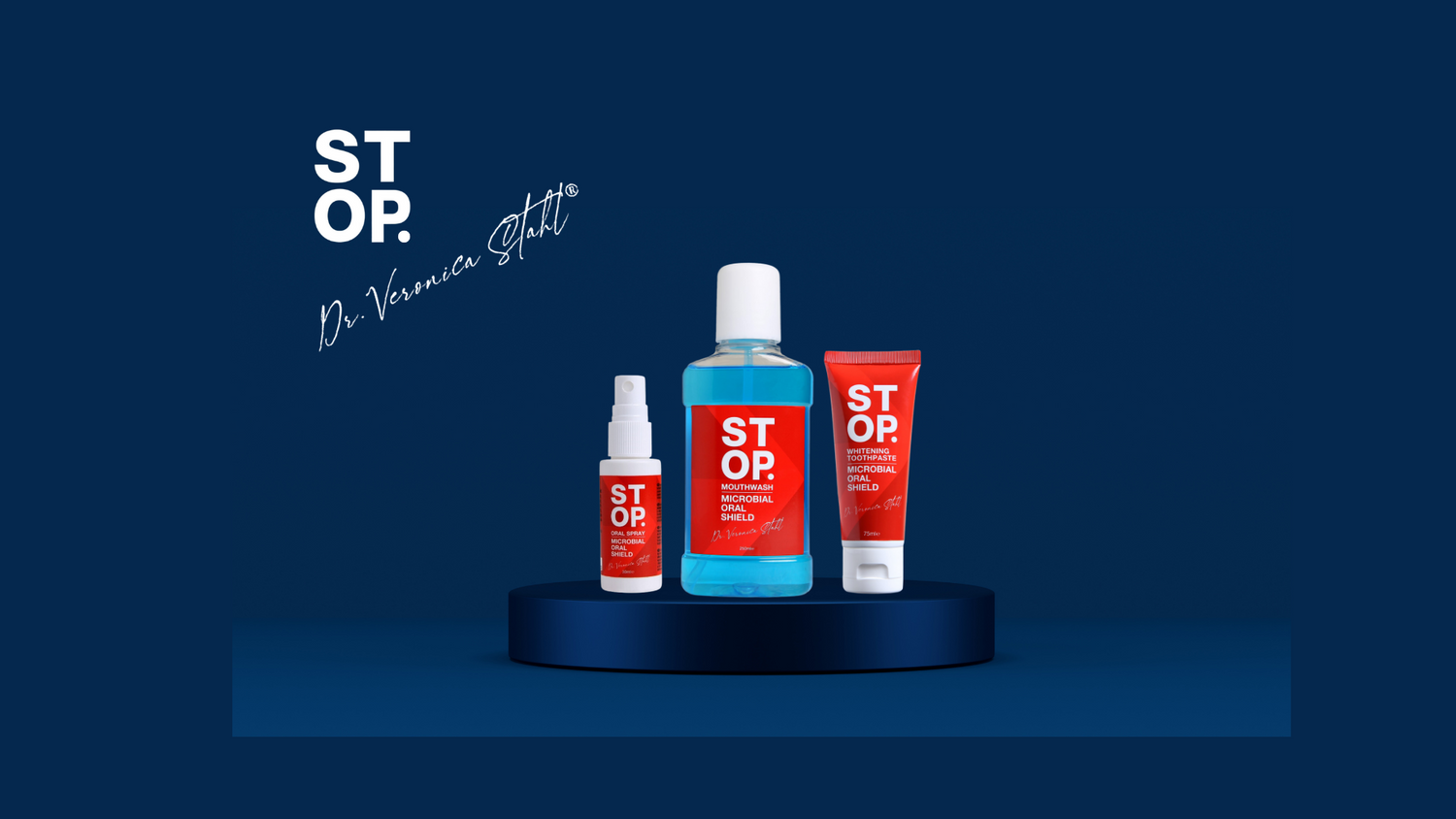
Once you’ve done the harder work of a professional cleaning and dialed in a conservative at-home routine, the daily products you use matter more than any single whitening trick. Stop-oralcare’s fluoride-free toothpaste, mouthwash, and oral spray are formulated with hemp and Dead Sea minerals specifically for people managing sensitivity, inflammation, and plaque buildup, the exact combination smokers deal with most.
Use the toothpaste for your twice-daily brush, the mouthwash after meals or smoking to cut down on redeposit, and the oral spray between brushings when you need a quick refresh without reaching for anything abrasive. The mineral and cannabinoid profile is built to support enamel and gum tissue rather than strip away at it, which fits the maintenance role dentists actually recommend after cleaning and whitening. If you’re ready to build that routine, explore the full product line at Stop-oralcare and find the combination that fits your daily habits.
Sources
For deeper reading, the ADA’s natural teeth whitening guidance covers safety basics, while PubMed’s staining research documents why smokers re-stain faster, and PubChem’s hydrogen peroxide profile explains the chemistry behind safe concentration limits.
This article is general information, not a substitute for advice from a qualified doctor. Consult a qualified healthcare professional about your own circumstances before acting on anything here.
- PMC article on tooth whitening mechanisms and safety
- PMC review on traditional oral hygiene adjuncts (oil pulling etc.)
- Hydrogen peroxide — PubChem
- PubMed study on staining and smoking