
TL;DR:
- Cruelty-free oral care products are developed without animal testing throughout the entire supply chain. Certifications like Leaping Bunny verify compliance through supplier audits, ensuring genuine cruelty-free claims. Combining cruelty-free and vegan certifications offers the most ethical assurance for consumers.
Cruelty-free oral care is defined as any dental product developed without animal testing at any point in its formulation or supply chain. This standard goes beyond the brand itself. PETA defines cruelty-free as a global position that prohibits animal testing by the brand, its ingredient suppliers, and any third parties acting on its behalf. Certifications like Leaping Bunny make this commitment verifiable rather than self-declared. For consumers who prioritize ethical dental products and sustainable dental hygiene choices, understanding why choose cruelty-free oral care is the first step toward purchasing with confidence.
Why choose cruelty-free oral care certifications?
Not all cruelty-free claims carry equal weight. A brand can print “not tested on animals” on its packaging without any independent verification. Certifications close that gap by requiring documented proof.
Leaping Bunny certification is the most rigorous standard available. It requires brands and every ingredient supplier in their chain to sign formal no-animal-testing pledges and submit to on-site audits. That supplier-level requirement is what separates Leaping Bunny from most self-declared claims. A brand can avoid testing its finished product while its raw material suppliers still conduct animal tests. Leaping Bunny closes that loophole.
Legal frameworks add another layer of context. EU Regulation 32009R1223 ties “no animal testing” claims to compliance across both manufacturers and ingredient suppliers, including prototypes and individual ingredients. This means a brand operating under EU cosmetic law cannot make that claim unless its entire supply chain meets the standard. Consumers outside the EU, however, face no equivalent legal protection.
The absence of a single global legal standard for “cruelty-free” means the term remains unregulated in many markets. Brands in those markets can use the phrase freely without meeting any defined criteria.
- Leaping Bunny: Requires supplier audits, annual monitoring, and formal pledges from all supply chain partners.
- PETA’s Beauty Without Bunnies: Lists over 6,300 companies that prohibit animal testing globally, though it relies on brand self-certification rather than independent audits.
- EU Cosmetic Regulation: Legally enforces no-animal-testing claims within the European Union across manufacturers and suppliers.
- Unverified brand claims: Labels like “cruelty-free” or “not tested on animals” with no certification body named carry no enforceable standard.
Pro Tip: When evaluating any ethical dental product, look for the Leaping Bunny logo specifically. It is the only certification that requires annual supplier monitoring and independent audits, making it the most reliable signal of genuine cruelty-free compliance.
Cruelty-free vs. vegan oral care: what is the difference?
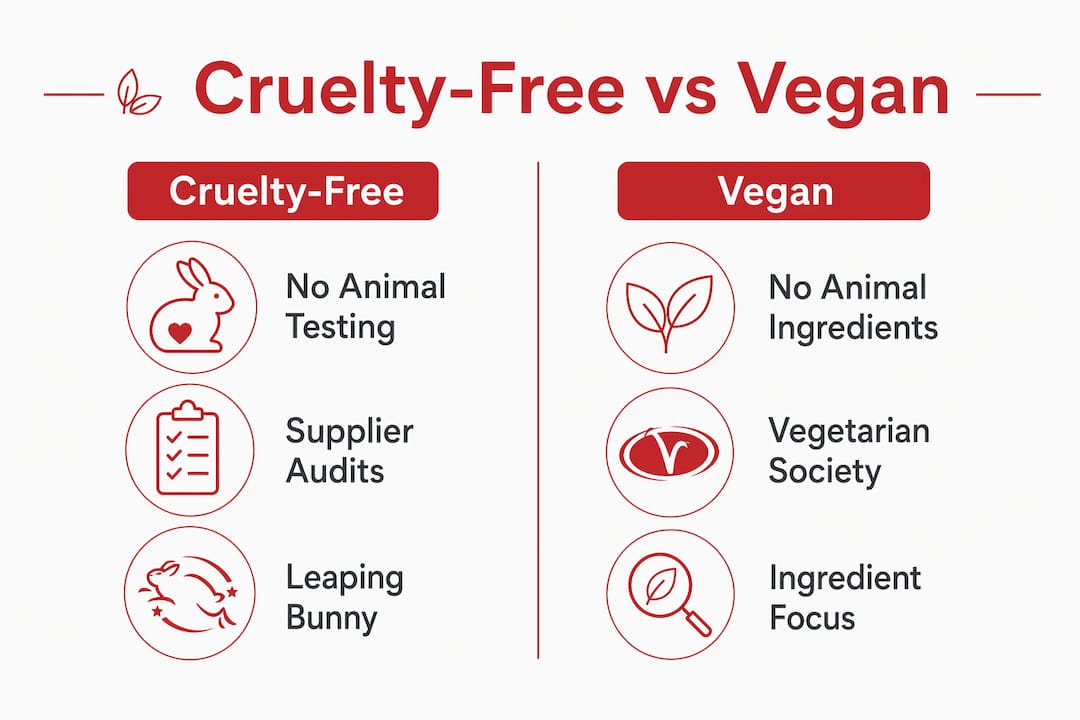
These two terms are frequently used together, but they describe different things. Confusing them leads to purchases that do not fully align with a consumer’s values.
Cruelty-free focuses on testing practices, not ingredients. A toothpaste can carry a Leaping Bunny logo and still contain beeswax, lanolin, or carmine. None of those ingredients trigger a cruelty-free violation because the standard only governs whether animals were used in safety testing. Vegan oral hygiene, by contrast, requires that no animal-derived ingredients appear at any stage of production. A product can be vegan and still have been tested on animals before receiving that label.
The Vegetarian Society trademark is one of the most recognized vegan certification marks for personal care products. It verifies that no animal-derived ingredients are present and that no animal testing occurred during development. For consumers who want both assurances, looking for products that carry both Leaping Bunny and a recognized vegan certification is the most reliable approach.
| Label | What it covers | What it does not cover |
|---|---|---|
| Cruelty-free | No animal testing at any supply chain stage | May still contain animal-derived ingredients |
| Vegan | No animal-derived ingredients in production | Does not guarantee no animal testing |
| Both certified | No animal testing and no animal-derived ingredients | Requires verification of both certifications |
Pro Tip: Check the vegan mouthwash benefits guide from Stop-oralcare to understand how vegan formulations differ from conventional options in both ingredient sourcing and ethical positioning.
What are the benefits of cruelty-free oral care beyond ethics?
The ethical case for cruelty-free products is clear. The practical benefits are equally compelling and often overlooked.
Cleaner formulas. Cruelty-free brands, particularly those also pursuing vegan oral hygiene standards, tend to avoid synthetic compounds that require animal-based safety testing. This often results in formulas with fewer harsh preservatives and artificial dyes. Consumers seeking natural oral care ingredients frequently find that cruelty-free products align with their preference for gentler formulations.
Support for non-animal testing science. Regulatory bodies now accept over 40 validated non-animal testing methods for cosmetics safety assessment. Choosing cruelty-free products funds brands that use these methods, accelerating their adoption across the industry. Animal testing is not scientifically necessary for oral care product safety.
Market influence. Consumer demand drives corporate behavior and supports legislative efforts to replace animal testing with humane alternatives. Every purchase of a certified cruelty-free product signals to manufacturers that ethical formulation is commercially viable.
- Cruelty-free formulas often contain fewer synthetic additives, reducing potential irritant exposure.
- Supporting certified brands accelerates investment in validated non-animal testing technologies.
- Purchasing decisions collectively shift industry norms and influence regulatory reform.
- Cruelty-free oral care aligns naturally with broader sustainable oral care practices, including reduced environmental impact from production.
How to identify trustworthy cruelty-free oral care products
Verification requires more than reading a label. The following steps give consumers a reliable framework for evaluating any cruelty-free mouthwash option, toothpaste, or oral spray.
-
Look for recognized certification logos. The Leaping Bunny logo is the most stringent third-party verification available. PETA’s cruelty-free bunny logo indicates brand self-certification with PETA oversight. Both are more reliable than uncertified packaging claims.
-
Check supplier-level monitoring. Leaping Bunny enforces back-to-supplier monitoring to prevent loopholes where ingredient suppliers conduct animal tests that the finished-product brand does not. Ask directly whether a brand’s certification covers its ingredient suppliers.
-
Consult PETA’s cruelty-free company list. PETA maintains a publicly searchable database of companies that have committed to no animal testing globally. This list is updated regularly and covers oral care brands specifically.
-
Verify market entry policies. Some brands avoid testing themselves but allow animal testing to satisfy regulations in markets that require it, such as certain product categories in China. A genuinely cruelty-free brand will not sell in markets that mandate animal testing unless those requirements have been waived.
-
Combine cruelty-free and vegan labels if both matter. The Vegetarian Society clarifies that cruelty-free and vegan are distinct standards. Consumers who want both assurances should look for products carrying certifications from two separate bodies, one for testing and one for ingredients.
-
Review the brand’s published supply chain policy. Transparent brands publish their supplier standards publicly. A brand that cannot or will not disclose its supplier testing policy is a signal worth noting.
Key Takeaways
Cruelty-free oral care requires verified supplier-level compliance, not just a brand-level claim, and combining cruelty-free and vegan certifications delivers the most complete ethical assurance available.
| Point | Details |
|---|---|
| Certification over claims | Leaping Bunny requires supplier audits; uncertified labels carry no enforceable standard. |
| Cruelty-free is not vegan | Cruelty-free covers testing only; vegan covers ingredients. Verify both if both matter. |
| Non-animal testing is viable | Over 40 validated non-animal methods exist, making animal testing scientifically unnecessary. |
| Market entry policies matter | Brands selling in markets that mandate animal testing cannot hold genuine cruelty-free status. |
| Consumer choice drives change | Purchasing certified products funds non-animal testing innovation and supports legislative reform. |
The supplier gap no one talks about
Most conversations about cruelty-free oral care stop at the brand level. That is the wrong place to stop. In my work with natural dentistry and product formulation, the most common gap I see is not in finished-product testing. It is in ingredient sourcing.
A brand can truthfully say it does not test its toothpaste on animals. What it often cannot say, without Leaping Bunny certification, is that none of its ingredient suppliers do either. That distinction matters enormously. Glycerin, certain mineral compounds, and flavoring agents all pass through supplier chains before they reach a finished formula. Without supplier-level audits, the cruelty-free claim is incomplete.
The consumer market is moving in the right direction. Demand for certified ethical dental products has grown steadily, and brands are responding. But the fastest way to accelerate that shift is to ask harder questions before purchasing. Check the certification body. Check the supplier policy. Check the market entry list. Efficacy and ethics are not in conflict. The science of lab-tested oral care shows that non-animal methods produce equally reliable safety data. The only thing animal testing still offers is regulatory inertia in a shrinking number of markets.
— Veronica
Ethical oral care products at Stop-oralcare
Stop-oralcare formulates its oral care line without animal testing, using hemp-derived compounds and Dead Sea minerals as active ingredients. The product range includes fluoride-free toothpaste, mouthwash, and oral sprays developed under the scientific direction of Dr. Veronica Stahl.
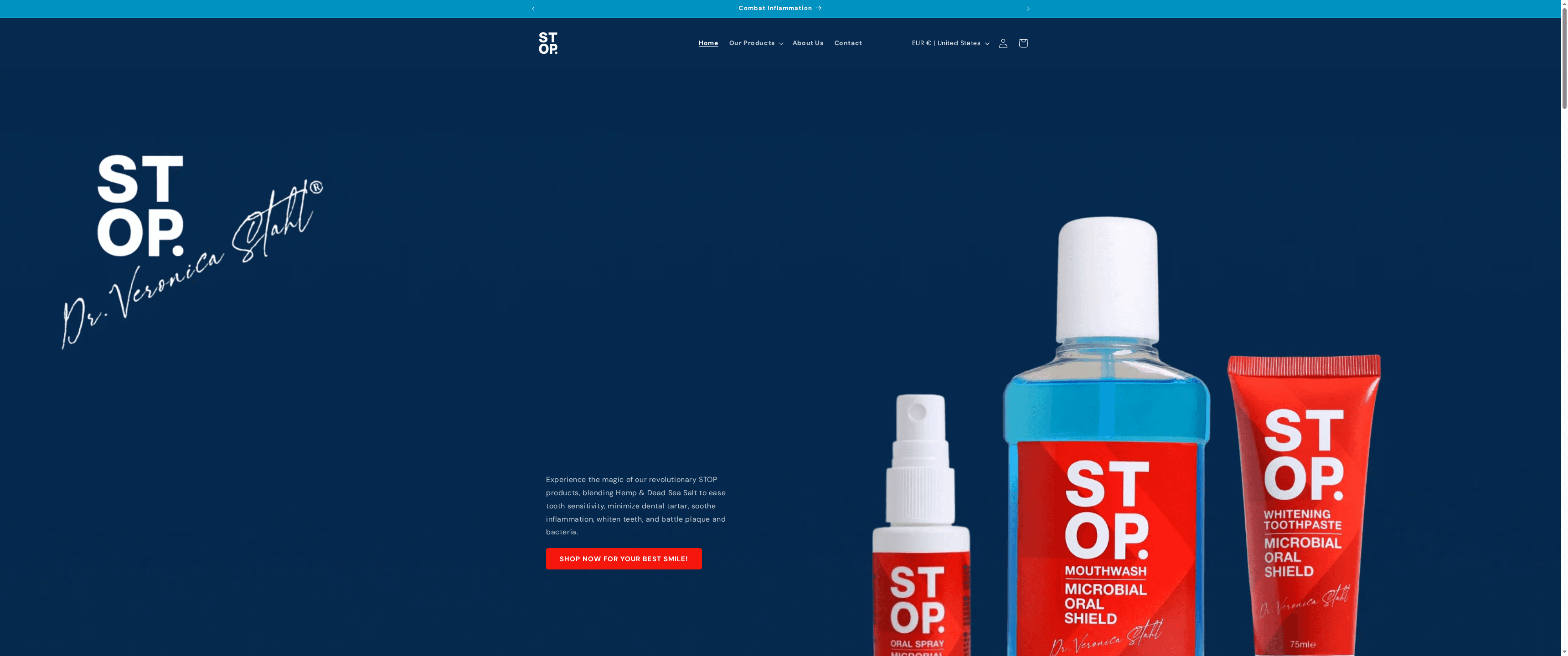
For consumers who want to align their dental hygiene routine with verified ethical standards, Stop-oralcare offers a transparent formulation approach backed by published research. Each product is designed to meet the expectations of consumers who prioritize both efficacy and ethical sourcing. Visit Stop-oralcare’s full product range to review ingredient lists, formulation standards, and available certifications before making a purchase decision.
FAQ
What does cruelty-free mean in oral care?
Cruelty-free oral care means the product was developed without animal testing at any stage, including by ingredient suppliers. PETA defines this as a global no-testing position covering the entire supply chain.
Is cruelty-free the same as vegan oral hygiene?
No. Cruelty-free refers to testing practices only, while vegan means no animal-derived ingredients are used. A product can be one without being the other.
Which certification is most reliable for cruelty-free toothpaste?
Leaping Bunny is the most stringent certification because it requires annual supplier audits and formal pledges from all supply chain partners, not just the finished-product brand.
Can a cruelty-free brand still sell in markets that require animal testing?
No. A brand that allows animal testing to satisfy legal requirements in any market, such as certain product categories in China, does not meet the standard for genuine cruelty-free status.
Are cruelty-free oral care products as effective as conventional ones?
Yes. Regulatory bodies accept over 40 validated non-animal testing methods for cosmetics safety, confirming that cruelty-free formulation does not compromise product safety or efficacy.