

TL;DR:
- Vegan mouthwashes avoid animal-derived ingredients and testing, offering an ethical choice for oral care. Their clinical efficacy is supported by plant-based antimicrobials like tea tree oil and nano-hydroxyapatite, which effectively target plaque, gingivitis, and halitosis. Careful ingredient verification and third-party certification ensure genuine vegan formulations aligned with health and ethical priorities.
Most people select mouthwash based on flavor or packaging, operating under the assumption that all formulas deliver equivalent outcomes. That assumption is increasingly difficult to sustain. The active ingredients, animal-derived components, and formulation choices within a mouthwash determine not only its clinical efficacy but also its alignment with the ethical priorities of a growing segment of health-conscious consumers. Vegan mouthwashes, formulated without animal byproducts and produced without animal testing, represent a distinct and scientifically supported category of oral care products. This article examines the defining characteristics, clinical evidence, and practical applications of vegan mouthwash for individuals committed to both oral health and ethical consumption.
Table of Contents
- What makes a mouthwash vegan?
- How vegan mouthwash supports oral health
- Vegan mouthwash vs. conventional formulas: What’s different?
- When and why vegan mouthwash is the better choice
- The real secret: Ingredients matter more than labels
- Choose your best path to safer, ethical oral care
- Frequently asked questions
Key Takeaways
| Point | Details |
|---|---|
| Vegan mouthwash defined | A vegan mouthwash avoids both animal ingredients and animal testing and is formulated with plant-based or mineral actives. |
| Evidence-backed benefits | Clinical studies show some vegan mouthwashes can control plaque and gingivitis as effectively as conventional options depending on the active ingredients. |
| Compare actives, not just labels | Oral health results are driven more by the formula’s ingredients than its vegan status alone. |
| Best fit for your needs | Vegan mouthwash is ideal for those avoiding animal products, concerned with ethics, or needing gentler, alcohol-free care. |
| Check certifications | Always look for third-party vegan/certified symbols to be sure a product meets strict standards. |
What makes a mouthwash vegan?
A vegan mouthwash is defined by two primary criteria: the complete absence of animal-derived ingredients and the exclusion of animal testing at any stage of product development or manufacture. Vegan and plant-based mouthwashes rely on plant-derived and synthetic ingredients rather than animal products or byproducts, as confirmed by oral care researchers evaluating formulation standards across the category.
Several ingredients commonly found in conventional mouthwashes disqualify them from vegan certification. Consumers seeking truly vegan products should scrutinize labels for the following components:
- Glycerin derived from animal fat: While glycerin can be synthesized from plant oils, many commercial formulas use animal tallow as the source material.
- Cochineal or carmine dyes: These red colorants originate from crushed insects and are occasionally present in flavored or colored mouthwash products.
- Casein or whey derivatives: Milk proteins sometimes appear in whitening rinse formulations.
- Honey or propolis: Bee-derived compounds used in some natural mouthwashes do not qualify under strict vegan definitions.
- Certain flavorings: Some synthetic and natural flavor compounds are tested on animals during safety evaluation, complicating certification even when the compound itself contains no animal material.
The vegan certification landscape introduces an important distinction between marketing language and verified status. A product labeled “natural” carries no standardized definition in most regulatory jurisdictions, whereas a certified vegan designation from a recognized third-party body, such as Vegan Action or The Vegan Society, requires documented ingredient verification and manufacturing audits. Consumers seeking vegan toothpaste benefits and consistent formulation standards across their entire oral care routine benefit from understanding this distinction.
Pro Tip: When evaluating any mouthwash for vegan compliance, cross-reference the ingredient list with a current database of animal-derived additives and confirm the presence of a recognized third-party vegan certification mark. The label claim “cruelty-free” does not automatically mean vegan, as it may refer only to testing practices without addressing ingredient sourcing.
How vegan mouthwash supports oral health
Clinical evidence for vegan mouthwash efficacy centers on the specific active ingredients employed, rather than the vegan classification itself. Essential oils, plant-derived antimicrobials, and mineral compounds each demonstrate distinct mechanisms of action against the oral pathogens responsible for plaque biofilm accumulation, gingivitis, and halitosis (clinically significant bad breath).
A particularly well-documented example involves tea tree oil, derived from Melaleuca alternifolia. A controlled clinical study found that 0.2% tea tree oil mouthwash demonstrated biofilm and gingivitis control comparable to 0.2% chlorhexidine over a 28-day evaluation period. Chlorhexidine is widely regarded as the gold standard antimicrobial agent in conventional mouthwash formulations, which makes this finding scientifically meaningful. The antimicrobial mechanism of tea tree oil operates through disruption of bacterial cell membrane integrity, reducing viable colony counts of key periodontal pathogens including Streptococcus mutans and Porphyromonas gingivalis.
“The effectiveness of a mouthwash depends more on the active ingredients than simply its vegan status.”
Beyond essential oils, several additional vegan-compatible active ingredients demonstrate measurable clinical utility:
- Nano-hydroxyapatite: A synthetic mineral that mirrors the calcium phosphate composition of natural tooth enamel. It functions as a fluoride alternative for remineralization (the process of restoring mineral density to enamel) and has demonstrated comparable cavity prevention efficacy in multiple independent trials.
- Oxygenating compounds: Sodium chlorite and similar agents create an oxygen-rich oral environment that disrupts anaerobic bacteria responsible for volatile sulfur compounds, the primary chemical contributors to halitosis.
- Aloe vera extract: Demonstrates anti-inflammatory activity at the gingival tissue level and has shown measurable reductions in plaque index scores in clinical settings.
- Xylitol: A plant-derived sugar alcohol that inhibits S. mutans adhesion to tooth surfaces and reduces cariogenic (cavity-causing) bacterial populations.
The table below summarizes clinical targets and the vegan-compatible active ingredients most strongly supported by published evidence.
| Oral health target | Vegan-compatible active | Mechanism of action | Evidence level |
|---|---|---|---|
| Cavity prevention | Nano-hydroxyapatite, xylitol | Remineralization, bacterial adhesion inhibition | Moderate to strong |
| Plaque/biofilm control | Tea tree oil, essential oil blends | Cell membrane disruption | Moderate (28-day trials) |
| Gingivitis reduction | Tea tree oil, aloe vera | Anti-inflammatory, antimicrobial | Moderate |
| Halitosis control | Sodium chlorite, zinc compounds | Oxidation of volatile sulfur compounds | Strong |
| Gum tissue support | Aloe vera, Dead Sea minerals | Anti-inflammatory, mineral support | Emerging |
Readers seeking detailed clinical context for natural mouthwash for gum disease or evaluating the best natural gum health options will find that ingredient scrutiny remains the most reliable guide. Vegan mouthwash benefits vary substantially across formulations, reinforcing the importance of reading beyond the label. Practical guidance on plaque removal technique further supports the clinical outcomes achievable with well-formulated vegan products.
Vegan mouthwash vs. conventional formulas: What’s different?
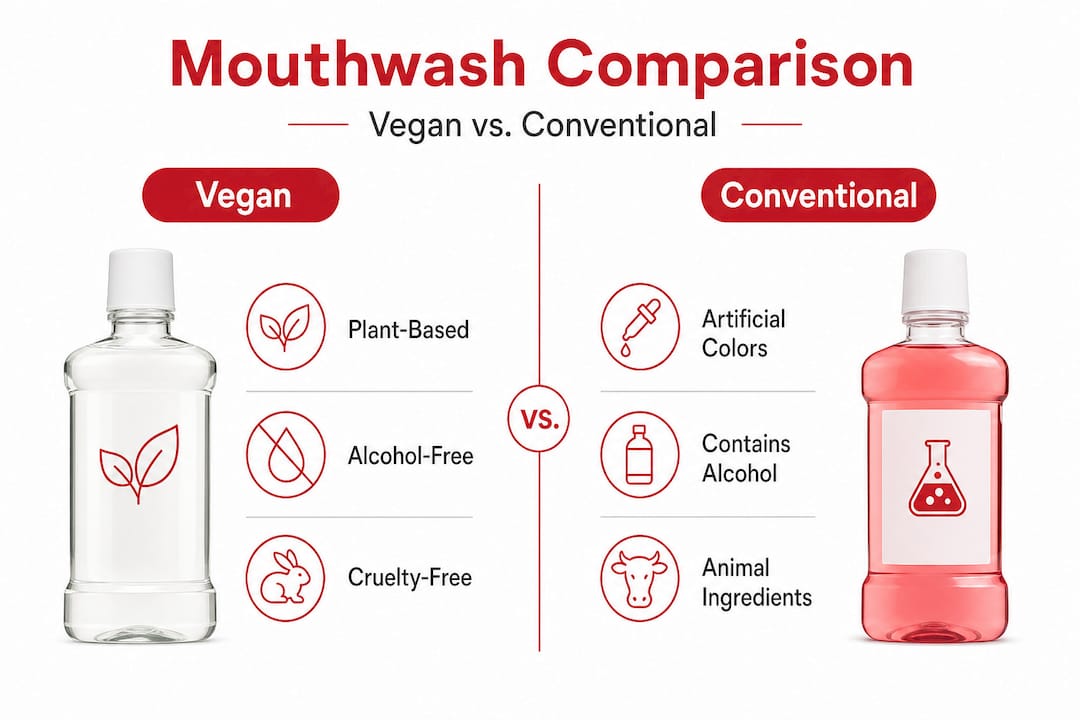
The major differences between conventional and vegan mouthwash stem from ingredient choices, alcohol content, and peroxide or synthetic flavoring decisions that reflect distinct formulation priorities. Understanding these differences allows consumers to make selections based on clinical need rather than generalized assumptions.
The comparison table below outlines the primary distinctions between vegan and conventional mouthwash categories across several relevant parameters.
| Parameter | Vegan mouthwash | Conventional mouthwash |
|---|---|---|
| Antimicrobial agent | Essential oils, plant extracts, zinc | Chlorhexidine, cetylpyridinium chloride |
| Alcohol content | Typically alcohol-free | Often contains ethanol (alcohol) |
| Remineralization | Nano-hydroxyapatite, mineral salts | Sodium fluoride, stannous fluoride |
| Colorants/dyes | Plant-derived or none | Synthetic, occasionally animal-derived |
| Animal testing | Excluded | May be required by some regulators |
| Sensitivity profile | Generally lower irritation | Higher irritation potential with alcohol |
| Clinical validation | Growing, formulation-dependent | Extensive, decades of data |
The absence of alcohol deserves particular attention from a clinical standpoint. Ethanol, the alcohol commonly found in conventional mouthwashes, acts as a solvent for active ingredients and carries antimicrobial properties at sufficient concentrations. However, it also desiccates (dries out) oral mucosal tissue, alters the salivary microbiome, and causes discomfort for individuals with dry mouth, mucosal sensitivity, or a history of alcohol dependency. Alcohol-free formulations, which represent the majority of vegan options, avoid these adverse effects while maintaining antimicrobial function through alternative active ingredients. For a detailed analysis of mouthwash formulation safety, the formulation choices that minimize tissue irritation are especially relevant to sensitive users.
Clinical insights from published mouthwash research further support the position that formulation design, rather than product category alone, determines both safety and efficacy outcomes.
For consumers determining which type of mouthwash best aligns with their oral health priorities, the following steps provide a structured decision framework:
- Identify your primary oral health concern. Cavity prevention, plaque control, gum inflammation, and halitosis each respond to different active ingredients.
- Assess your sensitivity profile. Individuals with dry mouth, mucosal irritation, or alcohol sensitivity should prioritize alcohol-free options.
- Review certification status. Confirm third-party vegan certification if ethical criteria are a priority, separate from clinical performance considerations.
- Match active ingredients to your clinical need. Nano-hydroxyapatite for remineralization, tea tree oil or essential oil blends for antimicrobial action, oxygenating compounds for halitosis.
- Evaluate trial duration in clinical evidence. Prefer formulas supported by peer-reviewed studies of at least 28 days, as shorter evaluation periods may not capture full clinical response.
Pro Tip: Avoid interpreting “natural” as equivalent to “gentle” or “safe.” Some plant-derived ingredients carry significant allergenic or irritant potential. Scrutinize the full ingredient list for documented sensitizers such as high-concentration eugenol or cinnamaldehyde, which appear in certain essential-oil-based formulas.
When and why vegan mouthwash is the better choice
Vegan mouthwash is not universally superior to conventional options, but specific user profiles and oral health contexts exist where it represents the more appropriate clinical and ethical selection. Vegan mouthwashes serve consumers seeking effective alternatives for breath control, gum support, or ethical shopping without animal testing, and the range of qualifying individuals is broader than many assume.
The following groups derive the most consistent benefit from vegan mouthwash formulations:
- Individuals with alcohol sensitivity or dry mouth (xerostomia): Alcohol-free vegan formulas eliminate the desiccating effect of ethanol while preserving antimicrobial activity.
- Consumers committed to veganism or animal welfare ethics: Verified vegan certification ensures alignment between oral care practices and broader ethical values, with no compromise on product safety.
- Individuals seeking fluoride-free alternatives: Nano-hydroxyapatite and plant-derived mineral compounds provide remineralization support without synthetic fluoride, addressing the preferences of those concerned about fluoride accumulation.
- Those with chemical sensitivities or allergies: Vegan formulas tend to exclude artificial dyes, synthetic preservatives, and animal-derived flavor compounds that represent common allergen sources.
- Patients targeting halitosis specifically: Plant-derived oxygenating and zinc-containing vegan formulas have demonstrated clinical efficacy in volatile sulfur compound reduction, which is the measurable marker of halitosis severity.
- Environmentally conscious consumers: Vegan formulations frequently align with sustainable sourcing practices and reduced environmental impact from manufacturing, though this requires independent verification per product.
In a 28-day clinical study evaluating tea tree oil mouthwash, statistically significant reductions in both gingival bleeding scores and plaque index measurements were recorded, findings that parallel the performance of chlorhexidine without the characteristic staining and taste disruption associated with that conventional agent. This trial duration is clinically meaningful and supports the use of plant-based formulas for short-to-medium-term gingival management.
For consumers managing halitosis and seeking toothpaste solutions that complement their mouthwash selection, the combination of oxygenating oral rinses with enzyme-active or mineral-based toothpastes represents a coherent, evidence-informed approach to breath management.
The real secret: Ingredients matter more than labels
Across the natural oral care segment, a recurring pattern emerges: consumers redirect their scrutiny from active ingredient profiles to certification marks and marketing language. Vegan status, cruelty-free claims, and natural designations each carry genuine value in specific contexts. They do not, however, constitute clinical evidence of efficacy on their own.

Clinical evidence for essential-oil mouthwashes supports some benefit for plaque control and halitosis management, but study size and duration often limit the conclusions that can be drawn. Many published trials in this area involve sample sizes below 100 participants and evaluation windows of 28 to 90 days. Longer-term, larger-scale randomized controlled trials remain an acknowledged gap in the evidence base for plant-based oral care. This does not negate the existing positive findings; it contextualizes them within the broader hierarchy of clinical evidence and underscores the importance of product-level ingredient scrutiny rather than reliance on category-level assumptions.
The practical implication for health-conscious consumers is direct: evaluate the specific active compounds in any mouthwash under consideration, verify the concentration at which those compounds are present (since sub-therapeutic concentrations of even well-studied actives will not produce clinical effects), and cross-reference the available peer-reviewed literature for the mechanisms claimed by the manufacturer. Understanding why plant-based formulations are designed as they are requires moving beyond the ingredient names to the mechanisms and concentrations that drive outcomes.
The oral care market will continue to produce an expanding range of vegan-labeled products. Some will be clinically well-supported; others will not. The consumers who consistently achieve their oral health goals are those who approach product selection with the same methodical criteria applied to any evidence-based health decision: active ingredients, mechanism, concentration, and clinical validation, in that order.
Pro Tip: When selecting a vegan mouthwash, identify your specific oral health objective first, whether plaque reduction, gum inflammation management, or halitosis control, and then identify the active ingredient shown to address that target in peer-reviewed research. Choose a product that contains that ingredient at a therapeutically relevant concentration.
Choose your best path to safer, ethical oral care
The evidence examined in this article confirms that vegan mouthwash is not merely an ethical preference but a clinically viable option for consumers who prioritize both oral health outcomes and ingredient transparency. Selecting an effective formula requires the same analytical approach applied to any evidence-based oral care product: ingredient review, mechanism verification, and alignment with personal health priorities.
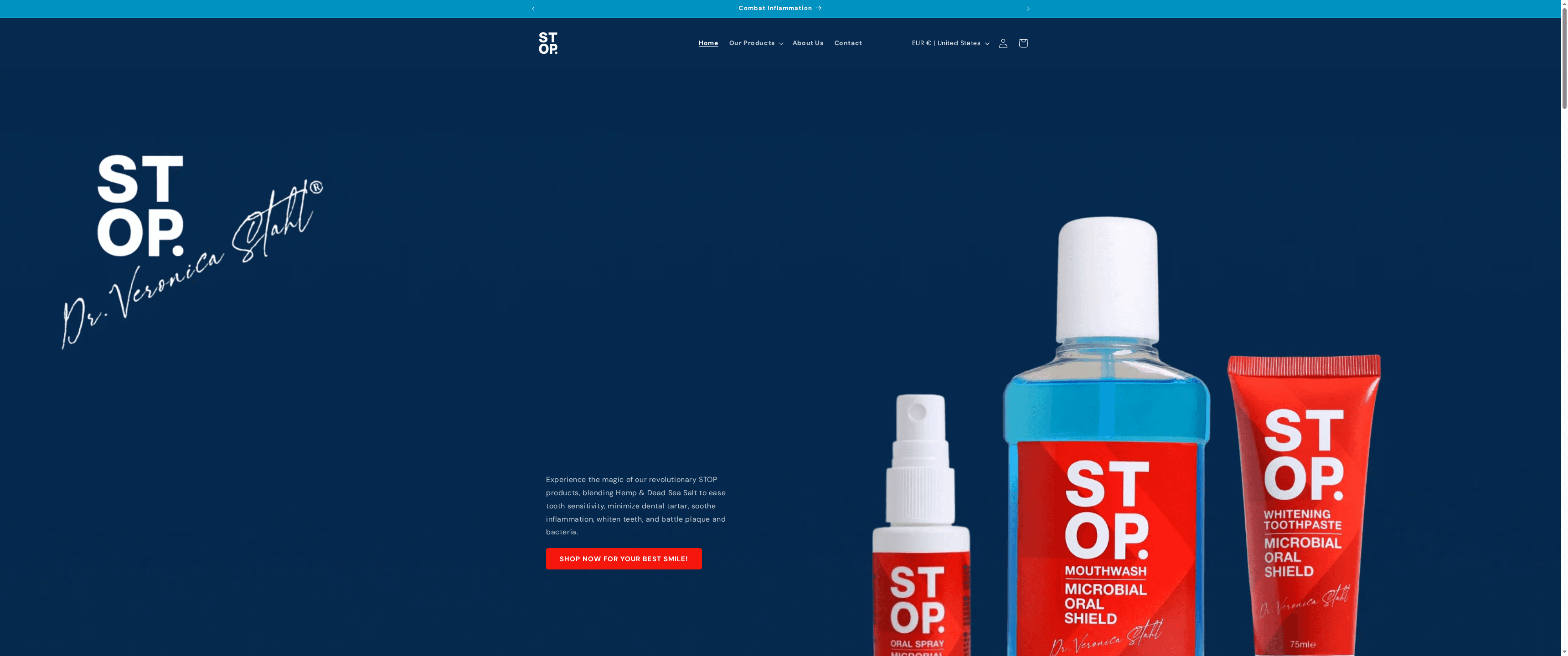
At stop-oralcare.com, the product range developed under the scientific direction of Dr. Veronica Stahl combines vegan-compliant formulations with clinically researched actives including hemp-derived compounds and Dead Sea minerals, ingredients that carry documented antimicrobial and anti-inflammatory properties. Each product is formulated without fluoride, without animal-derived components, and without the synthetic additives that compromise the tolerability profile of many conventional oral care products. Consumers seeking a verified, science-grounded starting point for vegan oral care will find a curated selection that bridges ethical commitment with evidence-based formulation.
Frequently asked questions
What ingredients should I avoid in non-vegan mouthwash?
Look for animal-derived glycerin, carmine or cochineal dyes, casein derivatives, and flavor compounds associated with animal testing, all of which disqualify a mouthwash from verified vegan status.
Is vegan mouthwash as effective as traditional mouthwash?
Effectiveness depends on the concentration and identity of active ingredients rather than vegan status alone; tea tree oil mouthwash demonstrated gingivitis control comparable to chlorhexidine in published clinical trials.
Does vegan mouthwash help with bad breath?
Yes, vegan formulas targeting halitosis frequently incorporate oxygenating compounds such as sodium chlorite, which neutralizes volatile sulfur compounds that are the primary measurable cause of clinically significant bad breath.
Can I use vegan mouthwash if I have sensitive gums?
Vegan mouthwashes are typically alcohol-free and exclude synthetic preservatives and dyes, making them a clinically appropriate option for individuals with gingival sensitivity; alcohol-free vegan formulas reduce mucosal irritation compared to ethanol-containing conventional rinses.
How do I know a mouthwash is truly vegan?
Confirm the presence of a recognized third-party vegan certification mark and independently review the ingredient list for animal-derived compounds, since product vegan claims require certification verification rather than reliance on unregulated label language alone.