

TL;DR:
- Antioxidant mouthwashes support oral tissue health by neutralizing free radicals rather than killing bacteria.
- They offer comparable plaque control to traditional antiseptics but without side effects like staining.
- Incorporating antioxidant rinses as an adjunct enhances healing and tissue protection in daily oral care.
Most people assume mouthwash works by killing bacteria with harsh antiseptic agents, and that stronger chemistry means better results. That assumption has driven decades of conventional oral care formulation. However, a growing body of clinical evidence points in a different direction, one where antioxidant-rich formulas support oral tissue health at the cellular level, reduce oxidative damage, and promote healing without the adverse effects linked to traditional antiseptic rinses. This article examines the science behind antioxidant-rich mouthwash, its clinical evidence base, how it compares to conventional alternatives, and how to incorporate it effectively into a daily oral care protocol.
Table of Contents
- What makes a mouthwash antioxidant-rich?
- How antioxidants support oral health
- Antioxidant mouthwash vs. traditional options
- Who can benefit and how to use antioxidant-rich mouthwash
- A fresh perspective: what most mouthwash guides miss
- Ready to try antioxidant-rich oral care?
- Frequently asked questions
Key Takeaways
| Point | Details |
|---|---|
| Natural antioxidant power | Antioxidant-rich mouthwash uses natural ingredients to protect gums and teeth. |
| Side-effect free | Herbal mouthwashes perform as well as traditional options but without staining or taste alteration. |
| Promotes healing | Antioxidants neutralize harmful molecules and support oral healing and a healthy microbiome. |
| Best for health-conscious users | Fluoride-free solutions ideal for those seeking innovative, natural oral care. |
What makes a mouthwash antioxidant-rich?
The term “antioxidant-rich mouthwash” refers to a specific class of oral rinse designed to do more than suppress microbial populations. Antioxidant-rich mouthwash is an oral rinse formulated with antioxidants such as green tea catechins, vitamin C, coenzyme Q10, sodium hyaluronate, and herbal extracts like tea tree oil, aloe vera, and myrrh. These compounds work by neutralizing free radicals in oral tissues, supporting cellular repair mechanisms, and modulating the local immune environment rather than relying exclusively on broad-spectrum antimicrobial activity.
Understanding the distinction between antioxidant formulas and traditional antiseptic mouthwashes requires a closer look at ingredient categories. The following table provides an overview of common antioxidant ingredients found in these formulas and their primary functions.
| Ingredient | Primary function | Source type |
|---|---|---|
| Green tea catechins | Free radical scavenging, antimicrobial | Botanical extract |
| Coenzyme Q10 (CoQ10) | Cellular energy support, antioxidant | Natural compound |
| Vitamin C (ascorbic acid) | Collagen synthesis, oxidative stress reduction | Nutrient |
| Sodium hyaluronate | Tissue hydration, healing support | Biopolymer |
| Tea tree oil | Antimicrobial, anti-inflammatory | Essential oil |
| Aloe vera | Soothing, anti-inflammatory | Botanical extract |
| Myrrh | Antimicrobial, antioxidant | Herbal resin |
These natural oral ingredients offer a fundamentally different mode of action compared to chlorhexidine gluconate or alcohol-based rinses, which function primarily through direct cytotoxicity against microbial cells. Traditional formulas are effective at reducing bacterial counts but do not address the oxidative damage occurring simultaneously in gum tissue.
Key characteristics that define an antioxidant-rich oral rinse include:
- Absence of alcohol and synthetic preservatives, which can dry oral mucosa and disrupt the natural microbiome
- Presence of polyphenolic compounds, such as catechins or ellagic acid, with documented free radical scavenging capacity
- Inclusion of bioactive molecules that support connective tissue and mucosal integrity
- pH-balanced formulation compatible with the oral environment
- Compatibility with fluoride-free protocols, making these rinses suitable for consumers avoiding synthetic additives
The use of herbal extracts in mouthwash formulas is not a recent phenomenon, but the systematic combination of multiple antioxidant actives into clinically validated oral rinses represents a significant formulation advance. With the basics established, let’s explore how these antioxidants actually impact oral health.
How antioxidants support oral health
The mechanism through which antioxidants benefit oral tissues is rooted in the biology of oxidative stress. Reactive oxygen species (ROS) are unstable molecular fragments generated by immune cells during infection, inflammation, and cellular metabolism. In the oral cavity, elevated ROS levels are closely associated with periodontal tissue destruction, gingival inflammation, and delayed wound healing. Antioxidants neutralize reactive oxygen species (ROS), reduce oxidative stress and inflammation, support nitrate reduction for nitric oxide production, promote healing, and modulate the oral microbiome favorably.
This multi-pathway activity is significant because it addresses the root cause of tissue damage in chronic gum conditions, not just the bacterial trigger. The oral environment is dynamic, and the continuous cycle of microbial challenge and immune response generates oxidative byproducts that harm epithelial cells and connective tissue fibers. Antioxidant molecules interrupt this cycle directly.
The specific mechanisms relevant to oral health include:
- ROS neutralization: Polyphenols and vitamins donate electrons to neutralize free radicals before they can oxidize cellular lipids, proteins, and DNA in gum tissue
- Nitric oxide support: Dietary and topical nitrate compounds in certain antioxidant rinses facilitate nitric oxide production via salivary bacterial reduction, which supports vascular tone and mucosal perfusion
- Microbiome modulation: Unlike broad-spectrum antiseptics, antioxidant actives selectively reduce pathogenic species while preserving commensal bacteria that contribute to oral health
- Collagen preservation: Antioxidants such as vitamin C are co-factors in collagen synthesis, supporting the structural integrity of periodontal ligaments and gingival connective tissue
- Mucosal healing: Sodium hyaluronate and aloe vera compounds support epithelial cell migration and tissue rehydration following minor injury or inflammatory episodes
The role of antioxidants in oral care extends beyond simple germ suppression, engaging biochemical pathways that traditional antiseptic formulas do not address.
Clinical note: Coenzyme Q10 has been identified in multiple studies as a particularly significant antioxidant in periodontal therapy due to its role in mitochondrial energy production within gingival fibroblasts, the cells responsible for maintaining the structural matrix of gum tissue. Its deficiency has been observed in patients with chronic periodontitis, lending support to its inclusion in topical oral formulas.
Pro Tip: When evaluating antioxidant mouthwash products, look specifically for CoQ10, sodium hyaluronate, and green tea extract listed in the active or functional ingredient section. These three compounds have the most consistent clinical evidence for gingival benefit.
Having looked at how antioxidants work, the next question is how well they perform compared to common alternatives.
Antioxidant mouthwash vs. traditional options
The most clinically relevant comparison is between antioxidant mouthwash and chlorhexidine gluconate (CHX), which has been the gold standard antiseptic rinse in dentistry for several decades. CHX is highly effective at reducing plaque and controlling gingivitis, but its use is associated with a well-documented profile of adverse effects that limit long-term adoption. Herbal antioxidant rinses deliver comparable anti-plaque and anti-gingivitis effects to chlorhexidine while producing no staining or taste alteration, positioning them as cost-effective alternatives for patients requiring ongoing gingival support.
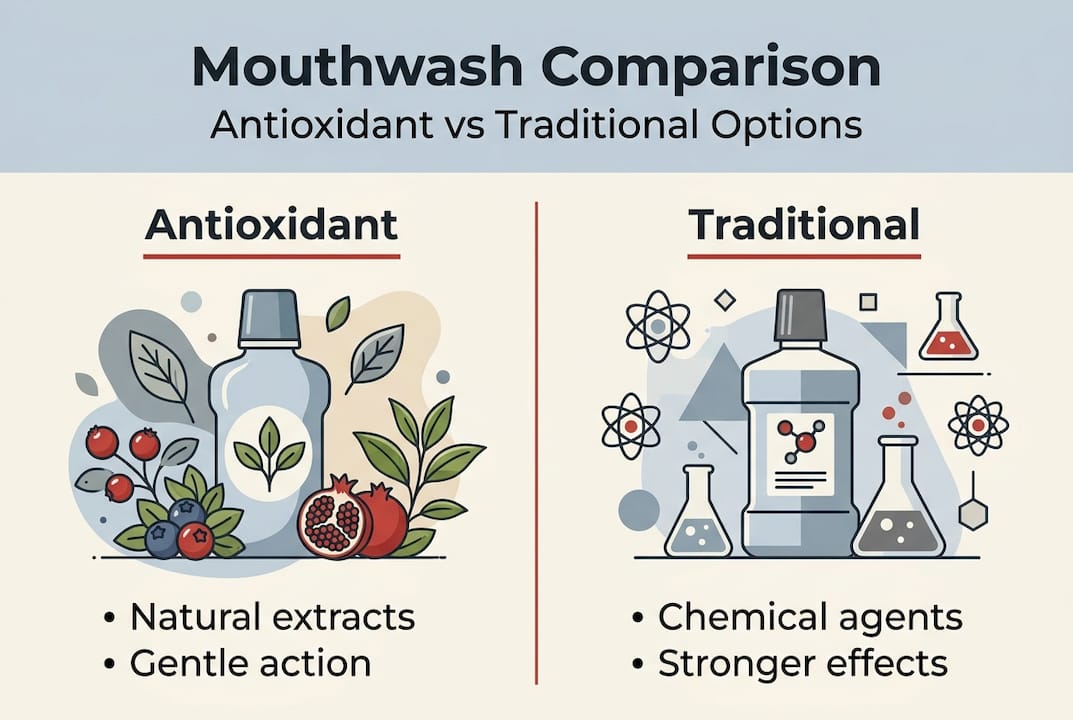
This equivalence in clinical outcomes without the associated side effects is a compelling argument for practitioners and patients who require long-duration gingival maintenance. The following comparison table summarizes the key differences between antioxidant-rich formulas and conventional antiseptic mouthwashes.
| Attribute | Antioxidant-rich mouthwash | Chlorhexidine mouthwash |
|---|---|---|
| Plaque reduction | Clinically significant | Clinically significant |
| Gingivitis improvement | Demonstrated in trials | Demonstrated in trials |
| Tooth staining | Not reported | Frequently reported |
| Taste alteration | Not reported | Frequently reported |
| Microbiome impact | Selective, preserving | Broad-spectrum disruption |
| Alcohol content | Typically absent | Variable |
| Fluoride-free compatibility | Yes | Yes |
| Long-term safety profile | Favorable | Caution advised |
| Daily use suitability | Generally appropriate | Short-term recommended |
For consumers pursuing natural gum disease remedies and those who have experienced sensitivity with conventional products, the antioxidant class of rinses provides a scientifically supported option without the trade-offs of chemical-heavy formulas.
Selecting the right fluoride-free mouthwash requires attention to specific formulation criteria. The following steps outline a practical evaluation process:
- Confirm the absence of alcohol and CHX: Both compounds compromise oral microbiome diversity with extended use.
- Verify active antioxidant concentrations: Broad-spectrum antioxidant labeling without specified compounds provides limited assurance.
- Check for clinical evidence on the specific formula: Ingredient studies are informative, but formulation-level clinical trials are more predictive of real-world outcomes.
- Assess compatibility with your existing oral hygiene protocol: Some antioxidant rinses interact with other active ingredients; confirm compatibility with your toothpaste and any prescribed rinses.
- Review the pH and osmolarity specifications: Formulas with physiological pH ranges are better tolerated by oral mucosa during repeated daily use.
Understanding mouthwash safety criteria is particularly relevant for individuals with pre-existing mucosal conditions, such as recurrent aphthous ulcers or xerostomia, where alcohol-free and non-irritating formulations are clinically preferable. Now that you understand the differences, how can you actually apply antioxidant-rich mouthwash to your daily dental routine?
Who can benefit and how to use antioxidant-rich mouthwash
Clinical evidence identifies a distinct profile for individuals most likely to achieve measurable benefit from antioxidant oral rinses. Health-conscious consumers seeking fluoride-free, natural solutions benefit most from antioxidant mouthwash, particularly those experiencing oxidative stress-related conditions such as periodontitis and gingivitis, as well as individuals seeking enhanced healing without the side effects associated with chlorhexidine use. However, specific populations beyond this general category stand to gain considerably from switching to or incorporating antioxidant rinses.
Individuals who should consider antioxidant mouthwash most seriously include:
- Patients diagnosed with chronic gingivitis or early-stage periodontitis requiring ongoing gingival support between professional cleanings
- Individuals with a documented sensitivity or allergy to chlorhexidine or alcohol-based formulas
- Consumers seeking fluoride-free products as part of a broader natural health protocol
- Post-surgical patients requiring gentle rinses that support healing without compromising tissue repair
- Individuals with systemic conditions linked to oxidative stress, such as type 2 diabetes, where oral-systemic connections are clinically significant
- Pregnant individuals for whom conservative, non-pharmacological oral care approaches are preferred
Integrating antioxidant mouthwash into daily practice does not require a significant disruption to existing oral hygiene habits. The following protocol reflects current evidence-based guidance:
- Complete mechanical cleaning first: Brushing and interdental cleaning must precede rinsing to remove biofilm mechanically. Mouthwash of any formulation does not substitute for this step.
- Measure a standard volume: Most clinical studies use 10 to 15 milliliters per session. Following the product’s specified dosage is advisable.
- Rinse for the recommended duration: Swish vigorously for 30 to 60 seconds to ensure adequate mucosal contact and antioxidant distribution.
- Time rinsing appropriately: Using the rinse after meals, when bacterial metabolic activity is elevated, maximizes its supportive function.
- Avoid eating or drinking for at least 30 minutes post-rinse: This preserves the concentration of active compounds on oral surfaces.
Exploring best mouthwash options within the natural oral care space enables consumers to identify products aligned with both their clinical needs and personal values around ingredient transparency.

It is equally important to acknowledge current limitations in the evidence base. More long-term randomized controlled trials (RCTs) are needed to fully establish the vascular and oral benefits of antioxidant mouthwash, and primary mechanical plaque control remains essential regardless of adjunctive rinse use. The antioxidant rinse functions as a supportive adjunct, not a standalone intervention.
Pro Tip: For individuals with alcohol-free mouthwash requirements, antioxidant formulas are particularly well-suited, as most are inherently free of ethanol and synthetic preservatives. Pairing them with mineral-based mouthwash ingredients such as Dead Sea minerals can further enhance the remineralizing and anti-inflammatory profile of your daily rinse routine. Let’s wrap up with a broader perspective on innovation and progress in natural oral care.
A fresh perspective: what most mouthwash guides miss
Most discussions of mouthwash effectiveness focus narrowly on bacterial kill rates and plaque index scores, metrics derived from short-term clinical trials that do not capture the full picture of oral tissue health. What is frequently absent from these assessments is an acknowledgment that oral tissues require more than microbial suppression to remain healthy. They require cellular nutrition, oxidative balance, and microbiome stability, conditions that harsh antiseptic formulas can actually impair with prolonged use.
The framing of antioxidant mouthwash as simply a “natural alternative” to chlorhexidine undersells its clinical significance. The role of antioxidant impacts in oral care extends to the biochemical environment of the periodontium, the mucosal immune response, and the nitric oxide pathway that governs vascular health in gingival tissue. These are not marginal considerations; they are central to the pathophysiology of the most prevalent oral diseases.
The honest clinical position is one of integration. Antioxidant mouthwash represents a meaningful advance in adjunctive oral care, but the evidence consistently reinforces that mechanical plaque control through brushing and interproximal cleaning remains the primary determinant of periodontal health. No rinse, however well-formulated, compensates for inadequate physical biofilm removal. The appropriate role for antioxidant mouthwash is as a scientifically supported complement to thorough mechanical oral hygiene, not as a replacement.
What the evidence also reveals is that long-term oral health is built incrementally through daily consistent practices. Selecting formulas that actively support tissue health, rather than merely suppress symptoms, reflects a more sophisticated understanding of oral physiology. For consumers and clinicians making product decisions, this distinction matters considerably.
Ready to try antioxidant-rich oral care?
For those seeking scientifically supported, fluoride-free oral care products formulated with natural antioxidant actives, the evidence outlined above provides a strong foundation for making informed decisions. The clinical data indicates that antioxidant-rich mouthwashes represent a genuine advance in daily oral hygiene, particularly for individuals managing chronic gingival conditions or transitioning away from antiseptic-heavy protocols.
At Stop Oral Care, the product range is developed under the guidance of Dr. Veronica Stahl, integrating hemp-derived compounds and Dead Sea minerals alongside established antioxidant actives. Each formula is designed to deliver measurable oral health benefits without synthetic preservatives, fluoride, or alcohol. Your journey toward healthier, natural oral care can begin today by exploring the full range of available products and the clinical rationale behind each formulation.
Frequently asked questions
What ingredients make a mouthwash antioxidant-rich?
Antioxidant-rich mouthwashes use ingredients like green tea catechins, vitamin C, coenzyme Q10, sodium hyaluronate, aloe vera, and tea tree oil, each selected for its capacity to neutralize free radicals and support oral tissue health.
Does antioxidant mouthwash help with gum disease?
Clinical studies demonstrate that antioxidant mouthwash can reduce plaque and gingival inflammation; one 14-day clinical trial using a formula with sodium hyaluronate, CoQ10, tea tree oil, and aloe vera showed statistically significant reductions in both plaque and gingival inflammation compared to prophylaxis alone.
Is antioxidant-rich mouthwash safe for daily use?
Antioxidant-rich mouthwash is generally well-tolerated for daily use, and clinical comparisons to chlorhexidine confirm that these formulas produce no staining or taste alteration, making them appropriate for long-term oral hygiene protocols.
Are there any disadvantages to antioxidant mouthwashes?
The primary limitation is that more long-term RCTs are needed to fully establish sustained benefits; additionally, antioxidant mouthwash functions as an adjunct and does not replace mechanical plaque removal through brushing and flossing.
Recommended
- Effective Natural Mouthwash for Gum Disease: 5 Home Remedies Backed by – Stop Oral Care
- Antioxidants in Oral Care: Cut Damage 40% Naturally – Stop Oral Care
- Natural actives in mouthwash: benefits for oral health – Stop Oral Care
- Best Natural Mouthwash for Gum Disease: 5 Effective Options Reviewed – Stop Oral Care