

Cold sensitivity in teeth, clinically termed dentin hypersensitivity, produces a short, sharp burst of pain when enamel or cementum wears away and exposes the underlying dentin layer, allowing cold stimuli to travel through microscopic tubules directly to the tooth nerve. If you are experiencing this pain now, the following steps can reduce discomfort while you arrange professional evaluation:
- Avoid the trigger immediately. Move cold food or liquid away from the affected tooth.
- Rinse with warm (not cold) water. A warm saltwater rinse can reduce local irritation.
- Apply desensitizing toothpaste directly. If available, press a small amount onto the sensitive tooth and leave it in place rather than rinsing.
- Take an OTC analgesic if needed. Ibuprofen or acetaminophen at standard adult doses can reduce acute discomfort.
- Contact a dentist promptly if pain lingers after the cold stimulus is removed, if swelling or fever is present, or if the pain is spontaneous and severe.
Key Takeaways
Cold sensitivity in teeth is a clinically manageable condition when the underlying cause is identified and addressed alongside symptom-reducing products.
| Point | Details |
|---|---|
| Definition and mechanism | Dentin hypersensitivity occurs when enamel or cementum wears away, exposing tubules that transmit cold to the nerve. |
| Immediate relief steps | Avoid the trigger, rinse with warm saltwater, apply desensitizing toothpaste directly, and take OTC analgesics if needed. |
| When to seek urgent care | Pain lasting beyond 30 seconds after the cold trigger is removed, swelling, fever, or spontaneous pain requires prompt dental evaluation. |
| First-line treatment | Desensitizing toothpaste with potassium nitrate or stannous fluoride, used consistently twice daily, typically produces measurable relief within 2–4 weeks. |
| Stop-oralcare option | Stop-oralcare’s fluoride-free, hemp and Dead Sea mineral formulations offer a natural daily protective option for confirmed dentin hypersensitivity. |
Table of Contents
- What is cold sensitivity in teeth and why does cold reach the nerve?
- Common reasons teeth become sensitive to cold
- How cold sensitivity feels and when symptoms signal a serious problem
- What your dentist will examine and which tests they may use
- Evidence-based treatment options from home care to dental procedures
- Practical at-home steps to ease cold tooth pain right away
- How to reduce the risk of future cold sensitivity through daily habits
- What the research says about active ingredients that reduce tooth sensitivity
- When to make a dental appointment and what to ask during your visit
- A clinician’s perspective on when sensitivity is routine versus concerning
- Stop-oralcare offers a natural daily option for sensitive teeth
- Sources
What is cold sensitivity in teeth and why does cold reach the nerve?
Dentin hypersensitivity occurs when the protective outer layers of a tooth, enamel on the crown and cementum on the root, erode or recede and leave the dentin exposed. Dentin contains thousands of microscopic channels called dentinal tubules that run from the tooth surface to the pulp, where the nerve resides. When cold contacts exposed dentin, fluid movement within those tubules stimulates the nerve and produces the characteristic sharp, brief pain.
Routine dentin hypersensitivity is distinguished from more serious conditions by its pain pattern. Ordinary sensitivity produces pain that is triggered by a specific stimulus and resolves within seconds once the stimulus is removed. Pain that lingers for 30 seconds or longer, arises spontaneously without any trigger, or is accompanied by swelling or fever suggests pulpitis (inflammation of the pulp), advanced decay, or infection, all of which require prompt clinical intervention rather than home management.
Tooth sensitivity at night often feels more pronounced than during the day. Saliva production decreases during sleep, reducing the natural buffering and remineralizing effect that saliva provides throughout waking hours. With less saliva present, exposed dentin surfaces are less protected, and the brain, free of daytime distractions, registers low-grade sensations more acutely. Clinicians frequently use this nocturnal pattern as a triage indicator when evaluating sensitivity complaints.
Common reasons teeth become sensitive to cold
Enamel wear, gum recession, cavities, cracked teeth, and certain dental procedures or whitening treatments are the most frequently identified contributors to cold sensitivity. Each mechanism exposes dentin through a distinct pathway:
- Enamel erosion from acidic diet or beverages. Frequent consumption of citrus, carbonated drinks, or vinegar-based foods dissolves enamel mineral over time, thinning the protective layer above the dentin.
- Gum recession. When gum tissue pulls back from the tooth, the root surface, covered only by thin cementum rather than enamel, becomes exposed. Root dentin is particularly reactive to cold.
- Cavities and decay. Bacterial acid production dissolves enamel and dentin, creating direct pathways to the nerve.
- Cracked or chipped teeth. Fractures allow cold stimuli to bypass enamel and reach dentin or pulp directly, often producing sharp, localized pain.
- Worn or failing fillings. Gaps at the margins of old restorations expose underlying dentin to temperature changes.
- Whitening treatments. Peroxide-based bleaching agents temporarily increase dentin permeability. Sensitive teeth after whitening typically resolve within days to weeks once treatment stops, though the mechanism is the same as other forms of dentin exposure.
- Bruxism (tooth grinding). Chronic grinding wears enamel from occlusal surfaces, progressively thinning the barrier between the environment and the dentin.
- Aggressive brushing. Scrubbing with a hard-bristled brush or using excessive force abrades enamel and contributes to gum recession over time.
Lifestyle callout: Acidic drink habits, frequent snacking on fermented or citrus foods, and over-brushing are modifiable behaviors that accelerate dentin exposure. Addressing these factors is a first-line prevention strategy before any product intervention.
How cold sensitivity feels and when symptoms signal a serious problem
The characteristic pain of dentin hypersensitivity is brief, sharp, and directly tied to a stimulus. You bite into ice cream, inhale cold air, or sip a cold beverage, and a sudden jolt of pain registers in one or more teeth, then fades within seconds. Exposed dentin transmits temperature sensations through dentinal tubules to the nerve, producing this short, reproducible response. The pain may affect a single tooth or several, depending on how many surfaces are exposed.
Cold weather tooth pain follows the same mechanism. Cold ambient air contacts exposed dentin when you breathe through your mouth, triggering the same tubular fluid movement and nerve stimulation as cold food or liquid.
Additional warning signs that warrant a dental appointment without delay include: visible swelling of the gum or face, sensitivity that developed immediately after trauma or a recent dental procedure, a tooth that feels loose or elevated in the socket, and any spontaneous throbbing pain at night. Ignoring mild sensitivity can lead to behavioral changes, such as avoiding brushing around the affected tooth, that allow underlying decay or infection to progress to a point requiring more complex restorative work.
What your dentist will examine and which tests they may use
A standard clinical evaluation for cold sensitivity proceeds through several structured steps, each designed to isolate the cause and determine the appropriate treatment pathway.
Medical and dental history is collected first: current medications, recent dental procedures, dietary habits, and a description of when and how the pain occurs. This context guides the physical examination.
Visual inspection identifies visible enamel wear, gum recession, fractures, discoloration, or failed restorations. The dentist will measure gum attachment levels using a periodontal probe, quantifying recession in millimeters to determine whether root surfaces are exposed.
Cold and air testing applies a cold stimulus (typically a refrigerant spray or ice) and a brief air blast to individual teeth. The patient’s response, whether pain is brief or prolonged, confirms which teeth are affected and suggests whether the issue is superficial dentin exposure or deeper pulp involvement.
Percussion and bite testing taps the tooth and asks the patient to bite on a small instrument. Pain on percussion or biting suggests a crack, abscess, or periodontal problem rather than simple dentin hypersensitivity.
Radiographic examination (X-rays) reveals decay beneath restorations, bone loss, root anatomy, and periapical pathology. A periapical abscess or deep carious lesion visible on X-ray shifts the diagnosis away from routine sensitivity toward a condition requiring more invasive treatment.
Pulp testing, using an electric pulp tester or thermal stimulus, is performed when prolonged or spontaneous pain suggests pulp involvement. A tooth that does not respond to pulp testing may indicate pulp necrosis; one that responds with prolonged, severe pain suggests irreversible pulpitis.
A routine sensitivity evaluation typically takes 30–60 minutes. Most dental insurance plans cover diagnostic exams and X-rays as preventive or diagnostic benefits, though coverage varies by plan. Out-of-pocket costs for a diagnostic visit in the United States generally range from $50 to $200 without insurance, depending on the number of X-rays taken.
Evidence-based treatment options from home care to dental procedures
Dentists select treatment based on the specific cause and severity of sensitivity, progressing from the least invasive options to more complex procedures when conservative measures are insufficient. The following list is ordered from first-line to advanced:
- Desensitizing toothpaste (potassium nitrate or stannous fluoride). Applied twice daily, potassium nitrate penetrates the dentin and depolarizes nerve fibers, reducing their ability to transmit pain signals. Stannous fluoride occludes dentinal tubules and provides additional antimicrobial protection. Most patients notice measurable improvement within 2–4 weeks of consistent use; full benefit typically requires 6–8 weeks.
- Topical fluoride varnish or prescription fluoride. Applied in-office or dispensed as a high-concentration home gel, fluoride promotes remineralization of exposed dentin and partially occludes tubules. In-office varnish provides faster initial relief than over-the-counter products.
- In-office desensitizing agents, dental bonding, and dentin sealants. Resin-based bonding materials or oxalate-based desensitizing agents are applied directly to exposed dentin surfaces, physically sealing tubules. These procedures are indicated when toothpaste and fluoride alone are insufficient.
- Gum grafts. When recession has exposed significant root surface, a connective tissue graft repositions gum tissue to cover the root. This is the most durable solution for recession-related sensitivity and also addresses esthetic concerns.
- Mouthguard for bruxism. A custom-fitted night guard prevents further enamel wear from grinding. It does not reverse existing damage but halts progression.
- Root canal treatment. Reserved for cases where the pulp is irreversibly inflamed or necrotic, root canal therapy removes the nerve tissue, eliminating sensitivity entirely. It is indicated when pain is spontaneous, prolonged, or associated with infection.
Pro Tip: When starting desensitizing toothpaste, apply a pea-sized amount directly to the sensitive tooth with a fingertip after brushing and leave it in place rather than rinsing. This maximizes contact time with the dentin surface and accelerates the desensitizing effect.
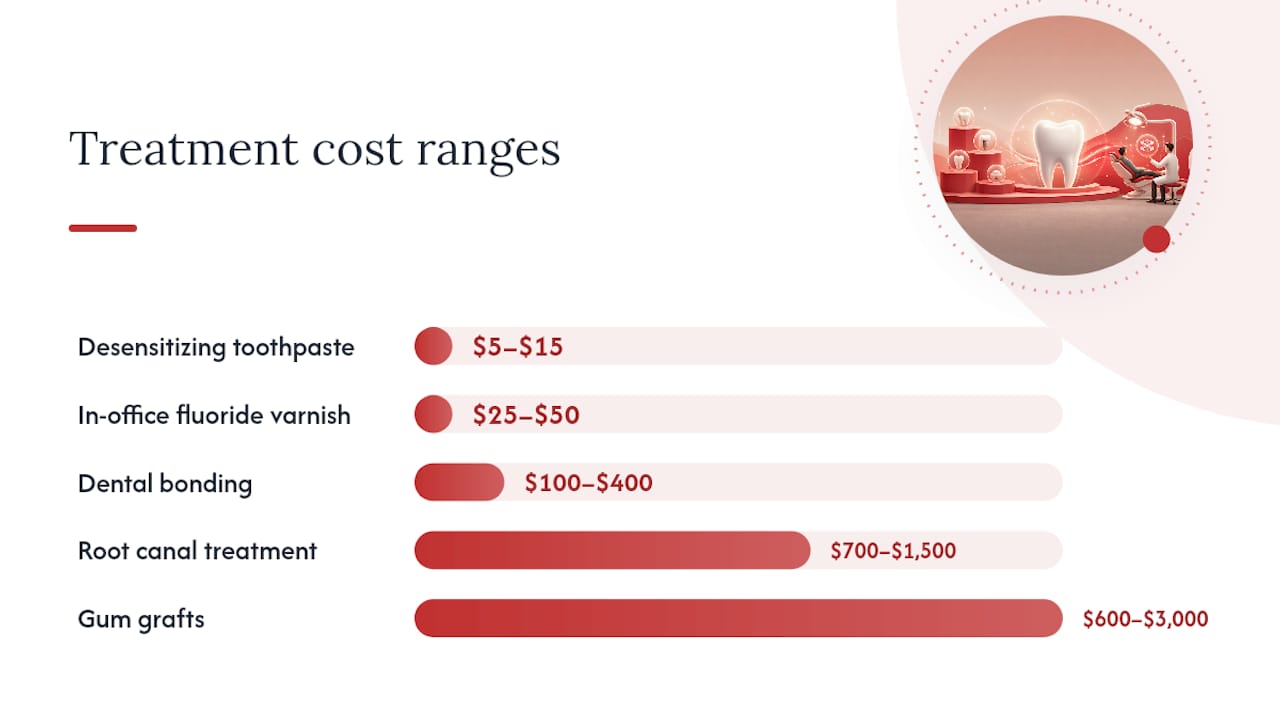
Cost expectations vary considerably. Desensitizing toothpaste costs $5–$15 per tube. In-office fluoride varnish typically runs $25–$50 per application. Dental bonding ranges from $100–$400 per tooth. Gum grafts cost $600–$3,000 per site depending on the extent of recession. Root canal treatment ranges from $700–$1,500 per tooth before crown restoration. Dental insurance commonly covers diagnostic visits, fluoride applications (particularly for adults with documented sensitivity), and surgical procedures such as grafts when medically necessary, though prior authorization is often required.
Practical at-home steps to ease cold tooth pain right away
Immediate home management focuses on reducing nerve stimulation and protecting exposed dentin until a dental appointment can be arranged.
Using desensitizing toothpaste correctly is the single most effective home intervention. Brush with it twice daily using a soft-bristled brush and gentle circular strokes. After brushing, press a small amount onto the sensitive tooth with a clean fingertip and leave it in place. Do not rinse. Consistent use for 2–4 weeks produces measurable relief for most cases of routine dentin hypersensitivity.
A warm saltwater rinse (one teaspoon of salt dissolved in eight ounces of warm water) reduces local inflammation and creates a mildly alkaline environment that buffers residual acid on tooth surfaces. Rinse for 30 seconds and spit; do not swallow.
For cold-weather tooth pain, breathing through the nose rather than the mouth reduces direct cold air contact with exposed dentin. A scarf or face covering over the mouth during outdoor exposure in cold temperatures provides additional protection.
Dos and don’ts for immediate home care:
- Do use OTC ibuprofen or acetaminophen at standard adult doses for acute pain relief.
- Do use a natural mouthwash formulated for sensitive teeth rather than an alcohol-based rinse, which can further irritate exposed dentin.
- Do pause whitening products until sensitivity resolves.
- Do not apply acidic home remedies (lemon juice, apple cider vinegar) to sensitive teeth; these accelerate enamel erosion.
- Do not brush immediately after consuming acidic food or drink; wait at least 30 minutes to allow saliva to partially remineralize the softened enamel surface.
- Do not ignore sensitivity that worsens, spreads to multiple teeth simultaneously, or persists beyond the cold stimulus.
How to reduce the risk of future cold sensitivity through daily habits
Prevention centers on protecting enamel and gum tissue from the mechanical and chemical forces that cause dentin exposure. The following checklist addresses the most modifiable risk factors:
- Use a soft-bristled toothbrush. Medium and hard bristles abrade enamel and contribute to gum recession. Replace the brush every three months or when bristles splay.
- Brush with gentle, circular strokes. Horizontal scrubbing concentrates force at the gum margin and accelerates recession.
- Limit acidic beverage frequency. Sipping acidic drinks throughout the day prolongs acid contact with enamel. Use a straw to reduce direct tooth contact, and follow with water.
- Use a remineralizing or desensitizing toothpaste daily. Products containing potassium nitrate, stannous fluoride, or hydroxyapatite support enamel integrity and reduce tubule permeability over time.
- Address bruxism with a night guard. A custom-fitted guard from your dentist provides better retention and coverage than over-the-counter alternatives.
- Attend dental checkups every six months. Early identification of recession, enamel wear, or early caries allows intervention before sensitivity develops.
- Neutralize acid after meals. Rinsing with water or chewing sugar-free gum stimulates saliva flow and accelerates pH recovery at the tooth surface.
For a structured daily routine, the oral care routine for sensitive teeth published by Stop-oralcare provides a stepwise framework that pairs these behavioral recommendations with appropriate product selection.
What the research says about active ingredients that reduce tooth sensitivity
The clinical evidence for sensitivity-reducing ingredients is well-established across multiple dental organizations and peer-reviewed literature.
Potassium nitrate is the most extensively studied active ingredient for dentin hypersensitivity. It acts by depolarizing the sensory nerve fibers within the pulp, reducing their excitability. The American Dental Association recognizes potassium nitrate-containing toothpastes as effective for reducing sensitivity with regular use. Clinical benefit typically becomes measurable after two weeks of twice-daily application, with maximum effect at six to eight weeks.
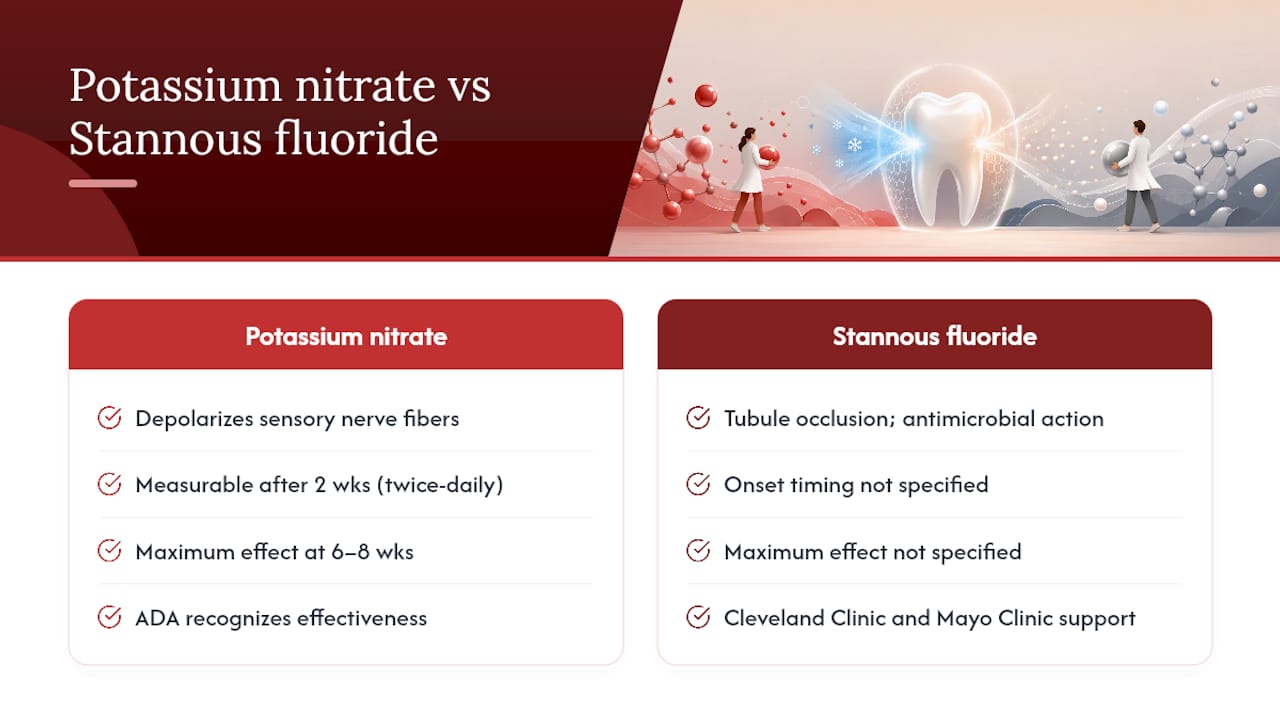
Stannous fluoride combines two mechanisms: tubule occlusion through the deposition of tin compounds within the tubule openings, and antimicrobial activity that reduces the bacterial load contributing to enamel erosion. It is considered one of the more versatile active ingredients because it addresses both sensitivity and caries risk simultaneously.
Studies cited by the Cleveland Clinic and Mayo Clinic support its use as an adjunct to home care when toothpaste alone is insufficient.
Hydroxyapatite, a synthetic form of the mineral that constitutes natural enamel, has demonstrated tubule-occluding and remineralizing properties in clinical studies. It is particularly relevant for patients seeking fluoride-free alternatives, as it works through a biomimetic mechanism rather than a chemical one.
Approximately 40 million adults in the United States experience some form of tooth sensitivity, making it one of the most prevalent complaints in general dental practice.
Safety considerations: potassium nitrate and stannous fluoride are well-tolerated at concentrations used in over-the-counter products. Patients with known tin sensitivity should discuss stannous fluoride use with their dentist. High-concentration prescription fluoride gels are not appropriate for unsupervised use in children under six. For patients seeking fluoride-free options, hydroxyapatite and mineral-based formulations offer a documented alternative, though the evidence base is less extensive than for fluoride. Selecting the right toothpaste for your specific sensitivity pattern is addressed in detail in the Stop-oralcare guide on choosing safe toothpaste for sensitive teeth.
When to make a dental appointment and what to ask during your visit
Appointment checklist — bring the following:
- A written note of when sensitivity started, which teeth are affected, and what triggers it (cold, heat, sweet, air, spontaneous).
- A list of all oral care products currently in use, including toothpaste, mouthwash, and any whitening products.
- A record of recent dental procedures (fillings, cleanings, extractions, bleaching) and approximate dates.
- A current medication list, as some medications cause dry mouth, which reduces saliva protection and increases sensitivity risk.
- Any photographs of visible changes (gum recession, chipped teeth) taken on your phone.
Questions to ask your dentist:
- Is this dentin hypersensitivity, or could it indicate decay, a crack, or pulp involvement?
- What is the most likely cause in my specific case?
- Which treatment do you recommend first, and what is the expected timeline for improvement?
- If home treatment does not resolve the sensitivity within six to eight weeks, what is the next step?
- Will my dental insurance cover the recommended treatment, and what are the out-of-pocket costs?
Regarding costs and insurance: conservative treatments such as desensitizing toothpaste recommendations and fluoride varnish are typically covered under preventive benefits. Restorative procedures (bonding, grafts) may require a separate deductible or co-pay and sometimes prior authorization. Confirming coverage before treatment prevents unexpected costs.
A clinician’s perspective on when sensitivity is routine versus concerning
Cold sensitivity is one of the most common complaints in general dental practice, and the majority of cases respond well to conservative management once the underlying cause is identified. The clinical distinction that matters most is not the intensity of the pain but its behavior: pain that resolves within seconds of removing the cold stimulus is consistent with dentin hypersensitivity; pain that lingers, escalates, or occurs without provocation requires a different diagnostic framework entirely.
Patients frequently focus on masking the symptom with desensitizing products, which is a reasonable first step, but it is not a substitute for addressing the cause. A patient who uses desensitizing toothpaste while continuing to grind their teeth without a night guard, or while maintaining a high-frequency acidic beverage habit, will experience recurrence because the protective barrier continues to erode. Durable relief requires both symptom management and cause modification.
Persistent or changing pain, particularly sensitivity that has worsened over weeks or shifted from triggered to spontaneous, warrants examination regardless of how mild it initially seemed. Early intervention consistently produces better outcomes and lower treatment costs than delayed care.
Stop-oralcare offers a natural daily option for sensitive teeth
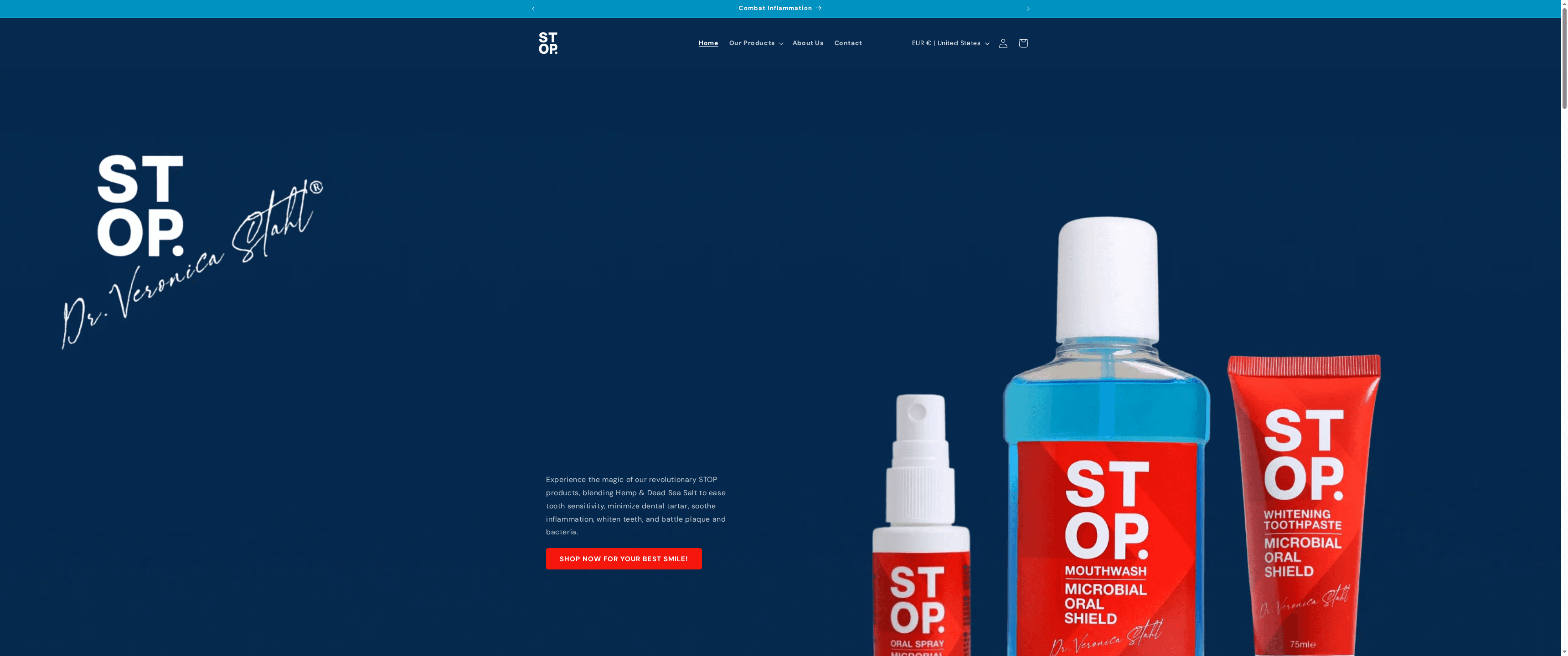
For patients managing mild-to-moderate dentin hypersensitivity who prefer a fluoride-free daily care option, Stop-oralcare formulates its toothpaste, mouthwash, and oral spray with hemp-derived compounds and Dead Sea minerals, a combination selected for its documented remineralizing, anti-inflammatory, and protective properties on exposed dentin surfaces. The formulation is designed to support enamel integrity and reduce tubule reactivity through mineral deposition rather than fluoride chemistry, making it a clinically considered alternative for patients who cannot or prefer not to use fluoride-based products.
This product line is not a substitute for professional dental care. If you are experiencing red-flag symptoms (persistent pain, swelling, fever, or spontaneous pain), contact a dentist before beginning any home product regimen. For patients whose sensitivity is confirmed as routine dentin hypersensitivity, Stop-oralcare’s formulations can be incorporated into the daily protective routine described throughout this article. Visit Stop-oralcare to review the full product range and determine which formulation aligns with your sensitivity pattern and care goals.
This article contains general health information and is not a substitute for professional dental advice. Consult a licensed dentist for diagnosis and treatment specific to your condition.
Sources
The following sources informed this article and provide additional clinical detail for readers seeking primary references:
- American Dental Association (ADA) — statistics/overview
- MouthHealthy (American Dental Association) — Sensitive teeth: Heat and cold sensitivity
- Cleveland Clinic — Sensitive Teeth: Causes, Treatment & Prevention
- Mayo Clinic — Sensitive teeth: What treatments are available?
Specific diagnoses, treatment plans, and product recommendations should always be confirmed with a licensed dental professional who can evaluate your individual clinical presentation.
Recommended
- What Is Sensitivity Relief Toothpaste and Why It Matters – Stop Oral Care
- 7-Step Oral Health Checklist for Sensitive Teeth Care – Stop Oral Care
- Oral Care Routine for Sensitive Teeth Naturally Explained – Stop Oral Care
- Understanding Dental Pain: Causes, Relief Strategies, and When to Seek – Stop Oral Care