

Tongue scraping, brushing twice a day, flossing, and steady hydration resolve most cases of bad breath because they target where the problem starts: the mouth. For faster relief, add a diluted bicarbonate rinse, chew fresh parsley, or reach for xylitol gum between meals. These aren’t folk remedies pulled from nowhere; they address the biology directly.
- Tongue scraping (once daily, morning): removes the coating where odor-causing bacteria concentrate.
- Brush twice daily and floss once: clears plaque before it feeds bacterial colonies.
- Hydrate throughout the day: saliva is the mouth’s own antimicrobial rinse.
- Bicarbonate rinse: one teaspoon in 200 to 250 ml water, swished for 30 seconds.
- Chew fresh parsley or xylitol gum: neutralizes odor and stimulates saliva flow within minutes.
Roughly 85 to 90 percent of halitosis cases originate in the mouth itself, not the stomach or sinuses, which is exactly why this routine works for most people. If your breath stays foul despite doing all of this correctly for two weeks, that’s a signal worth taking to a dentist rather than a signal to try a stronger mouthwash.
TL;DR:
- Tongue scraping, brushing twice daily, and flossing remain the most effective routine for most cases of bad breath, especially when done consistently for two weeks.
- Rinses with bicarbonate, parsley, or herbal teas provide short-term relief but do not address the underlying bacterial causes, which require regular hygiene.
- Persistent halitosis despite proper home care after two weeks indicates a need for professional dental evaluation to rule out structural or gum disease issues.
- Using undiluted lemon or charcoal daily can damage enamel or tissues and should be avoided in favor of evidence-based remedies.
- Chewing xylitol gum and maintaining hydration supports saliva flow and reduces bacterial growth, acting as effective immediate measures.
Table of Contents
- Why Does Bad Breath Happen in the First Place?
- What Natural Remedies for Halitosis Actually Work?
- How Long Until These Remedies Improve Your Breath?
- When Should You See a Dentist Instead of Trying Another Remedy?
- Why Trust This Guide on Natural Remedies for Bad Breath?
- Key Takeaways
- Where This Article’s Information Comes From
- The Practical Truth About Treating Bad Breath at Home
- A Daily Routine That Supports What You’re Already Doing
- Sources
Why Does Bad Breath Happen in the First Place?
Bad breath, known clinically as halitosis, comes down to bacteria breaking down proteins in your mouth and releasing volatile sulfur compounds. Those compounds, mostly hydrogen sulfide and methyl mercaptan, are what give halitosis its distinctive rotten-egg edge. Most chronic cases trace back to oral bacteria degrading proteins rather than anything happening lower in your digestive tract.
Several conditions feed this process:
- The tongue acts as the largest bacterial reservoir in the mouth, especially the back third near the throat.
- Plaque buildup along the gumline gives bacteria a stable surface to multiply on.
- Gingivitis and gum disease create pockets where bacteria thrive undisturbed.
- Dry mouth removes saliva’s natural rinsing and antimicrobial action.
- Certain foods and smoking contribute compounds that linger for hours, not days.
It helps to separate transient food breath, the garlic or coffee smell that fades once saliva does its job, from chronic halitosis that persists regardless of what you ate. The first is normal. The second usually points to plaque, gum inflammation, or a coated tongue that needs direct attention.
What Natural Remedies for Halitosis Actually Work?
Here’s a sequence that moves from daily maintenance to targeted, occasional interventions, each with the specifics that actually determine whether it helps or does nothing.
-
Scrape your tongue correctly. Use a dedicated tongue scraper, not a toothbrush, starting as far back as you comfortably can without gagging. Pull forward in one motion, rinse the scraper, and repeat three or four times. Do this each morning before brushing; the coating that builds up overnight is where a large share of odor-producing bacteria live.
-
Brush and floss with intention. Two minutes of brushing, twice daily, angled at the gumline where plaque actually accumulates. Floss once daily, since brushing alone misses the space between teeth where food debris feeds bacteria for hours.
-
Mix a baking soda free deodorant bicarbonate rinse. Dissolve one teaspoon of baking soda in 200 to 250 ml of water and swish for 30 seconds after brushing. Bicarbonate rinses work by rebalancing oral pH, making the environment less hospitable to odor-causing bacteria. Limit this to once or twice daily. Overuse can erode enamel over time, so skip it entirely if you have sensitive teeth or existing enamel wear.
-
Chew fresh parsley after meals. Parsley’s chlorophyll content neutralizes sulfur compounds almost on contact, which is why it’s been a post-meal habit for generations, not a myth. A few sprigs chewed slowly work better than a garnish swallowed whole.
-
Try oil pulling with coconut oil, cautiously. Swish one tablespoon for 10 to 15 minutes, then spit it out (never swallow) and rinse with water. Oil pulling can modestly reduce plaque levels in some studies, but it’s an adjunct, not a substitute for brushing. Skip it if you have swallowing difficulties or young children in the house who might mimic the practice unsupervised.
-
Chew mint, fennel seeds, or a clove after meals. Mint and fennel offer a quick masking effect alongside mild antibacterial action; clove contains eugenol, which has shown antibacterial activity in limited studies, though it should be used sparingly since it can irritate soft tissue in concentrated amounts.
-
Brew green tea, sage, or thyme as a rinse or drink. Green tea polyphenols and sage’s antimicrobial compounds have some laboratory-level evidence for reducing bacterial load, though effects vary person to person. Let tea cool before using it as a rinse; steep 5 minutes for drinking.
-
Chew xylitol gum between meals. Saliva is a natural antimicrobial, and xylitol stimulates its flow while starving the bacteria that feed on sugar. Aim for gum with xylitol as the primary sweetener, not an afterthought on the label.
-
Use essential oils only diluted, and skip them if pregnant or treating a young child. Tea tree oil, at no more than one or two drops in a full glass of water, has shown antibacterial activity, but undiluted use can burn oral tissue.
-
Be skeptical of charcoal and undiluted lemon. Both circulate widely as home remedies, but the evidence for charcoal reducing halitosis is thin, and lemon’s acidity erodes enamel with repeated use. Neither belongs in a daily routine.
Pro Tip: Keep xylitol gum and a small parsley stash on hand for the two hours after meals, since that’s the window when sulfur compounds peak and saliva flow naturally dips.
How Long Until These Remedies Improve Your Breath?
Some fixes work in minutes. Others need weeks to show a real difference, and knowing which is which keeps you from giving up on something that just needs more time.
- Same-day results: tongue scraping and xylitol gum noticeably cut odor within hours of use.
- Hours of effect: bicarbonate and herbal rinses freshen breath temporarily but don’t address the underlying bacterial load long-term.
- Four to eight weeks: consistent hygiene improvements and oral-targeted probiotics need sustained use before you’ll notice a durable shift.
- Track it simply: lick the inside of your wrist, let it dry for 10 seconds, then smell it, or ask a partner for an honest check once a week.
If you’ve kept up the full routine correctly for two weeks with no improvement, that’s the point to stop troubleshooting alone and book a dental visit. Persistent odor despite good technique usually means something structural, like gum disease, needs direct treatment.
When Should You See a Dentist Instead of Trying Another Remedy?
Some situations call for professional care rather than another home fix, and a few common remedies carry real risks if used carelessly.
- Avoid undiluted lemon juice or repeated charcoal use; both damage enamel or soft tissue with regular exposure.
- Never use essential oils undiluted, and check with a pharmacist before combining them with existing medications, since some oils interact with blood thinners and other prescriptions.
- Watch for red flags: a persistent foul odor that doesn’t respond to hygiene, bleeding gums, visible pus, or systemic symptoms like fever all warrant a dentist or physician visit, not another rinse.
- Digestive causes are rare; reserve GI investigations for cases with additional symptoms like reflux or abdominal pain, since the mouth accounts for the overwhelming majority of cases.
Health authorities are clear that natural remedies relieve symptoms but don’t replace professional care when halitosis persists. Bring a timeline of when the odor started, a list of remedies you’ve tried, and your current medications to the appointment; it speeds up the diagnosis considerably.
Why Trust This Guide on Natural Remedies for Bad Breath?
This guide draws on clinical dentistry and natural medicine expertise from Dr. Veronica Stahl, whose work informs Stop-oralcare’s approach to fluoride-free oral care formulated with hemp and Dead Sea minerals.
- Author background: Dr. Veronica Stahl combines dental training with a focus on natural, evidence-aware oral care formulations.
- Editorial sourcing: claims here are checked against AMELI, MSD Manuals, VIDAL, and Futura-Sciences, not marketing copy.
- Practical resources: Stop-oralcare’s own step-by-step guide to natural bad breath remedies expands on the routines covered here.
- Product research: internal testing on hemp and mineral-based formulations informs which natural ingredients make it into finished products versus which stay theoretical.
Key Takeaways
The most effective natural approach to halitosis combines daily tongue scraping and hygiene for lasting results with targeted rinses and xylitol gum for immediate relief.
| Point | Details |
|---|---|
| Start with the tongue | Scraping removes the largest bacterial reservoir and shows same-day improvement. |
| Use bicarbonate sparingly | One teaspoon per 250 ml water, once or twice daily, skipped if enamel is sensitive. |
| Match remedy to timeline | Rinses and gum work in hours; probiotics and hygiene need four to eight weeks. |
| Know the red flags | Bleeding gums, pus, or unresponsive odor after two weeks mean it’s time for a dentist. |
| Support the routine long-term | Stop-oralcare’s fluoride-free, hemp and Dead Sea mineral formulations are built to complement daily hygiene, not replace it. |
Where This Article’s Information Comes From
The medical claims here rely on established clinical and consumer-health references, chosen because they cover mechanism, prevalence, and safety rather than anecdote.
- AMELI: France’s national health insurance body, cited for diagnostic and treatment guidance on halitosis.
- MSD Manuals: a clinical reference used here for the bacterial mechanism behind chronic bad breath.
- VIDAL: a French drug and health reference, source of the oral-origin prevalence figure.
- Futura-Sciences: a science journalism outlet used for remedy-specific detail on bicarbonate, parsley, and oil pulling.
If your case doesn’t respond to the steps above, a clinician can rule out causes these sources flag as requiring direct treatment.
The Practical Truth About Treating Bad Breath at Home
Most advice on halitosis buries the one thing that actually moves the needle fast: the tongue. People spend money on mouthwash and mints when a $5 tongue scraper, used correctly and daily, outperforms almost everything else on this list for immediate results. That’s not a controversial claim; it follows directly from where the bacteria actually live.
Where conventional advice falls short is in treating every remedy as equally urgent. Rinses and gum are stopgaps, useful before a meeting or a date, but they don’t fix anything on their own. The habits that matter, tongue scraping, consistent brushing and flossing, and enough water to keep saliva flowing, are the ones people skip because they feel too basic to work. They’re basic because the problem is basic.
If you try one thing differently after reading this, make it the two-week rule: give a correct routine two full weeks before you conclude it isn’t working. Most people quit after three days and never find out if consistency would have solved it. Persistent odor after doing everything right isn’t a reason to try a stronger remedy; it’s a reason to see a dentist.
— Veronica
A Daily Routine That Supports What You’re Already Doing
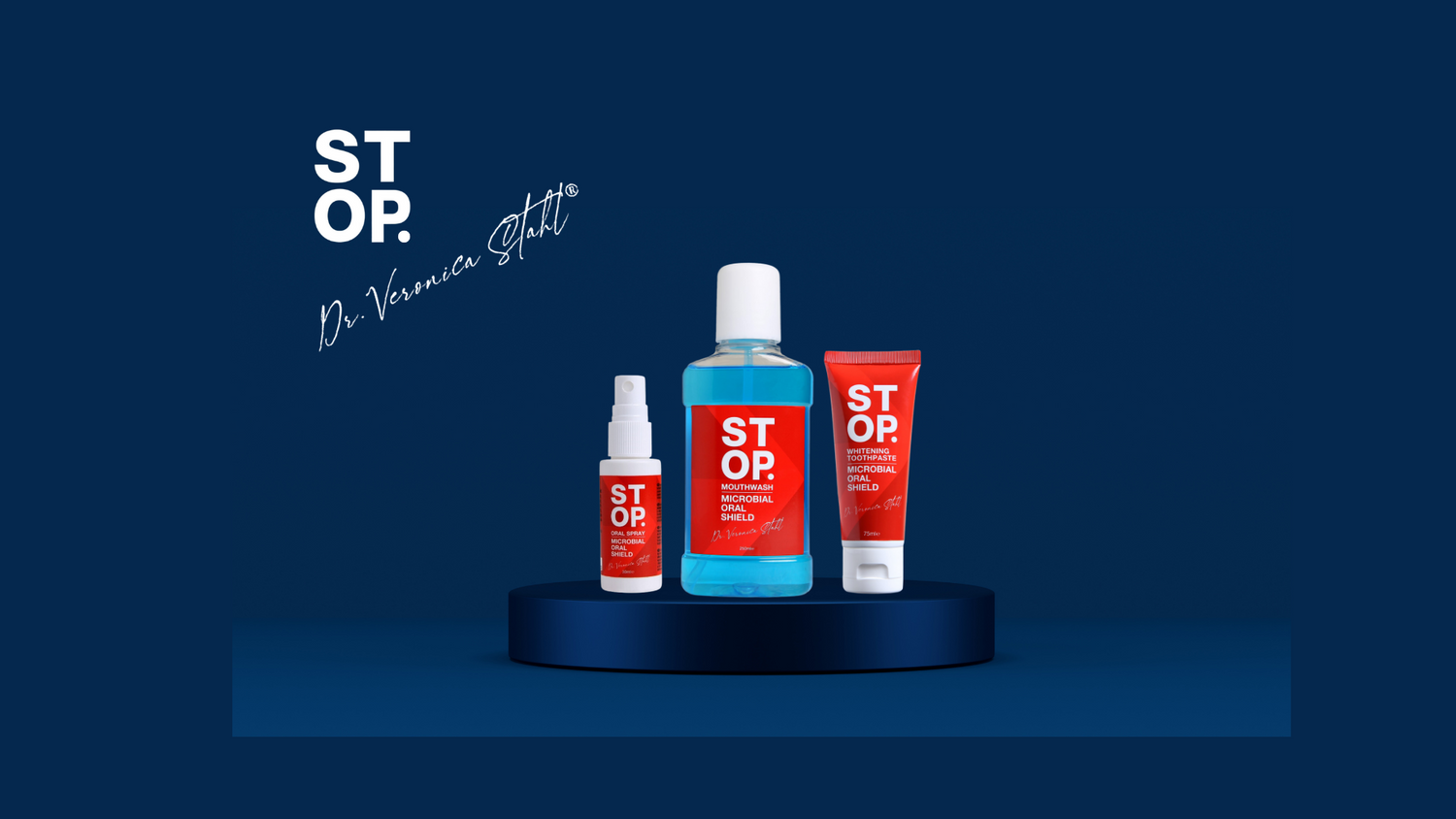
Home remedies handle the day-to-day, but they work best alongside oral care products that don’t undo your progress with harsh chemicals or fluoride sensitivities. Stop-oralcare formulates fluoride-free toothpaste, mouthwash, and oral spray with hemp and Dead Sea minerals specifically for people managing sensitive teeth, gum inflammation, or plaque buildup, the same underlying issues driving most chronic bad breath.

If you’ve been relying on parsley and bicarbonate rinses as stopgaps, the next logical step is a daily product built around the same natural-first approach, minus the guesswork of mixing your own solutions each morning. Stop-oralcare’s mineral-based formulations are designed to reduce inflammation and plaque while you keep up the scraping and flossing habits covered above. Browse the current product lineup to find a fluoride-free toothpaste or mouthwash suited to sensitive gums, and see which formulation fits the routine you’re already building.
Sources
- Quels sont les meilleurs remèdes naturels contre la mauvaise haleine ? - Futura-Sciences
- Mauvaise haleine - VIDAL
- Mauvaise haleine - Ameli
- Mauvaise haleine - MSD Manuals