

TL;DR:
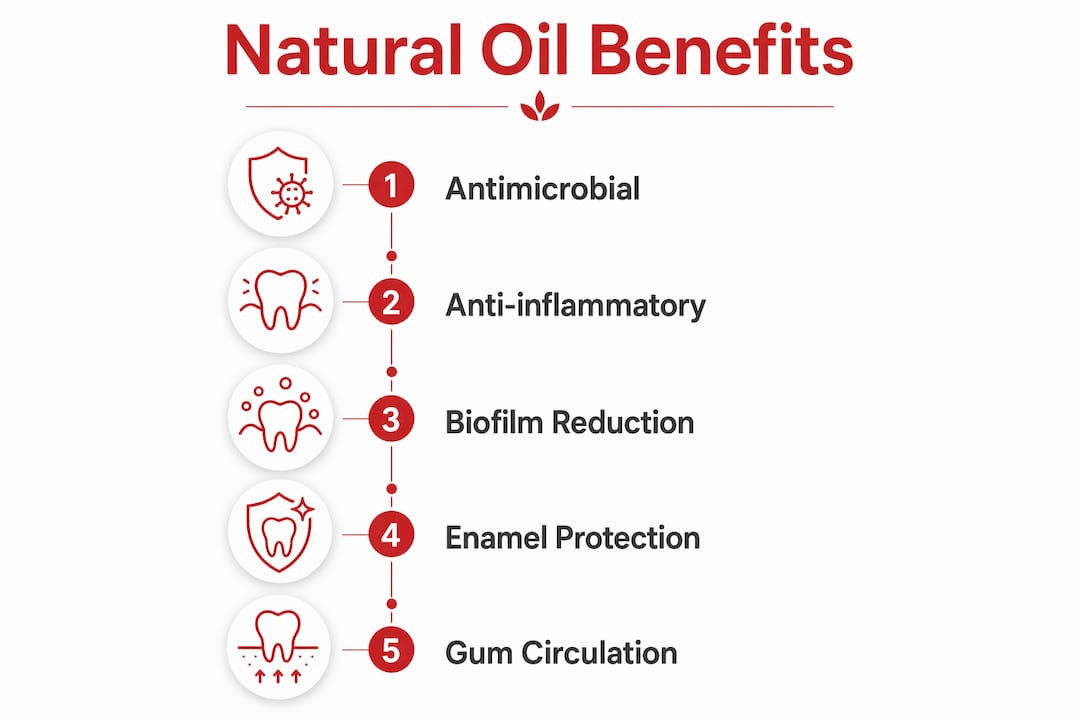
- Natural oils offer antimicrobial, anti-inflammatory, and biofilm-modulating benefits that support oral health, serving as effective adjuncts to mechanical hygiene.Clinical evidence highlights olive and coconut oils’ ability to reduce plaque and gingivitis, with oils acting through mechanisms like membrane disruption and quorum sensing inhibition.Each oil has specific uses—coconut for plaque control, clove for pain relief, peppermint for breath, and olive for gum inflammation—requiring proper dilution and protocol adherence for safety and efficacy.
Natural oils serve a defined clinical function in oral health: they deliver antimicrobial, anti-inflammatory, and biofilm-modulating effects that reduce plaque, support gum tissue integrity, and freshen breath without disrupting the oral microbiome. The role of natural oils in oral health has gained increasing scientific attention as clinical trials validate what botanical medicine has long proposed. Oils including coconut, tea tree, peppermint, clove, and olive oil each operate through distinct biochemical mechanisms, making them credible adjuncts to conventional dental hygiene. This guide examines the evidence, explains the mechanisms, compares the most studied oils, and outlines safe, practical application protocols.
What scientific evidence supports natural oils for oral hygiene?
Clinical research on natural oils in dentistry has expanded considerably over the past decade, moving beyond anecdotal reports toward controlled trial data. A systematic review and meta-analysis covering 12 randomized controlled trials and 456 subjects found that olive oil use produces significant reductions in gingivitis indices, including plaque scores and gingival bleeding on probing, after 2 to 8 weeks of use. This finding positions olive oil as a clinically relevant agent for early-stage periodontal management, not merely a dietary supplement.
Coconut oil has generated comparable interest. Research confirms that coconut oil pulling reduces plaque and gingival scores at levels similar to chlorhexidine, the gold-standard antiseptic rinse, without the associated toxicity or microbiome disruption. Sessions of 10 to 20 minutes, performed 2 to 3 times per week, are the protocol most supported by current data. That equivalence to chlorhexidine is clinically significant because it suggests a viable, low-risk alternative for patients who cannot tolerate chemical rinses.
Tea tree, peppermint, and clove oils have each demonstrated antibacterial and anti-inflammatory properties in controlled settings, with documented reductions in plaque burden and gum inflammation. The transition toward botanical therapies in dentistry is also driven by consumer demand for holistic, evidence-based treatments, which has accelerated research investment in this area. However, the field still requires standardization. Dosing protocols, carrier concentrations, and treatment durations vary widely across studies, and large-scale clinical trials are needed before universal clinical guidelines can be established.
| Oil | Key Evidence | Study Type |
|---|---|---|
| Olive oil | Reduces plaque and gingival bleeding in 2–8 weeks | Meta-analysis, 12 RCTs |
| Coconut oil | Plaque reduction comparable to chlorhexidine | Clinical trials |
| Tea tree oil | Reduces plaque-causing bacteria | Controlled laboratory and clinical studies |
| Peppermint oil | Reduces inflammation and neutralizes odor bacteria | Clinical and in vitro studies |
| Clove oil | Analgesic and anti-inflammatory via eugenol | Clinical dentistry applications |
Pro Tip: When evaluating natural oil products for oral care, look for formulations that specify the concentration of active compounds, such as eugenol content in clove oil or lauric acid percentage in coconut oil, since these directly determine therapeutic potency.
How do natural oils work to improve oral health?
The biological mechanisms through which natural oils exert their oral health effects are well characterized at the cellular and biochemical level. Understanding these mechanisms clarifies why certain oils outperform others for specific conditions and why they differ fundamentally from conventional antiseptic agents.
The primary mechanisms include:
- Bacterial membrane disruption: Lipophilic compounds in essential oils penetrate and destabilize bacterial cell membranes, causing cytoplasmic leakage and cell death in pathogens such as Streptococcus mutans and Porphyromonas gingivalis.
- Quorum sensing inhibition: Essential oils disrupt bacterial quorum sensing, the chemical communication system bacteria use to coordinate biofilm formation. This reduces plaque adhesion and acid production, protecting enamel from erosion through a mechanism distinct from harsh antiseptics.
- Saponification during oil pulling: Coconut oil pulling generates soap-like substances via saponification when the oil interacts with salivary enzymes. These agents mechanically lift and emulsify biofilm from tooth surfaces and gingival margins.
- Saliva enzyme preservation: Unlike alcohol-based or oxidizing rinses, essential oils selectively suppress pathogenic bacteria while preserving the beneficial proteins and enzymes in saliva that support enamel remineralization and pH regulation.
- Anti-inflammatory cytokine modulation: Clove oil’s active compound eugenol modulates pain receptors and inflammatory cytokines, reducing gingival inflammation and discomfort at the tissue level.
“Essential oils provide selective antibacterial effects that preserve saliva’s protective proteins, unlike many chemical rinses that disrupt the entire oral bacterial ecosystem.” — Bloom Holistic Dental, clinical review
Natural oils are also generally non-acidic and non-abrasive, which means they preserve enamel hydroxyapatite integrity rather than contributing to surface demineralization. This property makes them particularly suitable for individuals with enamel sensitivity or erosion risk. The combination of targeted antimicrobial action, biofilm disruption, and microbiome preservation represents a mechanistic profile that conventional chemical rinses do not replicate. For a deeper review of essential oils in oral hygiene, the scientific literature provides substantial supporting detail.
Comparing natural oils: which oil works best for teeth and gums?
Each natural oil carries a distinct biochemical profile that determines its most appropriate clinical application. Selecting the right oil depends on the specific oral health objective, whether that is plaque control, gum inflammation, pain relief, or breath management.

Coconut oil contains approximately 50% lauric acid, a medium-chain fatty acid with documented antimicrobial activity against Streptococcus mutans, the primary cariogenic pathogen. Its viscosity makes it well suited for oil pulling, where the saponification mechanism provides mechanical biofilm removal in addition to chemical antimicrobial action. Coconut oil is the most studied oil for plaque control and is the preferred choice for oil pulling protocols.
Peppermint oil contains menthol, which improves gingival circulation, soothes inflamed tissue, reduces inflammation, and neutralizes odor-producing bacteria without relying on artificial fragrances. It is the most effective single-agent oil for breath management and mild gingival irritation. Peppermint is also well tolerated at low concentrations, making it a practical addition to natural mouthwash formulations.
Clove oil is the most pharmacologically potent of the common dental oils. Eugenol, its primary active compound, is used in professional dentistry for topical analgesia and as an anti-inflammatory agent in periodontal dressings. For individuals experiencing acute gum discomfort or minor toothache, diluted clove oil applied topically provides measurable relief. Its use should be limited to short-term application due to the risk of tissue irritation at higher concentrations.
Tea tree oil targets plaque-forming bacteria with particular efficacy and has demonstrated reductions in gingival inflammation in clinical settings. It is not safe for ingestion and must always be used in diluted rinse form. Tea tree oil is best positioned as a component of natural mouthwash rather than a standalone topical agent.
Olive oil stands apart from the essential oils in that its benefits derive primarily from polyphenolic compounds, including oleuropein and hydroxytyrosol, which exert anti-inflammatory effects on periodontal tissues. The meta-analysis data supporting olive oil is among the strongest in the natural oils literature, particularly for gingivitis management. For individuals seeking holistic gum health support, olive oil represents a well-evidenced option.
Pro Tip: Clove oil should always be diluted to 1% or lower in a carrier oil before any oral application. Undiluted eugenol can cause chemical burns to gingival tissue, which is a documented adverse effect in clinical case reports.
How to incorporate natural oils safely into daily oral care
Natural oils function most effectively as adjuncts to mechanical oral hygiene, not as replacements for brushing and flossing. The following protocols reflect current evidence and safety guidelines.
- Oil pulling with coconut oil: Swish 1 tablespoon of coconut oil for 10 to 20 minutes on an empty stomach, 2 to 3 times per week. Spit into a trash receptacle, not the sink, to prevent drain blockage. Follow immediately with brushing and flossing. Oil pulling is an adjunctive practice and does not replace mechanical plaque removal.
- Essential oil mouthwash: Add 1 to 2 drops of tea tree, peppermint, or clove oil to 1 cup of water or a saline base. Rinse for 30 to 60 seconds and expectorate. Do not swallow. Use once daily or as directed by a dental professional.
- Topical application for gum discomfort: Dilute clove or peppermint oil to 1% concentration in a carrier such as fractionated coconut oil. Apply with a cotton swab to the affected gingival area for short-term relief only.
- Combining with saltwater rinses: Saltwater rinses used once daily for minor gum tenderness complement oil-based protocols by providing an alkaline environment that inhibits bacterial growth. Alternating between oil rinses and saline rinses on different days avoids overexposure to any single agent.
- Allergy screening: Perform a patch test before introducing any new essential oil. Individuals with nut allergies should exercise caution with coconut oil, and those sensitive to aspirin may react to eugenol in clove oil.
Pro Tip: For individuals new to oil pulling, starting with 5 minutes per session and gradually increasing to 20 minutes over two weeks reduces the likelihood of jaw fatigue and nausea, which are the most commonly reported barriers to consistent practice.
Natural oils should be integrated into a safe oral care routine that includes twice-daily brushing with a fluoride-free or mineral-based toothpaste, daily flossing, and regular professional dental examinations. The oils address the biochemical dimension of oral health; mechanical hygiene addresses the structural dimension. Neither replaces the other.
Key takeaways
Natural oils reduce plaque, support gum health, and preserve the oral microbiome through antimicrobial and anti-inflammatory mechanisms that chemical rinses do not replicate.
| Point | Details |
|---|---|
| Clinical evidence is substantial | Olive oil meta-analysis across 12 RCTs and coconut oil trials confirm measurable plaque and gingivitis reduction. |
| Mechanisms are biochemically distinct | Oil pulling uses saponification; essential oils disrupt quorum sensing and bacterial membranes without harming beneficial flora. |
| Each oil has a specific application | Coconut oil suits plaque control, clove oil addresses pain, peppermint manages breath, and olive oil targets periodontal inflammation. |
| Safety requires dilution and protocols | Essential oils must be diluted; oil pulling is adjunctive and should not replace brushing and flossing. |
| Standardization gaps remain | Large-scale trials are still needed to establish universal dosing and treatment duration guidelines for clinical use. |
My perspective on natural oils as a clinical tool
The evidence base for natural oils in oral care has matured considerably, but clinical enthusiasm should remain proportionate to what the data actually supports. Olive oil and coconut oil have the strongest trial data, and I consider them credible adjuncts for patients managing early gingivitis or seeking alternatives to alcohol-based rinses. The meta-analysis on olive oil, covering 456 subjects across 12 RCTs, is the kind of evidence that warrants genuine clinical attention, not dismissal as alternative medicine.
Where I urge caution is in the tendency to overextend these findings. Essential oils do not replace professional periodontal treatment in cases of established periodontitis. Patients with active bone loss, deep pocketing, or systemic conditions affecting oral health require conventional intervention first. Natural oils are most valuable as maintenance tools and preventive adjuncts, not as primary treatments for advanced disease.
The most underappreciated finding in this literature is the microbiome preservation effect. The fact that essential oils selectively suppress pathogens while leaving beneficial oral flora intact is a genuine pharmacological advantage over chlorhexidine, which disrupts the entire bacterial ecosystem. As the field moves toward microbiome-informed dentistry, this selective action will likely become a primary selection criterion rather than a secondary benefit.
The standardization problem is real and should not be minimized. Without agreed dosing protocols, clinicians cannot make precise recommendations, and patients cannot replicate study conditions at home. Future research needs to prioritize concentration-specific trials and long-term safety data before natural oils can be formally integrated into clinical guidelines.
— Veronica
Explore natural oral care solutions at Stop-oralcare

Stop-oralcare develops fluoride-free oral health products formulated with natural active compounds, including hemp-derived ingredients and Dead Sea minerals, designed to support gum health, reduce plaque, and preserve the oral microbiome. The product line, developed under the clinical direction of Dr. Veronica Stahl, reflects the same evidence-based approach to botanical oral care documented in the research reviewed here. For individuals seeking natural oral care products that align with current scientific understanding, Stop-oralcare provides formulations grounded in clinical research rather than marketing claims. Explore the full range of natural mouthwash options, toothpastes, and oral sprays designed to complement the oil-based protocols outlined in this guide.
FAQ
What is the role of natural oils in oral health?
Natural oils provide antimicrobial, anti-inflammatory, and biofilm-modulating effects that reduce plaque, support gum tissue, and freshen breath. They function as adjuncts to mechanical oral hygiene, not replacements for brushing and flossing.
Is coconut oil pulling as effective as chlorhexidine?
Clinical trials confirm that coconut oil pulling reduces plaque and gingival scores at levels comparable to chlorhexidine, without the associated toxicity or disruption to the oral microbiome. Sessions of 10 to 20 minutes, 2 to 3 times per week, are the most evidence-supported protocol.
Which natural oil is best for gum inflammation?
Olive oil and clove oil are the most clinically supported options for gum inflammation. Olive oil’s polyphenols reduce periodontal inflammation over 2 to 8 weeks, while clove oil’s eugenol provides faster-acting analgesic and anti-inflammatory relief for acute gum discomfort.
Are essential oils safe to use in the mouth daily?
Essential oils are safe for daily oral use when properly diluted, typically at 1% concentration or lower in a water or carrier oil base. Undiluted application carries a risk of tissue irritation, and essential oil rinses should never be swallowed.
Can natural oils replace conventional dental care?
Natural oils do not replace professional dental examinations, mechanical plaque removal, or treatment for established periodontal disease. They are most effective as preventive adjuncts and maintenance tools within a complete oral hygiene routine.
Recommended
- Why Use Essential Oils in Oral Hygiene: What Science Says – Stop Oral Care
- Oral care science: principles, myths, and natural solutions – Stop Oral Care
- How natural compounds boost oral health without fluoride – Stop Oral Care
- Top natural oral ingredients for healthier teeth and gums – Stop Oral Care