

Chlorhexidine stains are extrinsic, meaning they sit on the tooth surface rather than inside the enamel, and a professional cleaning removes most of them. Scaling and polishing performed by a dentist or hygienist is the method with the clearest evidence behind it. In the meantime, brushing with a low-abrasivity whitening toothpaste, occasional baking-soda cleaning, and short, low-concentration peroxide rinses can reduce visible discoloration. If staining persists after a reasonable trial of home care, or if you notice it on a filling or crown, contact your prescriber or dentist rather than extending the rinse on your own.
TL;DR:
- Home remedies like brushing with low-abrasivity toothpaste, occasional baking soda, and short peroxide rinses can reduce mild chlorhexidine stains but may not remove heavy or long-standing discoloration.
- Professional cleaning with scaling and polishing effectively removes most extrinsic stains, especially when home care efforts have plateaued after one to two weeks.
- Staining appears within days of starting chlorhexidine, and persistent stains on restorations or widespread discoloration should prompt immediate dental evaluation.
- Using chlorhexidine for short durations and avoiding habits like smoking, coffee, and tea during treatment can minimize stain development.
- Combining abrasive home remedies or long-term rinsing increases the risk of enamel damage and offers limited benefit over professional removal methods.
Table of Contents
- Practical steps to reduce or remove stains at home
- What dentists and hygienists do to remove chlorhexidine stains
- How to limit staining while you still need chlorhexidine
- Which home remedies actually help, and which ones risk harm
- How fast stains appear and when to book a dental visit
- A clinician-informed view of removal and alternatives
- What matters most in this decision
- A fluoride-free option worth discussing with your dentist
- FAQ
- Sources
Practical steps to reduce or remove stains at home
Home care will not fully reverse heavy chlorhexidine staining, but it limits further discoloration and can lighten mild cases while you wait for a cleaning appointment. The sequence below follows the order most likely to help without damaging enamel or irritating gum tissue.
- Brush twice daily with a low-abrasivity whitening or stain-control toothpaste, using a soft-bristled brush and gentle, circular strokes rather than hard scrubbing.
- Clean between teeth daily with floss or interdental brushes, since plaque left along the gumline is where chlorhexidine staining concentrates according to clinical reviews.
- Use baking soda only occasionally, mixed as a thin paste with water, applied with a soft brush for under a minute and rinsed off completely.
- If your dentist approves it, use a low-concentration hydrogen peroxide rinse for a short period rather than a continuous daily habit.
- Reassess after one to two weeks: if discoloration has not visibly improved, home measures are unlikely to remove the remaining stain and a cleaning is the next step.
“Low-abrasivity” refers to a toothpaste formulated to polish without grinding away enamel, which matters because daily hard scrubbing with a highly abrasive paste can wear enamel faster than it lightens stain. The American Dental Association’s clinical considerations note that peroxide-containing products have shown some benefit for extrinsic stain reduction in clinical studies, though the concentration and duration used in a dental office differ from an over-the-counter rinse used at home. A related guide on removing tea stains from teeth covers similar timing principles that apply to chlorhexidine discoloration as well.
Deeper or longer-standing stains, especially those that have been present for more than a couple of weeks, often resist brushing and rinsing because the pigment has bonded more firmly to plaque and pellicle on the tooth surface. At that point, mechanical removal in a dental chair becomes the more realistic option.
Pro Tip: Rinse your mouth with plain water after a baking-soda session before brushing again, since combining two abrasive steps back to back increases the risk of enamel wear.
What dentists and hygienists do to remove chlorhexidine stains
A dental visit for chlorhexidine staining typically centers on mechanical cleaning rather than chemical whitening, since the discoloration usually sits on the surface rather than inside the tooth structure.
- Scaling and polishing use hand instruments or mechanical scalers followed by a rotating brush and polishing paste to lift plaque and surface stain, a method described in clinical trial protocols that rely on this approach before evaluating stain outcomes.
- Air polishing, which directs a fine powder and water spray at the tooth surface, is sometimes preferred around natural teeth with heavier staining, though clinicians weigh its suitability carefully near existing restorations.
- In-office whitening is reserved for stains that persist after cleaning or for discoloration that proves to be intrinsic rather than surface-level, and it works through a different mechanism than mechanical polishing.
- A hygienist can usually tell during examination whether staining is extrinsic, so asking directly, “Can you tell if this is extrinsic stain or something deeper?” helps set realistic expectations before treatment begins.
Appointment length for a standard cleaning runs similarly to a routine checkup, and most patients see a visible improvement in a single visit when the staining is extrinsic. Cost may vary by clinic and by how much calculus or staining has built up, so it is worth asking for an estimate at the time of booking rather than assuming a fixed fee. For readers who want a plaque-focused home routine to pair with professional visits, a step-by-step mouthwash guide outlines techniques that support the same goal.
How to limit staining while you still need chlorhexidine
Chlorhexidine’s periodontal benefits are real but time-limited in most treatment plans, and a few habits during the course meaningfully reduce how much staining develops.
- Follow the prescriber’s instructions on duration, since clinical guidance generally supports short courses, a short course typically lasting a few weeks, rather than open-ended use.
- Remove plaque thoroughly through brushing, flossing, and interdental cleaning before starting the rinse, since stain tends to form where plaque already sits.
- Limit coffee, tea, red wine, and smoking during the course, as these add their own extrinsic pigment on top of chlorhexidine’s effect; understanding why oral habits persist after quitting smoking or vaping can help reduce staining risk.
- Space the rinse away from brushing and meals as directed, since timing can affect how the product interacts with other products in the mouth.
A manufacturer-marketed anti-discoloration system (ADS) added to chlorhexidine did not produce a statistically significant reduction in staining when users kept brushing normally, according to a meta-analysis of clinical trials. That finding matters because ADS-labeled rinses are often marketed as a staining fix, and the data suggests plaque control still does more work than the additive itself. A related article on chlorhexidine side effects and when to stop walks through duration guidance in more depth.
Which home remedies actually help, and which ones risk harm
Not every popular fix is safe, and some carry real risk to enamel or gum tissue even when they produce a short-term cosmetic improvement.
- Baking soda, used occasionally and gently, can lighten mild extrinsic stains without much risk, provided it is not used as a daily heavy scrub.
- Low-concentration hydrogen peroxide rinses have some supporting evidence for extrinsic stain reduction, though the ADA’s clinical considerations note that concentration and duration affect both benefit and safety, and a separate review of peroxide mouthwash side effects found mucosal changes associated with stronger formulations in trials.
- Careful manual removal with a toothpick on a localized, early stain has been noted in small clinical observations to help, but aggressive scraping risks cutting gum tissue or scratching enamel.
- Activated charcoal and other abrasive powders carry a meaningful enamel-abrasion risk with limited evidence of benefit, so they are better avoided as a routine habit.
Home remedies rarely match what a scaling and polishing appointment accomplishes in a single visit, and an aggressive DIY attempt can leave the tooth surface rougher, which actually makes it easier for new stain to attach later.
Pro Tip: If a home method requires scrubbing harder or longer to see any change, that is a sign to stop and book a cleaning instead of continuing.
How fast stains appear and when to book a dental visit
Chlorhexidine staining often becomes visible within days of starting the rinse, and it concentrates on surfaces where plaque was already present before treatment began.
- If staining has not noticeably improved after seven to fourteen days of careful home care, further self-treatment is unlikely to resolve it and a professional cleaning is the appropriate next step.
- Staining that appears on a filling, crown, or veneer rather than natural tooth surface deserves prompt attention, since these materials respond differently to both the stain and to polishing.
- Gum inflammation, pain, or unusually widespread discoloration are reasons to contact your dentist sooner rather than waiting out the home-care window.
- When discussing options with your prescriber or hygienist, mention how long you have used the rinse and whether the staining is new or gradually worsening, since that detail affects whether they recommend stopping, switching products, or simply scheduling a cleaning.
A clinician-informed view of removal and alternatives
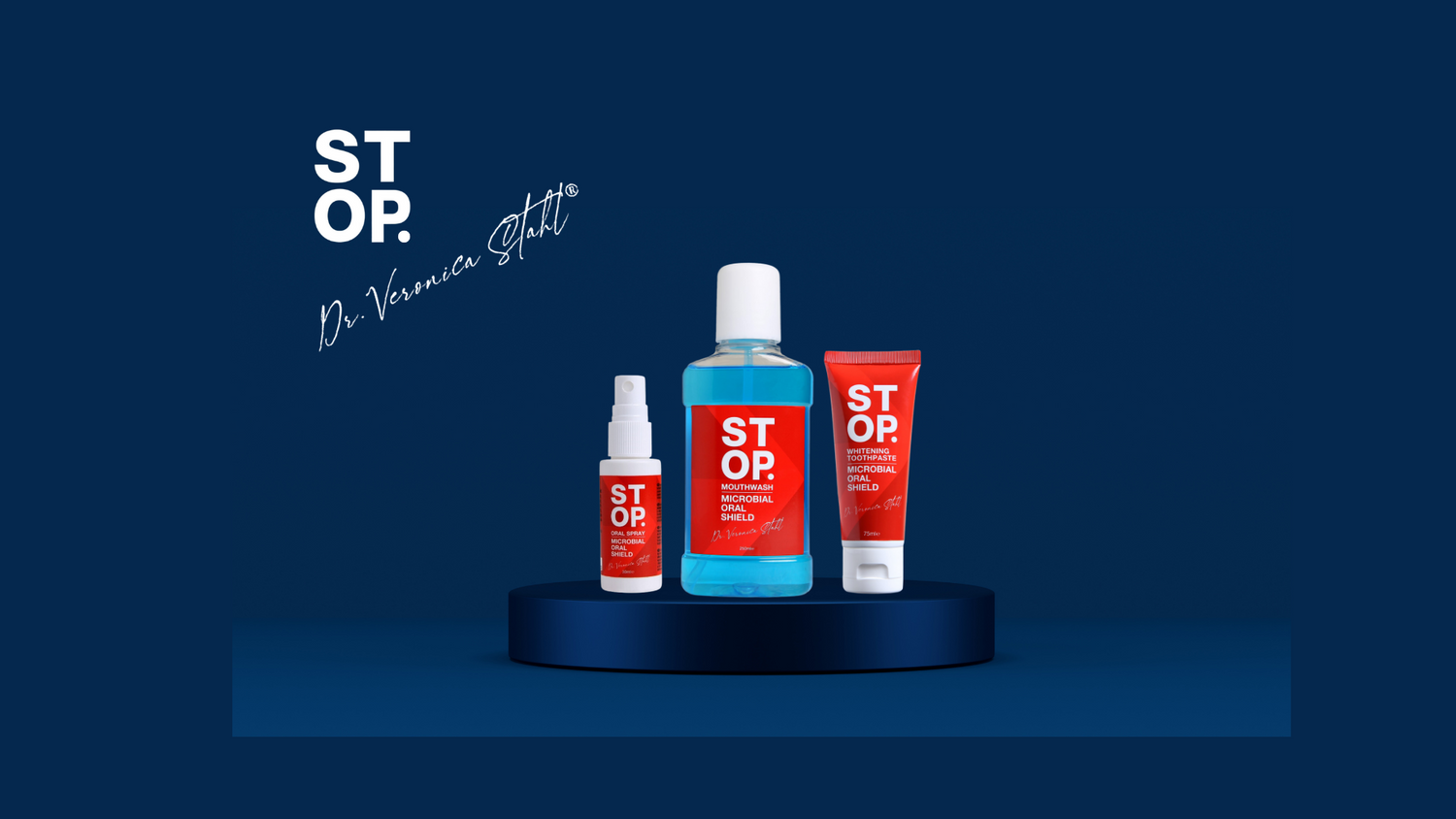
Dr. Veronica Stahl’s work in natural oral care informs the approach here: mechanical cleaning addresses the stain itself, while the underlying product choice affects how much staining risk a patient takes on in the first place. The product line, including toothpaste, mouthwash, and oral spray, is formulated around hemp and Dead Sea minerals rather than the antimicrobial agents most associated with surface discoloration. Readers using a prescribed chlorhexidine rinse should confirm with their dentist before substituting any product, since the clinical benefit of a short antimicrobial course may outweigh the cosmetic tradeoff for a given diagnosis.

What matters most in this decision
The conventional advice on chlorhexidine staining tends to focus heavily on whitening products, when the more useful lesson from the clinical record is that plaque control, not whitening chemistry, determines how much stain forms in the first place. An anti-discoloration additive did little to change outcomes in trials when brushing habits stayed the same, which suggests manufacturers have marketed a fix for a problem that mechanical hygiene already addresses better. The stains themselves are rarely permanent, and readers who treat a cleaning appointment as the default solution, rather than a last resort after weeks of home experimentation, will generally spend less time and risk less enamel wear. Prioritize thorough plaque removal during the rinse course itself, keep home remedies occasional rather than habitual, and treat baking soda or peroxide as a bridge to a dental visit rather than a replacement for one.
— Veronica
A fluoride-free option worth discussing with your dentist
For readers managing sensitive teeth or gum concerns alongside stain risk, Certain protective and whitening oral care products offer a fluoride-free, hemp and Dead Sea mineral formulation built around gentler daily contact with enamel.

These products are not a substitute for a prescribed antimicrobial rinse, so check with your dentist before replacing one with the other. You can view current formulations and pricing on the Stop Oral Care product page.
FAQ
Does chlorhexidine stain teeth permanently?
No, chlorhexidine staining is extrinsic and sits on the tooth surface rather than inside the enamel, so it is usually removable with professional scaling and polishing. Persistent cases that do not respond to cleaning are uncommon and typically involve restorations rather than natural enamel.
How long does it take chlorhexidine to stain your teeth?
Staining can become visible within days of starting the rinse, particularly on surfaces where plaque was already present. The amount of discoloration tends to build the longer the course continues, which is one reason clinical guidance favors short courses of two to four weeks.
How do I get rid of antibiotic or chlorhexidine stains on teeth?
Start with thorough brushing using a low-abrasivity toothpaste, daily flossing, and occasional baking-soda cleaning, then book a professional cleaning if discoloration remains after one to two weeks. Scaling and polishing remains the most reliable method for removing this type of surface stain.
Can chlorhexidine cause tooth discoloration on fillings or crowns?
Yes, chlorhexidine can stain restorations such as fillings, crowns, and veneers, and these surfaces sometimes respond differently to polishing than natural enamel does. If you notice discoloration on a restoration, mention it to your dentist promptly since the cleaning approach may need to be adjusted.
Sources
- NIHR evidence alert on chlorhexidine mouthwash
- PMC7793524
- American Dental Association — Mouthrinse (Clinical considerations)