

Curcumin, the active compound in turmeric, has anti-inflammatory and antimicrobial properties that can reduce gum inflammation when used as an adjunct to professional periodontal care. Meta-analytic data show measurable but modest improvements in probing pocket depth and clinical attachment level. Turmeric does not replace scaling and root planing for moderate to advanced periodontitis, and raw or homemade preparations carry a real staining risk that formulated products are designed to minimize.
TL;DR:
- Curcumin provides modest improvements in periodontal measurements when used with scaling and root planing, averaging a 0.33mm attachment gain.
- Formulated mouthwashes and gels deliver better results and fewer side effects than homemade pastes, with standardization and absorption enhancers increasing effectiveness.
- Curcumin acts as an anti-inflammatory, antioxidant, and antibiofilm agent, supporting gum health mainly in mild to moderate gingivitis cases.
- Proper application involves short contact times, pairing with existing hygiene routines, and caution with DIY pastes to avoid staining and mucosal irritation.
- Significant gum disease signs like deep pockets or persistent bleeding require professional treatment; curcumin is a supportive adjunct, not a substitute.
Table of Contents
- What the Research Says: Mechanisms, Trials, and What the Numbers Mean
- How to Use Turmeric Safely and Effectively for Gums
- Staining, Irritation, and Other Risks to Know Before You Start
- Why Formulation Matters More Than the Ingredient Itself
- Red Flags: When Turmeric Isn’t Enough
- Why Trust This Guide
- What Most Advice on Turmeric and Gum Health Gets Wrong
- Stop Oral Care: A Science-Minded Way to Add Turmeric to Your Routine
- Sources
What the Research Says: Mechanisms, Trials, and What the Numbers Mean
Curcumin’s effect on gum tissue starts at the molecular level, not with the yellow stain it leaves on a countertop. The compound inhibits NF-kB, a protein complex that switches on the genes responsible for producing inflammatory cytokines. When gum tissue is under bacterial attack, NF-kB activation drives up production of TNF-alpha and IL-1beta, two cytokines that fuel the swelling, redness, and bleeding you recognize as gingivitis. Curcumin blunts that signaling cascade, which is why researchers describe it as a cytokine modulator rather than a simple painkiller or antiseptic.
Beyond that anti-inflammatory action, curcumin also functions as an antioxidant that neutralizes reactive oxygen species generated during the immune response, and it shows antibiofilm activity against several bacterial species implicated in periodontal disease. That combination, calming inflammation while disrupting bacterial colonies, is what makes it biologically plausible as a periodontal adjunct rather than just a folk remedy with a pleasant reputation.
The clinical trial data backs up the mechanism with caveats worth taking seriously. A systematic review and meta-analysis published in Dentistry Journal found that locally delivered curcumin, used alongside scaling and root planing, produced statistically significant reductions in periodontal measurements: clinical attachment level improved by an average of 0.33 millimeters, and probing pocket depth dropped by roughly 0.47 millimeters compared to SRP alone.
Statistic Callout: Those numbers are real, but they’re small. A half-millimeter change in pocket depth is not going to turn a 6mm pocket into a healthy 3mm sulcus. The same meta-analysis flagged significant heterogeneity across the studies it pooled, meaning different trials used different curcumin concentrations, delivery vehicles, and follow-up periods, which limits how confidently anyone can generalize the results.
Separately, research on oral health applications of turmeric reports that curcumin’s efficacy in reducing plaque and gingival inflammation can be comparable to 0.20% chlorhexidine, long considered the gold standard antiseptic mouth rinse, and it often causes fewer side effects in the process. That’s a meaningful finding for anyone who has stopped using chlorhexidine because of the taste disturbance or staining it’s known to cause.
Here’s how the evidence breaks down by outcome type:
- Plaque reduction: Several trials show curcumin mouthwashes performing on par with chlorhexidine over short observation windows.
- Gingival inflammation: Gingival index scores improve in most randomized trials, with effect sizes similar to standard antiseptics in some comparisons.
- Pocket depth and attachment level: Adjunctive use with SRP yields small but statistically significant gains, per pooled meta-analysis data.
- Side effect profile: Curcumin formulations tend to produce less staining and taste disruption than chlorhexidine, according to research summarized in Frontiers in Pharmacology.
The honest takeaway: curcumin earns its place as a supporting player in gum care, particularly for people managing mild to moderate gingivitis or maintaining results after professional cleaning. It is not, based on the current trial record, a substitute for mechanical debridement when pockets are already deep or bone loss has begun.
How to Use Turmeric Safely and Effectively for Gums
The form you choose matters as much as the ingredient itself. Curcumin only helps if it actually reaches inflamed tissue in a usable concentration, and that’s where a lot of home approaches fall short.
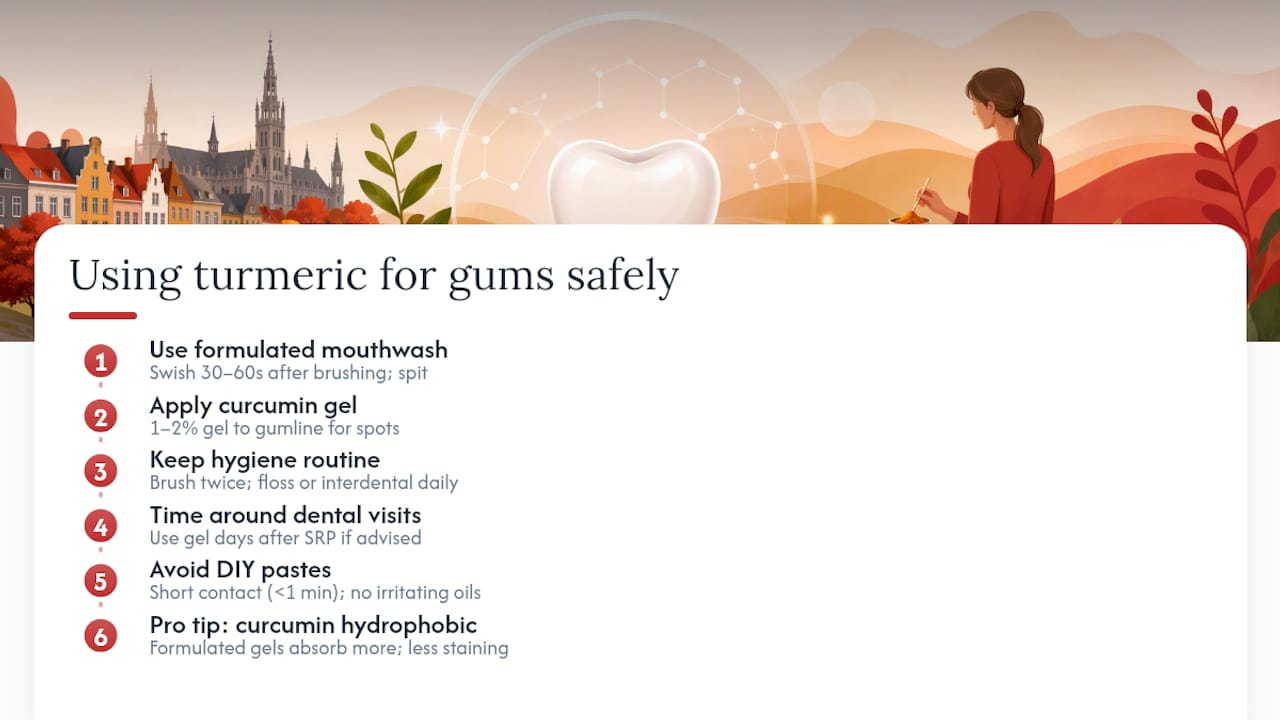
1. Start with a formulated mouthwash. Clinical trials testing curcumin mouthwashes have used a range of concentrations depending on the base and delivery vehicle. A pre-mixed, professionally formulated rinse gives you a known, repeatable dose. Swish for 30 to 60 seconds after brushing, once or twice daily, and spit rather than swallow.
2. Consider a gel for targeted spots. Gels in the 1% to 2% range have been used in trials as a topical application after scaling and root planing, applied directly to the gumline with a fingertip or applicator. This is where curcumin’s local anti-inflammatory action gets the most direct contact time with irritated tissue.
3. Pair it with, not instead of, your existing hygiene routine. Brush twice daily, floss or use interdental brushes, and treat curcumin products as an addition to that baseline, not a replacement for it. Combining a curcumin rinse with consistent mechanical cleaning is a practical way to prevent gingivitis naturally rather than chasing inflammation after it’s already flared.
4. Time it around professional visits. If you’ve had SRP or another periodontal procedure, ask your dentist whether a curcumin gel applied in the days following treatment is appropriate. This is the specific window where adjunctive use has the strongest evidence behind it.
5. Approach DIY turmeric paste with caution. If you’re mixing raw turmeric powder with water or oil at home, keep contact time short (under a minute), avoid open wounds or recent extraction sites, and never use mustard oil or other irritating carrier oils on broken or bleeding tissue. Rinse thoroughly afterward. A natural mouthwash recipe built on gentler, tested ingredients is generally a safer starting point than an improvised paste.
Pro Tip: Raw turmeric powder stirred into water disperses poorly because curcumin is hydrophobic, meaning it repels water. That’s exactly why it stains so aggressively and absorbs so inconsistently. A clinically formulated gel or oil-based product with absorption enhancers gets more curcumin into the tissue and less pigment onto your enamel.
Staining, Irritation, and Other Risks to Know Before You Start
Turmeric’s biggest practical drawback isn’t a hidden safety concern. It’s the pigment. Curcumin stains porous surfaces on contact, and that includes tooth enamel, especially with prolonged or repeated exposure.
- Staining: Keep contact time short, rinse thoroughly after use, and consider professional polishing if discoloration builds up over weeks of use.
- Irritation or allergic reaction: A small number of people experience mucosal irritation from topical curcumin. Patch-test a small area first and discontinue if you notice burning, swelling, or persistent redness.
- Blood thinner interaction: Curcumin taken systemically, in supplement or high-dose dietary form, can have mild blood-thinning effects and may interact with anticoagulant medications. Topical oral use is far less likely to cause a systemic effect, but tell your dentist if you’re on blood thinners before starting any curcumin regimen.
- DIY dosing inconsistency: Homemade pastes have no standardized concentration, which means the same recipe can be too weak to help or strong enough to irritate, depending on how it’s mixed.
Severe, unrelenting pain, visible pus, loose teeth, or fever alongside gum symptoms are not situations to manage with turmeric or any other home remedy. Those signs point to an active infection or advanced periodontal breakdown that needs professional evaluation without delay.
If you notice ongoing staining or irritation despite short contact times, a review of your routine is worth it. Our charcoal toothpaste safety guide covers similar pigment and abrasion issues with another popular natural ingredient, and the same short-contact, rinse-well principle applies here.
Why Formulation Matters More Than the Ingredient Itself
Curcumin is hydrophobic and has notably poor water solubility, which is the single biggest obstacle standing between “turmeric is anti-inflammatory in a lab dish” and “turmeric helps your actual gums.” Stir turmeric powder into water and most of the active compound never dissolves into a form your tissue can absorb; it just sits there, tinting everything orange in the meantime.
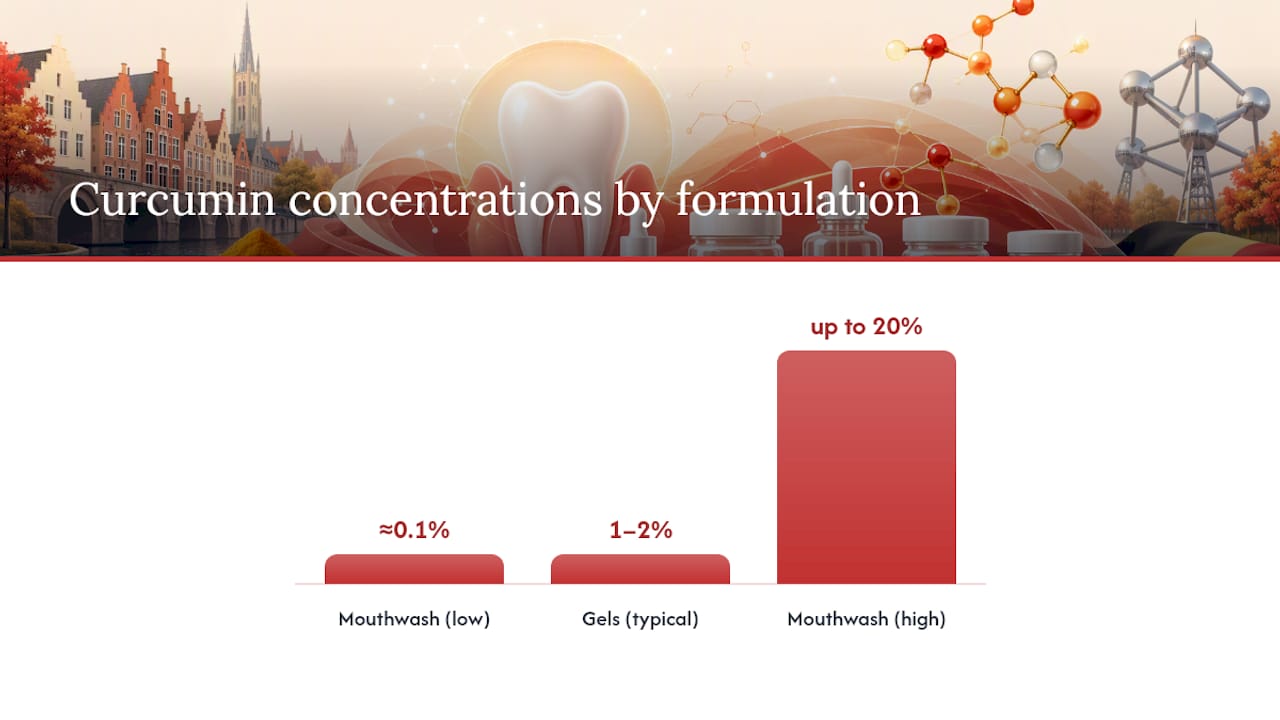
Clinical trials get around this with specific delivery formats. Gels tested in periodontal research typically run 1% to 2% curcumin concentration. Mouthwashes vary more widely, from about 0.1% up to 20%, depending on the solvent base. Some trials use locally delivered chips or subgingival irrigation placed directly into periodontal pockets, and newer research is exploring mucoadhesive films and nanoparticle formulations that cling to gum tissue longer and release curcumin more gradually, according to an umbrella review of curcumin’s periodontal applications.
Absorption enhancers make a measurable difference. Co-formulating curcumin with lipids or piperine, the compound that gives black pepper its bite, substantially increases how much curcumin actually crosses mucosal tissue. This is also why food-focused approaches to boosting turmeric’s absorbability, like pairing it with fat and black pepper, have gained traction outside dentistry too; the same solubility problem shows up whether you’re drinking a turmeric shot or applying a gum gel.
When you’re evaluating a product, look for:
- Standardized curcumin content stated as a specific percentage, not a vague “turmeric extract” listing.
- Documented clinical or trial-based formulation, not just a marketing claim of “natural anti-inflammatory.”
- Absorption-enhancing carriers, such as lipid bases or piperine co-formulation.
- A low-irritant base that won’t compound staining or mucosal sensitivity.
Professionally formulated adjuncts consistently outperform homemade pastes in the trial record, largely because dose and delivery are controlled rather than improvised.
Red Flags: When Turmeric Isn’t Enough
Persistent bleeding when you brush, teeth that feel loose, gum pockets a hygienist measures at 5mm or deeper, visible pus, or pain that doesn’t ease within a couple of days are all signals that a curcumin rinse won’t resolve on its own. Scaling and root planing remains the mechanical foundation of periodontal treatment. Curcumin supports that process; it doesn’t substitute for it. If you’re noticing early symptoms and want a clearer sense of what escalation actually looks like, our guide on early periodontitis remedies walks through when home care is appropriate and when it’s time to book a dental visit.
Why Trust This Guide
This article was developed under the guidance of Dr. Veronica Stahl, whose work centers on natural, scientifically grounded approaches to oral health. Stop-oralcare’s editorial content is built to reflect current periodontal research rather than anecdotal claims.
- Content reviewed against peer-reviewed systematic reviews and randomized controlled trial data
- Focused on natural, fluoride-free formulation science rather than one-off home remedies
- Further reading available on sensitive gum care and related natural oral health topics
- Detailed credential and case study documentation to be expanded in future publications
What Most Advice on Turmeric and Gum Health Gets Wrong
The evidence supports curcumin as a low-risk adjunct that nudges inflammatory markers in the right direction, not a cure that most articles imply it is. That gap between promise and proof is where a lot of natural health content oversells the ingredient.
The bigger blind spot is formulation. Most advice treats turmeric as interchangeable: powder, paste, capsule, doesn’t matter, just get it near your gums. That’s backwards. Curcumin’s poor solubility means a homemade paste and a properly formulated gel can produce wildly different results despite using the “same” ingredient. Readers should prioritize delivery format first, dosage consistency second, and only then worry about frequency of use.
If I had to correct one habit, it would be this: stop treating DIY turmeric pastes as a baseline expectation. Standardized, tested formulations exist for good reason, and they consistently outperform kitchen experiments in the trials that actually measured outcomes.
— Veronica
Stop Oral Care: A Science-Minded Way to Add Turmeric to Your Routine
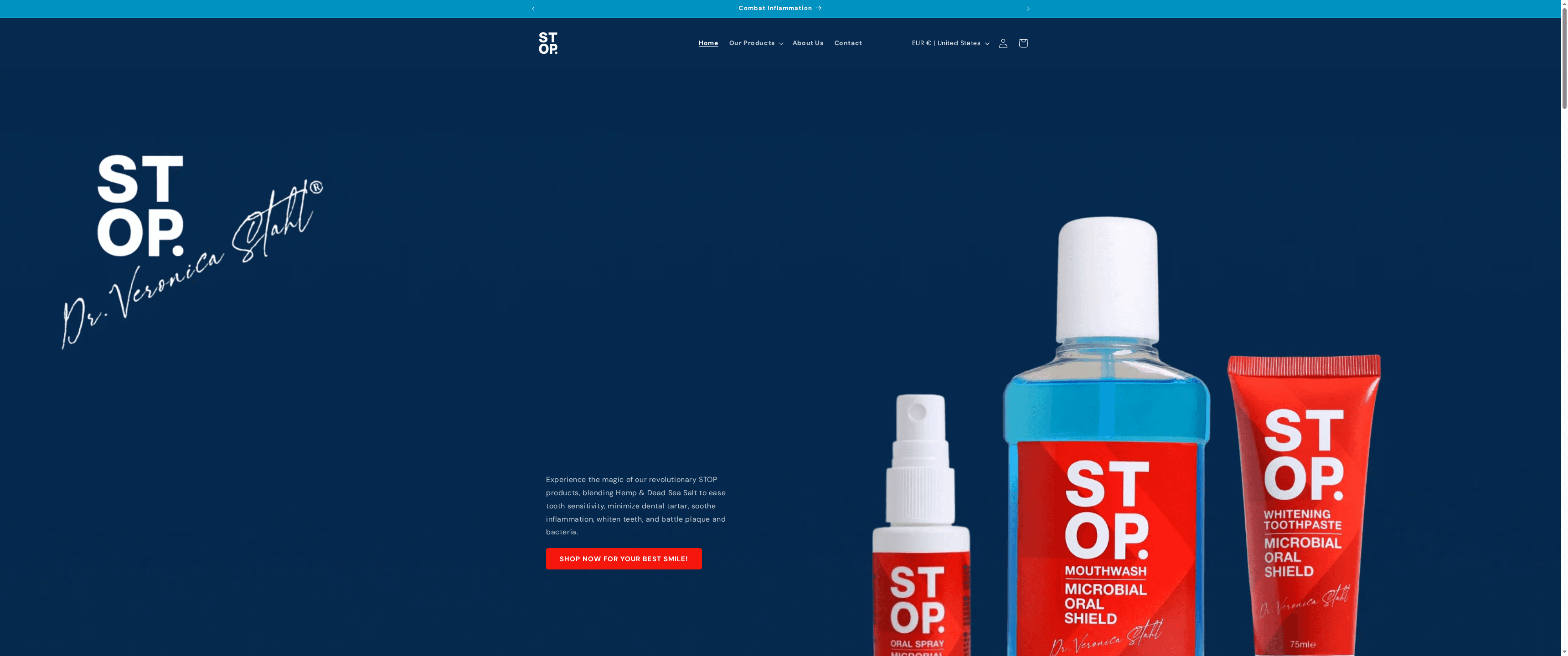
If the formulation research above convinced you that raw turmeric powder isn’t the most reliable route, Stop-oralcare builds fluoride-free oral care products around ingredients chosen for a reason, not just a trend. The line combines hemp and Dead Sea minerals with a formulation philosophy that prioritizes documented natural compounds over improvised kitchen mixes, giving you a standardized option instead of a guessing game with powder and water.
Consistent dosing matters more than enthusiasm when it comes to reducing gum inflammation, and that’s exactly the gap a formulated product is designed to close. If you’ve recently had scaling and root planing or you’re managing early gum sensitivity, visit the Stop-oralcare product line to see which natural, fluoride-free option fits into your post-treatment or daily maintenance routine.
This article is general information, not a substitute for advice from a qualified doctor. Consult a qualified healthcare professional about your own circumstances before acting on anything here.
Sources
- Effects of turmeric (Curcuma longa) on oral health — (2025/2026 research excerpt)
- A systematic review and meta-analysis on locally delivered adjunctive curcumin in periodontitis (MDPI)
- Curcumin in oral health: mechanisms, clinical evidence, and delivery strategies — Frontiers in Pharmacology