

TL;DR:
- Adaptogenic oral care uses plant-based adaptogens to support oral health by reducing inflammation and balancing microbes. These products act as adjuncts, not replacements, to brushing, flossing, and dental treatments. Consistent use over several weeks can improve gum health and manage stress-related oral conditions.
Adaptogenic oral care is the use of plant-based adaptogens in dental hygiene products to support oral health by reducing inflammation, balancing oral microbiota, and mitigating stress-related oral conditions. The term “adaptogenic oral care” is an emerging consumer phrase; the recognized clinical category is phytotherapy-based oral hygiene, which encompasses herbal preparations used as adjuncts to conventional mechanical hygiene. Ingredients like Ashwagandha (Withania somnifera), Ginger (Zingiber officinale), and Ginseng (Panax ginseng) form the core of this approach, drawing on Ayurvedic and traditional herbal medicine traditions that span millennia. Adaptogenic oral care products do not replace brushing, flossing, or professional dental treatment. They function as adjunctive agents that work alongside standard hygiene to address inflammation, microbial imbalance, and stress-driven oral conditions.
What is adaptogenic oral care and how do adaptogens benefit oral health?
Adaptogens benefit oral health through three primary mechanisms: antioxidant activity, antimicrobial action, and anti-inflammatory modulation. Each mechanism targets a different layer of oral disease risk, which is why researchers have studied these compounds as adjuncts to periodontal therapy rather than standalone treatments.
Ashwagandha contains bioactive withanolides that stabilize oral microbiota and promote mucosal health. Withanolides are steroidal lactones that interfere with bacterial cell membrane integrity, reducing the load of pathogenic species without eliminating the full microbial community. This selective pressure is clinically meaningful because a diverse, balanced microbiome resists colonization by pathogens more effectively than a depleted one.

Ginger and Ashwagandha also demonstrate direct effects on enamel. Seventeen studies reviewed by 2025 confirmed the effectiveness of polyherbal dentifrices as adjuncts to traditional periodontal therapy, with evidence of tooth remineralization and reduced gingival inflammation in in vitro models. That body of evidence positions adaptogenic dentifrices as clinically relevant, not merely cosmetic.
The systemic dimension is equally important. Adaptogens modulate the HPA axis to rebalance cortisol levels, indirectly protecting oral tissues by reducing systemic inflammation. Elevated cortisol is a documented driver of bruxism and periodontal tissue breakdown. By dampening the stress response, adaptogens reduce one of the least-discussed contributors to gum disease.
- Antioxidant effects: Polyphenols in Ginger neutralize reactive oxygen species that damage periodontal ligament cells.
- Antimicrobial activity: Terminalia chebula and Withania somnifera show significant activity against Streptococcus mutans and Candida albicans, attributed to tannins, gallic acid, and phenolic compounds.
- Anti-inflammatory action: Withanolides suppress pro-inflammatory cytokines, reducing gingival erythema and pocket depth progression.
- Stress mitigation: HPA-axis modulation lowers cortisol, which reduces bruxism frequency and systemic inflammation affecting oral tissues.
Pro Tip: Ashwagandha has been used in Ayurvedic medicine for 3,000 years. Its application in oral care is not a trend. It is a modern formulation of a well-documented therapeutic tradition.
What types of adaptogenic oral care products are available?
Product format determines how adaptogens reach their target tissues. Two delivery categories exist: topical application and transmucosal absorption. Each has distinct onset times, targeted effects, and practical trade-offs.
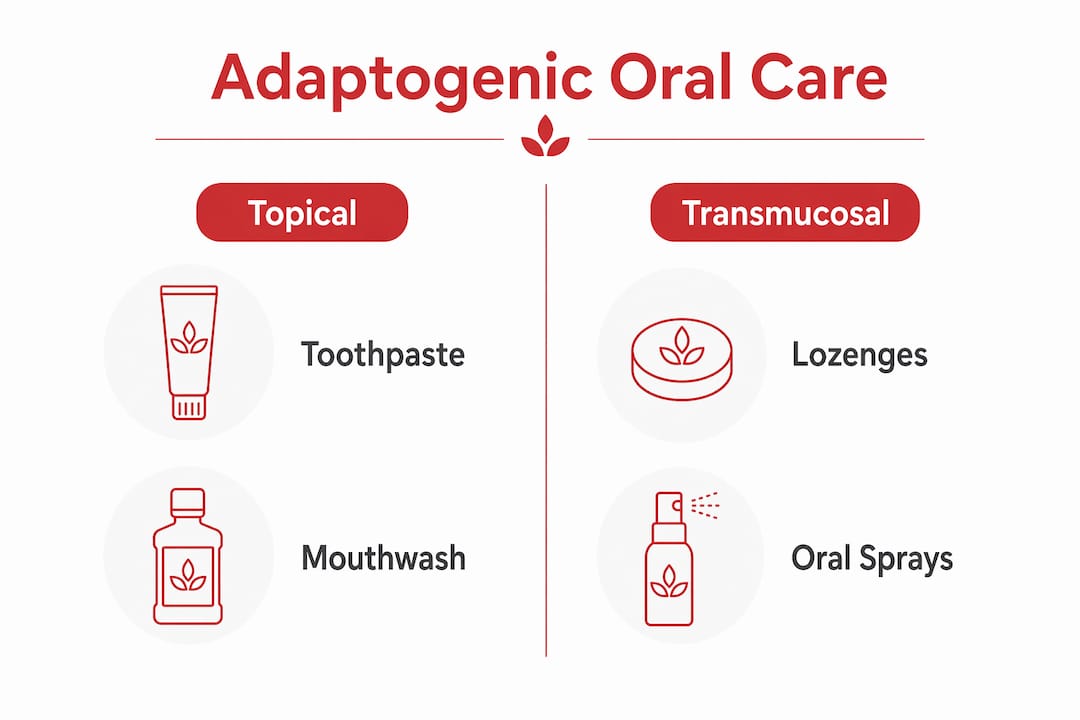
Topical products include toothpastes and mouthwashes. These deliver adaptogens directly to gingival tissue and enamel surfaces. Onset is localized and immediate at the site of application. Mouthwashes extend contact time beyond brushing, which improves the anti-inflammatory and antimicrobial effect on soft tissue. The limitation is that topical products do not meaningfully enter systemic circulation, so their stress-modulating benefits remain local.
Transmucosal products include lozenges and oral sprays. These are absorbed through the buccal mucosa, entering the bloodstream faster than capsules or swallowed tablets. Sprays and lozenges designed for buccal absorption allow rapid onset and better systemic adaptogenic support compared to oral capsules. The segment for functional oral sprays containing adaptogens like Ginseng is growing significantly in 2026, driven by consumer demand for products that combine breath freshening with genuine therapeutic action.
| Product type | Delivery method | Primary benefit | Key adaptogens | Limitation |
|---|---|---|---|---|
| Toothpaste | Topical | Remineralization, antimicrobial | Ginger, Ashwagandha | No systemic absorption |
| Mouthwash | Topical rinse | Gingival anti-inflammation | Ginger, Ginseng | Short contact time |
| Oral spray | Transmucosal | Rapid stress relief, energy | Ginseng, Ashwagandha | Requires holding in mouth |
| Lozenge | Transmucosal | Sustained systemic support | Ginseng, Maca | Slower than spray |
Pro Tip: When using an adaptogenic spray or lozenge, hold the product against your cheek for 30–60 seconds before swallowing. Buccal absorption is significantly faster than gastrointestinal absorption, and most people skip this step entirely.
How does adaptogenic oral care compare to conventional chemical agents?
The fundamental difference between adaptogenic and conventional oral care is the treatment goal. Conventional chemical antiseptics like chlorhexidine aim for broad microbial elimination. Adaptogenic oral care targets eubiosis of oral microbiota, meaning a balanced microbial environment rather than a sterile one. That distinction has real clinical consequences.
Chlorhexidine is effective against periodontal pathogens, but long-term use carries documented side effects: tooth staining, altered taste perception, and dry mouth. Fluoride, while effective for caries prevention, raises concerns at high doses, particularly for children and people with fluoride sensitivity. Natural herbal agents mitigate these drawbacks by preserving a balanced oral environment rather than disrupting the full microbial community.
The evidence for phytotherapy as an adjunct is growing. Combining conventional periodontal therapy with herbal preparations yields better clinical outcomes than mechanical treatment alone, including reductions in periodontopathogenic bacteria and improvements in pocket depth and bleeding scores. This positions adaptogenic products not as replacements but as evidence-supported additions to standard care.
- Conventional antiseptics eliminate broad microbial populations, including beneficial species.
- Adaptogenic agents selectively reduce pathogenic load while preserving commensal bacteria.
- Chemical agents carry documented side effects with prolonged use; adaptogenic products have a generally favorable safety profile when used as directed.
- Neither category replaces mechanical hygiene. Brushing and scaling remain the foundation of periodontal health.
Readers interested in how botanical ingredients compare to conventional fluoride formulations will find detailed ingredient-level analysis useful before selecting a product.
Who should consider adaptogenic oral care and how to use it effectively?
Adaptogenic oral care is most relevant for people with specific, identifiable oral health challenges that conventional products address incompletely. The clearest candidates are those with chronic gingival inflammation, stress-related bruxism, sensitivity to chemical antiseptics, or a preference for fluoride-free formulations.
People with medical conditions or who take prescription medications should consult a healthcare provider before adding adaptogenic products to their routine. Adaptogens modulate the HPA axis and cortisol, which means they can interact with corticosteroids, thyroid medications, and immunosuppressants. This is not a reason to avoid them. It is a reason to use them with clinical awareness.
Consistent use is the most important factor in outcomes. Adaptogenic products must be used consistently as adjuncts to mechanical hygiene. They do not replace brushing or professional scaling, but they improve outcomes and gum health over time when used regularly. Expecting results after a single week is unrealistic. Most clinical studies observe meaningful changes after four to twelve weeks of consistent application.
- Identify your primary concern. Gingival inflammation, bruxism, and microbial imbalance each respond to different adaptogenic ingredients. Match the product to the condition.
- Check the ingredient list. Look for standardized extracts of Ashwagandha, Ginger, or Ginseng. Proprietary blends without disclosed concentrations offer no way to assess dose adequacy.
- Choose the right format. Topical products address local tissue. Transmucosal sprays and lozenges address systemic stress. Many people benefit from combining both formats.
- Maintain mechanical hygiene. Brush twice daily, floss once daily, and attend professional cleanings at least twice per year. Adaptogenic products work on top of this foundation, not instead of it.
- Set a realistic timeline. Commit to consistent use for at least eight weeks before evaluating results.
The Stop-oralcare safe ingredients guide provides a vetted list of adaptogenic and botanical compounds with documented oral health applications, which is a practical starting point for evaluating product labels. For a broader perspective on herbal remedy safety and appropriate use, the herbal remedy safety guide at Mybestpharmacy.net covers interaction risks and dosing considerations relevant to oral care applications.
Pro Tip: If you experience gum sensitivity when switching to an adaptogenic toothpaste, reduce frequency to once daily for two weeks. The shift in microbial environment can cause transient sensitivity as the oral microbiome rebalances.
Key Takeaways
Adaptogenic oral care works best as a consistent adjunct to mechanical hygiene, not as a replacement for brushing, flossing, or professional dental treatment.
| Point | Details |
|---|---|
| Core definition | Adaptogenic oral care uses plant-based adaptogens to reduce inflammation, balance microbiota, and address stress-related oral conditions. |
| Mechanism of action | Withanolides, polyphenols, and HPA-axis modulation provide antioxidant, antimicrobial, and systemic anti-inflammatory effects. |
| Product format matters | Transmucosal sprays and lozenges deliver faster systemic onset; topical toothpastes and mouthwashes address localized tissue effects. |
| Adjunct, not replacement | Clinical evidence supports adaptogenic products as additions to conventional periodontal therapy, not substitutes for mechanical hygiene. |
| Safety and consistency | Consult a provider if on medications; commit to at least eight weeks of consistent use to evaluate meaningful outcomes. |
The evidence is promising, but the hype needs calibrating
I have spent years reviewing the intersection of natural medicine and clinical dentistry, and the honest assessment of adaptogenic oral care is this: the science is real, but it is early. The in vitro remineralization data on Ginger and Ashwagandha dentifrices is genuinely encouraging. The antimicrobial activity of Terminalia chebula against Streptococcus mutans is not folklore. These are documented findings from peer-reviewed research.
What concerns me is the speed at which marketing has outpaced the clinical evidence. Consumers are being sold adaptogenic mouthwashes as if they are equivalent to a professional periodontal protocol. They are not. The oral microbiome balance research is clear: preserving eubiosis is a valid and clinically meaningful goal, but it requires consistent application over weeks, not a single rinse.
The most underappreciated benefit of adaptogens in oral care is the systemic stress pathway. Bruxism is a stress-mediated condition. Periodontal disease progression accelerates under chronic cortisol elevation. An adaptogen that genuinely modulates the HPA axis addresses a root cause that no toothpaste, conventional or herbal, touches directly. That is where I see the most defensible clinical rationale for this category.
My recommendation is to approach adaptogenic oral care with calibrated expectations. Use it consistently, combine it with mechanical hygiene, and give it at least two months before drawing conclusions. The category deserves serious attention. It does not deserve uncritical enthusiasm.
— Veronica
Natural oral care products grounded in research
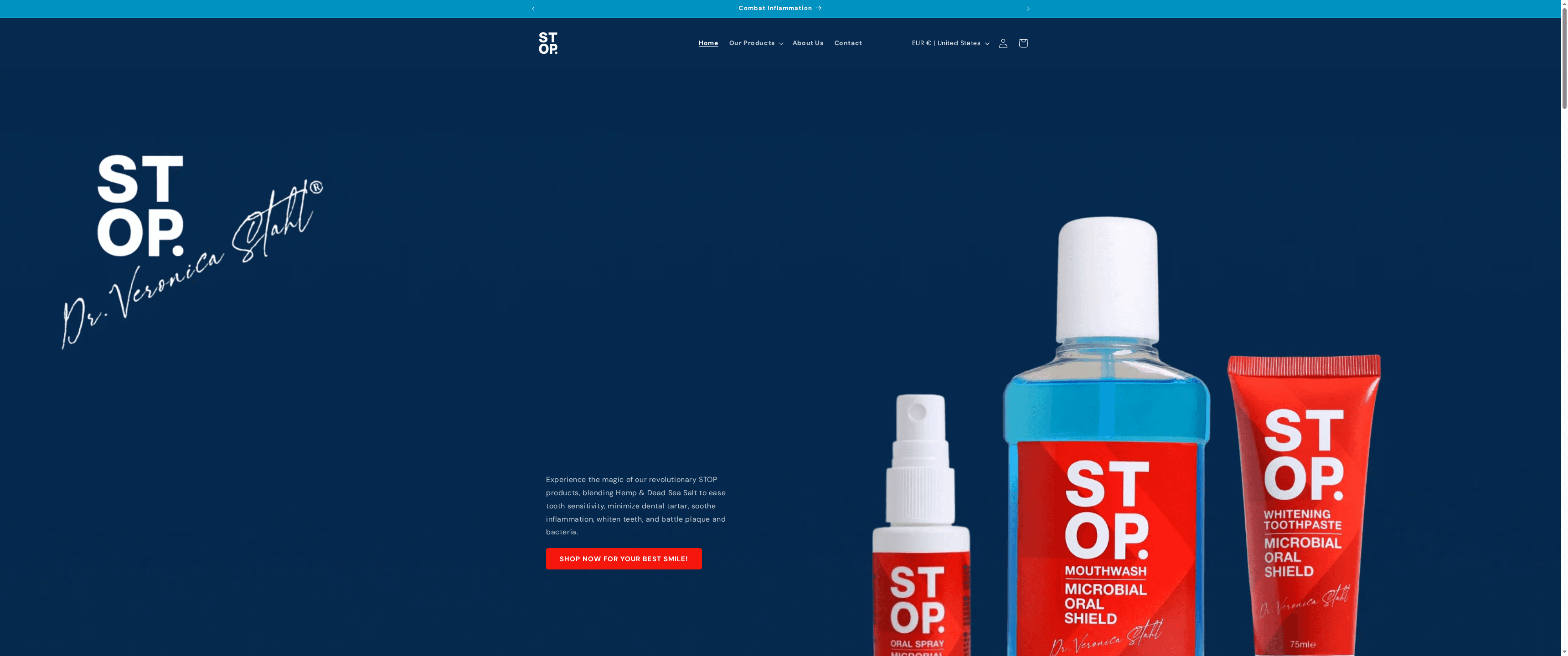
Stop-oralcare formulates its products around documented botanical and mineral compounds, including hemp-derived ingredients and Dead Sea minerals, with fluoride-free formulations designed for people who want effective alternatives to conventional dental products. The product line includes toothpastes, mouthwashes, and oral sprays developed under the guidance of Dr. Veronica Stahl, a specialist in dentistry and natural medicine. Each formulation reflects the principle that oral health support should preserve microbial balance rather than disrupt it. Readers who want to evaluate specific ingredient profiles and product options can visit the Stop-oralcare product catalog to review current availability and formulation details.
FAQ
What is adaptogenic oral care in simple terms?
Adaptogenic oral care uses plant-based adaptogens like Ashwagandha, Ginger, and Ginseng in dental products to reduce inflammation, support microbial balance, and address stress-related oral conditions. These products function as adjuncts to standard brushing and professional dental care.
Can adaptogens improve dental health?
Yes, within a defined scope. Research shows adaptogenic ingredients reduce gingival inflammation, demonstrate antimicrobial activity against oral pathogens like Streptococcus mutans, and support tooth remineralization when used consistently alongside mechanical hygiene.
How does adaptogenic oral care work differently from conventional mouthwash?
Conventional antiseptic mouthwashes eliminate broad microbial populations, including beneficial bacteria. Adaptogenic oral care targets eubiosis, meaning it selectively reduces harmful species while preserving the commensal microbiome that protects against pathogen colonization.
Are adaptogenic oral care products safe for everyone?
Most adaptogenic oral care products carry a favorable safety profile, but people taking corticosteroids, thyroid medications, or immunosuppressants should consult a healthcare provider first, as adaptogens modulate cortisol and the HPA axis.
How long does it take to see results from adaptogenic oral care?
Clinical studies on herbal periodontal adjuncts typically observe meaningful changes after four to twelve weeks of consistent use. Single-week trials do not provide sufficient time to assess the microbial or anti-inflammatory effects of adaptogenic formulations.
Recommended
- How natural compounds boost oral health without fluoride – Stop Oral Care
- Adaptive Oral Care Explained: Meaning, Benefits, and Solutions – Stop Oral Care
- How to Transition to Natural Oral Care Naturally and Safely – Stop Oral Care
- Synergistic oral care: Optimize your natural dental health – Stop Oral Care