

TL;DR:
- Synergistic oral care combines products and practices to enhance overall oral health beyond isolated routines.
- It supports microbiome balance, remineralization, and pH stabilization through coordinated ingredient use.
- Consistency and compatibility are essential; individual ingredients alone are not sufficient for optimal results.
Most people brush twice daily, floss occasionally, and consider the job done. Yet clinical evidence consistently shows that fragmented oral care routines leave significant gaps in protection, allowing pathogenic bacteria to thrive within complex biofilm structures that isolated product use cannot fully address. Synergistic oral care represents a coordinated methodology where each product, practice, and ingredient is selected and sequenced to amplify the effects of the others, producing outcomes that no single intervention achieves alone. This article defines the concept precisely, explains the science behind it, and provides a structured framework for implementing a natural, fluoride-free routine grounded in evidence.
Table of Contents
- What is synergistic oral care?
- How does synergistic oral care work?
- Natural ingredients making synergy possible
- How to build your own synergistic, natural oral care routine
- Our take: What most people miss about true oral synergy
- Get started with a complete synergistic oral care solution
- Frequently asked questions
Key Takeaways
| Point | Details |
|---|---|
| Holistic routines matter | Oral health improves most when habits, products, and the microbiome work together. |
| Natural synergy works | Ingredients like hemp and Dead Sea minerals can enhance results when used in a layered routine. |
| Choose gentle solutions | Synergistic oral care minimizes harsh ingredients, making it suitable for sensitive teeth and gums. |
| Consistency beats novelty | Daily, coordinated habits produce better results than trendy products alone. |
What is synergistic oral care?
Synergistic oral care is a holistic methodology wherein multiple oral health practices and products are deliberately combined so that their combined effect exceeds what each would produce independently. Rather than treating brushing, rinsing, and flossing as discrete, unrelated tasks, this approach treats the oral cavity as an integrated biological environment requiring coordinated intervention.
Standard oral hygiene routines are largely reactive and fragmented. A consumer purchases a toothpaste, perhaps a mouthwash, and applies them at separate times without considering how they interact at the microbiological level. Synergistic oral care, by contrast, begins with an understanding of how oral microbiome balance is affected by the sequence, timing, and composition of every product used.
The core benefits of this coordinated approach include:
- Microbiome preservation: Natural and plant-based products applied in a deliberate sequence support the growth of commensal bacteria while suppressing pathogenic species, rather than indiscriminately eliminating all oral flora.
- Cumulative remineralization: Mineral-rich rinses and pastes, when used after mechanical debridement (brushing and flossing), have direct access to cleaned enamel surfaces, enhancing mineral uptake.
- pH stabilization: Layering alkaline-buffering products after acidic dietary exposure protects enamel from demineralization over time.
- Reduced systemic exposure: Fluoride-free, plant-derived formulations used consistently reduce the cumulative chemical burden on oral tissues and the gastrointestinal tract.
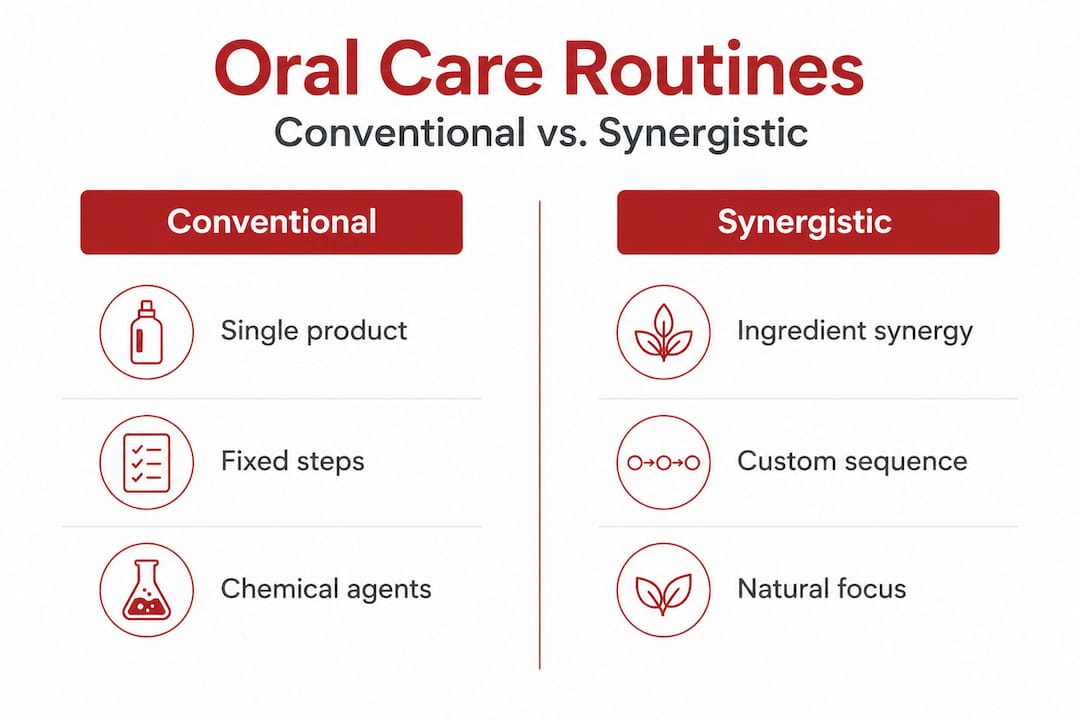
The table below contrasts an isolated conventional routine with a synergistic natural routine:
| Feature | Isolated conventional routine | Synergistic natural routine |
|---|---|---|
| Product selection | Independent, uncoordinated | Ingredient-compatible, sequenced |
| Microbiome impact | Broadly antimicrobial | Selectively supportive |
| pH management | Passive | Active and deliberate |
| Remineralization | Fluoride-dependent | Natural mineral-based |
| Ingredient transparency | Variable | High, plant-based emphasis |
| Long-term tissue impact | Potential irritation | Reduced chemical burden |
The concept is not merely theoretical. Research addressing how synergistic oral care strategies support a healthy microbiome demonstrates that oral microbial communities respond measurably to the composition and frequency of care interventions. When products are selected with their combined biological effect in mind, clinical outcomes including reduced plaque indices, lower gingival inflammation scores, and improved salivary pH have been documented.
How does synergistic oral care work?
With the basics defined, the underlying science and practical methods of synergistic oral care merit closer examination. The oral cavity is a dynamic ecosystem hosting over 700 identified bacterial species. Health is not defined by the absence of bacteria but by a balanced community in which commensal species dominate. Disruption of this balance, termed dysbiosis, is the origin of the most prevalent oral conditions, including dental caries, periodontitis, and halitosis.
The role of pH balance in oral hygiene is central to understanding why coordinated care works. Salivary pH normally ranges from 6.7 to 7.4. When pH falls below 5.5, the critical threshold, hydroxyapatite crystals in enamel begin to dissolve. Acidogenic bacteria such as Streptococcus mutans produce organic acids as metabolic byproducts, and conventional sugary diets amplify this effect. A synergistic routine addresses pH at multiple intervention points rather than leaving stabilization to saliva alone.
A structured, synergistic daily oral care routine operates as follows:
- Mechanical debridement (brushing): Using a soft-bristle brush with a natural, mineral-enriched paste removes loosely adherent biofilm and food debris, preparing surfaces for subsequent treatment.
- Interdental cleaning (flossing or interdental brushes): Removes biofilm from proximal surfaces inaccessible to toothbrush bristles, where carious lesions and periodontal pockets most commonly initiate.
- Therapeutic rinsing: A mineral-rich, fluoride-free mouthwash applied immediately after mechanical cleaning contacts freshly exposed enamel and soft tissue surfaces, maximizing ingredient absorption.
- Targeted supplementation (as indicated): Oil-based oral sprays or hemp-infused formulations address residual inflammation and support the oral microbiome and body health connection by modulating localized immune responses.
- Dietary pH awareness: Scheduling acidic food or beverage consumption away from brushing events prevents mechanical disruption of softened enamel.
“The sequential application of products with complementary mechanisms of action at targeted biological sites represents a fundamentally more sophisticated approach to oral disease prevention than any single-agent regimen.” This principle, consistent with current periodontology literature, underpins the rationale for synergistic care design.
Pro Tip: Apply your mineral-rich rinse immediately after brushing and before eating or drinking anything. This three-to-five-minute window allows maximum mineral contact with clean enamel, substantially improving remineralization efficiency compared to rinsing at a separate time of day.
Natural ingredients making synergy possible
Understanding the mechanism, a closer examination of the specific ingredients that enable true oral care synergy is warranted. Not all natural ingredients produce equivalent outcomes, and the selection of biocompatible, evidence-supported compounds is critical to achieving the coordinated effects described above.
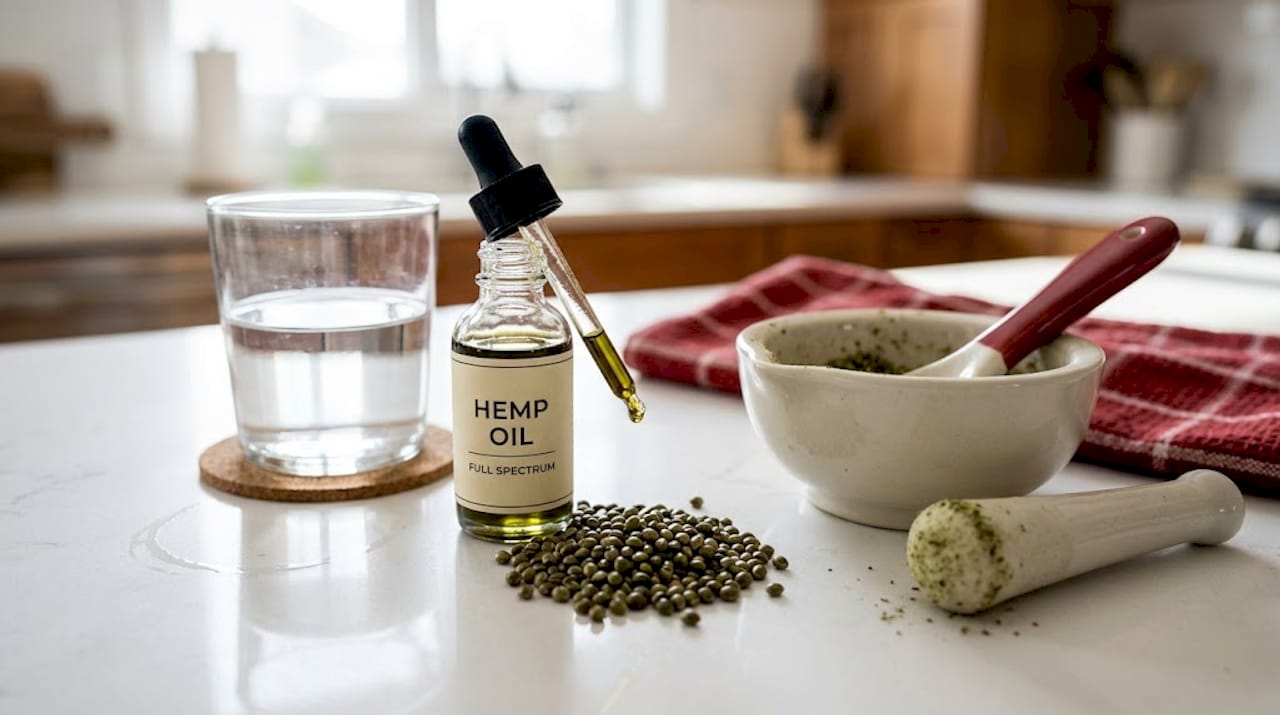
Hemp oil (derived from Cannabis sativa L.) contains cannabidiol (CBD) and related phytocannabinoids that interact with the endocannabinoid system present in oral mucosal tissues. Research indicates anti-inflammatory properties relevant to gingival tissue health, with potential to modulate cytokine production in periodontal tissues. Hemp oil also contains essential fatty acids, specifically linoleic and alpha-linolenic acid, which support epithelial membrane integrity.
Dead Sea minerals, including magnesium chloride, potassium chloride, calcium chloride, and bromide salts, provide a highly bioavailable mineral substrate that supports enamel remineralization through mechanisms distinct from fluoride. Magnesium, in particular, is incorporated into the hydroxyapatite crystal lattice, increasing its resistance to acid dissolution. These minerals also exhibit osmotic effects on microbial cell membranes, contributing to biofilm disruption without broad-spectrum antibiotic activity.
The following comparison illustrates how these natural compounds differ from conventional synthetic and fluoride-based ingredients:
| Property | Hemp and Dead Sea minerals | Fluoride and synthetic agents |
|---|---|---|
| Remineralization mechanism | Bioavailable mineral lattice incorporation | Fluorapatite crystal formation |
| Anti-inflammatory action | Phytocannabinoid-mediated, targeted | Generally absent |
| Microbiome selectivity | Supports commensal species | Broadly antimicrobial |
| Systemic safety profile | High, biocompatible | Concerns at elevated doses |
| Tissue irritation potential | Low | Variable (SLS, alcohol) |
| Synergistic compatibility | High with plant-based formulations | Limited by chemical interactions |
The natural oral hygiene workflow supported by clinical and scientific evaluation identifies additional plant-based compounds that contribute meaningfully to a synergistic routine:
- Xylitol: A polyol sugar alcohol that inhibits Streptococcus mutans adhesion and reduces salivary bacterial counts without disrupting commensal communities.
- Aloe vera gel: Demonstrates anti-inflammatory and antimicrobial properties relevant to gingival tissue health and is compatible with hemp oil formulations.
- Kaolin clay: A mild abrasive that supports mechanical plaque removal and gentle whitening without enamel surface damage associated with harsh abrasives.
- Activated charcoal (controlled use): Adsorbs chromogenic compounds responsible for surface staining, offering whitening benefits when formulated appropriately and used at controlled frequencies.
- Tea tree oil (at low concentrations): Exhibits targeted antimicrobial activity against periodontal pathogens, complementing the anti-inflammatory action of hemp oil.
These ingredients, when formulated together and used in coordinated sequence, produce a combined anti-inflammatory, remineralizing, and microbiome-supportive effect that exceeds what any single active compound achieves in isolation.
How to build your own synergistic, natural oral care routine
Empowered with ingredient knowledge, constructing a personalized synergistic oral care routine becomes a structured, achievable process. The foundation is consistency and compatibility, not the acquisition of every available product.
A clinically informed, practical daily framework includes the following steps:
- Morning (upon waking, before eating): Brush for two full minutes using a hemp-infused or Dead Sea mineral toothpaste, paying particular attention to the gingival margin. This removes overnight biofilm accumulation and introduces active natural compounds before salivary dilution occurs.
- Rinse with mineral mouthwash: Immediately following brushing, use a fluoride-free, mineral-enriched rinse for 30 to 60 seconds. Swish actively to ensure contact with interdental and posterior surfaces.
- Interdental cleaning (once daily, preferably evening): Floss or use interdental brushes to mechanically remove biofilm from proximal surfaces. This step is often neglected but is disproportionately impactful in reducing interproximal caries and periodontal inflammation.
- Targeted oral spray (as indicated): Hemp-based oral sprays applied to inflamed or sensitive gingival areas after interdental cleaning allow direct phytocannabinoid delivery to affected tissues.
- Evening brush and rinse: Repeat the morning brush and rinse sequence, ensuring the oral environment is clear of fermentable substrates prior to the overnight fasting period, during which salivary flow is reduced and the risk of acid accumulation increases.
For individuals with specific wellness goals, this framework supports meaningful adaptation. Those with dentinal hypersensitivity should prioritize mineral-rich formulations applied for extended contact periods and avoid highly abrasive components. Individuals managing early-stage periodontal disease benefit from adding an anti-inflammatory oral spray step and increasing interdental cleaning frequency. The process of building a natural oral care routine systematically addresses how coordinated oral care practices prevent oral disease over both short and long time horizons.
For comprehensive self-monitoring, the oral hygiene checklist for adults provides a reference tool that tracks product use, sequencing, and outcomes across a sustained period.
Pro Tip: Commit to your synergistic routine for a minimum of three consecutive weeks before evaluating results. Oral microbiome rebalancing and remineralization processes operate on biological timescales that require sustained, consistent intervention. Tracking gingival bleeding frequency, plaque visibility, and sensitivity levels across this period provides objective data for routine refinement.
Our take: What most people miss about true oral synergy
With all the practical steps outlined, it is important to address the most prevalent misconceptions that prevent individuals from achieving the results that synergistic oral care can realistically deliver.
The most persistent myth in natural oral care is that a single “hero ingredient” is sufficient to transform oral health outcomes. Marketing frequently positions one compound, whether activated charcoal, coconut oil, or CBD, as a standalone solution. The clinical evidence does not support this framing. Individual ingredients, regardless of their documented efficacy in isolation, operate within a biological system that requires coordinated support across multiple dimensions simultaneously.
What actually determines long-term results is the relationship between habit consistency and product compatibility. A consumer who uses a premium hemp toothpaste inconsistently, or who follows it with a conventional alcohol-based mouthwash that disrupts the oral microbiome, will not observe the outcomes that the toothpaste’s ingredient profile could theoretically produce. The two products work against each other at the microbiological level, and the net effect is reduced efficacy for both. Understanding why dental routine matters as a complete system rather than a collection of product choices is the most important conceptual shift a health-conscious consumer can make.
Observation of individuals transitioning from conventional to natural oral care regimens consistently reveals a second underestimated factor: the adjustment period. The oral microbiome requires time to reestablish a commensal-dominant state after years of exposure to broadly antimicrobial conventional products. During this period, some users report temporary changes in breath or tissue sensitivity. These transient responses are consistent with microbiome rebalancing and typically resolve within two to four weeks of consistent natural product use.
The difference between products with compelling claims and those that deliver sustainable results lies almost entirely in formulation coherence and routine integration. Individual ingredient claims matter far less than whether those ingredients were designed to work together and whether the user applies them within a consistent, coordinated daily structure.
Get started with a complete synergistic oral care solution
Ready to put this knowledge into action? The transition from fragmented conventional routines to a coordinated, natural approach does not require a complete overhaul. It requires selecting products designed to function together and applying them within a consistent daily sequence.
At Stop Oral Care, the product line is formulated specifically to support synergistic oral care solutions, with hemp and Dead Sea mineral formulations designed for compatibility across toothpaste, mouthwash, and oral spray applications. Each product addresses a distinct biological mechanism, mechanical debridement, pH stabilization, microbiome support, and anti-inflammatory action, while remaining ingredient-compatible so that sequential use amplifies rather than neutralizes the effects of prior steps. If you are ready to move from understanding the science to applying it, the collection provides a structured starting point without requiring specialized clinical knowledge.
Frequently asked questions
Is synergistic oral care safe for people with sensitive teeth or gums?
Yes, many natural synergistic routines are specifically formulated to minimize harsh chemical agents such as sodium lauryl sulfate and alcohol, which are primary contributors to tissue irritation in sensitive oral environments. Dead Sea mineral formulations and hemp-based products are generally well tolerated across a range of sensitivity profiles.
How is synergistic oral care different from traditional oral hygiene?
Synergistic oral care treats the oral cavity as an integrated biological system, optimizing product sequencing, microbiome balance, and ingredient compatibility rather than applying individual products as disconnected steps. Traditional oral hygiene focuses primarily on mechanical plaque removal without coordinating the biological effects of products used in sequence.
Do I need every product in a synergistic oral care system?
No. The operational principle is compatibility and consistency rather than volume of products. Combining two or three well-formulated, ingredient-compatible products used in a deliberate daily sequence consistently outperforms a larger collection of incompatible products applied inconsistently.
Can hemp and Dead Sea minerals really replace fluoride?
The clinical evidence supporting natural remineralization through bioavailable minerals is substantive, but individual clinical circumstances vary. Dead Sea minerals support hydroxyapatite integrity through distinct mechanisms from fluoride, and hemp compounds contribute anti-inflammatory benefits that fluoride does not provide. Consultation with a dental professional familiar with evidence-based natural care is recommended before modifying any established preventive regimen.
Recommended
- Natural oral health benefits: fluoride-free care guide – Stop Oral Care
- Top natural oral ingredients for healthier teeth and gums – Stop Oral Care
- Therapeutic oral care: natural, fluoride-free benefits – Stop Oral Care
- Sustainable Oral Care: Benefits and Best Practices – Stop Oral Care
- Why avoid synthetic supplements? The case for natural