

TL;DR:
- Prebiotic oral care aims to nourish beneficial bacteria and restore microbiome balance instead of eliminating oral microbes.
- Clinical evidence supports ingredients like arginine and xylitol at specific concentrations to reduce caries and promote oral health.
Most oral hygiene products are designed around a single principle: eliminate bacteria. Antimicrobial toothpastes, antiseptic mouthwashes, and antibacterial rinses all share the same target. Yet the human mouth harbors hundreds of bacterial species, many of which perform critical functions in maintaining oral health. Understanding what is prebiotic oral care means recognizing that the goal is not elimination but balance. This article examines the science behind prebiotic oral hygiene, the clinical evidence supporting specific ingredients, the biological mechanisms involved, and practical guidance for integrating these products into a dental care routine.
Table of Contents
- Key Takeaways
- What is prebiotic oral care
- Key prebiotic ingredients and clinical evidence
- How prebiotic oral care works
- Practical tips for prebiotic oral hygiene
- My perspective on prebiotic oral care
- Stop-oralcare’s approach to prebiotic oral hygiene
- FAQ
Key Takeaways
| Point | Details |
|---|---|
| Prebiotics nourish, not eliminate | Prebiotic oral care selectively feeds beneficial oral bacteria to restore microbiome balance. |
| Arginine has strong clinical support | 8.0% arginine toothpaste reduced caries incidence scores by over 25% in a two-year randomized trial. |
| Xylitol targets harmful bacteria | Daily xylitol consumption of 5 to 10 grams is associated with a 30 to 80% reduction in caries incidence. |
| Dose and concentration determine efficacy | Products must contain validated concentrations of prebiotic substrates to deliver measurable outcomes. |
| Prebiotics, probiotics, and postbiotics differ | Each category works through distinct mechanisms; understanding the difference guides better product selection. |
What is prebiotic oral care
The International Scientific Association for Probiotics and Prebiotics (ISAPP) defines prebiotics as non-living substrates that provide a health benefit through selective utilization by microorganisms in the host. Applied to oral care, this means that prebiotic ingredients do not introduce new bacteria into the mouth. Instead, they provide substrate material that beneficial bacteria already present in the oral cavity can metabolize to outcompete harmful species.
This definition is clinically significant because it separates prebiotics from two related but distinct categories.
- Probiotics are live bacterial strains introduced into a biological system to confer health benefits. In oral care, probiotic lozenges or tablets deliver specific bacterial strains such as Lactobacillus reuteri directly to the oral environment.
- Postbiotics are inactive microbial components or metabolic byproducts that exert a physiological effect without living cells. Research from Japan demonstrates that heat-inactivated postbiotics significantly reduce bleeding on probing, indicating their role in gingival inflammation control.
- Prebiotics occupy the upstream position in this framework, supplying the fuel that enables beneficial bacteria to thrive and perform protective functions.
Consumers frequently confuse these three categories, which leads to misaligned product expectations and suboptimal purchasing decisions. The distinction matters clinically because each approach targets a different point in the microbiome modulation pathway.
Pro Tip: When reviewing prebiotic oral hygiene product labels, confirm that the listed ingredient is a recognized prebiotic substrate, such as arginine, xylitol, or inulin, rather than a probiotic culture or vague “microbiome-supporting” claim.
Key prebiotic ingredients and clinical evidence
Two substrates have accumulated the most substantial clinical data in the context of prebiotic dental products: arginine and xylitol. Both act through selective mechanisms that favor beneficial bacterial populations while reducing the metabolic advantage of cariogenic species.
Arginine
Arginine is an amino acid that selectively nourishes bacteria expressing the arginine deiminase system (ADS). These ADS-positive bacteria, including Streptococcus sanguinis and Streptococcus gordonii, metabolize arginine to produce ammonia. This ammonia raises biofilm pH, directly counteracting the acid produced by cariogenic species such as Streptococcus mutans following carbohydrate fermentation.
A large-scale randomized clinical trial published in 2025 found that 8.0% arginine toothpaste reduced DMFS scores by 26.0% and DMFT scores by 25.3% over a two-year study period compared to a fluoride-only control group. This finding supports the inclusion of arginine in fluoride-free oral care formulations as a clinically effective caries-preventive agent. The concentration of 8.0% is not arbitrary. Lower concentrations may not provide sufficient substrate to enable meaningful pH buffering across the biofilm.

Xylitol
Xylitol functions as a prebiotic oral care ingredient through a different mechanism. S. mutans uptakes xylitol through its phosphotransferase transport system, converting it to xylitol-5-phosphate, a compound the bacteria cannot metabolize further. This creates a futile cycle that depletes bacterial energy reserves and reduces acid production. Additionally, xylitol consumption at 5 to 10 grams per day is associated with a 30 to 80% reduction in caries incidence across pediatric and adult populations, according to Cochrane evidence.
The following table summarizes the comparative profiles of these two primary prebiotic ingredients:
| Ingredient | Primary mechanism | Validated dose | Key clinical outcome |
|---|---|---|---|
| Arginine | ADS-pathway pH buffering via ammonia production | 8.0% concentration | 25 to 26% reduction in DMFS and DMFT scores |
| Xylitol | Futile cycle in S. mutans, pH stabilization | 5 to 10 g per day | 30 to 80% reduction in caries incidence |
Pro Tip: Xylitol is highly toxic to dogs, ferrets, and rabbits. Even small quantities can cause life-threatening hypoglycemia and liver failure in these animals. Store all xylitol-containing oral care products securely out of reach of pets.
How prebiotic oral care works
To understand how does prebiotic oral care work in biological terms, the starting point is the concept of oral microbiome homeostasis. The oral cavity contains an estimated 700 bacterial species organized into structured biofilms on tooth surfaces, the gingival margin, and mucosal tissues. When this microbial community remains balanced, commensal bacteria produce compounds that regulate pH, inhibit pathogen adhesion, and maintain enamel integrity. When oral microbiome balance is disrupted, acidogenic species proliferate, leading to demineralization, caries, and periodontal disease.
Traditional antiseptic approaches reduce total bacterial load without discrimination. This temporarily lowers pathogen numbers but also eliminates the beneficial species needed to re-establish balance. Prebiotic strategies take the opposite approach.
“Prebiotic approaches shift focus from pathogen elimination to re-establishing healthy oral microbiota, promoting oral bacterial homeostasis rather than eradicating microorganisms.” (ISAPP, biotics for oral microbiota and dental applications)
Specifically, prebiotic substrates influence the oral environment through three overlapping mechanisms. First, they promote the growth of alkali-producing bacteria that neutralize biofilm acids before enamel demineralization occurs. Second, they modify the carbohydrate matrix architecture of dental biofilms, reducing the structural conditions that support cariogenic species. Third, as beneficial bacteria become more numerically dominant, they competitively inhibit the adhesion and colonization of pathogens such as S. mutans and Porphyromonas gingivalis.
This precision nourishment approach represents a substantive departure from broad-spectrum antimicrobial strategies. Rather than depleting the microbiome, it reconfigures its composition toward a community associated with clinical health outcomes. Prebiotics can also function synergistically with probiotics and postbiotics when formulations are designed with this complementary architecture in mind.
Practical tips for prebiotic oral hygiene
Incorporating prebiotic dental products into a daily oral care routine requires attention to product formulation, ingredient concentration, and usage consistency. The following steps provide a structured approach for health-conscious individuals.
-
Verify ingredient identity and concentration. Confirm that the product label lists a recognized prebiotic substrate at a clinically validated dose. For arginine, the target concentration is 8.0%. For xylitol in toothpaste or mouthwash, confirm it appears as a primary rather than trace ingredient. Prebiotic mouthwash benefits are contingent on sufficient xylitol concentration to produce the futile cycle effect in S. mutans.
-
Evaluate product claims against scientific evidence. Many products marketed under a prebiotic label lack sufficient substantiation or effective ingredient concentrations to deliver a clinical benefit. A product containing trace amounts of a prebiotic ingredient alongside multiple antimicrobial agents may undermine the microbiome-supportive effect entirely.
-
Consider combination formulations. Products that incorporate both prebiotic substrates and other naturally derived active ingredients, such as Dead Sea minerals or plant-based compounds, may provide complementary mechanisms for enamel remineralization and anti-inflammatory activity. The synergy between prebiotic substrates and mineralizing agents is an area of increasing research interest.
-
Maintain consistent usage frequency. Clinical trials demonstrating efficacy for arginine and xylitol are based on regular, twice-daily use or habitual daily consumption. Intermittent use is unlikely to produce the cumulative microbiome shifts required for measurable outcomes.
-
Monitor outcomes over a meaningful timeframe. Microbiome rebalancing is not an immediate process. The two-year timeframe of the arginine clinical trial reflects the period required to observe statistically significant reductions in caries incidence. Users should evaluate outcomes in consultation with a dental professional over months rather than days.
My perspective on prebiotic oral care
In my clinical and research experience, the most frequent problem I observe with prebiotic oral care is not skepticism, it is undiscriminating enthusiasm. Patients and consumers often arrive convinced that any product labeled “prebiotic” or “microbiome-friendly” will deliver benefits. That assumption frequently does not hold.
What I have learned from reviewing the clinical literature is that efficacy depends almost entirely on substrate specificity and dose. A toothpaste that includes 0.1% xylitol as a flavoring agent is not delivering a prebiotic effect. Similarly, a product that pairs a genuine prebiotic ingredient with a high-concentration antimicrobial agent is working against itself biochemically.
The broader paradigm shift from antiseptic to microbiome-supportive oral care is scientifically well-grounded. However, the market has moved faster than the regulatory framework, and label claims have not kept pace with clinical evidence. My recommendation is always to look for products where the prebiotic ingredient appears at a validated concentration, where the formulation avoids high-dose antimicrobials that would eliminate the very bacteria the prebiotic is meant to nourish, and where there is at least some peer-reviewed or clinical support for the specific formulation or ingredient used.
Prebiotic oral care functions best as one component of a holistic dental health approach that also includes professional hygiene appointments, a low-fermentable-carbohydrate diet, and regular monitoring by a qualified dental professional.
— Veronica
Stop-oralcare’s approach to prebiotic oral hygiene
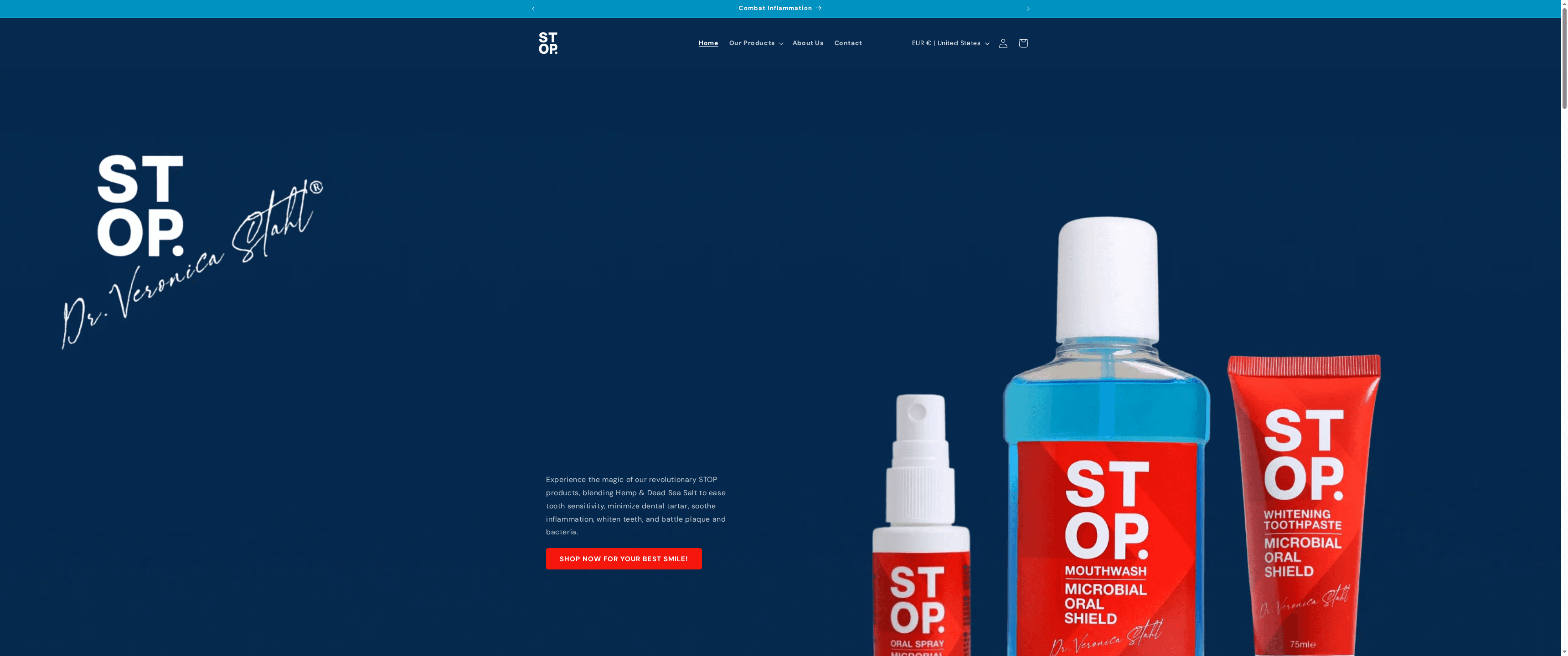
Stop-oralcare formulates its product line around scientifically supported natural ingredients, including compounds aligned with prebiotic oral hygiene principles. The brand’s fluoride-free toothpaste and oral care products incorporate Dead Sea minerals alongside plant-derived actives, reflecting a commitment to microbiome-conscious formulation rather than broad-spectrum antimicrobial suppression. Each product is developed under the guidance of Dr. Veronica Stahl, whose background in both dentistry and natural medicine informs the integration of evidence-based ingredient selection.
Health-conscious individuals seeking natural oral care alternatives will find Stop-oralcare’s full product range designed to complement, rather than disrupt, the beneficial bacterial communities that support long-term oral health. The Stop-oralcare blog also provides in-depth coverage of the latest research on oral microbiome science and natural dental hygiene.
FAQ
What does prebiotic oral care mean?
Prebiotic oral care refers to dental products and practices that use non-living substrates to selectively nourish beneficial bacteria in the oral cavity, promoting microbiome balance rather than eliminating bacteria indiscriminately.
What are the main benefits of prebiotic oral care?
The primary benefits include reduced caries incidence, stabilized biofilm pH, inhibition of cariogenic species like Streptococcus mutans, and support for a balanced oral microbiome that resists disease-associated dysbiosis.
How does prebiotic toothpaste differ from regular toothpaste?
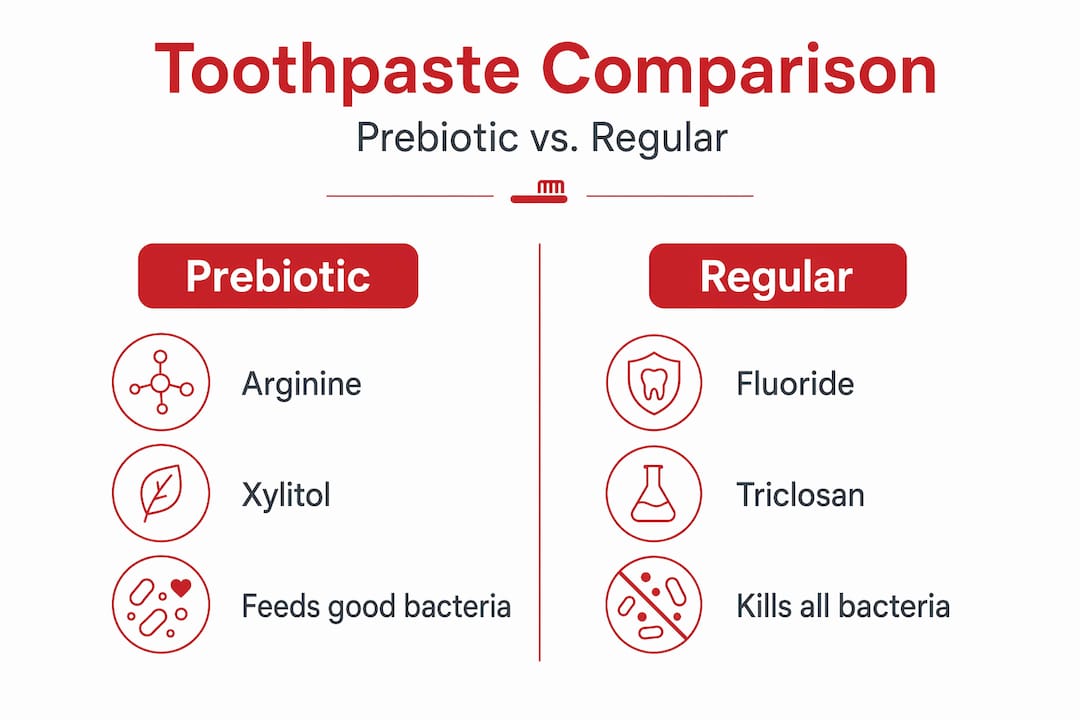
Prebiotic toothpaste contains specific substrates such as arginine or xylitol that feed beneficial oral bacteria, whereas conventional toothpastes typically use antimicrobial agents designed to reduce total bacterial counts without microbiome selectivity.
Does xylitol in mouthwash actually work as a prebiotic?
Yes, xylitol qualifies as a prebiotic oral care ingredient when present at sufficient concentrations. Its mechanism involves a futile metabolic cycle in S. mutans that reduces acid production and supports pH stability across the oral biofilm.
How do I know if a prebiotic oral care product is effective?
Confirm the product contains a validated prebiotic substrate at a clinically supported concentration, such as 8.0% arginine or a meaningful xylitol dose, and that the formulation does not include competing high-dose antimicrobials that would negate the microbiome-supportive effect.
Recommended
- Synergistic oral care: Optimize your natural dental health – Stop Oral Care
- Oral care ingredients guide: safe, natural solutions explained – Stop Oral Care
- Workflow for Safer Oral Hygiene Using Natural Products – Stop Oral Care
- What Is Botanical Oral Hygiene? Benefits and Expert Insights – Stop Oral Care