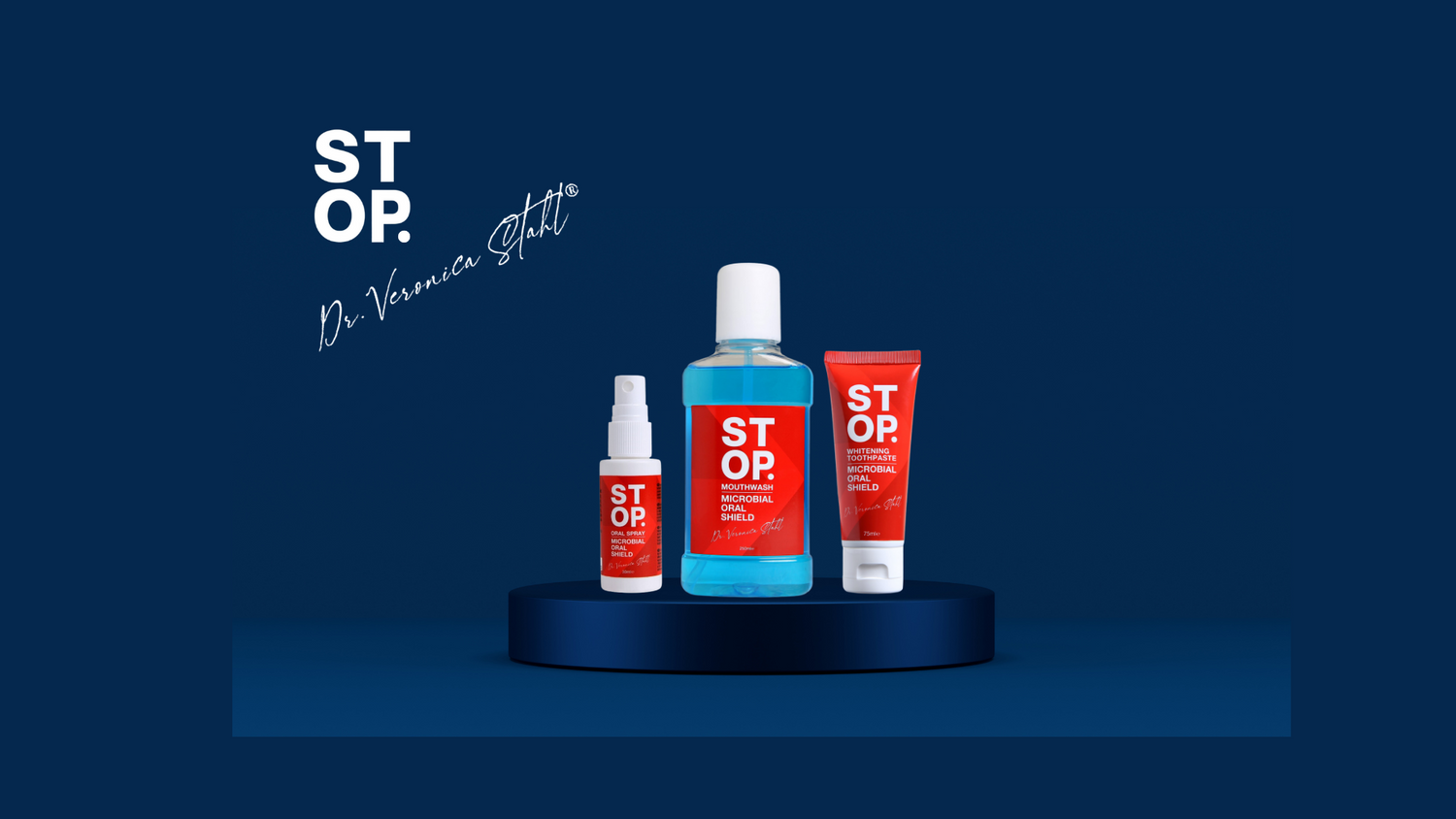


A bitter taste in mouthwash almost always comes from specific ingredients, most often chlorhexidine, alcohol, menthol, or certain herbal extracts, or from a temporary shift in taste perception caused by medication. Short-term bitterness is rarely dangerous. Stop using the product, rinse with plain water, and switch to an alcohol-free formula unless the bitterness persists for days or comes with pain.
TL;DR:
- Chlorhexidine concentration above 0.12% and rinsing longer than 60 seconds significantly increase taste disturbance and bitterness perception.
- Botanical extracts like Coptis chinensis cause dose-dependent bitterness, with higher concentrations leading to unpleasant tastes.
- A combination of chlorhexidine with hydrogen peroxide can markedly reduce bitterness without compromising antibacterial effectiveness, but should be used only under dental supervision.
- Medications and treatments such as chemotherapy can alter taste perception, making bitterness more intense or persistent even without mouthwash use.
- Choosing alcohol-free, low-menthol mouthwashes with natural ingredients lowers the likelihood of bitterness and improves daily comfort.
Table of Contents
- What Causes a Bitter Taste in Mouthwash?
- Could a Medical Condition Be Causing the Bitter Taste?
- What Actually Fixes a Bitter Aftertaste?
- How Do You Choose a Mouthwash That Won’t Taste Bitter?
- Why Mixing Mouthwash Ingredients Can Make Bitterness Worse
- Common Myths About Bitter Mouthwash, Debunked
- The Basic Science of Why Mouthwash Tastes Bitter
- What Stop-Oralcare Gets Right About Bitterness (and What the Industry Still Gets Wrong)
- Looking for a Mouthwash That Skips the Bitter Aftertaste?
- Sources
- FAQ
What Causes a Bitter Taste in Mouthwash?
Mouthwash formulation is the first place to look when a rinse suddenly tastes wrong. Several active ingredients are bitter by design, and how much you notice depends on concentration, contact time, and how your own taste receptors are working that day.
Chlorhexidine (CHX) is the most common culprit in prescription-strength rinses. A controlled study found that chlorhexidine progressively reduces taste acuity for bitter and salty flavors over a week of use, with perception hitting its lowest point on day seven of twice-daily rinsing. That same research recommends keeping concentrations at or below 0.12% and limiting rinse time to under 60 seconds to protect taste function.
Botanical extracts carry their own bitterness problem. A 2026 sensory study on mouthwash containing Coptis chinensis extract found the effect was dose-dependent: a concentration around 0.02% stayed within acceptable sensory limits, but higher concentrations caused testers to rate the taste as unpleasant. Formulation strength, not just ingredient type, decides how bad a rinse tastes.
Alcohol, menthol, hydrogen peroxide, and essential oils add a different problem: a sharp burning sensation that often gets confused with bitterness. Healthline’s reporting points out that this intensity is not a sign of stronger antibacterial action. It is a formulation choice.
Common bitterness triggers include:
- Chlorhexidine, especially at concentrations above 0.12%
- Alcohol, which dries and irritates oral tissue
- Menthol and essential oils in high concentrations
- Herbal alkaloids like those in Coptis chinensis extract
- Hydrogen peroxide at higher percentages
If your mouthwash burns rather than tastes bitter, the ingredient list is usually the fastest way to identify why.
Could a Medical Condition Be Causing the Bitter Taste?
Sometimes the mouthwash is not the problem. Your taste perception is. Medications, cancer treatment, and oral disease can all alter how bitterness registers on your tongue, and these causes deserve a different response than simply switching brands.
Chemotherapy is a well-documented trigger for heightened bitter sensitivity. A 2026 pilot clinical report on homoeriodictyol sodium (Na-HED) mouthwash found that patients receiving carboplatin experienced reduced bitterness after using a Na-HED rinse, suggesting that TAS2R receptor-targeted compounds can dial down chemo-related taste distortion. This is a narrow use case, but it confirms that cancer treatment genuinely rewires how bitter compounds are perceived, not just imagined.
Dysgeusia (a persistent altered taste) and phantogeusia (a taste sensation with no external trigger) can stem from dry mouth, certain blood pressure or antidepressant medications, sinus infections, or nerve damage. If a bitter taste shows up even without mouthwash, the mouthwash was never the real source.
When these symptoms appear, it’s time to call a professional:
- Bitterness lasting more than two weeks with no product change
- Visible white patches, ulcers, or swelling on the gums or tongue
- Taste changes that started right after a new prescription
- Pain, bleeding, or a foul odor alongside the bitter taste
Roughly a week of daily chlorhexidine use is enough to trigger the maximum taste disturbance recorded in clinical testing, which is a useful benchmark: if your bitterness outlasts a week past stopping the product, something else is likely involved.
What Actually Fixes a Bitter Aftertaste?
Fixing bitterness starts with the simplest move: stop the product causing pain or a strong reaction, rinse your mouth with water, and reach for an alcohol-free or menthol-free alternative while you figure out the cause.
For anyone who needs a therapeutic rinse like chlorhexidine and can’t just swap it out, a documented masking strategy exists. A pilot study found that combining 0.12% chlorhexidine with 1.5% hydrogen peroxide dropped perceived bitterness scores dramatically, from an average of roughly 7.09 with CHX alone to about 2.57 with the combination, while keeping antibacterial activity comparable in lab testing. That is a meaningful compliance win for patients who might otherwise skip a prescribed rinse because it tastes unbearable.
This is not a do-it-yourself project. Mixing antiseptic concentrations without guidance risks throwing off the balance that made the combination effective in the study. Anyone on a prescribed CHX regimen should ask their dentist before adding hydrogen peroxide or any other adjunct.
Steps to reduce bitterness safely:
- Stop any rinse causing pain, swelling, or an unbearable taste immediately.
- Switch to an alcohol-free, low-menthol formula for daily use.
- Ask your dentist about hydrogen peroxide as a masking adjunct if you’re prescribed chlorhexidine.
- Brush before using a therapeutic rinse. Consumer medicine guidance notes this reduces both staining and taste alteration.
- Skip tea, coffee, and other tannin-rich drinks for at least 30 minutes after rinsing to limit staining and taste interactions.
Pro Tip: Keep chlorhexidine exposure short and infrequent when you can. Practice-level guidance favors using high-efficacy, bitter rinses like CHX for a defined short course, then switching back to a gentler daily formula once the clinical goal is met. For more on managing that transition, see the guide on chlorhexidine side effects and stopping points.
How Do You Choose a Mouthwash That Won’t Taste Bitter?
Reading the label before you buy saves you from repeating the same bad experience with a new bottle. A few criteria consistently separate gentle formulas from harsh ones.
Look for alcohol-free formulas first. Alcohol contributes to both the burning sensation and dry mouth, which can make any bitterness linger longer. Low-menthol or essential-oil-free options are worth prioritizing if your mouth reacts strongly to intense flavors, since essential oil concentration drives much of that sharp aftertaste even in products marketed as natural.
If you’ve been prescribed a therapeutic rinse, confirm the concentration on the label matches what your dentist recommended, typically 0.12% chlorhexidine, and follow the exposure time instructions exactly. Going over 60 seconds or using it more than twice daily increases both bitterness and taste disturbance without adding clinical benefit.
Label checklist for sensitive taste:
- Alcohol-free formulation
- No or minimal menthol/essential oil concentration
- Clear listing of active ingredient percentage
- Natural mineral or plant-based ingredient list over synthetic flavor blends
Fluoride-free, hemp and Dead Sea mineral-based lines fit this profile for people who want a gentler daily rinse without giving up plaque control. If you’re rebuilding your routine around sensitive taste, a natural mouthwash guide for sensitive teeth walks through what to expect during the switch.
Why Mixing Mouthwash Ingredients Can Make Bitterness Worse
Bitterness rarely comes from one ingredient acting alone. Most rinses combine an antiseptic, a flavoring agent, and sometimes alcohol or a preservative, and these compounds interact on your tongue in ways that amplify the unpleasant taste beyond what any single ingredient would produce.
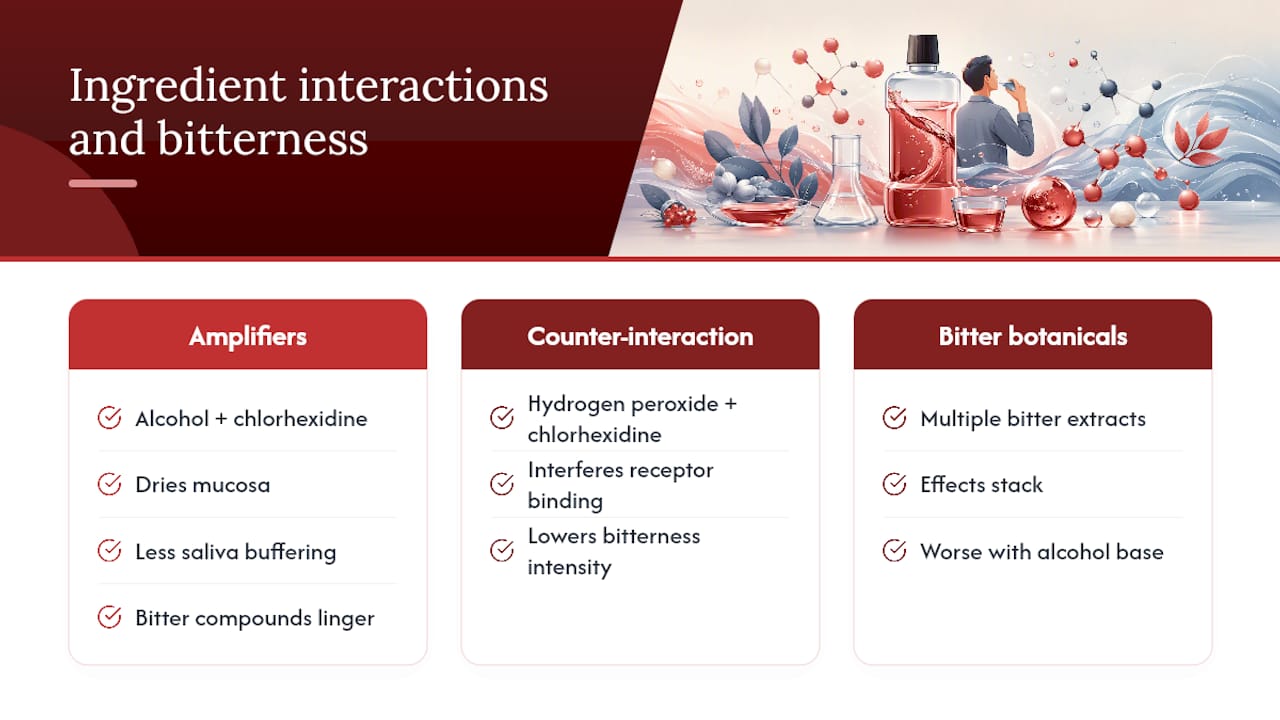
Chlorhexidine paired with alcohol is a common example. Alcohol dries the oral mucosa, which reduces saliva’s natural buffering effect and leaves bitter compounds sitting on taste receptors longer. Add menthol into that same formula, and the cooling sensation can mask early bitterness at first contact, then give way to a stronger bitter aftertaste once the menthol fades. This layering effect explains why some rinses taste tolerable for the first few seconds and unbearable by the time you spit.
The reverse interaction is what makes the hydrogen peroxide masking strategy interesting from a formulation standpoint. Instead of two ingredients compounding bitterness, the peroxide appears to interfere with how chlorhexidine binds to bitter taste receptors, lowering perceived intensity without removing the antiseptic’s effect. That is a deliberate counter-interaction, not an accident, and it shows why ingredient pairing matters as much as any single component.
Natural extracts are not exempt from this either. Combining multiple bitter botanicals, or adding a bitter herbal extract to an already alcohol-based formula, tends to stack rather than cancel out. If a rinse tastes worse than you’d expect from its ingredient list, check whether it is combining two or more bitter-leaning compounds at once.
Common Myths About Bitter Mouthwash, Debunked
A lot of bad habits around mouthwash come from a handful of persistent myths. Clearing them up changes how people actually use these products.
Myth: A stronger burn or bitterness means stronger germ-killing power. This is false. Healthline’s reporting is direct on this point: intense sensations reflect alcohol, menthol, or essential oil content, not superior antimicrobial performance. Alcohol-free rinses can be just as effective against plaque bacteria.
Myth: Bitterness always means an allergic reaction. True allergic reactions to mouthwash exist, but they usually come with swelling, hives, or breathing difficulty, not just an unpleasant taste. A bitter taste alone is far more likely to be a formulation issue or a temporary taste shift.
Myth: You should tolerate the bitterness because “natural” or “medicinal” rinses are supposed to taste bad. Bitterness is often a concentration problem, not an inherent trait of active ingredients. The Coptis chinensis research showed a formula stayed within acceptable taste limits at 0.02% and only became unpleasant at higher concentrations. Reformulation, not tolerance, is usually the answer.
Myth: If a rinse tastes bad, it must be working harder. Bitterness is a sensory reaction, not a performance metric. Plenty of clinically effective, low-bitterness formulas exist, and matching a rinse to your sensitivity doesn’t mean settling for less protection.
The Basic Science of Why Mouthwash Tastes Bitter
Your tongue detects bitterness through TAS2R receptors, a family of taste receptor proteins that respond to a wide range of chemically unrelated compounds, everything from plant alkaloids to synthetic antiseptics. When a bitter molecule from mouthwash binds to one of these receptors, it triggers a signal that your brain interprets as “bitter,” regardless of whether the compound is actually harmful.
Chlorhexidine binds effectively to several TAS2R receptor subtypes, which is part of why it registers as bitter even at clinical concentrations designed for safety. Alkaloids in botanical extracts like Coptis chinensis work the same way, activating bitter receptors directly rather than through any secondary chemical reaction.
Concentration determines how many receptor sites get activated and how strongly. This is exactly what the dose-dependent findings in the Coptis chinensis study demonstrate: more active compound means more receptor binding, which means a stronger bitter signal. Rinse time compounds the effect, since longer contact gives more molecules the chance to bind before you spit.
This is also why medications and treatments that affect taste buds or nerve signaling, like chemotherapy, can make an otherwise mild rinse suddenly taste intensely bitter. The receptors themselves may become more sensitive, or the signal pathway to the brain gets altered, independent of anything in the mouthwash bottle.
What Stop-Oralcare Gets Right About Bitterness (and What the Industry Still Gets Wrong)
The oral care industry has spent decades treating bitterness as an unavoidable cost of effectiveness. That framing doesn’t hold up against the formulation science. Concentration control, ingredient pairing, and receptor-level masking strategies all show that bitterness is largely an engineering choice, not a fixed trade-off for antimicrobial power.
What gets underestimated is how much bitterness actually undermines the outcome a product is supposed to deliver. A chlorhexidine rinse that tastes so unpleasant a patient stops using it after three days provides less clinical benefit than a milder formula used consistently for the full course. Compliance is not a soft factor here. It is the mechanism through which taste tolerance translates into actual oral health outcomes.
Stop-Oralcare’s approach, built around fluoride-free formulations using hemp and Dead Sea minerals rather than alcohol or high-dose synthetic antiseptics, reflects a different premise: that gentler ingredient profiles and consistent daily use often outperform harsh, short-tolerance formulas for most people outside of prescribed, short-term therapeutic use. That doesn’t mean every bitter rinse is unnecessary. Chlorhexidine has a legitimate, evidence-backed role in targeted treatment. It means the everyday rinse most people reach for shouldn’t have to taste punishing to be worth using.
— Veronica
Looking for a Mouthwash That Skips the Bitter Aftertaste?
If chlorhexidine, alcohol, or menthol-heavy rinses have been leaving you with a bitter taste you dread twice a day, the fix doesn’t have to involve tolerating discomfort or quitting mouthwash altogether. Stop-Oralcare’s STOP | Mouthwash is formulated fluoride-free with hemp and Dead Sea minerals instead of alcohol or high-concentration synthetic antiseptics, built around the same label criteria this guide just walked through: no alcohol, no overpowering menthol, and an ingredient list designed for daily comfort rather than short-term clinical intensity.
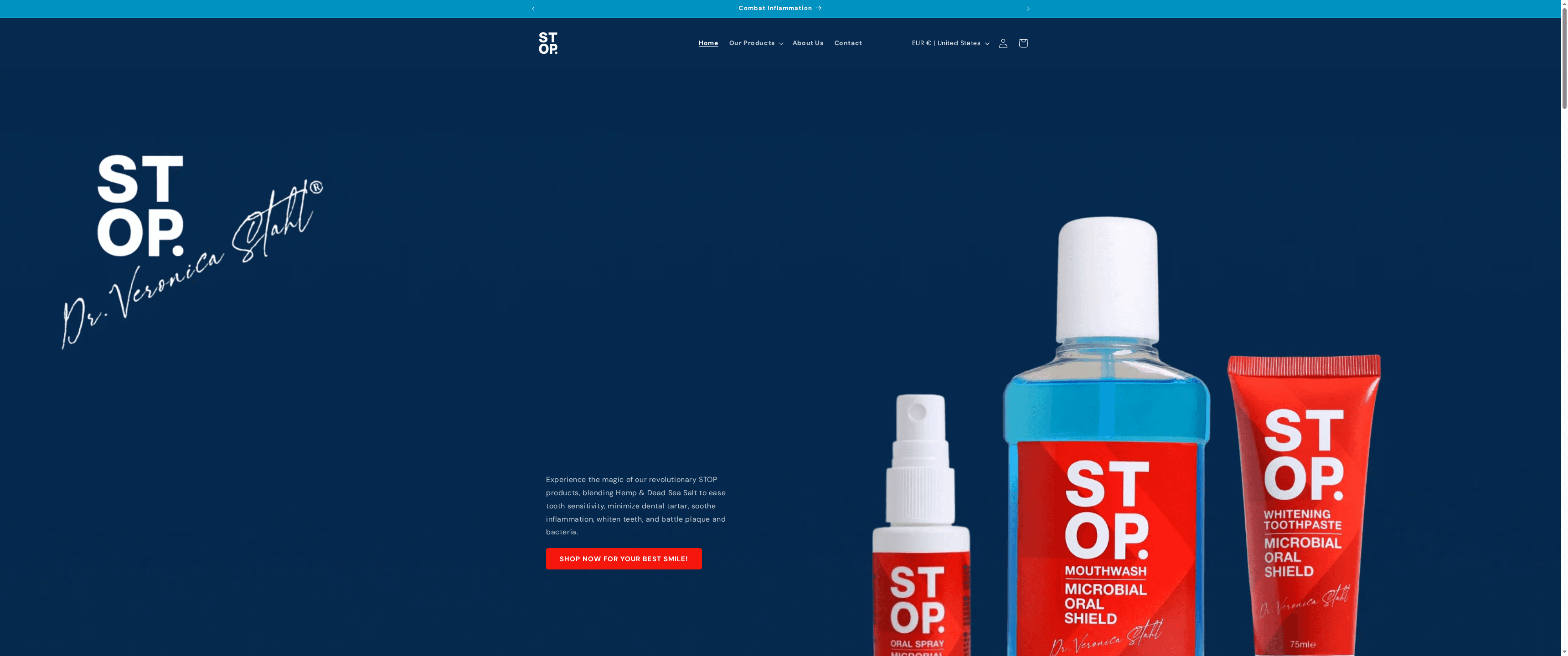
It’s priced at €20,00 one-off, with no subscription required to try it. If you’re currently using a prescribed chlorhexidine rinse, keep following your dentist’s guidance on concentration and duration. For your regular, everyday rinse, take a look at the STOP | Mouthwash product page and see whether a gentler formula fits your routine better than what’s currently sitting in your bathroom cabinet.
This article is general information, not a substitute for advice from a qualified doctor. Consult a qualified healthcare professional about your own circumstances before acting on anything here.
Sources
- Applied Sciences (MDPI) — Coptis chinensis extract-loaded mouthwash (2026)
- Chlorhexidine and taste. Influence of mouthwashes concentration and of rinsing time (PubMed)
- Journal of Indian Society of Periodontology — Hydrogen peroxide masks the bitterness of chlorhexidine mouthwash
- Healthline — Why does mouthwash burn when I gargle? (2020)
FAQ
Why does my mouthwash suddenly taste bitter?
A sudden bitter taste usually points to a specific ingredient like chlorhexidine, alcohol, or a botanical extract, especially if you switched products recently. If nothing changed about your routine, a new medication or a mild oral infection could be altering your taste perception instead.
Is a bitter aftertaste from mouthwash dangerous?
No, a bitter aftertaste alone is not typically dangerous and often resolves once you stop the product or rinse with water. See a dentist if the bitterness lasts more than two weeks, comes with pain, or appears alongside visible sores or swelling.
Does hydrogen peroxide really reduce chlorhexidine’s bitter taste?
Yes, a pilot study found that combining 0.12% chlorhexidine with 1.5% hydrogen peroxide significantly reduced perceived bitterness while keeping antibacterial activity similar to chlorhexidine alone. This combination should only be used with a dentist’s guidance, not as a self-directed mix.
What’s the best-tasting mouthwash for sensitive taste?
Alcohol-free, low-menthol formulas are generally the gentlest option for sensitive taste. Stop-Oralcare’s STOP | Mouthwash is formulated fluoride-free with hemp and Dead Sea minerals for a milder daily rinse without alcohol or high-dose synthetic antiseptics.
Can medications cause a bitter taste even without mouthwash?
Yes, certain blood pressure medications, antidepressants, and chemotherapy drugs are known to alter taste perception, sometimes causing a persistent bitter or metallic sensation. A 2026 pilot report found that Na-HED rinses reduced chemotherapy-related bitterness in some patients, showing this type of taste distortion is a real, treatable phenomenon rather than something to just endure.