

TL;DR:
- Triclosan was a broad-spectrum antimicrobial used in some toothpastes but offered only modest benefits. Its environmental persistence and potential health risks led to regulatory bans and a shift toward triclosan-free formulations. Today, most U.S. toothpastes no longer contain triclosan, and natural alternatives emphasize ingredients like hemp-derived compounds and Dead Sea minerals.
Triclosan is a synthetic, broad-spectrum antimicrobial agent that was historically added to certain toothpaste formulations to reduce plaque accumulation and gingival inflammation. The consumer verdict is straightforward: its benefits were modest, conditional on a specific copolymer pairing, and the Florence Statement representing coordinated scientific consensus urges avoidance of triclosan in routine daily consumer products without a clear, evidence-based medical need. For consumers seeking natural, fluoride-free oral care, the practical recommendation is to select triclosan-free formulations and consult a dental professional if active gum disease is present.
Table of Contents
- What triclosan in toothpaste is and how it works
- Why manufacturers added triclosan to some toothpastes
- Health and environmental concerns linked to triclosan
- Regulatory status in the United States — what to know
- Does triclosan make toothpaste work better than standard formulations?
- How to tell whether a toothpaste contains triclosan
- How to choose a triclosan-free toothpaste, including natural and fluoride-free options
- Practical next steps if you are concerned about triclosan exposure
- Stop-oralcare’s approach to triclosan and ingredient safety
- Key Takeaways
- Why the triclosan conversation still matters for natural oral care
- Stop-oralcare’s triclosan-free formulations for natural oral care
- Useful sources and further reading
What triclosan in toothpaste is and how it works
Triclosan (5-chloro-2-(2,4-dichlorophenoxy) phenol) is a lipophilic, polychlorinated bisphenol compound. In toothpaste ingredient panels, it appears plainly as “triclosan.” Its antimicrobial mechanism involves disrupting bacterial fatty acid synthesis, which reduces the viability of plaque-forming organisms at the tooth and gum surface.
Critically, triclosan’s oral-care effectiveness depended on pairing with a retention copolymer, typically polyvinylmethyl ether maleic acid (PVM/MA). Without that copolymer, triclosan washes away during rinsing before it can act on the biofilm. The NCI Drug Dictionary describes how the copolymer enhances triclosan uptake by enamel and buccal epithelial cells, prolonging its protective effect.
The intended mechanism, when the full triclosan/copolymer/fluoride system was present, operated through three pathways:
- Reduction of bacterial load within the supragingival plaque biofilm
- Attenuation of gingival inflammatory response at the soft-tissue margin
- Marginal inhibition of early caries lesion formation when combined with fluoride
Why manufacturers added triclosan to some toothpastes
Consumer demand for stronger gingivitis control, combined with early clinical trial signals, drove manufacturers to incorporate triclosan into select formulations during the 1990s and 2000s. The FDA approved triclosan at 0.3% in Colgate Total toothpaste in 1997 specifically for antigingivitis purposes.
Clinical evidence summary: A Cochrane review found moderate-quality evidence that triclosan/copolymer plus fluoride reduced plaque and gingival inflammation compared with fluoride toothpaste alone, though the clinical importance of that reduction remained debatable.
A meta-analysis of multiple trials reported statistically significant but quantitatively modest weighted mean differences favoring triclosan/copolymer dentifrices on both plaque and gingivitis indices. The benefit was real under controlled conditions, but its magnitude was limited and not uniformly clinically meaningful across patient populations.
Health and environmental concerns linked to triclosan

Triclosan persists in the environment and bioaccumulates in aquatic organisms, including algae, fish, and marine mammals. It is listed among the most frequently detected compounds in streams across the United States, entering water systems primarily through municipal wastewater effluents.
Human-safety uncertainties compound the environmental picture. Triclosan has been characterized as a potential endocrine disruptor, and research documents its detection in urine, blood, breast milk, and amniotic fluid in the general population. Under certain conditions, triclosan can react with chlorinated tap water to form trace chlorinated byproducts such as chloroform, representing an additional daily exposure pathway for toothpaste users. Concerns about antibiotic-resistance selection pressure further motivated scientific calls for reduced routine use.
Regulatory consensus: The Florence Statement, a coordinated position by environmental health scientists, recommends avoiding triclosan and related antimicrobials in consumer products unless a specific, evidence-based medical need exists.
Pro Tip: To minimize both personal exposure and household environmental load, select triclosan-free toothpaste formulated with biodegradable, plant-derived ingredients and verify the absence of triclosan on the product’s active ingredient panel.
Regulatory status in the United States — what to know
The U.S. regulatory trajectory for triclosan unfolded in stages rather than through a single prohibition:
- September 2016: The FDA banned triclosan from consumer antiseptic wash products (liquid, gel, foam, and bar soaps), citing insufficient evidence of added benefit over plain soap. This ruling did not constitute a blanket ban across all consumer product categories.
- Post-2016: Market and professional guidance progressively reduced triclosan use in toothpastes, driven by a combination of limited demonstrated clinical superiority and growing environmental concerns rather than a direct FDA toothpaste ban.
- 2019: The American Dental Association confirmed that triclosan-containing toothpaste is no longer commercially available in the United States.
The practical implication for U.S. consumers is that the domestic toothpaste market is now effectively triclosan-free. Checking labels remains advisable for imported products or older inventory.
Does triclosan make toothpaste work better than standard formulations?
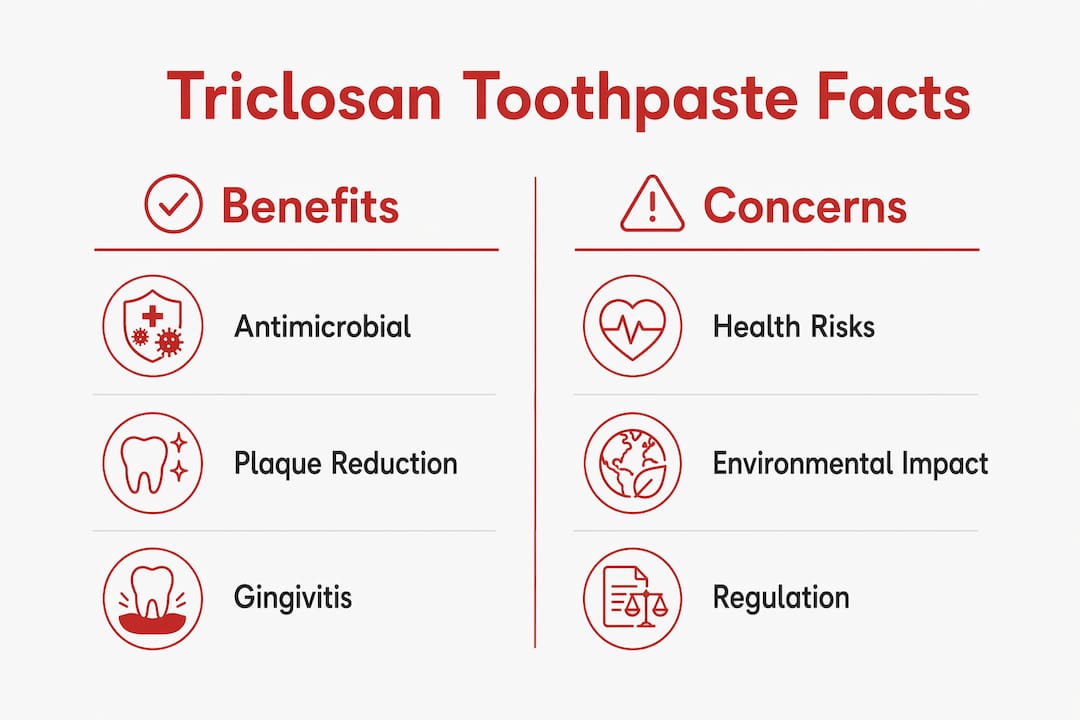
The evidence supports a conditional “yes” under specific formulation conditions, not a general superiority claim.
| Comparison | Triclosan/Copolymer/Fluoride | Fluoride Only |
|---|---|---|
| Plaque reduction | Modest additional reduction (meta-analysis) | Established benefit |
| Gingivitis reduction | Modest additional reduction (Cochrane, moderate quality) | Established benefit |
| Caries protection | Marginal additional effect in some studies | Well-established |
| Environmental profile | Persistent, bioaccumulative | Not applicable |
| U.S. market availability | Not commercially available (as of 2019) | Widely available |
Evidence note: The Cochrane review rated the supporting evidence as moderate quality, and FDA reviewers concluded that many triclosan-containing consumer products offered no clear added benefit over standard dental care.
Fluoride’s anticaries benefit is well established and does not depend on a copolymer system. For consumers with persistent gingivitis or periodontal concerns, a dental professional can recommend targeted antimicrobial therapies with a stronger evidence base than OTC triclosan ever provided.
How to tell whether a toothpaste contains triclosan
- Locate the Drug Facts panel on the outer carton or tube. Triclosan, when present as an active drug ingredient, is listed there with its purpose (e.g., “Triclosan 0.30% — Antigingivitis”).
- Check the inactive ingredients list if no Drug Facts panel is present. Triclosan may appear as a preservative in some international formulations.
- Look for “antibacterial” claims on the front label. Such claims often signal an antimicrobial active ingredient; verify by reading the full ingredient panel.
- Confirm absence by name. Triclosan has no common synonym in consumer labeling; if the word “triclosan” does not appear, the product does not contain it. Use the safe toothpaste checklist as a reference for other ingredients worth reviewing.
- Contact the manufacturer if the label is damaged, incomplete, or in a foreign language. Manufacturers are required to disclose active drug ingredients on request.
How to choose a triclosan-free toothpaste, including natural and fluoride-free options
Selecting a triclosan-free formulation requires evaluating active ingredients, formulation transparency, and the tradeoffs between chemical exposure reduction and proven efficacy.
Tradeoff note: Natural and fluoride-free choices may reduce exposure to synthetic antimicrobials, but may require supplementary strategies, including thorough interdental cleaning and regular professional check-ups, to achieve caries protection comparable to fluoride-based formulations. A detailed analysis of those tradeoffs is available in the fluoride-free toothpaste guide.
Ingredient categories worth evaluating include:
- Fluoride formulations (sodium fluoride, stannous fluoride): well-established anticaries and antigingivitis evidence; the standard against which alternatives are measured.
- Biomimetic remineralizers (hydroxyapatite, nano-calcium phosphate): evidence-supported enamel protection without fluoride; reviewed in depth at biomimetic enamel protection.
- Herbal and botanical antimicrobials (neem, tea tree, thymol): variable evidence; botanical ingredients can support gum health in fluoride-free formulations.
- Hemp-derived ingredients and Dead Sea minerals: formulation goals include anti-inflammatory support, sensitivity reduction, and mineral replenishment; relevant for consumers prioritizing natural, non-synthetic active ingredients.
- Enzyme-based or probiotic-support formulas: emerging category targeting the oral microbiome rather than broad-spectrum bacterial suppression.
For clinical remineralization needs, a physician-oriented option such as Dentalmin Pro illustrates the category of evidence-based remineralizing formulations available outside standard retail.
Practical next steps if you are concerned about triclosan exposure
- Verify your current toothpaste. Check the active ingredient panel for “triclosan.” U.S. commercial toothpastes have not contained it since 2019, but imported or older products may.
- Switch to a confirmed triclosan-free formulation. Transition is straightforward; no tapering is required. Monitor gum health during the first four to six weeks and note any changes in bleeding or sensitivity.
- Reinforce mechanical oral hygiene. Twice-daily brushing with a soft-bristle brush and daily interdental cleaning (floss or interdental brushes) address plaque more reliably than any antimicrobial additive.
- Schedule a dental check-up if you have a history of gingivitis, periodontal disease, or persistent gum bleeding. A dental professional can assess whether a prescription-strength antimicrobial, such as chlorhexidine gluconate, is clinically indicated for your specific condition.
- Ask your dentist specific questions: Which antimicrobial approach is appropriate for my gum health status? Is a fluoride-free remineralizing strategy sufficient for my caries risk? Are there professional treatments that address my concerns more effectively than OTC products?
For persistent or complex periodontal concerns, a physician-oriented system such as the Dentalcidin Oral Care System represents the category of professionally guided antimicrobial protocols that go beyond standard OTC toothpaste.
Stop-oralcare’s approach to triclosan and ingredient safety
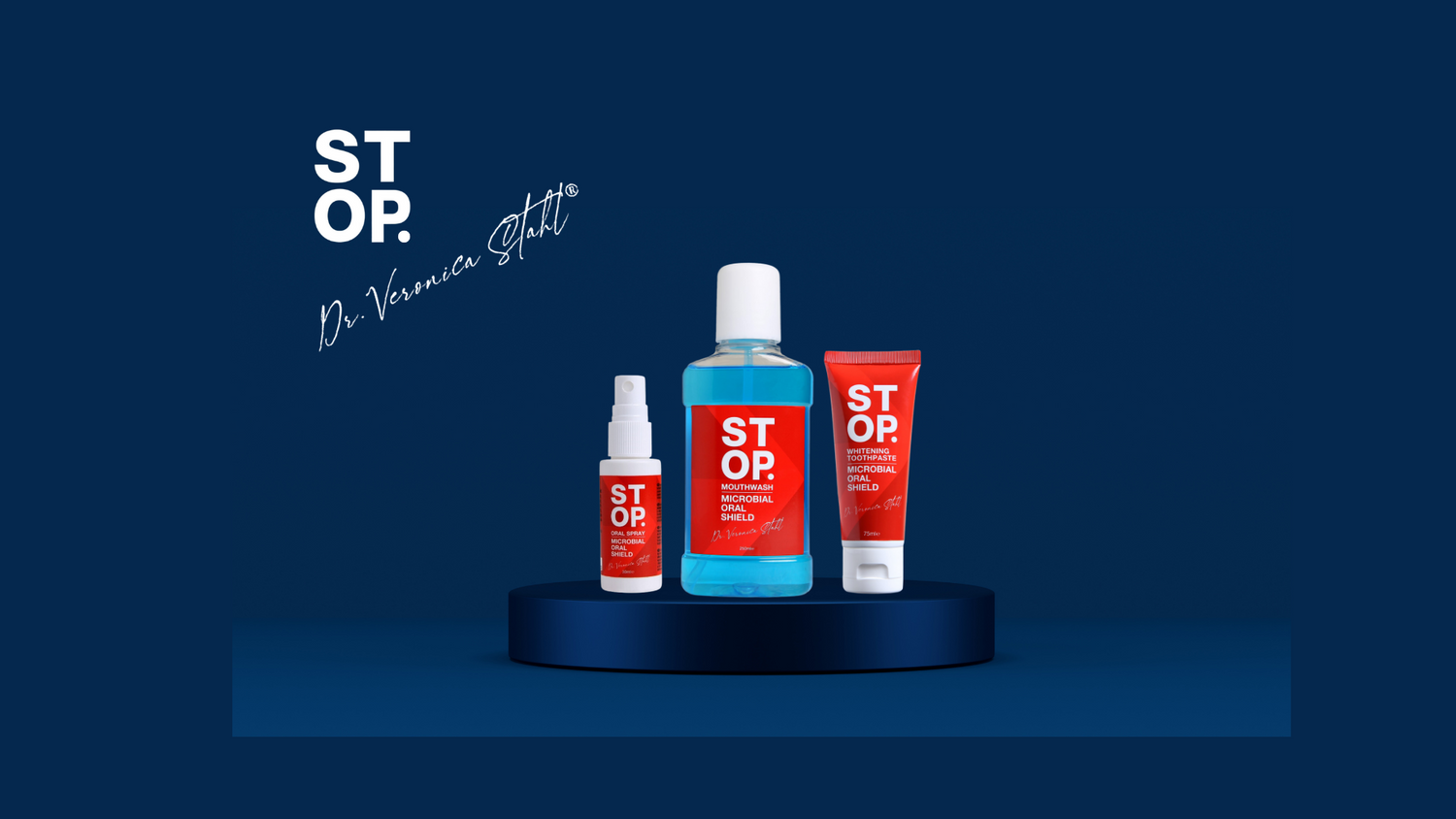
Stop-oralcare’s product line is formulated without triclosan, reflecting both the scientific consensus represented by the Florence Statement and the regulatory trajectory that removed triclosan-containing toothpaste from the U.S. market. The brand’s formulations incorporate hemp-derived ingredients and Dead Sea minerals, selected for their anti-inflammatory properties, mineral content relevant to enamel and gum tissue support, and compatibility with sensitive oral tissues.
Dr. Veronica Stahl, Stop-oralcare’s lead expert in dentistry and natural medicine, guides the brand’s ingredient selection criteria, prioritizing compounds with defined mechanisms and documented safety profiles over broad-spectrum antimicrobials with uncertain long-term exposure data.
This article provides general informational content and does not constitute professional dental or medical advice. Consumers with active gum disease, periodontal conditions, or specific clinical concerns should consult a licensed dental professional to determine appropriate evidence-based treatment.
Key Takeaways
Triclosan’s modest benefit in toothpaste was conditional on a specific copolymer formulation, and U.S. consumers no longer encounter it in commercially available toothpaste as of 2019.
| Point | Details |
|---|---|
| Definition and mechanism | Triclosan is a synthetic antimicrobial that required pairing with a PVM/MA copolymer to remain active on tooth surfaces. |
| Limited clinical benefit | Cochrane and meta-analysis evidence showed modest, debatable improvements in plaque and gingivitis versus fluoride alone. |
| Safety and environmental concerns | Triclosan bioaccumulates in aquatic systems and raises endocrine-disruption and antibiotic-resistance concerns per the Florence Statement. |
| U.S. market status | Triclosan-containing toothpaste has not been commercially available in the United States since 2019 per the ADA. |
| Stop-oralcare recommendation | Stop-oralcare’s triclosan-free, hemp and Dead Sea mineral formulations offer a transparent, natural alternative for sensitive teeth and gum health. |
Why the triclosan conversation still matters for natural oral care
The phase-out of triclosan from U.S. toothpaste was not driven by a single dramatic safety finding. It resulted from the convergence of limited demonstrated benefit for most consumers, a growing body of environmental persistence data, and a scientific community increasingly skeptical of broad-spectrum antimicrobials in products used twice daily for a lifetime. That convergence is precisely what the Florence Statement articulated.
What this means for consumers choosing natural, fluoride-free products is that the absence of triclosan is now the baseline, not a differentiating claim. The more substantive question is what a formulation does include and whether those ingredients have defined, plausible mechanisms for the outcomes they are intended to support. Hemp-derived compounds offer documented anti-inflammatory pathways relevant to gingival tissue. Dead Sea minerals provide a mineral matrix with potential relevance to remineralization and sensitivity. Neither category carries the environmental persistence profile that made triclosan a liability.
The conventional wisdom that “antibacterial” equals “better” for oral care is not supported by the evidence. Mechanical plaque removal remains the most reliably effective intervention, and the role of a toothpaste is to support that process, not replace it with chemistry of uncertain long-term consequence.
Stop-oralcare’s triclosan-free formulations for natural oral care
Consumers who have confirmed that their current toothpaste is triclosan-free and are now evaluating what to use instead will find that Stop-oralcare’s fluoride-free line addresses that question directly. Formulated with hemp and Dead Sea minerals, and developed under Dr. Veronica Stahl’s scientific guidance, each product is designed for consumers who prioritize ingredient transparency, sensitivity support, and gum health without synthetic antimicrobials.
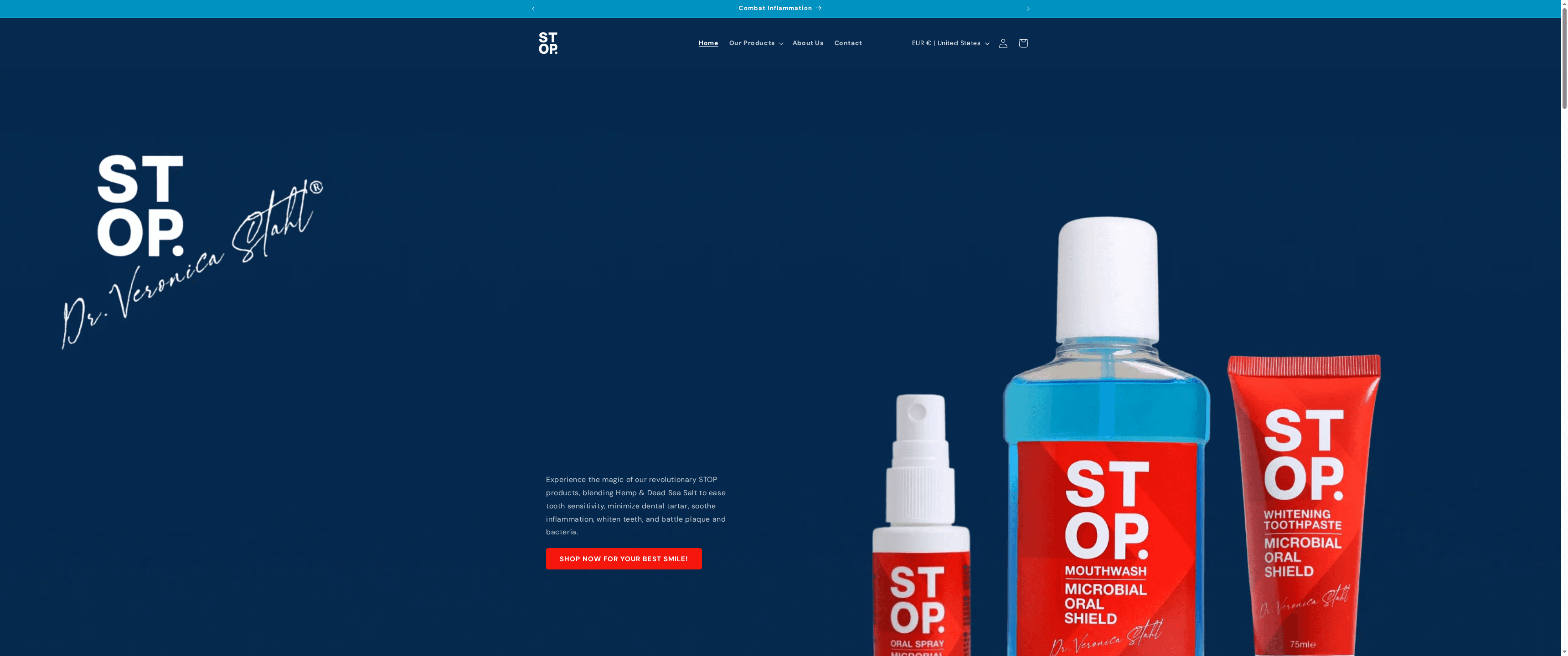
The product range includes toothpaste, mouthwash, and oral spray, all triclosan-free and formulated without fluoride for consumers who have made an informed choice to pursue natural remineralizing and anti-inflammatory strategies. Product details, ingredient disclosures, and purchasing options are available at Stop-oralcare. For clinical dental conditions, consultation with a licensed dentist remains the appropriate first step before selecting any OTC oral care product.
Useful sources and further reading
- The Florence Statement on Triclosan and Triclocarban (PMC) — The coordinated scientific consensus document urging avoidance of triclosan in routine consumer products; primary reference for the environmental and safety concerns sections.
- Cochrane Review: Triclosan/Copolymer Toothpastes for Oral Health — Moderate-quality systematic review of clinical outcomes; the most rigorous source for benefit-versus-risk evaluation.
- Meta-analysis of triclosan/copolymer dentifrices (PubMed) — Quantitative summary of plaque and gingivitis index data across controlled trials.
- American Dental Association: Toothpastes — Confirms the 2019 U.S. market phase-out of triclosan-containing toothpaste.
- Triclosan: What It Is and Its Effects (Cleveland Clinic) — Consumer-facing summary of FDA review findings and market withdrawal context.
- Triclosan Environmental Behavior and Bioaccumulation (PMC) — Documents environmental persistence, copolymer-dependent retention, and aquatic bioaccumulation.
- Adverse Effects of Triclosan Exposure on Health (PMC) — Comprehensive review of endocrine-disruption potential, gut microbiome effects, and mechanisms of toxicity.
- NCI Drug Dictionary: Triclosan/Copolymer/Fluoride Toothpaste — Precise formulation definition including PVM/MA copolymer mechanism.
When interpreting clinical endpoints from the studies above, note that statistically significant differences in plaque or gingivitis indices do not always translate to clinically meaningful outcomes for individual patients. Environmental concern data and clinical efficacy data address different questions and should be evaluated separately when making personal product decisions.