

Yes, most people with sensitive teeth can whiten successfully using tailored, gentler protocols rather than skipping whitening altogether. The core strategy is a “low and slow” approach: lower-concentration bleaching agents used over a longer period, paired with two weeks of pre-treatment using a potassium-nitrate desensitizing toothpaste. Severe, localized, or sharp pain, however, is a signal to pause and see a dentist before continuing.
TL;DR:
- Sensitive teeth typically require a “low and slow” whitening approach, involving lower peroxide concentrations over longer periods to minimize pain.
- Using potassium nitrate toothpaste for two weeks before whitening helps reduce nerve sensitivity and prevents sharp reactions during treatments.
- Custom tray whitening options are gentler and more precise, with professional supervision recommended for severe sensitivity or underlying dental issues.
- At-home products like sensitivity-specific strips, trays, and gentle toothpastes offer gradual results but may take longer to reach the desired shade.
- Post-treatment care with sensitivity relief products and avoiding acidic foods for 24 to 48 hours help prevent rebound sensitivity and maintain whitening results.
Table of Contents
- What Are the Best Gentle Whitening Options for Sensitive Teeth?
- How Do You Prepare Teeth Before Whitening to Avoid Pain?
- Which At-Home Whitening Products Actually Suit Sensitive Teeth?
- When Should You See a Dentist Instead of Whitening at Home?
- How Do You Care for Teeth After Whitening to Prevent Rebound Sensitivity?
- What Natural Adjuncts Support a Low-and-Slow Whitening Routine?
- A Realistic Take on Whitening With Sensitive Teeth
- Support Your Whitening Routine With Natural, Fluoride-Free Care
- Sources
- FAQ
What Are the Best Gentle Whitening Options for Sensitive Teeth?
Not every whitening product treats sensitive enamel the same way, and the order in which you try these options matters. Ranked from gentlest to most intensive, here’s what actually works for sensitive teeth whitening options without triggering the sharp, electric pain many people associate with bleaching.
- Dentist-prescribed custom take-home trays. These are the gentlest professional route because the tray is molded to your exact bite, which prevents gel from leaking onto gum tissue and irritating nerves. Custom trays at lower-concentration carbamide peroxide, equivalent to a gentler hydrogen peroxide level, can match higher-concentration results over a longer course, just with less bite.
- OTC whitening strips designed for sensitivity. Lower-peroxide strips marketed specifically for sensitive teeth sit in the middle of the intensity spectrum. They’re less precise than custom trays but far gentler than standard-strength strips.
- Whitening toothpastes formulated for sensitivity. Products containing potassium nitrate and low-abrasive polishing agents won’t lift deep stains, but they provide gradual surface-stain removal while relieving sensitivity with daily use.
- Non-bleaching stain removers and enamel-strengthening products. These work as adjuncts, not primary whiteners. Think of them as maintenance tools that extend the life of whatever whitening method you choose.
The realistic expectation here matters: sensitive patients can usually reach a comparable end shade to non-sensitive patients, it just takes longer. That’s not a compromise. That’s the actual trade.
How Do You Prepare Teeth Before Whitening to Avoid Pain?
Preparation is where most people skip a step and pay for it later with days of zinging pain. The single most evidence-backed move is starting a potassium-nitrate desensitizing toothpaste two weeks before you begin whitening, brushing with it twice daily. Potassium nitrate works by calming the nerve endings inside the tooth’s dentin tubules, so by the time you introduce peroxide, the nerve response is already blunted.
Fluoride or hydroxyapatite remineralizing agents play a supporting role, strengthening enamel before treatment and helping seal exposed dentin afterward. Some dentists build these directly into a pre- and post-treatment routine rather than treating them as optional add-ons.
Pacing during the actual whitening sessions is just as important as the prep work:
- Start with shorter wear times, around 30 to 45 minutes, instead of the standard longer sessions.
- Try every-other-night application instead of daily use to give tissue recovery time between exposures.
- If a session produces sharp “zinging” pain rather than mild tingling, skip the next scheduled session entirely.
- Keep a simple log: rate sensitivity after each session on a 1 to 10 scale, and stop escalating concentration or frequency once you consistently hit 5 or above.
Pro Tip: Treat the sensitivity diary like a dosage chart, not a diary of complaints. If two consecutive sessions score higher than the last two, that’s your cue to drop back to a lower concentration or add an extra rest day, not to push through.
Building this pacing habit early prevents the common mistake of front-loading intensity and then abandoning whitening altogether after one bad night.
Which At-Home Whitening Products Actually Suit Sensitive Teeth?
The mechanism behind whitening discomfort comes down to two variables: peroxide concentration and contact time. Higher concentration held against enamel for longer periods lifts stains faster, but it also pushes more peroxide through the enamel to the nerve, which is exactly what triggers sensitivity. Every at-home product category represents a different balance of those two variables.
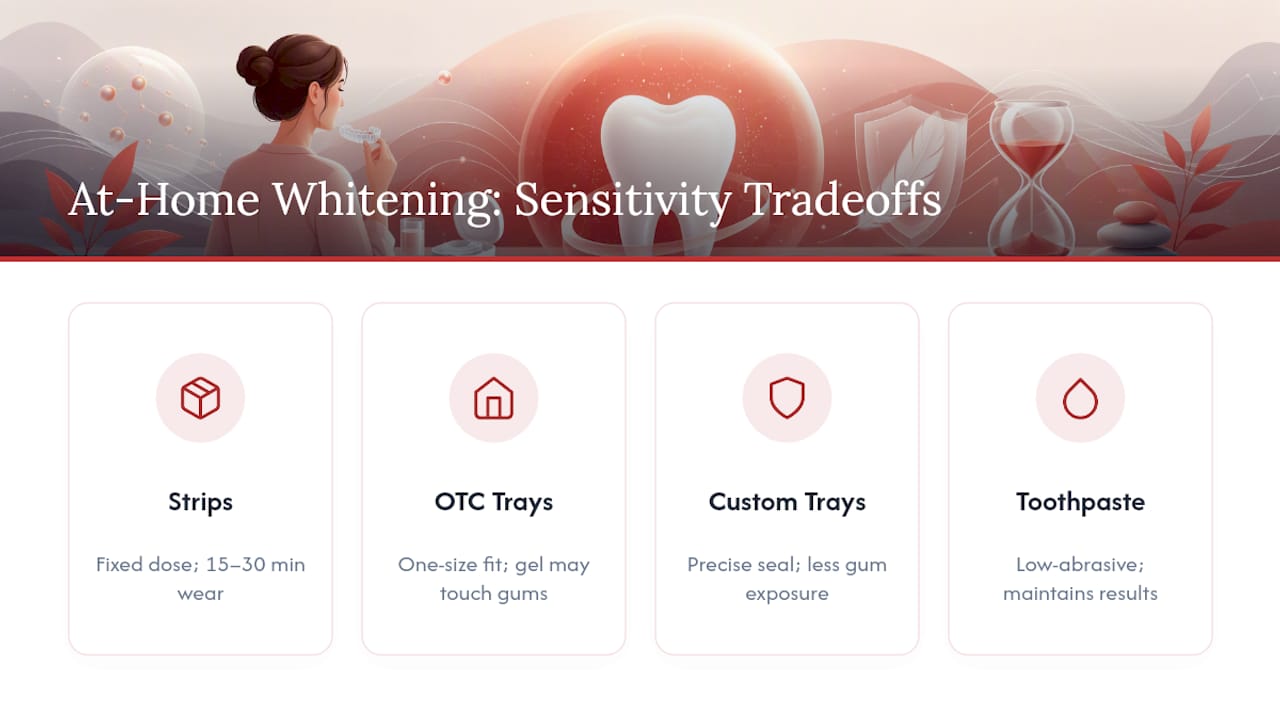
Whitening strips offer a fixed concentration and a fixed wear time, typically 15 to 30 minutes per application. Sensitivity-formulated versions use lower peroxide percentages, which is the trade-off: less intensity for more comfort. They’re a reasonable middle step for people who found standard strips too aggressive but want more strength than a toothpaste alone provides.
Prefilled OTC trays sit between strips and custom trays. They’re one-size-fits-most, which means gel can shift and touch gum tissue in people with irregular bite patterns. Most are formulated at a lower strength than professional trays specifically because manufacturers can’t control fit the way a dentist can.
Custom dentist trays remain the gentlest route for a structural reason, not just a chemical one. Because the tray seals precisely against your teeth, less gel escapes onto soft tissue. Many dentists also add fluoride or amorphous calcium phosphate (ACP) directly into the tray protocol, giving enamel extra support during the exact window it’s most vulnerable.
Surface stain removers and daily toothpaste don’t bleach at the same level, but they matter more than people assume in a multi-step routine. A gentle, low-abrasive toothpaste used between whitening cycles maintains results and reduces how often you need to reach for stronger treatments.
Related resources worth reviewing before you start include Stop-oralcare’s guide to safe at-home whitening and a breakdown of what sensitivity relief toothpaste actually does at the ingredient level.
When Should You See a Dentist Instead of Whitening at Home?
Some symptoms are a clear signal that DIY whitening isn’t the right next move, no matter how gentle the product claims to be.
- Persistent sharp or localized pain, especially pain concentrated in one tooth rather than a general dull ache across your smile, often points to an underlying issue like a crack or exposed root that whitening will only aggravate.
- Gum bleeding or visible inflammation suggests active gum disease, and bleach in that environment increases irritation rather than just cosmetic risk.
- A cracked or chipped tooth creates a direct path for peroxide to reach the nerve, producing pain far beyond typical sensitivity.
- Active cavities or visible decay need treatment first. Whitening over an untreated cavity can worsen pain significantly and delay diagnosis.
For patients with any of these red flags, or simply a history of severe sensitivity, professional in-office whitening or dentist-prescribed trays are the safer route. Professionals modify the standard protocol specifically for sensitive patients: shorter treatment cycles, buffering agents added to the gel to reduce pH swings, and a post-treatment desensitizing gel applied immediately after the session rather than left for the patient to manage alone.
Before recommending any whitening protocol, a dentist will typically check for existing restorations (fillings, crowns) that won’t whiten evenly, confirm there’s no untreated decay, and assess gum health to rule out active periodontal disease.
How Do You Care for Teeth After Whitening to Prevent Rebound Sensitivity?
The days immediately after a whitening session are when enamel is most porous and most vulnerable to rebound pain, and what you do in that window determines whether sensitivity fades or lingers.
- Continue using a potassium-nitrate or hydroxyapatite-based sensitivity relief toothpaste for at least a week past your last session, not just during treatment.
- Avoid coffee, red wine, and other acidic or heavily pigmented beverages for 24 to 48 hours, since porous enamel absorbs new stains and irritants faster right after bleaching.
- Space touch-up sessions weeks apart rather than back to back, and only increase concentration or frequency once you’ve gone several sessions without notable discomfort.
- If sensitivity persists longer than one to two weeks after you’ve stopped whitening entirely, that’s outside the normal range and warrants a dental evaluation rather than more waiting.
A practical checklist covering these steps in sequence is available in Stop-oralcare’s oral health checklist for sensitive teeth care, and readers dealing with lingering discomfort after a whitening cycle can find targeted remedies in this guide to easing sensitivity after whitening.
What Natural Adjuncts Support a Low-and-Slow Whitening Routine?
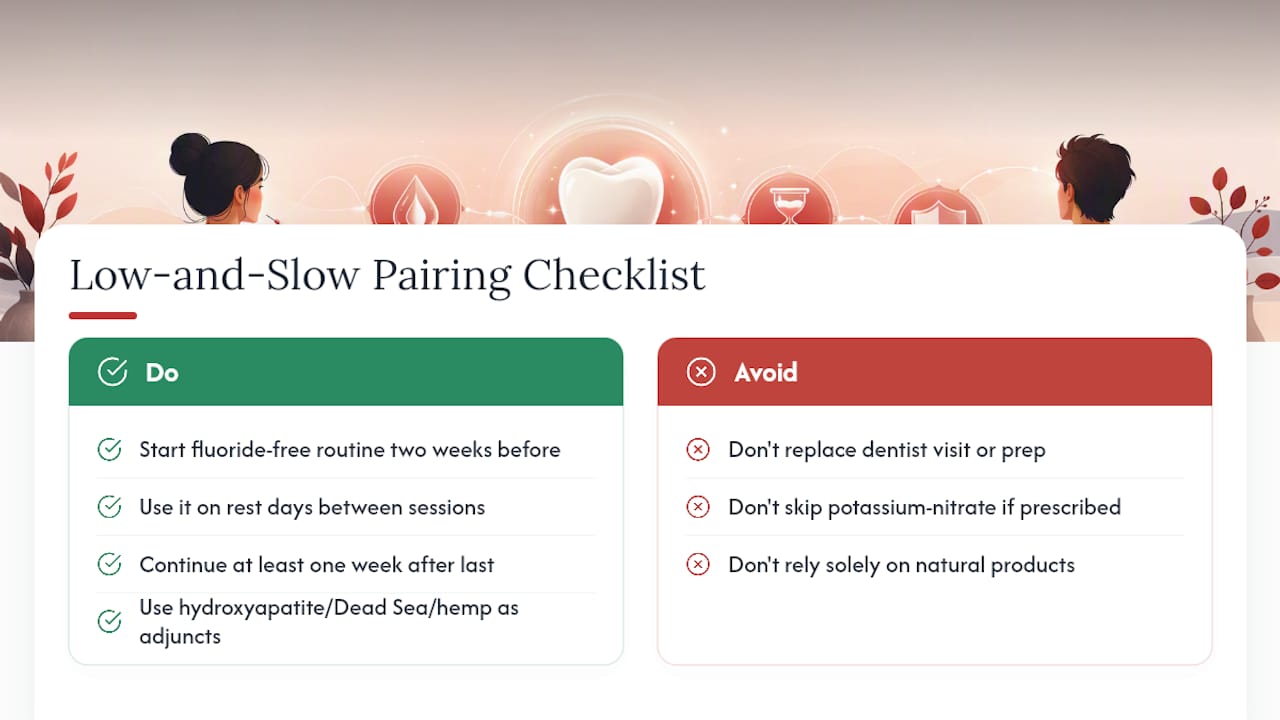
Fluoride-free formulations built around hemp compounds and Dead Sea minerals can be used alongside a low-and-slow whitening protocol rather than replace the dentist visit or the desensitizing prep work that actually drives results. Hydroxyapatite-style remineralizing ingredients support enamel during the exact window it’s most porous, which is the same window where fluoride or ACP additives are already recommended by dental protocols.
A practical checklist for pairing natural products with sensitive whitening looks like this: start any fluoride-free desensitizing routine two weeks before your first whitening session, keep using it on rest days between applications, and continue for at least a week after your last session. None of that replaces a potassium-nitrate protocol if that’s what your dentist recommends. It runs in parallel with it.
Readers who prefer fluoride-free, ingredient-focused options can review the specifics in Stop-oralcare’s guide to natural toothpaste for sensitive teeth, which covers what each mineral ingredient is actually doing.
A Realistic Take on Whitening With Sensitive Teeth
The mistake I see most often isn’t picking the wrong product. It’s picking the right product and then rushing the timeline. Patience is the actual active ingredient in every sensitive-teeth whitening protocol that works. Two weeks of pre-treatment feels like a long wait when you want results now, but it’s the difference between a whitening experience you can repeat every few months and one that puts you off bleaching entirely after one painful night.
Combine that patience with honest tracking of your own symptoms, and don’t treat a dentist visit as a failure if sharp or localized pain shows up. It’s a diagnostic step, not a setback.
— Veronica
Support Your Whitening Routine With Natural, Fluoride-Free Care
If you’re already committed to a low-and-slow whitening protocol, the products you use between sessions matter almost as much as the whitening method itself. Certain fluoride-free toothpaste, mouthwash, and oral sprays formulated with hemp and Dead Sea minerals may help support enamel and calm irritated gum tissue during the window whitening leaves teeth most vulnerable.
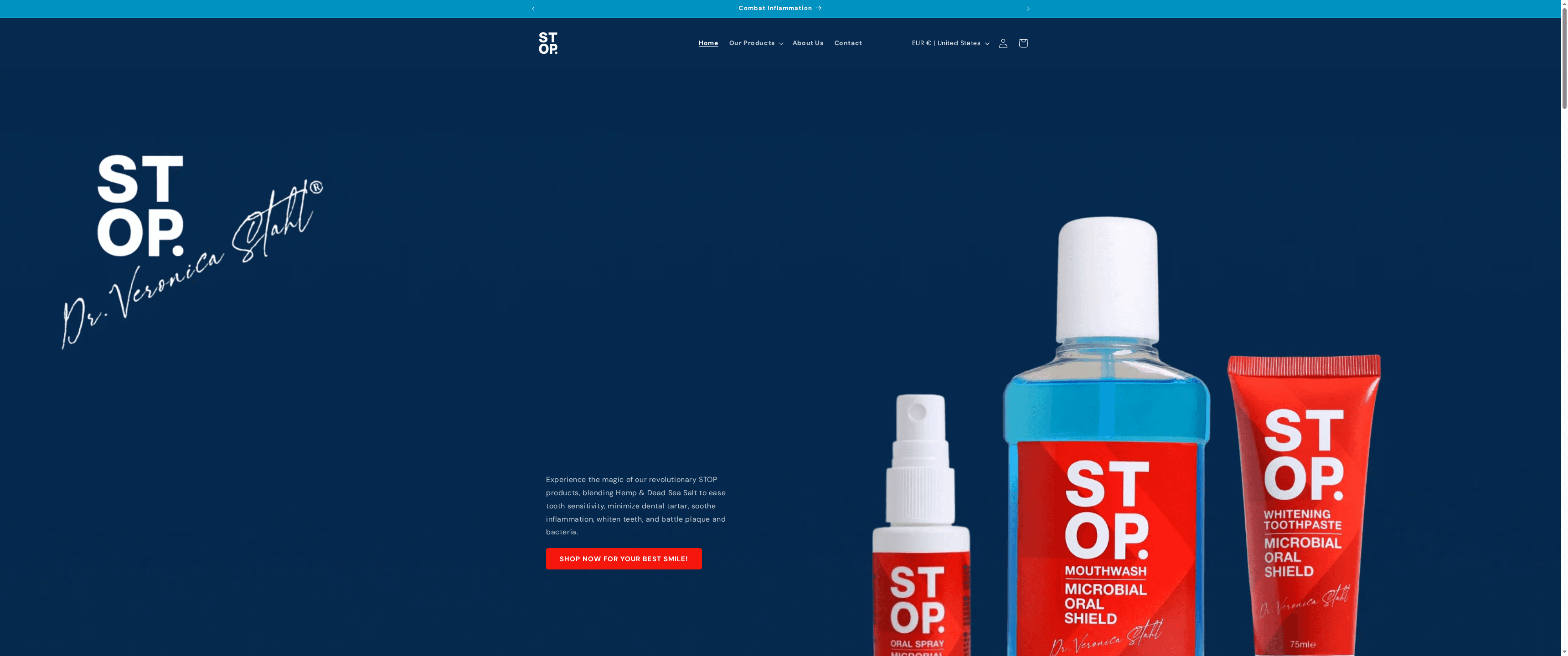
These products aren’t a substitute for a dentist’s exam or a desensitizing protocol your dentist recommends. They’re a natural adjunct you can layer into the pre-treatment, in-treatment, and post-treatment phases already outlined above. Visit the Stop-oralcare product catalog to explore the full formulation lineup and find the combination that fits your sensitivity level and whitening schedule.
Sources
The protocols in this guide draw on cosmetic dentistry guidance covered in Forbes’ roundup of whitening products for sensitive teeth, clinical pre-treatment and pacing recommendations from Serenity Dental’s guide to whitening without pain, and formulation details from Opalescence’s sensitivity relief whitening toothpaste page.
- Teeth whitening for sensitive teeth: how to whiten without pain - Serenity Dental
- Sensitivity Relief Whitening Toothpaste - Opalescence
FAQ
Can Sensitive Teeth Be Whitened Safely?
Yes. Most sensitive patients can whiten effectively using lower-concentration gels, longer treatment windows, and two weeks of potassium-nitrate pre-treatment, though severe or localized pain should be checked by a dentist first.
What Is the Most Effective Way to Whiten Sensitive Teeth?
The most effective approach is the “low and slow” method: lower-concentration bleaching agents used over a longer course with skipped days between sessions, combined with a potassium-nitrate desensitizing toothpaste beforehand.
Is There Professional Teeth Whitening That Doesn’t Hurt?
Professional whitening rarely causes zero discomfort, but dentists reduce pain significantly by using buffering agents, shorter treatment cycles, and post-treatment desensitizing gel applied immediately after the session.
How Long Does Pre-Treatment Take Before Whitening Sensitive Teeth?
Dental guidance recommends two weeks of twice-daily brushing with a potassium-nitrate desensitizing toothpaste before starting any whitening protocol.