

The oral cavity serves as the body’s primary gateway for pathogen entry, and the immune system concentrated there constitutes the first and most consequential line of defense against microbial invasion. Supporting oral immunity is not simply a matter of dental hygiene. It is a prerequisite for systemic immune balance, inflammatory disease prevention, and long-term health maintenance. Current immunological research confirms that disruptions to oral immune function propagate well beyond the mouth, contributing to conditions ranging from metabolic disorders to neurodegenerative disease.
Key reasons to support oral immunity include:
- Maintaining the physical and chemical barrier that prevents pathogen translocation into deeper tissues
- Regulating pro-inflammatory cytokines such as IL-1β, IL-6, and TNF-α to prevent chronic systemic inflammation
- Preserving microbial homeostasis, which shapes both local and distant immune responses
- Reducing risk of periodontitis, dental caries, and mucosal disease linked to immune dysfunction
- Protecting against systemic conditions associated with oral dysbiosis, including metabolic and neurodegenerative disorders
How the oral mucosal barrier protects against infection
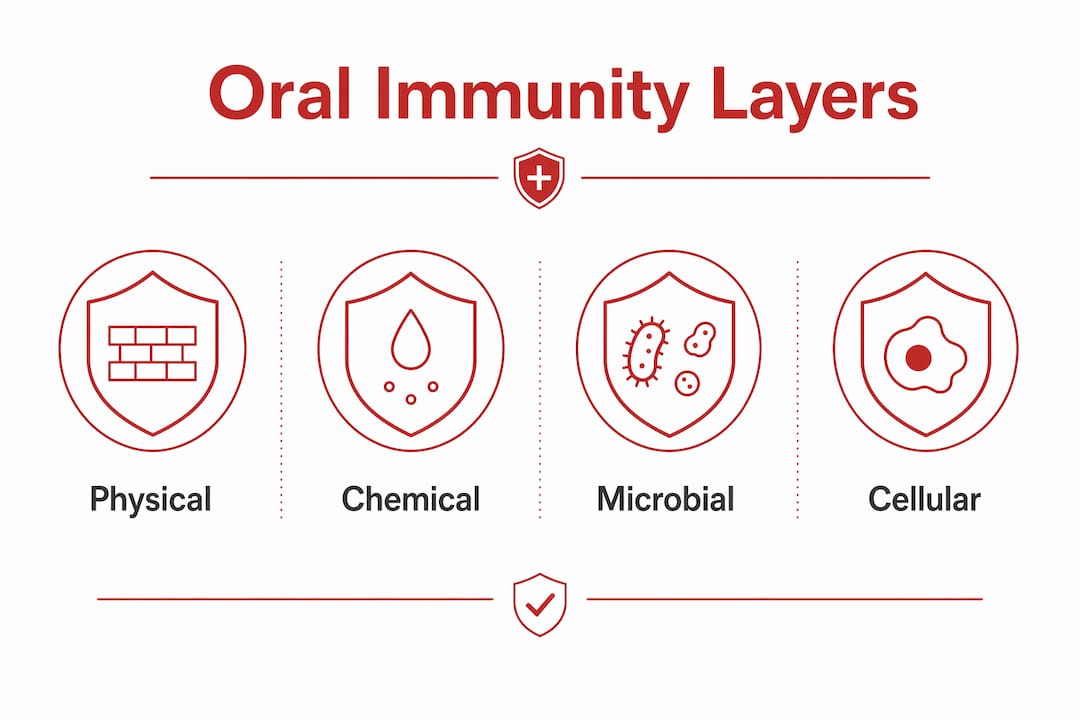
The oral mucosal barrier integrates four distinct defense layers: physical, chemical, microbial, and cellular. Each layer operates interdependently, and failure at any level can compromise the entire system.
The physical barrier consists of stratified epithelium, which undergoes continuous cell turnover. As surface epithelial cells exfoliate, they carry attached microorganisms with them, mechanically limiting colonization. Beneath this structural layer, chemical defenses in saliva provide a second line of protection.
| Barrier Component | Key Elements | Primary Function |
|---|---|---|
| Physical | Stratified epithelium, cell turnover | Prevents microbial penetration into tissues |
| Chemical | Lysozyme, lactoferrin, histatins, sIgA | Neutralizes and agglutinates pathogens |
| Cellular (innate) | Macrophages, neutrophils, γδT cells | Immediate pathogen clearance and inflammation control |
| Cellular (adaptive) | T helper cells, B cells | Immune memory and precise pathogen targeting |
| Microbial | Commensal microbiota | Competitive exclusion of pathogens |
Salivary antimicrobial peptides, including lysozyme, lactoferrin, and histatins, disrupt microbial membranes and inhibit pathogen adhesion. Secretory IgA functions through immune exclusion, agglutinating and neutralizing pathogens directly in saliva before they can adhere to mucosal surfaces. Th17 cells, abundant in oral tissues, mediate mucosal barrier integrity and coordinate neutrophil recruitment in response to microbial challenge. The role of saliva’s protective molecules in this multilevel defense system is well-documented in current immunological literature.
How the oral microbiome shapes immune regulation
The oral microbiome does not merely coexist with the immune system. It actively trains and calibrates it. Commensal microorganisms modulate the development of innate lymphoid cells, macrophages, and γδT cells from early life onward, establishing immune tolerance patterns that persist into adulthood.

When microbial balance is maintained, commensal communities downregulate pro-inflammatory cytokines including IL-1β, IL-6, and TNF-α, while enhancing anti-inflammatory mediators such as IL-10. Dysbiosis reverses this balance. A shift toward pathobiont dominance, as seen with Porphyromonas gingivalis overgrowth, drives Th17 skewing and persistent inflammatory signaling that damages periodontal tissue and can propagate systemically.
Key microbe-immune interactions include:
- Commensal-dependent expression of GAS6, a ligand that controls gingival inflammation and maintains Th17/Treg balance
- P. gingivalis lipopolysaccharides activating Toll-like receptor 2, inducing Th17 differentiation and modulating mucosal immune profiles
- γδT cells in oral epithelium producing IL-17 in a microbiota-dependent manner, bridging innate and adaptive immune responses
- Short-chain fatty acids from commensal metabolism supporting epithelial junction integrity and immune restraint
Pro Tip: Maintaining oral microbiome balance through consistent hygiene practices and dietary choices that favor commensal species is one of the most direct ways to sustain oral immune regulation over time.
What happens to systemic health when oral immunity fails
Oral dysbiosis triggers systemic inflammation by enabling bacteria and their molecular components to translocate through compromised mucosal barriers and affect distant organs. The oral-gut axis is a well-characterized pathway through which oral microbes influence intestinal immune profiles, with dysbiotic oral communities shown to exacerbate intestinal pathology in experimental colitis models.
The systemic consequences of impaired oral immunity extend across multiple organ systems.
| Systemic Condition | Mechanism of Oral-Systemic Link |
|---|---|
| Metabolic-associated steatotic liver disease (MASLD) | Oral pathobiont translocation via oral-gut axis promotes hepatic inflammation |
| Alzheimer’s disease | P. gingivalis and associated virulence factors detected in brain tissue |
| Parkinson’s disease | Systemic inflammatory signaling from oral dysbiosis implicated in neuroinflammation |
| Cardiovascular disease | Periodontal pathogens promote endothelial inflammation and atherosclerosis |
| Type 2 diabetes | Bidirectional relationship with periodontitis mediated by systemic IL-6 and TNF-α elevation |
Oral diseases directly caused by immune dysfunction include:
- Periodontitis: Tissue destruction driven by exaggerated host inflammatory response to dysbiotic biofilm, not by bacterial toxins alone
- Dental caries: Disrupted microbial balance favoring Streptococcus mutans and acid-producing species
- Oral mucosal disease: Conditions such as lichen planus and recurrent ulceration linked to aberrant local immune activation
The oral-systemic connection underscores that oral immune dysfunction is not a localized problem. It is a systemic risk factor that warrants active management.
Expert perspectives and evidence-based strategies for oral immune support
A critical insight from current immunological research is that effective oral immune support is not synonymous with maximizing immune activation. Excessive immune responses cause the tissue destruction observed in periodontitis, while insufficient responses permit pathogen invasion. The clinical objective is immune balance, specifically maintaining microbial tolerance while preserving the capacity for targeted defense.
“Clinical damage in oral disease arises from excessive immune responses rather than bacteria alone. Supporting oral immunity means balancing immune activity rather than simply suppressing it. The goal is homeostasis, not eradication.” — Frontiers in Microbiology, oral microbe-immune interplay
Oral mucosal barrier remodeling is now understood as a dynamic, continuous process rather than a static anatomical feature. Single-cell sequencing and spatial transcriptomics have revealed that epithelial cells function as immune sentinels, coordinating cytokine networks in real time. This reframing shifts oral health from passive hygiene maintenance to active immune management.
Evidence-based strategies to support oral immune function include:
- Oral hygiene: Mechanical disruption of biofilm through brushing and interdental cleaning reduces pathobiont load and limits dysbiosis-driven cytokine elevation
- Nutrition: Adequate intake of vitamins C and D, zinc, and polyphenols supports epithelial integrity and immune cell function
- Probiotics: Lactobacillus reuteri and Streptococcus salivarius support oral immune health by fostering beneficial microbial communities and modulating host immune receptors, requiring long-term barrier training rather than short-term supplementation
- Prebiotics and postbiotics: Emerging as adjuncts that modulate the oral microbiome and enhance barrier function, with mechanisms including selective support of health-associated communities and delivery of immunoactive metabolites
- Fluoride-free formulations with natural actives: Products incorporating antimicrobial natural compounds can support the mucosal barrier without disrupting commensal populations, consistent with the microecological approach advocated in recent barrier research
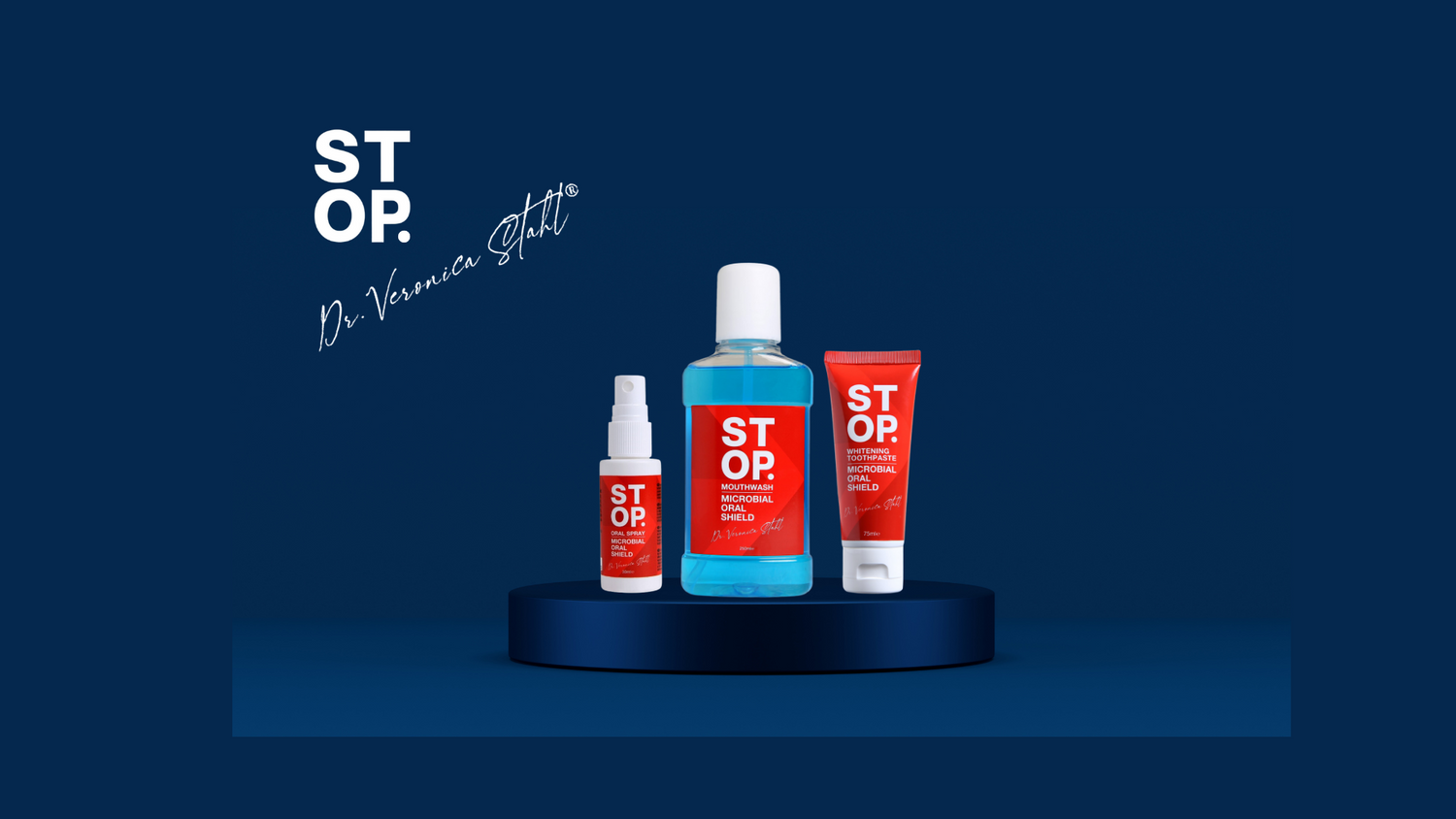
Stop-oralcare’s product line, formulated with hemp and Dead Sea minerals and developed under the direction of Dr. Veronica Stahl, applies these principles directly. The formulations are designed to support mucosal barrier integrity and microbial balance without the collateral disruption to commensal communities associated with conventional antimicrobial agents.
Key Takeaways
Supporting oral immunity requires maintaining mucosal barrier integrity, microbial homeostasis, and cytokine balance, because disruption at any level propagates systemic inflammatory disease.
| Point | Details |
|---|---|
| Oral immunity is systemic | Oral dysbiosis links to MASLD, Alzheimer’s, cardiovascular disease, and type 2 diabetes via bacterial translocation and cytokine elevation. |
| Balance over activation | Tissue damage in periodontitis results from excessive immune response; the clinical goal is homeostasis, not immune suppression or maximal activation. |
| Cytokine regulation matters | Maintaining microbial balance downregulates IL-1β, IL-6, and TNF-α while enhancing anti-inflammatory IL-10. |
| Probiotics require long-term use | Lactobacillus reuteri and Streptococcus salivarius support oral immune health through sustained barrier training, not short-term supplementation. |
| Barrier remodeling is active | The oral mucosal barrier continuously remodels in response to microbial and environmental signals, requiring ongoing rather than episodic immune support. |
Recommended
- Immune Support for Gums: What You Need to Know – Stop Oral Care
- Discover the Best Toothpaste for Oral Microbiome: 10 Science‑Backed Pi – Stop Oral Care
- The Best Mouthwash for Oral Microbiome: Top Picks That Support Healthy – Stop Oral Care
- Oral microbiome: Why it matters for whole body health – Stop Oral Care