

TL;DR:
- Paraben-free oral products exclude synthetic preservatives linked to endocrine disruption and rapid urinary concentration reduction. Consumers should carefully read ingredient lists to identify and avoid any compounds ending in “-paraben.” Formulators are now using alternative preservatives like phenoxyethanol and botanical extracts to ensure safety and efficacy.
Paraben-free oral products are formulations of toothpaste, mouthwash, and oral spray that exclude the paraben family of synthetic preservatives, a class the U.S. Food and Drug Administration currently monitors but has not banned at cosmetic concentrations. For safety-minded consumers, avoiding parabens in oral care is a scientifically reasonable precaution: a 2016 study reported that some urinary paraben concentrations dropped by more than 40% within three days of switching to paraben-free products, demonstrating that individual-level exposure reduction is practical and rapid. Stop-oralcare formulates its fluoride-free, hemp-infused oral care line without parabens, reflecting a precautionary, evidence-aware approach to ingredient selection.
To act on this immediately, scan every product’s ingredient list for the names below and prefer products that disclose their preservative strategy clearly:
- Methylparaben (also listed as methyl parahydroxybenzoate)
- Ethylparaben (ethyl parahydroxybenzoate)
- Propylparaben (propyl parahydroxybenzoate)
- Butylparaben (butyl parahydroxybenzoate)
- Any ingredient ending in “-paraben”
Table of Contents
- What are parabens and why do they concern consumers?
- What does the FDA say, and what does the evidence show?
- How are parabens used in toothpaste and mouthwash?
- What preservatives replace parabens in oral care formulations?
- How do you choose a safe paraben-free oral product?
- Does switching to paraben-free products affect cleaning performance?
- Who should be especially cautious with paraben-free products?
- Key Takeaways
- Why ingredient transparency shapes Stop-oralcare’s formulation philosophy
- Stop-oralcare’s paraben-free oral care line
- Useful sources and further reading
What are parabens and why do they concern consumers?
Parabens are a family of synthetic preservatives used widely in cosmetics and personal care products to prevent the growth of bacteria, yeast, and mold. Their chemical structure, a para-hydroxybenzoic acid ester, gives them broad-spectrum antimicrobial activity at low concentrations, which is why formulators have relied on them for decades.
The central health concern is endocrine-disrupting activity. EWG’s research documents that certain parabens can mimic estrogen at the receptor level, raising concerns about reproductive effects and cumulative body burden from simultaneous exposure across multiple personal care products. Biomonitoring surveys have detected parabens in nearly all U.S. urine samples tested, indicating near-universal background exposure in the general population.
The four parabens most commonly found on U.S. product labels are summarized below.
| Paraben Name | Common Label Synonym | Relative Potency (estrogenic) |
|---|---|---|
| Methylparaben | Methyl parahydroxybenzoate | Lowest |
| Ethylparaben | Ethyl parahydroxybenzoate | Low |
| Propylparaben | Propyl parahydroxybenzoate | Moderate |
| Butylparaben | Butyl parahydroxybenzoate | Higher |
Pro Tip: When reading a label, scan from the bottom third of the ingredient list upward. Preservatives like parabens typically appear near the end, where concentrations are lowest but still present.
What does the FDA say, and what does the evidence show?
The FDA’s published position is that it currently has no definitive information showing that parabens at cosmetic concentrations negatively affect human health. The agency’s approach emphasizes monitoring and labeling requirements rather than a prohibition, which places the U.S. in a notably different regulatory position than the European Union, where isopropyl- and isobutylparaben have been banned in personal care products since 2015. Several major U.S. retailers have also adopted phased restrictions on specific parabens in their private-label lines, a market-driven signal that precedes federal action.
“Clinicians generally agree that typical paraben amounts are unlikely to cause acute harm, but that reducing exposure is a reasonable precaution given the state of the evidence.” — Cleveland Clinic
For individual shoppers, the practical implication is this: the absence of a regulatory ban does not equal a clean bill of health. The gap between inconclusive evidence and a formal prohibition is precisely where consumer precaution operates. The more than 40% reduction in measured paraben concentrations observed within three days of switching products shows that precautionary choices produce measurable biological results quickly.
How are parabens used in toothpaste and mouthwash?
Water-based oral care formulations, including toothpaste, mouthwash, and gel products, are inherently susceptible to microbial contamination. Parabens address this by inhibiting bacterial and fungal proliferation throughout the product’s shelf life. The FDA confirms that methylparaben and propylparaben are the most frequently used members of this class in such products.
Oral care products present a distinct exposure consideration compared to topical cosmetics. Mouthwash is a rinse-off product, but it contacts mucous membranes directly, and toothpaste is used twice daily with some degree of incidental ingestion. Understanding mouthwash formulation choices and their preservative implications is therefore relevant to cumulative exposure assessment.
Common oral care products where parabens may appear:
- Fluoride and non-fluoride toothpastes
- Antiseptic and cosmetic mouthwashes
- Whitening gels and dental rinses
- Oral sprays with water-based carriers
What preservatives replace parabens in oral care formulations?
Paraben-free oral care products rely on alternative preservation systems, each with distinct trade-offs in antimicrobial spectrum, pH sensitivity, taste impact, and shelf life. Healthline’s ingredient guidance identifies phenoxyethanol, sodium benzoate, potassium sorbate, and ethylhexylglycerin as the most common synthetic alternatives, while botanical extracts such as rosemary extract and tea tree oil represent plant-derived options. Formulators also use formulation-level strategies including pH control, anoxic packaging, and single-use dosing to reduce preservative load.
| Preservative Category | Antimicrobial Spectrum | Key Trade-offs |
|---|---|---|
| Small-molecule synthetics (e.g., phenoxyethanol, ethylhexylglycerin) | Broad | Generally well-tolerated; some concentration-dependent sensitivity concerns |
| Organic acid systems (e.g., sodium benzoate, potassium sorbate) | Moderate; pH-dependent | Effective at low pH; may affect taste at higher concentrations |
| Botanical extracts (e.g., rosemary extract, tea tree oil) | Narrow; variable | Lower irritation potential; shorter effective shelf life; batch variability |
| Formulation-level control (pH, anoxia, single-use) | System-dependent | No added preservative; requires strict packaging and storage discipline |
Natural preservatives such as vitamin E, grapefruit seed extract, and rosemary extract are increasingly used by manufacturers seeking to avoid synthetic chemicals entirely, though their antimicrobial efficacy is generally narrower than conventional preservatives.
Pro Tip: Paraben-free formulations often have shorter shelf lives or stricter storage requirements. Check the expiration date and any “store in a cool, dry place” instructions before purchasing, and do not use the product beyond its printed date.
How do you choose a safe paraben-free oral product?
A structured approach to label evaluation reduces the risk of selecting a product that replaces parabens with a poorly characterized alternative. The dental ingredient safety guidance published by Stop-oralcare outlines a practical framework for this assessment.
Shopping checklist:
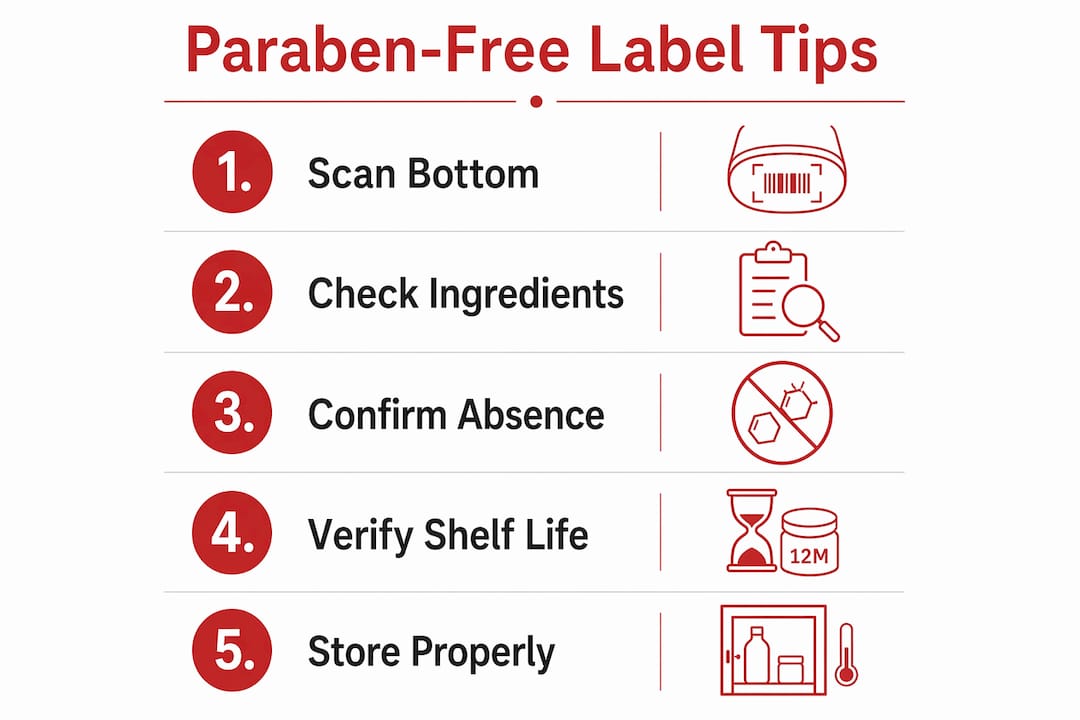
- Confirm the label states “paraben-free” explicitly.
- Read the full ingredient list and verify no “-paraben” suffix appears.
- Identify the named preservative alternative (phenoxyethanol, sodium benzoate, etc.).
- Check the expiration date and storage instructions.
- Look for third-party transparency signals: published ingredient lists, clinical testing references, or a named formulator.
- Prefer products with specific efficacy claims (plaque reduction, sensitivity relief) backed by cited evidence.
Ingredients to avoid:
- Any compound ending in “-paraben”
- Vague listings such as “preservative” with no chemical name
When to consult a clinician: If you are pregnant, nursing, managing a known allergy to benzoate compounds, or selecting products for an infant, discuss the switch with a healthcare provider before changing your oral care regimen. The Safe Oral Care Ingredients List maintained by Stop-oralcare provides a transparency reference for evaluating specific ingredient choices.
Pro Tip: Prioritize products that publish their full ingredient list online, not just on the physical label. Brands that maintain a publicly accessible ingredients reference demonstrate a level of transparency that is itself a trust signal.
Does switching to paraben-free products affect cleaning performance?
Preservative selection does not directly govern the active cleaning mechanisms in oral care products. Fluoride efficacy, abrasive particle size, antimicrobial actives such as cetylpyridinium chloride, and surfactant systems operate independently of whether the preservative is a paraben or an alternative. A well-formulated paraben-free product can deliver equivalent plaque reduction, sensitivity relief, and whitening performance to a paraben-containing counterpart.
What does matter is whether the paraben-free formulation has been subjected to the same stability and efficacy testing as conventional products. Consumers should look for evidence-based oral hygiene claims supported by published clinical data, not just marketing language. A product that replaces parabens but lacks any clinical substantiation for its efficacy claims has not necessarily improved on the original.
Who should be especially cautious with paraben-free products?
Paraben-free does not automatically mean risk-free. Alternative preservatives carry their own safety profiles, and some populations warrant additional care.
Pregnant and nursing individuals, infants, and people with compromised immune systems should consult a dentist or physician before switching oral care products, particularly when moving to formulations with novel botanical preservatives whose safety data in these populations is limited. For guidance on preservative-free mouthwash options and their storage requirements, Stop-oralcare’s published resources provide product-specific detail.
Paraben-free formulations also carry an environmental dimension. Parabens have been detected in aquatic environments and marine organisms, and their estrogenic activity raises ecological concerns beyond human health. Choosing alternatives with better environmental degradation profiles is a consideration that extends the precautionary rationale beyond individual exposure.
Pro Tip: For paraben-free products without conventional preservatives, store them away from humidity and heat. Bathroom countertops near showers are often the worst storage location for these formulations.
Key Takeaways
Paraben-free oral products offer a scientifically supported path to reducing synthetic preservative exposure, with measurable results achievable within days of switching.
| Point | Details |
|---|---|
| What “paraben-free” means | The formula contains none of the four common parabens: methyl-, ethyl-, propyl-, or butylparaben. |
| FDA vs. precautionary evidence | The FDA monitors but has not banned parabens; a 2016 study showed urinary concentrations dropped more than 40% within three days of switching. |
| Common alternatives | Phenoxyethanol, sodium benzoate, potassium sorbate, ethylhexylglycerin, and botanical extracts each carry distinct trade-offs. |
| Label-reading checklist | Confirm “paraben-free” on the label, verify no “-paraben” suffix in the ingredient list, and check expiration and storage instructions. |
| Stop-oralcare transparency | The Safe Oral Care Ingredients List provides a publicly accessible reference for evaluating ingredient safety in Stop-oralcare formulations. |
Why ingredient transparency shapes Stop-oralcare’s formulation philosophy
The evidence base on parabens illustrates a recurring pattern in consumer product safety: regulatory agencies operate on a standard of demonstrated harm, while individual consumers reasonably apply a precautionary standard given cumulative exposure across multiple products. The gap between those two positions is not a failure of science. It reflects the inherent lag between biomonitoring data, mechanistic research, and formal regulatory action.
Stop-oralcare’s approach, developed under the scientific direction of Dr. Veronica Stahl, a specialist in dentistry and natural medicine, treats that gap as a design constraint rather than a marketing opportunity. Formulating without parabens is not a response to a proven crisis; it is a response to the reasonable expectation that products entering the oral cavity daily should carry the lowest plausible preservative burden. The oral care ingredients guide published on the Stop-oralcare platform reflects this position with ingredient-level specificity, not generalized “natural” claims.
Consumers evaluating any paraben-free product, including Stop-oralcare’s, should demand the same standard: named preservative alternatives, published stability data, and clinical evidence for efficacy claims. Transparency is the only meaningful differentiator in this category.
Stop-oralcare’s paraben-free oral care line
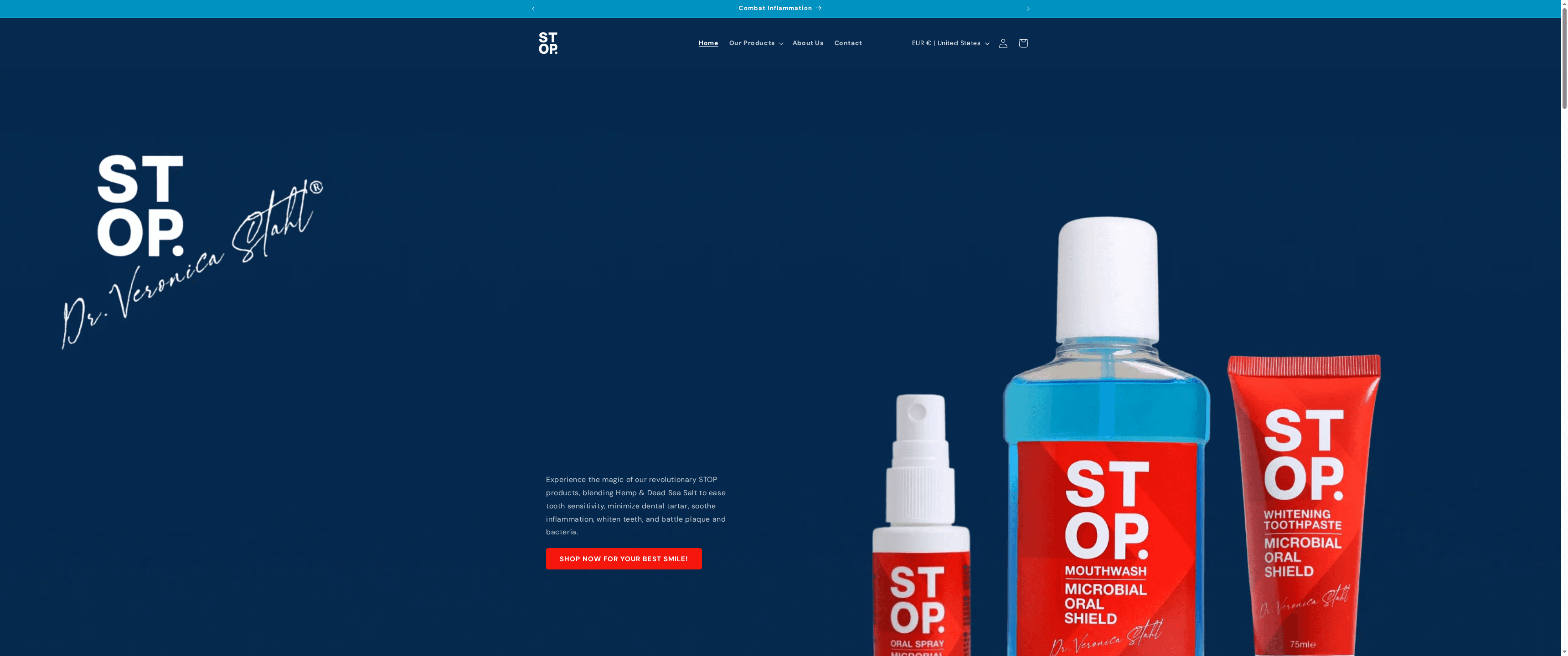
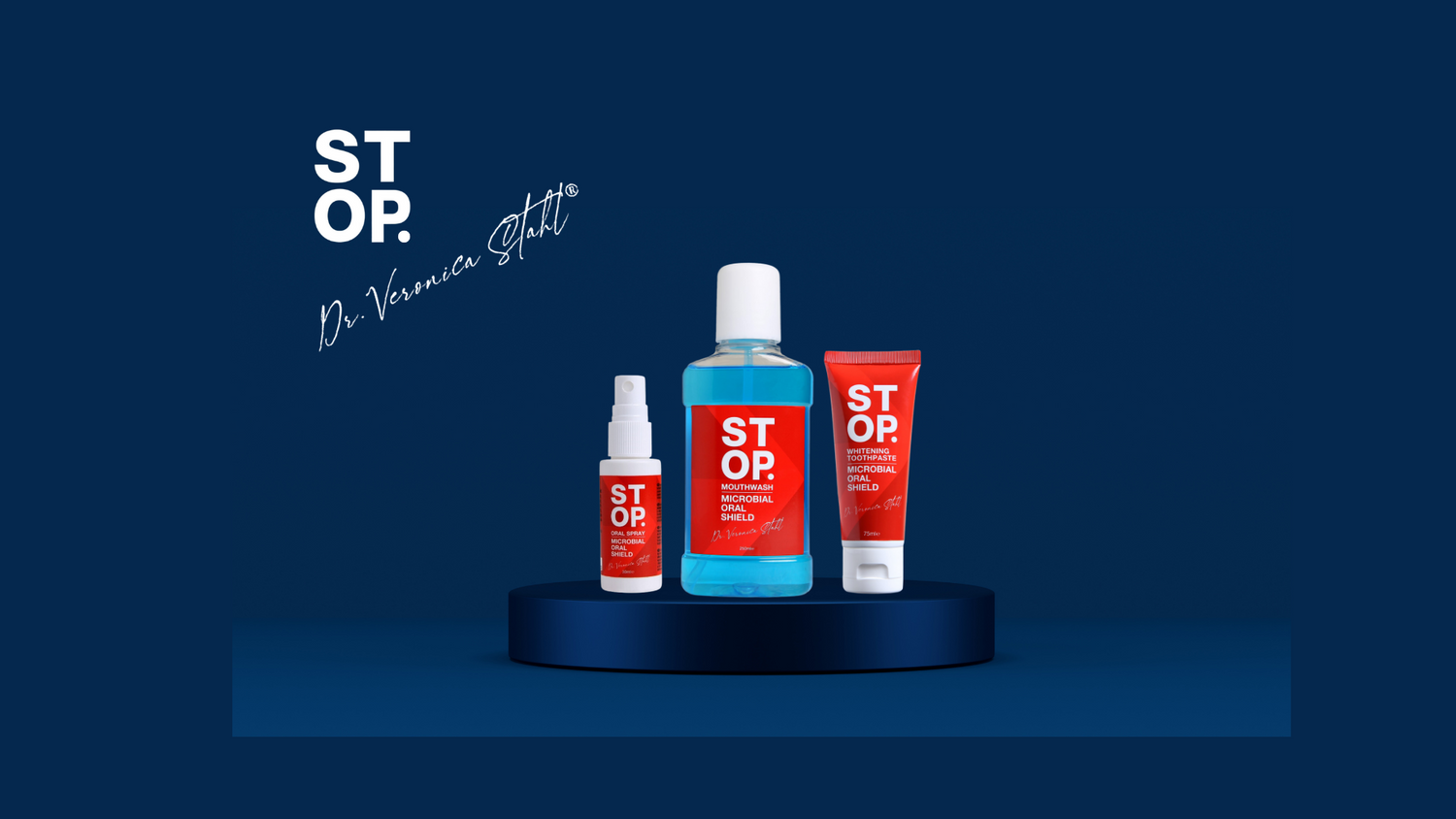
Stop-oralcare offers a fluoride-free, hemp-infused oral care line formulated without parabens and with Dead Sea minerals, designed for consumers who require both ingredient transparency and clinical performance evidence. The product range, including toothpaste, mouthwash, and oral spray, is developed under Dr. Veronica Stahl’s scientific oversight and supported by a publicly accessible Safe Oral Care Ingredients List that names every ingredient and its functional role. For consumers with questions about specific ingredients or sensitivities, Stop-oralcare’s customer support team can address ingredient-level inquiries directly. To review the full product range and ingredient documentation, visit Stop-oralcare.
Disclosure: This article is published by Stop-oralcare, which sells the products referenced in the promotional section above.
Useful sources and further reading
The following primary and clinical sources informed this article. Readers are encouraged to consult them directly to verify claims and access the underlying research.
- Parabens in Cosmetics | FDA: The FDA’s official consumer guidance on paraben safety, labeling requirements, and the agency’s current monitoring position.
- What Are Parabens, and Why Don’t They Belong in Cosmetics? | EWG: EWG’s summary of endocrine-disruption evidence, biomonitoring findings, and international regulatory comparisons.
- What You Should Know About Parabens | Cleveland Clinic: Clinical perspective on paraben exposure, the 2016 biomonitoring study, and clinician recommendations on precautionary reduction.
- Paraben-Free Beauty Products: What It Means | Healthline: Consumer-facing label-reading guidance and an overview of common paraben-free preservative alternatives.
- Parabens as the double-edged sword | ScienceDirect: Peer-reviewed review of paraben chemistry, toxicological profile, and the shift toward natural preservative alternatives in cosmetics.
- Hormone Havoc: Perimenopause and Menopause | Nuka Love: Consumer-facing context on endocrine disruption and hormone-related health concerns relevant to paraben exposure.